

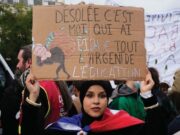

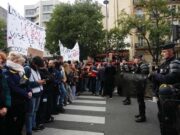

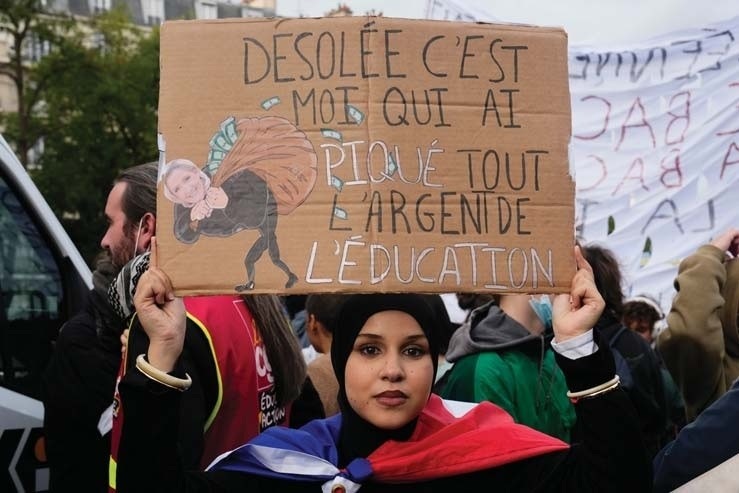

French officials are playing a high-stakes blame game, trading accusations over the widespread civil unrest that has gripped the country for weeks.
France is currently facing record debt, a high-budget deficit and political fragmentation. Social unrest driven by frustration over poor school conditions, teacher shortages, living costs and declining public services has added to the list of problems French officials are being asked to solve.
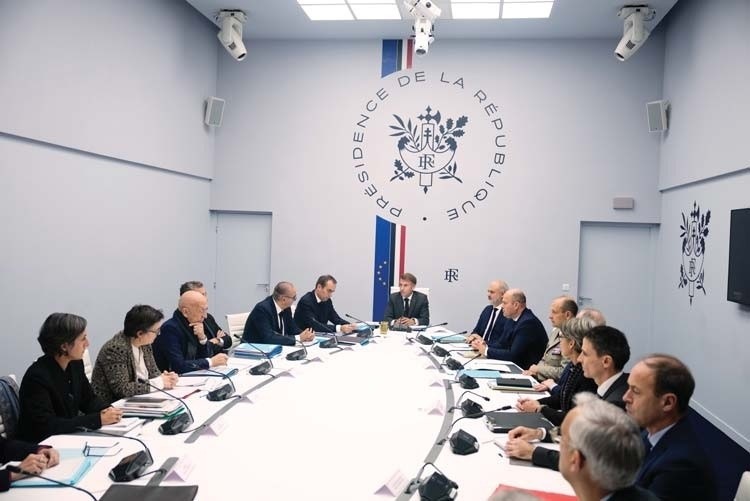
French Prime Minister Sébastien Lecornu is blaming far-left groups for the protests. According to the BBC, a leaked internal intelligence report prepared for the Paris police department accused student unions and political movements “aligned with the radical left” of manipulating student demonstrations and relying on violence as an electoral strategy ahead of the 2027 presidential elections. It named, in particular, La France Insoumise (LFI), translated to France Unbowed, a far-left political party.
While some demonstrations escalated into riots, looting and arson on Oct. 17, the protests, which began in mid-September and have drawn hundreds of thousands of participants, have largely been peaceful.
LFI leader Jean-Luc Mélenchon, a presidential candidate who has supported the protests, denied the claims and instead accused the prime minister of being “responsible for the chaos” either due to “incompetence or a worst-case strategy,” according to the BBC.
Marine Le Pen, a leader of the far-right National Rally party and a presidential contender, posted a video on social media also blaming LFI leader Mélenchon. Her party has taken a step further to blame immigrants for the chaos in France, the BBC reports.
However, French authorities had not implicated immigrants in the violence, according to the BBC. In addition, Reuters reported that government officials acknowledged shortcomings in their security response to the Oct. 17 unrest.
The political debate over the protests has extended beyond France, with U.S. President Donald Trump weighing in and blaming the unrest in France and elsewhere in Europe on immigrants and Muslims. It is an unfounded allegation and familiar tactic he has also used in the U.S.
“If Europe doesn’t close its borders and bring the criminals out, like the people that are protesting, Europe is finished,” he said at the White House on Oct. 19, according to Al Jazeera. “When I look at France, when you look at Italy, when you look at all the turmoil and the hatred, that’s not about school.
That’s about people coming into the countries that hate the country.” His unfounded comments come ahead of the midterm congressional elections in the U.S. He did not present evidence to support his claims.
French President Emmanuel Macron disputed President Trump’s characterizations. “We’ve had people claiming that we were invaded by hordes of migrants and Islamists, which is completely false,” he said to reporters during a trip to Qatar, according to The Associated Press. He added that some leaders on the other side of the Atlantic are “using our country for their own political campaigns.”
The Council on American-Islamic Relations (CAIR) released a statement on Oct. 21 denouncing attempts to blame the French protests on Muslims and immigrants.
“Politicians who blame immigrants and Muslims for the economic problems those very same politicians caused are using a transparently dishonest, dangerous tactic,” Washington, D.C.-based CAIR said in the statement.
“President Trump, Vice President Vance and other political leaders should be working to solve the cost-ofliving crisis that their Iran war escalated rather than blaming Muslims and immigrants for economic protests in France that have nothing to do with Islam or immigrants. We echo the condemnation of these false narratives and urge all public figures to stop weaponizing misinformation for political gain.”
French citizens interviewed by the BBC argue that politicians are overlooking the underlying causes of the unrest.
When the BBC’s Europe editor spoke to Lisa Cordat of the Fédération Syndi-cale Étudiante, a national student union in France involved in the demonstrations, she said it was “insulting” to suggest that demonstrators were being manipulated or “told to do this, or do that” by politicians.
“Student anger comes from the ground up,” the student said, according to the BBC.
Another interviewee, Lina, told the BBC: “Politicians are hunting for scapegoats but don’t ask why it all happened. The root causes of Saturday [Oct. 17]. We feel scared and abandoned.”
A teacher identified as Mar told the BBC that violence on Oct. 17 distracted from weeks of legitimate demonstrations for better public services. “Politicians aren’t listening to what the students need, or what teachers need or what the French people want,” she said. “They’re using the violence to election-campaign to become president and to try to make their opponents look bad.”
