










Hundreds of thousands of people are taking to the streets of several cities in Europe, protesting deteriorating public services, inadequate education funding, rising living costs, housing shortages, wages, government policies and more.
Growing dissatisfaction has resulted in the latest waves of protests in France, Belgium, Italy, Spain and other European countries.
The Most Honorable Elijah Muhammad, Eternal Leader of the Nation of Islam, taught on what dissatisfaction brings. “We are living in the time when dissatisfaction is 100 percent throughout the world of man and mankind. Therefore we are living among the dissatisfied persons, daily and nightly,” He wrote in chapter 23 of His seminal book, “The Fall of America.”
His National Representative, the Honorable Minister Louis Farrakhan, in an April 28, 1995, message titled, “What’s Troubling America,” said of his Teacher, “The Honorable Elijah Muhammad said 30% dissatisfaction could lead to a change that affects 75% of the world. But when you get 100% dissatisfaction, it leads to a total change.”
Minister Farrakhan has also warned that there is now “100% dissatisfaction all over the Earth.”
“Seven billion people on our planet are upset, angry, dissatisfied with those who lead and govern their lives and the institutions that have been put into place by various governments to govern [the] lives of the people of the Earth,” the Honorable Minister Louis Farrakhan said in a message titled.
“The Intensifying, Universal Cry for Justice,” delivered on February 22, 2015, in Chicago. “Every nation on Earth now: If you listen to the politics of each nation, they’re running on a theme, or a plan, about ‘change’ to satisfy the dissatisfied elements.”
For the Nation of Islam’s Student European Regional Minister Abdul Hakeem Muhammad, based in the UK, the uprisings in France and other countries are a consequence of broken promises.
“My general view on what is taking place in France is something that governments throughout the world are guilty of, which is publishing manifestos prior to an election and making promises to the people that they don’t keep once elected,” he said to The Final Call.
“As a consequence of that, we’re going into a global shift where the people, now, are starting to hold their governments more acutely to account.” He added that people no longer care about the destruction of their towns and cities caused through protest “because these beautiful towns and cities are no longer affordable for the average citizen to enjoy.”
“The people have reached the point of breaking, and what you’re seeing in Paris is a people who have broken. They can’t take any more promises that will not be fulfilled,” he said.
Unrest in France
For citizens of France, dissatisfaction had been brewing over time, according to residents of suburban Paris interviewed by The Final Call. Teacher staffing shortages at a school in the Paris region quickly became the catalyst to what has been described by multiple media outlets as the country’s worst period of civil unrest in decades.
“The anger in France, everybody’s angry; White, Black…. [No one] is okay with the government…. Nobody agrees. The dissatisfaction is at a very, very high level,” Sister Darikatine X, a member of the Nation of Islam who lives in the suburbs of Paris, told The Final Call.
Teachers began demonstrating on Sept. 17. High school students joined the demonstrations, and the frustration quickly spread to other schools and universities.
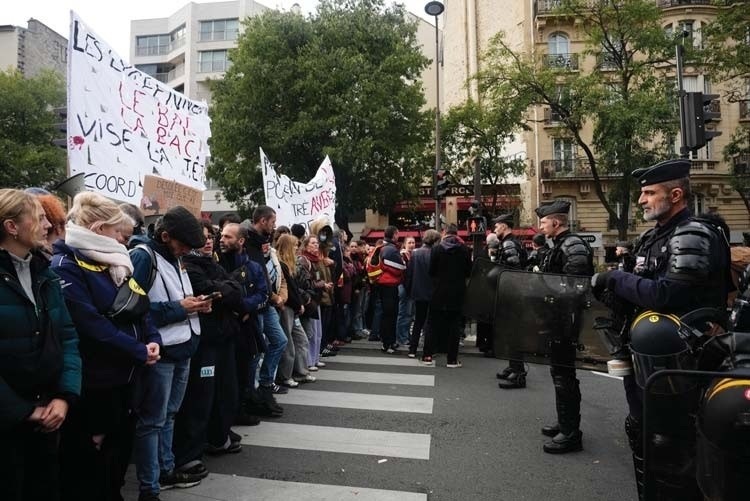
By early October, students were blockading schools and clashing with police, while teachers and labor unions joined larger demonstrations on rising living costs, wages and public services. Large nationwide demonstrations continued throughout October.
“It started in September. The students in high schools were complaining about overcrowded classrooms, and sometimes they don’t have heating in winter. The staff members, the teachers, [are] not enough for all of the students,” Brother Ghislain X, another resident of suburban Paris and a member of the Nation of Islam, said to The Final Call.
“Several things that I think people are fed up with, the way school is structured and organized by the government, but now it’s more than just school. People complain also about the prices that’s up. Also, the oil for cars that’s going up. It started with the students, but now there are also other complaints, and so that’s becoming a big protest now.”
The demonstrations escalated on Oct. 17, when approximately 550,000 people participated in nationwide protests, according to France’s Interior Ministry. Organizers estimated there were 800,000 participants. Although the demonstrations were largely peaceful, looting, arson and clashes with police occurred in several cities over that weekend.
“There are young people who smashed things. They destroyed shops, also, and school blockades during the week, and also fighting. They fight against the police,” Bro. Ghislain X said.
Authorities responded to the protests with increased security measures and localized curfews in various French cities. Sis. Darikatine X said she believes negative police response intensified the protests. She also expressed concern about reports of serious injuries among young protesters during confrontations with police.
“The level of violence is very, very high. That’s why the response from the high school students and all the people who joined them are so strong,” she said.
The current events in France and across Europe beg the world to listen to the warning and guidance of the Honorable Minister Louis Farrakhan. In a message delivered in a 2015 interview with Cliff Kelley on Chicago’s WVON 1690 AM radio station, Minister Farrakhan warned:
“[S]ince unjust and wicked people have been in positions of power and governance over the people—and there is no justice, there’s 100 percent dissatisfaction all over the Earth— then governments, now, have to pay money to mobilize their police and then militarize their police.”
Youth rising The Honorable Minister Louis Farrakhan also warned the world’s governments about the rising up of young people due to growing dissatisfaction. “Have you noticed every revolution that is taking place on the Earth?
Look in the faces of those who are rising against their governments—that’s right: It is disenfranchised young, jobless people. Not only are young Black people in America unemployed, young people are unemployed all over the world,” Minister Farrakhan said in Part 23 of his 2013 weekly lecture series, “The Time and What Must be Done.”
He continued: “When you look at the austerity measures going on in Greece, in Spain, in Italy, in France, look at who is rising up: It is the youth! If you look at Libya, if you look at Syria, if you look at Egypt, if you look at Tunisia, if you look in Bahrain—wherever there’s revolution or strife against a constituted authority, it is the young who are rising up!”
“It’s reached a point where people are very fed up, especially young people,” Bro. Ghislain X said, speaking of the uprisings in France. He expressed how young people are different from the generations before them and desire more respect from their governments, bearing witness to what the Honorable Minister Louis Farrakhan said.
“It started in France and now Belgium started to do the same thing, and it’s still the young people who started the blockades and all of the protests.
The energy and the way of thinking of young people are very different, and maybe the governments think that the young people will be the same as the old generation,” he said. “But they are really, really different. They don’t accept the way things are structured in their countries.”
As demonstrations intensified in France, students, labor unions and other groups also mobilized in Belgium, Italy, Albania and Greece. Protesters raised similar concerns over education funding, public services, economic pressures, wages, housing and government accountability.
On Oct. 9, approximately 30,000 people marched in Brussels, the capital of Belgium, during a national strike organized by major trade unions. Transportation, flights, schools and childcare were disrupted. Police used tear gas and water cannons on demonstrators and detained and arrested at least 21 people. Confrontations continued throughout October.
In Italy, students demonstrated in Milan, Rome and Turin on Oct. 16, over education funding and government policies. Demonstrations on living costs and public services intensified during the Oct. 17-18 weekend, with clashes, looting and property damage reported in several cities. In Milan, police detained 271 people, including 32 who were formally arrested, according to Reuters.
Student-led demonstrations intensified in Albania in mid-October, as part of a broader anti-government movement, leading to clashes with police and attacks on government buildings and businesses. Protesters raised concerns about government accountability and demanded Albanian Prime Minister Edi Rama’s resignation.
In Athens, the capital of Greece, students began demonstrating on Oct. 13. Protesters set up tents near the parliament building to draw attention to student housing costs.
Another encampment was established on Oct. 20, and approximately 10,000 people marched in Athens on Oct. 21.
Distress and confusion
While students and young people have been leading some of Europe’s latest protest movements, housing-rights organizations, labor unions and public-sector workers have also been protesting in Ireland, Spain and Portugal over rising rent, housing shortages, evictions, wages, working conditions and rising household expenses.
On Oct. 14, more than 300,000 teachers, health workers, civil servants and other public employees participated in a nationwide strike in Ireland. Schools closed and thousands of medical appointments were canceled.
In Spain and Portugal, housing-rights protesters have staged demonstrations and encampments in recent weeks, demanding action on rising rent, housing shortages and evictions. Demonstrations continued throughout October.
The uprisings in Europe are only examples of the distress and confusion of nations the Most Honorable Elijah Muhammad warned about. In part 10 of “The Time and What Must Be Done,” the Honorable Minister Louis Farrakhan echoed his teacher in a message on the signs of distress and confusion plaguing the nations of the Earth.
“[I]f you’ll read, or look at the news, ‘Are the nations in distress?’ My God! There are 17 nations in Europe that were taking austerity measures to address their debt crisis.
They are in distress because their economies are collapsing,” the Honorable Minister Louis Farrakhan said. He referenced a quote from a previous French labor minister, Michel Sapin, telling the French people that the country is “totally bankrupt.”
At the end of the second quarter of 2026, France’s public debt stood at approximately €3.6 trillion ($4 trillion), or 119% of gross domestic product, according to France’s national statistics agency. The debt-to-GDP ratio was at its highest level since 1946, according to French newspaper Le Monde.
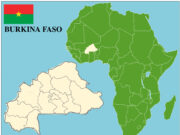
In recent years, three West African countries—Burkina Faso, Mali and Niger—have ended French military deployments in their territories and established the Alliance of Sahel States.
Niger is also taking control of uranium mining operations associated with a French company. However, the extent to which these developments have affected France’s current economic reality has not been established.
“Even if it affects the French country, French people will never have this information officially, and some of them do not even understand the correlation of what’s going on,” Sis. Darikatine X said.
Bro. Ghislain agreed. “They’ll never say in the French government, officially, that the economic situation of France is linked to the fact that those countries in Africa decided to take their resources back, so they don’t speak about it,” he said.
On the confusion of nations, the Honorable Minister Louis Farrakhan questioned in part 10: “Are the heads of our government confused? You mean you can’t sit down in a room and agree on a way forward to solve the problems of the American people?”
The same questions can be asked of France and other European countries. Sis. Darikatine explained that in Europe, the European Parliament plays a major role in legislation.
The European Parliament represents 450 million people who live in the European Union (EU), according to the parliament’s website. It works alongside the Council of the European Union to adopt new legislation and approve the EU budget, thus influencing national policies. Individual governments still retain substantial authority over their own budgets, education systems, policing and other policies.
Whether the latest wave of protests across Europe is reflective of 100% dissatisfaction remains to be seen.
Sis. Darikatine X attributed the lack of adequate government response to the protests in France to the country’s failing political structure and does not believe the protests will lead to change.
“Whatever the party, right, left, whatever, center, none of them can do anything actually, because the European law is above everything. So even if the protest goes much further than it is today, I don’t think we’re going to see major change,” she said.
Bro. Ghislain X agreed, arguing that while French President Emmanuel Macron condemned the violence in an Oct. 18 televised address, he offered no meaningful solution. “They offer no solution for the people, so I don’t see any evolution. No evolution, but revolution,” he said.
“Outside the revolution, I cannot see anything else. Nothing is working in this country,” Sis. Darikatine X said.
Student Minister Abdul Hakeem Muhammad believes that real change must come from the French government. He described this moment as a great opportunity for the government to correct itself.
“If Mr. Macron and his government were to come out and atone to the people for breaking all of these promises and move forward as a man who makes his word his bond, then forgiveness can be accessed from the people,” he said.
“We’re in a time of atonement. The people have pointed out the wrong. The government has to accept the wrong and do something to correct the wrong,” he added.
Then, the French government would be leading European governments by example, “to show them that they have to now be governments, or become governments, of integrity, as opposed to governments who just promise to deceive.”
