




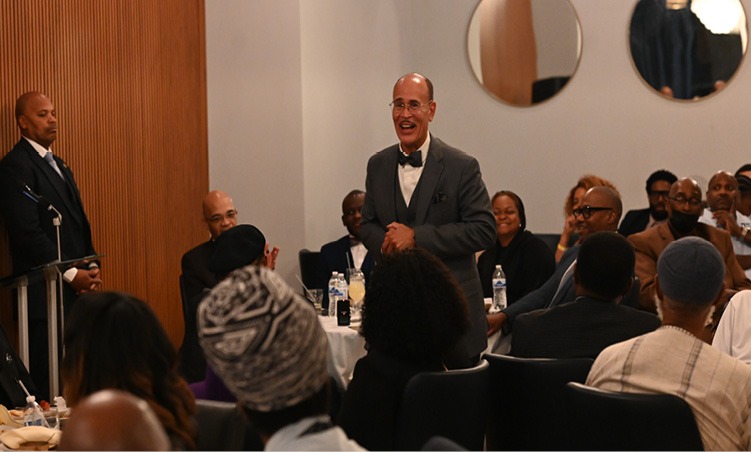

ATLANTA—In a season of global unrest, domestic political fractures, and rising public disillusionment, a Midtown Atlanta gathering offered something rare: clarity.
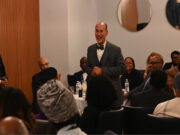
On October 9, inside Tabla Restaurant, a cross-section of Georgia’s Black political leadership, educators, clergy, organizers, and Nation of Islam members met for a dinner discussion that also served as a spiritual checkpoint.
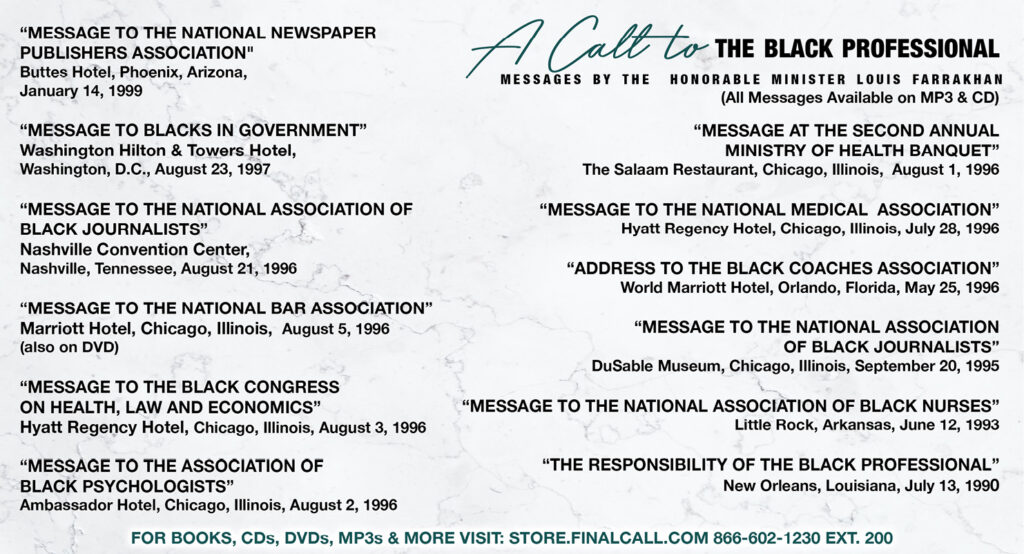
The event, hosted by Georgia Legislative Black Caucus members State Representatives Robert Dawson and Eric Bell, along with Attorney Brandon Price Crum, aligned with the Holy Day of Atonement—a time rooted in accountability, reconciliation, and community restoration. The Holy Day of Atonement was established with the 1995 Million Man March convened by the Honorable Minister Louis Farrakhan.
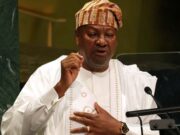
Attorney Crum opened the evening, followed by Representative Dawson, whose introduction of Student Minister Ishmael Muhammad, National Assistant to the Honorable Minister Louis Farrakhan, set a deeply personal tone. Mr. Dawson did not recite a résumé; he offered testimony.
Mr. Dawson spoke with the candor of a man shaped by struggle. “People see me now in office with perceived power,” he said. “But I didn’t fall from heaven. I rose from hell.”
He recalled meeting Student Min. Ishmael as a young man on 125th Street in Harlem—“dreads in my hair,” and searching for direction. That encounter “put a battery in my back,” sparking a transformation that redirected his life and anchored his purpose.
Mr. Dawson described Student Min. Ishmael as a grounded, disciplined, studious servant-leader—a family man, a consistent worker, a quiet force.
Student Min. Ishmael began by thanking Allah (God) for the prophets and reaffirming his position as a student of the Most Honorable Elijah Muhammad under the divine guidance of the Honorable Minister Louis Farrakhan.
His message to the audience was anchored in scripture and the Teachings of the Most Honorable Elijah Muhammad, and moved into a reflection on the Million Man March.
He reminded the room that October 16, 1995, was not a political demonstration but a spiritual summons. “No man had ever called a million Black men together—not for arms, but for atonement,” he said. “We went to make a demand on ourselves.”
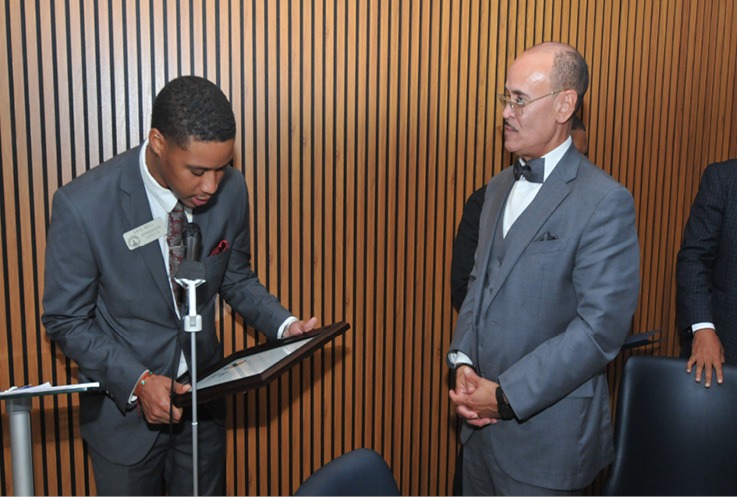
Unity was demonstrated that day—AME, Baptist, Catholic, Muslim, Hebrew Israelite, agnostic, Crips, Gangster Disciples—standing shoulder to shoulder as brothers, offered a glimpse of how God intended us to see one another, Student Min. Ishmael explained.
“Look at the word ‘unity.’ The ‘I’ sits in the middle—and that ‘I’ must always be God. If we could live that unity for one day, we can live it every day. But we are still too divided,” he said.
When ego replaces God at the center, unity collapses; and when unity collapses, political, social, and economic power evaporates, he concluded.
From unity, the message shifted to timing: “There is a season for everything. If our actions aren’t in harmony with the time, no amount of planning will bring success,” Student Min. Ishmael said.
He warned that America is living through the decline of a civilization. He said political leaders know firsthand that the system they operate within “is corrupt to the core,” built for the wealthy and never for the poor.
He cautioned that compromise is a seduction. “How many of us claim Christ on Sunday, then make deals all week, only to ask forgiveness again next Sunday?” he asked.
He revisited Minister Farrakhan’s warning from the 10th anniversary of the Million Man March, also known as “The Millions More Movement.” There, Minister Farrakhan noted that the most educated among Black people are often placed in positions that separate them from the masses.
“This design makes us feel we’ve arrived, while our people remain in poverty in the midst of plenty,” Min. Farrakhan said at that time, noted Student Min. Ishmael.
He explained that the Millions More Movement was created to bring skilled Black professionals back into alignment with the needs of the many. Leaders must think like a nation, not an organization, he said, adding, “(the Honorable) Elijah Muhammad said our unity is more powerful than atomic power.”
Explaining the function of unity, Min. Ishmael explained, “Everybody can’t play quarterback. Somebody has to block. Somebody has to run. When everyone plays their position, the team wins,” he said. A direct warning followed:
“You have power in your hands, and power can be manipulated.” When powerful interests dislike a Black leader doing real work, they often elevate another candidate willing to serve their [powerful interests] agenda, he said. “That replacement may be well-meaning, but serves them, not us,” he said.
He reminded the room that Jesus was not popular—truth to power rarely is. Divisions within the room were addressed head-on: “Some of us in this room have offended each other. … If we carry division, how can we call young people to unity?”
Global conflict, rising inflation, and extreme weather were cited as signs of divine judgment. “(The Honorable) Elijah Muhammad warned that God would visit America with rain, hail, snow, and earthquakes,” Student Min. Ishmael said.
Recent earthquakes, shifting hurricane seasons, and geopolitical tensions were referenced as evidence. “These are not the fault of our children. They are the fruit of a world we’ve allowed others to control,” he said.
His closing call centered on unity, courage, and responsibility—especially in education. “Without self-love and self-respect, we see Black boys disrespecting Black girls, Black boys killing Black boys,” he said, adding that the work of the Million Man March—atonement, reconciliation, responsibility—remains unfinished.
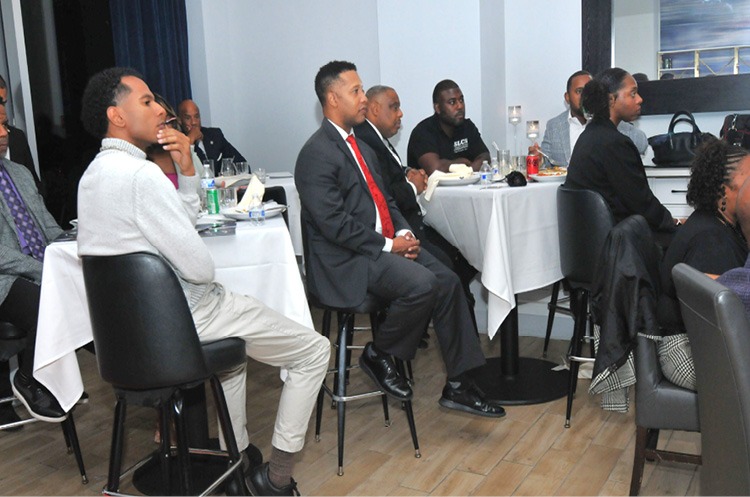
Guests left with the message still resonating. Brother Musa Shabazz, a Los Angeles native now living in Atlanta, told The Final Call the words were overdue for those in office. “His message was very necessary, especially for those in political office, understanding that their position is to serve the people, not to prioritize their own interests,” Mr. Shabazz said. “It really spoke to the importance of integrity.”
Coach Barry Ross of Atlanta heard the lesson as a coach would. “Very inspirational, very motivational,” Mr. Ross said. “Bringing us together for one common goal: to better ourselves and better each other,” he continued.
“Being a coach myself, I connected with the one about the field: the linemen, everybody has a position,” he said. “He also talked about the body’s organs working in unison. Those metaphors really resonated with me.”
Bishop Greg Fann called the address unflinching. “The words that he gave is phenomenal because it’s the truth. Ain’t nothing but the truth,” Bishop Fann said. “We do need people who are in political office to have courage and to be standing up on truth and not being bought out with money.”
It was Bishop Fann’s first time meeting Student Min. Ishmael. He credited another leader for bringing him into the work. “Minister Sharrieff Muhammad is the reason that I began to work with the Nation because he’s a straight-up brother too, all the way,” he said, referring to Nation of Islam Student Southern Regional Minister Abdul Sharrieff Muhammad of Mosque No. 15 in Atlanta.
Professor Tia Gibbs of Atlanta told The Final Call the message landed squarely on her daily work. “It was so informative and right on time,” Ms. Gibbs said. “I work with young people all the time, and one thing I noticed is they don’t know our history.
So, they’re not as motivated.” For her, the talk of unity hit hardest. “He was talking about how people have the beef and envy each other,” Ms. Gibbs said. “People get caught up in such trivial situations that they lose the point, especially with the last few elections. We lost all the way around because people couldn’t get along for the common good.”
Representative Eric Bell told The Final Call that hosting the event was essential once he learned the Holy Day of Atonement would be in Atlanta. “Georgia’s open for our community. Georgia’s open for change.” Political backlash did not concern him. “Blowback from who? I welcome it.”
In a time of political division, global conflict, economic strain, and moral confusion, the night’s message was unmistakable: unity is power, integrity is protection, and leadership is service. The responsibility to make communities decent and safe rests on every shoulder in the room.
The dinner ended. The charge did not. Thirty-one years after nearly two million men gathered to atone, the call in Atlanta remained the same: Look inward. Lay down old grudges. Play your position. Serve the whole.
As Student Min. Ishmael Muhammad put it, the responsibility belongs to everyone in the room—and everyone outside it.
