











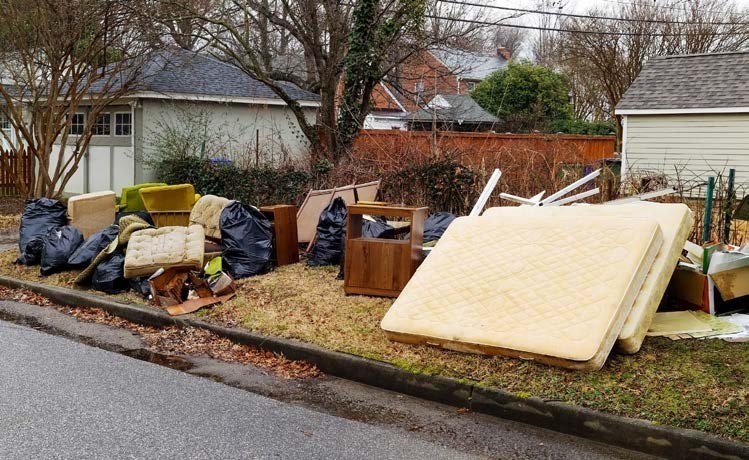

WASHINGTON—Darlene Hampton was constantly facing eviction. Last year, she finally paid the overdue rent but still left her apartment, taking her four children with her. Ms. Hampton told The Final Call that her D.C. rent rose $200 each year, and keeping up became increasingly difficult.
After her third eviction notice, she went to court, where the landlord obtained a judgment against her. Ms. Hampton said she eventually paid the rent. But she was tired of the back-and-forth with the eviction court, she said, and decided to leave. She moved in with her brother in the suburbs.
Her children changed schools. Her commute to work grew longer.
For Black families, housing instability can continue long after overdue rent is paid. Court cases can disrupt schooling and employment, and records of those cases can make another landlord reluctant to rent to them.
Black renters face a disproportionate share of eviction cases. Capital B, a non-profit news organization serving Black communities, reported in September that Black residents make up about 52% of renters in the five-county metro Atlanta region but nearly 70% of eviction cases.
The outlet attributed those figures to Peter Hepburn, a Rutgers University sociologist and collaborator with Princeton University’s Eviction Lab, who spoke at a Sept. 10 meeting at the Atlanta History Center.
Black renters with household incomes above $80,000 are still at greater risk of eviction than White households earning $20,000, he said, according to Capital B. He cited discrimination, limited savings and fewer people to turn to for help. Income explains some of the disparity but not all of it, he said.
Not every eviction case ends with a family put out. It starts with a notice, a court filing, a judgment, and a removal; each is a separate step, and a case can stop at any of them. Ms. Hampton’s ended with a judgment and her decision to leave. Even a filing that goes no further can leave a court record that surfaces when a family applies for its next home.
Housing researchers call that lasting barrier the “Scarlet E.” Tenant screening companies collect court information and sell reports that landlords use to evaluate applicants. Mismatched names, outdated entries, or missing case outcomes can get an applicant rejected over a case that belonged to someone else or that the tenant won.
In a recent article, Emily Benfer, a George Washington University law professor and Eviction Lab research collaborator, described Randy Dillard Jr.’s saga. His New York City apartment applications were repeatedly rejected after screening systems confused him with his father, who shared the same name.
Years earlier, his father had faced an eviction filing after a dispute over serious housing defects. The younger Mr. Dillard was forced to move in with relatives.
Federal law offers some protection. Negative information such as an eviction generally cannot appear on a screening report after seven years, according to the Consumer Financial Protection Bureau. The bureau advises applicants to confirm the report identifies them correctly and shows how the case ended.
Court records and screening reports are separate, however. Access to court records depends on state and local rules, and sealing a case may require a tenant to take additional steps.
Research documents what housing instability can mean for children. A 2025 working paper by economist Robert Collinson and five co-authors, released through the Census Bureau’s Center for Economic Studies, examined eviction’s effects in Chicago and New York.
Using Chicago’s Cook County court records linked to the 2010 census, the researchers found that 53 to 56% of households facing eviction had children. About 45% of children facing eviction in that county lived in households headed by single mothers.
The researchers found that eviction increased residential moves and homelessness and disrupted school engagement, with more absences and school changes. They also found lower high school graduation rates, although little effect on elementary and middle school test scores.
A separate Eviction Lab analysis of Houston Independent School District records from 2002 to 2016 found that 12.3 percent of students whose parents faced eviction filings finished the academic year at a different school, almost three times the rate among students whose parents did not.
Compared with students who moved for other reasons, those who moved after an eviction landed in schools with more low-income students, higher turnover, and lower test scores.
Even the fear of losing a home is linked to how children fare. A 2025 study in JAMA Network Open by University of Pittsburgh researcher Jamie Hanson associated caregivers’ stress about eviction or housing loss with higher odds of depression in children.
Some jurisdictions are limiting the lasting damage of eviction records. In the District of Columbia, a law that took effect in 2022 requires the Superior Court to seal eviction case records 30 days after a case is resolved if the landlord does not win a judgment for possession, and three years after it is resolved if the landlord does.
Kansas enacted Substitute for House Bill 2357 in April, creating a way for tenants to ask a court, at no cost, to expunge an eviction judgment. A tenant must wait three years after the judgment and show that they have paid any money owed to the landlord under it. A new eviction judgment during those three years delays expungement of the earlier one until the newer one also qualifies.
The Kansas law also directs courts to consider mediation in eviction cases unless it would not help the parties or is impracticable.
Ms. Benfer’s analysis with The Eviction Lab calls for earlier record sealing and stronger accountability for screening companies. Those steps address the barriers families meet when applying for another home. Help with overdue rent and access to a lawyer can help tenants resolve a case before displacement.
Paying late did not keep Ms. Hampton’s household in Washington. Worn down by the court, she gave up the apartment, and the move cost her children their schools and lengthened her commute. “Eviction was the last thing I thought I would have to contend with,” she said.
