

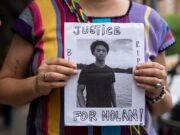








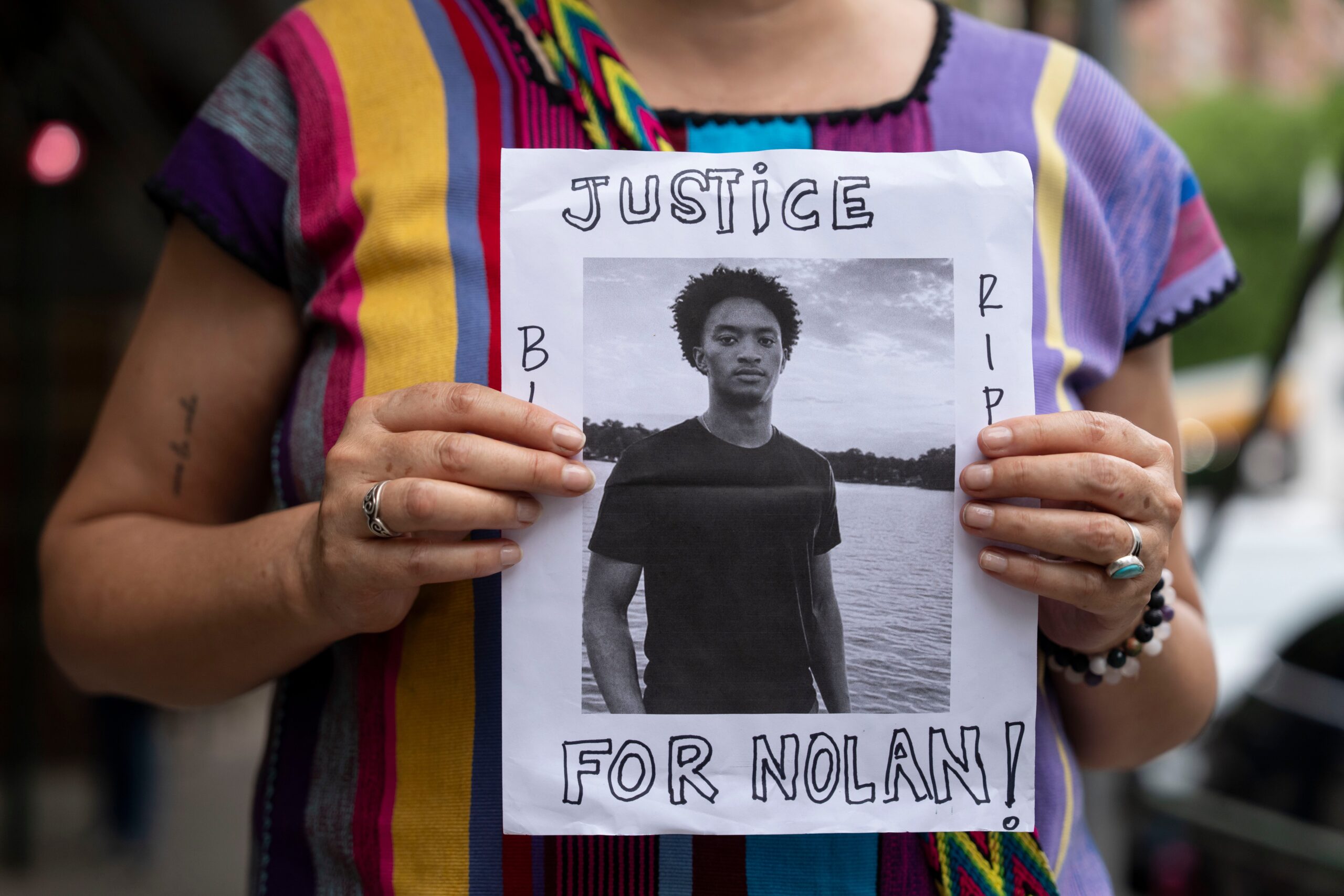

“What happened to our son?” Christine and Elmore Wonsley are still asking that question after a Jackson County, Mississippi, grand jury unanimously declined to indict anyone in connection with the death of Nolan Wells, the 18-year-old Black teen who went on a boating trip with “friends” on July 4. His body was discovered two days later off the shore of Horn Island, Mississippi.
The grand jury concluded that the position, condition and location of Nolan’s body were consistent with drowning. It also reported finding no credible evidence of criminal conduct by anyone who traveled to or from Horn Island on July 4.
The grand jury was impaneled on April 20 (for its term), and reconvened on Sept. 14 and adjourned on Sept. 18. The Jackson County, Miss., District Attorney’s office released a redacted version of the grand jury report on the evening of Sept. 21.
“Elmore and I have read through the report page by page more than once. What we have learned is that we still have no answers, and the report reinforced the fact that Nolan was not given a thorough, transparent and honest investigation,” Christine Wonsley said at a Sept. 22 press conference in response to the grand jury decision.
The panel consisted of 23 jurors. Twelve of the jurors were White, five were Black, two were Hispanic, two were Native American, one was Asian and one identified their race as “other.” The jury issued 132 subpoenas and heard from 43 witnesses.
The jury considered evidence collected during the investigation by the Jackson County Sheriff’s Office, including physical and digital evidence, interviews, recorded statements, images, videos, recordings, maps, GPS data and location data, according to the report. It also considered reports on Nolan’s cellphone by his family’s forensic examiner.
Nolan traveled from his hometown of Ocean Springs, Miss., to Horn Island. He was pictured on a boat with three young White men, who returned to the mainland without him. His phone was returned to the mainland with the group.
The grand jury report cited findings from both the Mississippi State Medical Examiner and forensic pathologist, Dr. Roger A. Mitchell Jr., who conducted an independent autopsy in July. Both classified the cause and manner of Nolan’s death as undetermined. Drowning is considered a diagnosis of exclusion in forensic pathology.
“That means all other causes must be ruled out prior to certifying a death as drowning. What is another potential cause that the district attorney failed to rule out? Blunt force trauma,” civil rights attorney Ben Crump, who is part of the family’s legal team, said at the press conference.
In the independent autopsy, Dr. Mitchell found red discoloration in the soft tissue at the back of Nolan’s head, which he later determined to be blood, according to the full autopsy report. The state medical examiner’s autopsy report also documented two contusions on the back of Nolan’s head. Neither autopsy established how the injuries occurred.
A witness told the grand jury he saw Nolan slip off the side of a boat around 3:30 p.m. on July 4 but could not say whether Nolan struck his head, according to the report. He said Nolan didn’t appear to be injured. The grand jury did not establish how Nolan sustained the bruising.
“Nolan was a college football player on scholarship in tip-top shape, supreme physical condition, but apparently, they say he drowned in shallow waters. How do you explain that? They say we’ll never know,” Atty. Crump said.
“How do you explain that he stayed on the island after his friends left? Why did he stay? We’ll never know, they say. Two medical examiners found contusions on the back of Nolan’s head and bruises. Dr. Roger Mitchell found bruises on his back. What caused them, and did they contribute to his death? We’ll never know, they say.”
The final pages of the grand jury report addressed social media narratives surrounding Nolan’s death. Jackson County District Attorney Angel Myers McIlrath posted a video statement alongside the report, accusing Nolan’s legal team of “fanning the flames” of allegations that his death was connected to racial hatred or violence.
Atty. Crump challenged the district attorney’s words. “Don’t attack these parents. Don’t attack us supporting these parents for doing the same exact thing that you would do if it was your child,” he said, adding that her accusations against the legal team are only a distraction.
“Ben Crump and our legal team, we aren’t the issue. And DA McIlrath and her office, they aren’t the issue. The issue is what really happened to Nolan Xavier Wells,” he said.
The legal team held a separate press conference on Sept. 24 to reveal findings from an independent forensic examination of Nolan’s cellphone. The examination was conducted by Garrett Discovery, a digital forensics firm retained by the family, and led by the firm’s chief executive officer, Andrew Garrett.
Mr. Garrett said the examination established that Nolan’s cellphone remained aboard the boat and that Nolan last accessed the device at approximately 2:18 p.m. on July 4. The examination recovered Snapchat messages, GPS information and other digital records, including messages that continued syncing to the phone after Nolan’s death due to active group conversations.
Mr. Garrett played a video depicting where the phone was traveling while on the boat. He reported that data had been deleted from the phone between the time Nolan last possessed it and the time his family recovered it. He did not establish who deleted the data or why it was deleted.
In both press conferences, Nolan’s family and their legal team questioned whether the investigation into Nolan’s death was thorough and whether witnesses provided meaningful testimony before the grand jury. Grand jury proceedings are generally conducted in secret, and the family’s legal team did not participate in the proceedings.
“This lawyer that I know who worked for the prosecutor’s office for years, his position has always been that the grand jury does what the prosecutor tells them,” Houston-based attorney Pamela Muhammad said to The Final Call. “The prosecutor, all they have to do is find that there’s probable cause that a crime occurred, looking at the evidence. They don’t have to prove the case.”
For Atty. Muhammad, Nolan’s case is another example of “Black youth dying under suspicious and questionable circumstances.”
“The questions that are being asked by the family and the concerns being raised by the way the case was investigated and ultimately the grand jury process, which ended with this no bill, raises the question as to whether or not there was a deliberative body process that was done with justice,” she said.
The legal team has released Dr. Mitchell’s independent autopsy report and the state medical examiner’s autopsy report. The family and their attorneys are calling for the investigation to remain open and active and for the district attorney’s office to release the investigative file.
In its report, the grand jury acknowledged that if additional credible evidence emerges suggesting Nolan’s death was non-accidental, the matter could be presented to a grand jury again.
The family is also requesting that the U.S. Department of Justice conduct an independent federal review. Atty. Crump announced a tentative press conference for Oct. 1 in Atlanta, where Dr. Mitchell will explain both autopsy reports.
Elmore Wonsley, Nolan’s father, urged supporters to continue asking the question of what happened to Nolan Wells. “Please continue to ask that question,” he said. “Continue to speak his name, because he’s not a hashtag. He’s our son.”
