









The Trump administration confronted allegations of war crimes and underreporting the number of deaths of U.S. service members in the Iran war Sept. 18, even as the third War Powers resolution vote to curb the president’s authority to pursue his war passed in the U.S. House of Representatives 220-204.
Seven Republicans joined the Democrats to pass the mostly symbolic measure that can be vetoed if it reaches the president’s desk.
The House passed the measure on Sept. 15. President Trump and Israeli Prime Minister Benjamin Netanyahu launched the unprovoked attack on Feb. 28.
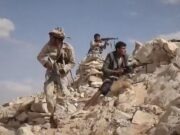
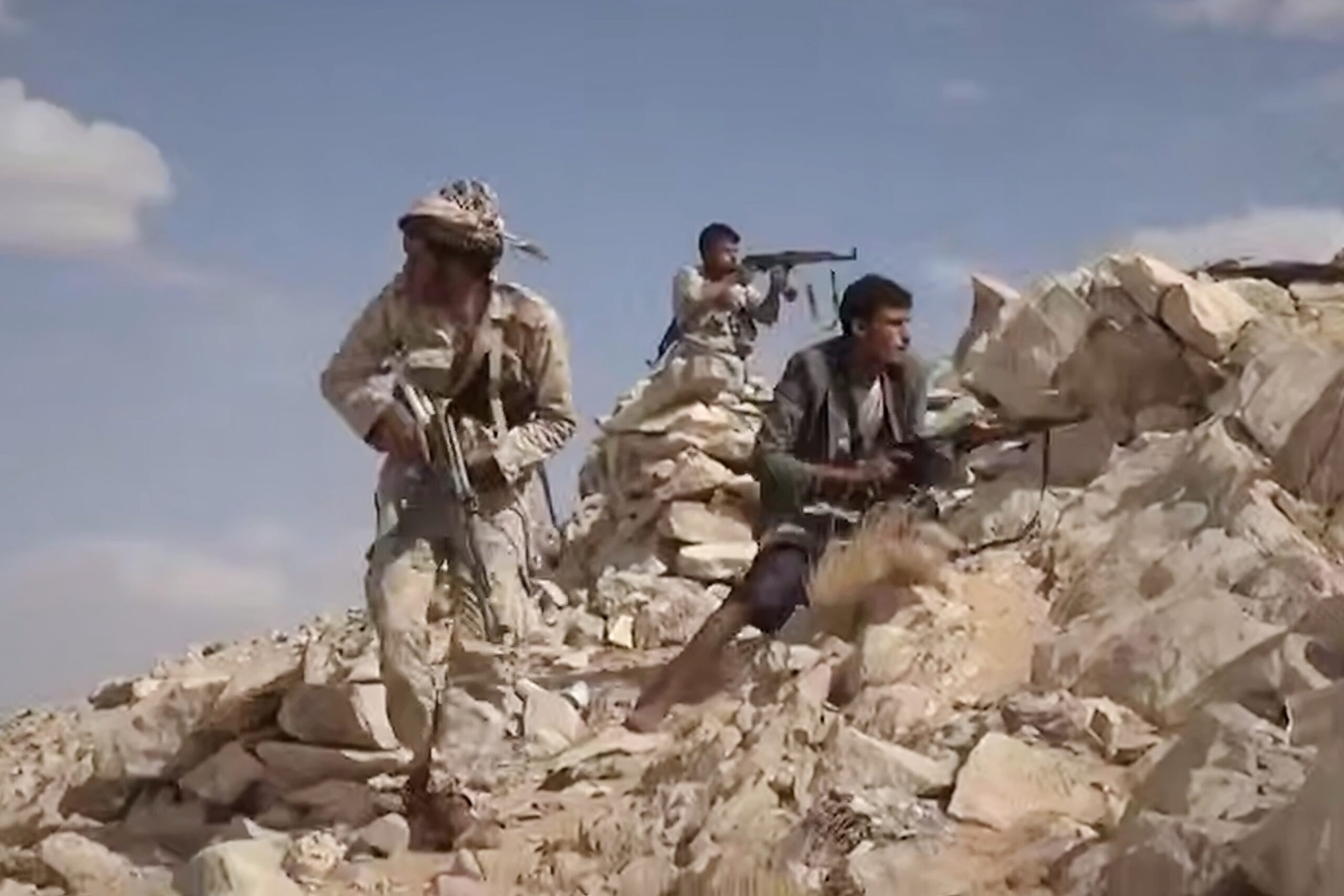
The vote and allegations came as a front in the war opened wider as Iran-backed Ansar Allah (Houthi) forces advanced in its fight to control the Bab Al Mandeb Strait, the second critical waterway in the Gulf region through which Saudi Arabia ships crude oil.

Prior to the war, the Strait of Hormuz, now controlled by Iran, accounted for about 20% of the world’s crude oil shipments, according to the U.S. Energy Information Administration, while Bab al Mandeb accounted 5%-9%.
In a perhaps surprising and unexpected move, a reported request from Saudi Prince Mohammed Bin Salman for U.S. military assistance to halt advancing Ansar Allah forces was rebuffed by President Trump, deciding instead to provide the Kingdom with military intelligence.
“There is no sense in Washington that the U.S. owes the Saudis anything,” said Phyllis Bennis, director of the New Internationalism Project at the Institute for Policy Studies (IPS), emphasizing the “transactional” nature of Trump administration’s relationships.
“The Trump administration has said that explicitly about NATO countries, that we have no obligation to support them. This is just one more example that the Saudis are not special in that way.”
She said Persian Gulf countries that rely on U.S. military protection may seek other means of security while not necessarily moving completely away from the U.S. “Some may look for other options, some may try to normalize their relationship with Iran,” she said. “They’re seeing they can’t count on the U.S. for what they thought were promises of what they’d get for hosting a military base in their country.”
The War Powers vote might have been influenced by a Sept. 15 government watchdog report that quantified significant war-related hardware and facility losses previously known but not widely reported.
Compounding the administration’s problems are Sept. 18 reports by The Washington Post that four more service members died than what appears in the Pentagon’s public database, known as the Defense Casualty Analysis System, and UN allegations that the U.S. committed war crimes for the bombings of a school and sports facility at the beginning of the war.
Watchdogs confirm damage
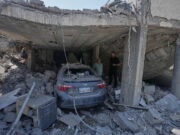
An Inspector General’s report that included information from watchdog groups for the Defense and State departments and the U.S. Agency for International Development revealed Iranian missiles damaged or destroyed hundreds of buildings and other structures on U.S. bases in Kuwait, Bahrain, Qatar, the United Arab Emirates, Saudi Arabia, Iraq, Oman and Jordan.
Iranian attacks compromised dozens of U.S. airplanes and drones, including MQ-9 Reaper drones and KC-135 refueling planes. Reaper drones cost $30 million each, the report noted.
At the same time, according to the report, the State Department negotiated sales of more than $44 billion in emergency and non-emergency military products to Saudi Arabia and other Gulf nations. Sales included military helicopters, munitions and munitions support as well as advanced precision weapons systems, the report said.
The War Powers vote took place as nervous Republican legislators return home to campaign for November midterm elections. They know they will face voters who mostly oppose the war and are tired of rising gas and food prices.
The BBC reported that a barrel of oil cost $72.48 at the start of the war. A barrel was priced at $103.47 on Sept. 18, according to oilprice.com.
Iowa’s two Republican representatives, both military veterans, voted in favor of the War Powers resolution. Both opposed it in previous votes.
“I will not vote to keep our soldiers in an open-ended war, with Iowans paying too much at the pump. The Iranian regime and its nuclear ambitions have been defanged. The President needs to present a plan to Congress and the American people for how these ends so we can focus on bringing our soldiers home and lowering prices,” said Rep. Marionnette Miller-Meeks.
Referencing two Iowans killed in a drone attack in Kuwait, Rep. Zach Nunn said, “Congress owes them, their families, and every American in uniform clear objectives and constitutional oversight. With the negotiating window closed, sustained combat operations now require congressional authorization. … We can defend Americans, pressure Iran, and pursue peace while ensuring Congress fulfills its constitutional responsibility.”
Other Republicans voting for the resolution were Thomas Massie (Ky.), Brian Fitzpatrick (Pa.), Warren Davisson (Ohio), Tom Barrett (Mich.), and Nancy Mace (S.C.).
The Senate has narrowly voted to oppose a resolution on two previous occasions and has not voted since July 30.
No U.S. strategy in Iran war
With the Strait of Hormuz controlled by Iran, the U.S. and other nations were concerned that Iran-allied Ansar Allah would seize control of the Bab Al Mandeb strait at the southern end of the Red Sea.
Prince bin Salman made two calls to President Trump Sept. 10, one asking for military strikes on Ansar Allah forces, according to news reports. Ansar Allah succeeded in securing Bab al Mandeb coastal territory and the island of Perim (also known as Mayyum) giving them control of the waterway.
Ansar Allah forces, however, signaled to the international community that shipping through the strait remains safe for ships, except those from Saudi Arabia.
The conflict between Ansar Allah and Saudi Arabia began in 2014 when Ansar Allah captured the capital city Sana’a from the transitional government of Abdurabbuh Mansur Hadi.
In 2015, Mr. Hadi fled to Saudi Arabia from which Operation Decisive Storm—a Saudi-led coalition of forces to reinstate Mr. Hadi—was launched. Today, the civil war continues with Ansar Allah controlling one third of Yemen. President Rashad Al-Amini leads the Saudi-backed, internationally recognized Yemen government.
The lack of U.S. strategic planning has been a major criticism of Mr. Trump’s “unnecessary war,” according to Morgan State University political science professor Wilmer Leon.
“If the Trump administration had a plan, then how to deal with the Saudi situation would have been part of the plan. Because there was no plan, there was no process to deal with peripheral issues,” he told The Final Call.
He recounted the U.S.’ role in creating what’s happening between the Saudis and Ansar Allah. The (Barack) Obama administration encouraged the Saudis to fight Yemen, he said, adding the Biden administration later labeled Ansar Allah as a terrorist group during a time when the Saudis and Ansar Allah were negotiating a peace treaty.
‘They blew the hell out of Bahrain’
Evidence of the lack of planning has been seen in depleted weapons stockpiles, lengthy troop deployments, maintenance issues on ships, depletion of emergency fuel stockpiles, and low morale among military personnel, among other issues.
The USS Gerald R. Ford aircraft carrier recently was ordered to return to port after more than 10 months at sea resulting in unsustainable conditions on the ship and among shipmates.
Two U.S. officials who spoke to The Intercept news told of early miscalculations in the U.S. strategy: one, that Iran would buckle under the size of the U.S. Navy presence; two, the U.S.’ mission was seriously crippled at the outset when Iranian missiles destroyed the U.S. Navy logistics hub in Bahrain.
“They blew the hell out of Bahrain,” Navy Secretary Hung Cao would later admit in an interview with The Epoch Times, the damage of which was documented in the Inspector General’s report.
Dr. Leon said the USS Gerald Ford is an example of the lack of strategy and planning by the U.S. Iran knows it can’t defeat the Navy ships, so they just cut off the fleets’ supply chain, he said.
“Iran says, ‘It’s gonna need water. They’re gonna need food. They’re going to need to be resupplied,’” Dr. Leon said.
“So, they strike the base that supplies the ship. They don’t have to attack the ship. The ship will eventually leave because it can’t support itself and that takes us back to the adage: You have the watches, but we have the time.”
