










[Editor’s note: Under the guidance and instructions of our Publisher, the Honorable Minister Louis Farrakhan, The Final Call recently sent a delegation to Springfield, Ohio, to investigate and speak with community residents on the impact of the elimination of Temporary Protected Status for Haitians. The delegation included: Former Editor-in-Chief and current Contributing Editor James G. Muhammad, Staff Writer Anisah Muhammad, Contributing Photographer Haroon Rajaee and N.O.I. Representative to Haiti, Joseph Makhandal Champagne. The Final Call will continue to report on this important issue.]
SPRINGFIELD, Ohio—Jocelyn Rhau sits at a table near the entrance of the Rose Goute Creole restaurant. A Haitian flag and an American flag are situated on either side of the front door behind him, seemingly representing his heritage and his aspirations.
Wearing a yellow T-shirt with the word “Boston” in capital letters across his chest and the sleeves cut off at the shoulders, he looks across a table that is as empty as the restaurant itself. Except for a small delegation of journalists in the city to talk to people like him.
The main thing accompanying him is an unfamiliar silence—no clanging kitchen utensils, no conversations among neighborhood residents, and no Haitian music over the speakers.
The restaurant is a popular establishment that, on any given day before July 27, was bustling with crowds from surrounding communities eating and enjoying Haitian music.
That was before President Donald Trump eliminated the Temporary Protected Status (TPS) for Haitians, a federal program that allows migrants to live and even work in the U.S. if it is too dangerous for them to return to their country.
Today in Springfield, most Haitians live in fear, community leaders told The Final Call.
Haitians in the U.S. were granted TPS protection following a devastating 2010 earthquake in Haiti. That protection was extended, and other refugees were allowed in through the years because of disease, hurricanes, the assassination of President Jovenel Moise in 2021, and extensive violence before and since.
President Trump went after the status in 2017 during his first term, arguing the earthquake’s structural damage had been resolved. The courts, addressing lawsuits filed against the administration, issued injunctions challenging termination of the program.
Feb. 3, 2026, was the expiration date for the latest extensions. After clearing the remaining legal hurdles, the Trump administration terminated TPS for Haitians on July 27.
Interviews conducted by The Final Call in Springfield described widespread fear since the termination took effect. Because many residents speak Haitian Creole, reporters traveled with an interpreter, who approached prospective interviewees and explained the purpose of the reporting. Many declined to speak.
At a law office serving the Haitian community, located in a nearly empty three-story office building, most doors were locked. Signs warned that ICE was not allowed or that entry was restricted to authorized personnel. ICE is U.S. Immigration and Customs Enforcement, an agency within the Department of Homeland Security (DHS).
September 22, 2026
When reporters knocked on the frosted glass window of the door, the silhouette of a person approached. Too hesitant to open the door, the person slid a piece of paper with a number to an authorized person to contact at the law office.
When a reporter approached two hotel workers returning from an outside break and announced he was in town to do a story on the problems Haitians are facing, the workers blurted, “We know nothing about that,” before going into a side hotel door.
In the restaurant, Mr. Rhau explained the fear. “After they said TPS was ending, ICE began arresting people. They were arresting people everywhere. I am only 39 years old, and the stress is making my hair fall out. Even though I am not working now, I could be working.”
In response, Haitian residents set up early warning systems using WhatsApp and other social media platforms to message residents about the presence of ICE agents. Most recently, two Haitian pastors were apprehended. One, Gilbert Joubert Adrien, was in his vehicle with four passengers on Aug. 20 when ICE agents blocked his car and took him into custody, according to local activists.
Less than two weeks later, 20-year-old Wright State University student Pierre Damas Bel died after being struck by a tractor-trailer on Interstate 70. Authorities were investigating the Aug. 31 death as a possible suicide.
His family and community members said he had been distressed and humiliated after ICE required him to wear an ankle monitor (See related story on page 3). Monitoring devices in various forms are given to the undocumented so they can be tracked and eventually deported. The exact number of people detained and deported to Haiti is unclear.
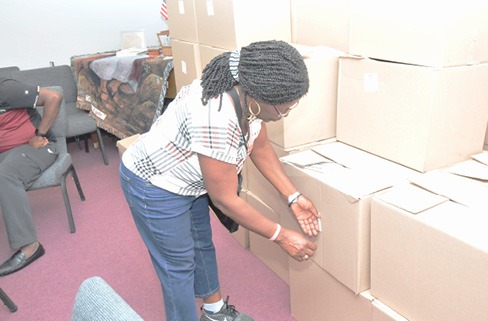
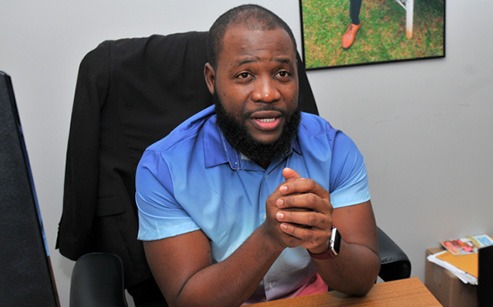
James Fleurijean and Hubert Calixte are Haitian activists familiar with the daily struggles the people endure. Mr. Calixte is a U.S. resident born in Haiti. He serves his people as an interpreter and sometimes a mediator.
When a resident receives a letter from ICE to come to their office for a tracking device, Mr. Calixte sometimes transports them. The tracking device comes in the form of an ankle monitor, an app placed on a cell phone or a digital watch.
Mr. Calixte is a familiar face and can sometimes negotiate for a resident to receive a less noticeable form of tracking. If he had been with Pierre, he said he may have been able to convince ICE to place him with a watch or an app on his phone.
Mr. Fleurijean is a board member of the Haitian Community Help & Support Center. His agency shoulders the weight of being what he describes as the only Haitian organization in the city that distributes vital household supplies and food.
As volunteers stuffed boxes with items like laundry detergent, diapers, and tissue, Mr. Fleurijean explained that most of the boxes are delivered. Very few people venture out of their homes to come to the center, he said.
Other agencies do similar work, but Mr. Fleurijean explained, “All the responsibilities have been on our back. We are the ones they come to when they have some immigration issue, when they need an attorney, an interpreter; they come to us.
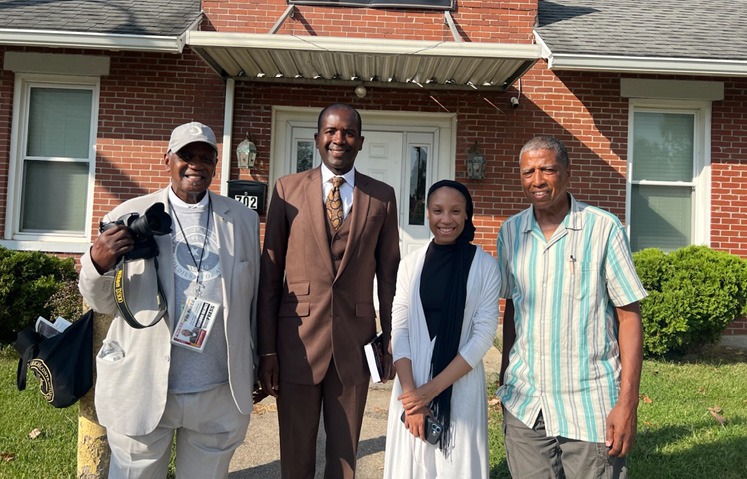
Photo: Robert Muhammad
“If they have a rent issue, they come to us, food, everything, even water,” he said.
As The Final Call spoke with Mr. Fleurijean, he got a call from the son of one of the detained pastors, asking for help with an issue he was facing to help his detained father.
Haitians came for work, and helped Springfield recover
The growth of Springfield’s Haitian population accelerated as workers responded to job opportunities in the area and then shared their experiences with relatives and friends. Local leaders and residents said manufacturing, warehouse and service-sector employers needed workers, particularly after the COVID-19 pandemic.
Today, the town of 58,000 has an estimated 12,000-15,000 Haitian residents in Springfield and Clark County, according to local government estimates. As they began to thrive, they opened small businesses in mostly abandoned strip malls. By many accounts, Haitians helped to revive the city.
“There were lots of jobs. The factories, the warehouses were giving bonuses,” Mr. Fleurijean at the Community Center explained to The Final Call. “They would put out ads asking people to come to work. When I came to Springfield, it was just a ghost town.”
The population growth also strained schools, health care and housing. Cultural differences created some tensions between Haitian newcomers and some longtime residents, including members of Springfield’s existing Black community.
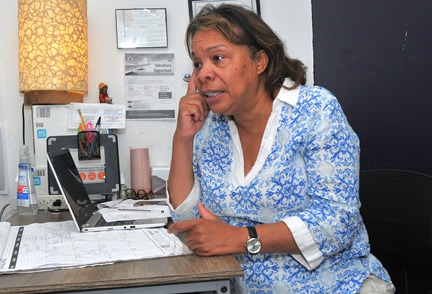
Margery Koveleski is a U.S. citizen born in New York to Haitian parents. She works from a small room in the back of a lightly stocked Haitian bodega. Passion for Haitian people burns in her belly as she thumps her chest, describing herself in the spirit of Harriet Tubman. She’s been in Springfield 24 years.
When Haitians began to arrive, she assisted them as an interpreter, helped them to establish bank accounts, and as they progressed, she helped new arrivals avoid being exploited, particularly in housing, something that also attracted pastor Michal Young.
Rev. Young is pastor of Zion Hill Baptist Church and president of the Interdenominational Ministerial Fellowship (IMF), a diverse coalition formed after the COVID-19 pandemic. Both mention that there have been tensions between the communities, but over the years a sense of unity has emerged.
“As clergy and as leaders, we were concerned that they would not be exploited,” said Rev. Young, who has lived in the Springfield area for over 30 years. “We could not believe how much the rent and leases had increased. We found out it was due to the influx of Haitians, fundamental supply and demand.”
He said the IMF organized rallies and marches following the 2024 false and inflammatory statement by then presidential candidate Donald Trump that Haitians in Springfield were eating neighborhood pets.
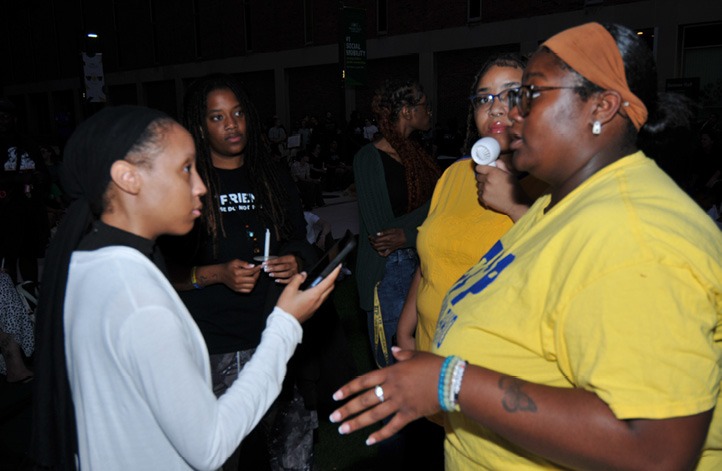
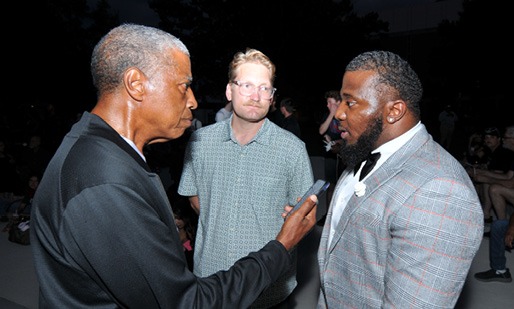
Photos: Haroon Rajaee
“I was so appalled by the way they treated Haitians,” Ms. Koveleski said. “They would have to sleep on the floor or a cardboard box. They came with families and renters sometimes didn’t accept children. They came to work, but they wanted to eventually go back home,” she said.
The absence of Haitians’ participation in the economy is and will have a serious impact, those interviewed told The Final Call. “Everybody will be affected, not only the Haitian stores,” Ms. Koveleski said. “But this needs to happen to show prejudice there’s a high price to that. It’s easy to be intimidated by fear.”
Locked down
How long can the Haitian community hold out under these conditions? Interviewees said they are concerned that residents aren’t going to doctor or dentist appointments and some children are being kept home from school.
Most who have work visas cannot work anymore due to the cancellation of TPS. Those who do have jobs sometimes don’t go out of fear. So, income is very limited, they said.
“No one knows how long this is gonna take to be finished,” Mr. Fleurijean said. “We are hoping things gonna come to an end as soon as possible, but we don’t know. The only thing we tell people is to be careful whenever they are going out because people cannot stay at home like 24-7.
“Sometimes they need some stuff. So, us as an organization, we do the maximum that we can, but we can’t feed all these people for too long. And I don’t really think we reach all of them because there are so many Haitians living in Springfield, even if some of them have already left.”

The Final Call
Ms. Koveleski once depended on donations from those who could pay for her services, but now mostly works with attorneys, who she said are taking on fewer asylum cases.
The Trump administration is encouraging Haitians to self-deport and the Department of Homeland Security is offering an incentive of free airfare and a stipend of around $2,600. But self-deporting has its problems. While the government encourages Haitians to self-deport, it posts a Level 4 “do not travel” advisory to U.S. citizens, the highest level.
Churches, a foundation of the community, have also been hard hit. Pastor Michelet Delcine sits in an empty church that once was filled every Sunday with more than 100 parishioners. Now there may be 10. He calls his congregants regularly and they contribute what they can financially to keep the church doors open, he said.
The church, Bon (Good) Samaritan Baptist Church, sits on a busy street. As The Final Call delegation entered the front door, which sits about 40 feet from the thoroughfare, a person in a passing car shouted an obscenity at the well-known safe haven for Haitians. Wearing a black suit, navy-blue T-shirt and navy-blue socks, the pastor takes a “keep hope alive” attitude.
“It is a beautiful country, and the people are good people,” he said of the U.S. “There are bad people in every society. Every administration is different. But this one is not different—it is worse, in my view.
“I do not believe it is governing according to the law. Reagan used to be bad, but he listened. George Bush’s father used to be bad, but he listened. This one does not listen.”
He said people here with legal work permits should have been left alone. At first, the Trump message was that immigration enforcement would focus on going after criminals, he said.
“That is not what people are seeing. It is unbelievable, but true,” he lamented. “When I say keep hope alive, that means this will not last. It will not last. It is passing by. Good times are coming,” he said with a smile.
There will be additional coverage in upcoming editions of The Final Call.
2
[Editor’s note: Under the guidance and instructions of our Publisher, the Honorable Minister Louis Farrakhan, The Final Call recently sent a delegation to Springfield, Ohio, to investigate and speak with community residents on the impact of the elimination of Temporary Protected Status for Haitians. The delegation included: Former Editor-in-Chief and current Contributing Editor James G. Muhammad, Staff Writer Anisah Muhammad, Contributing Photographer Haroon Rajaee and N.O.I. Representative to Haiti,
Joseph Makhandal Champagne. The Final Call will continue to report on this important issue.]
The Final Call
