



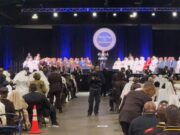


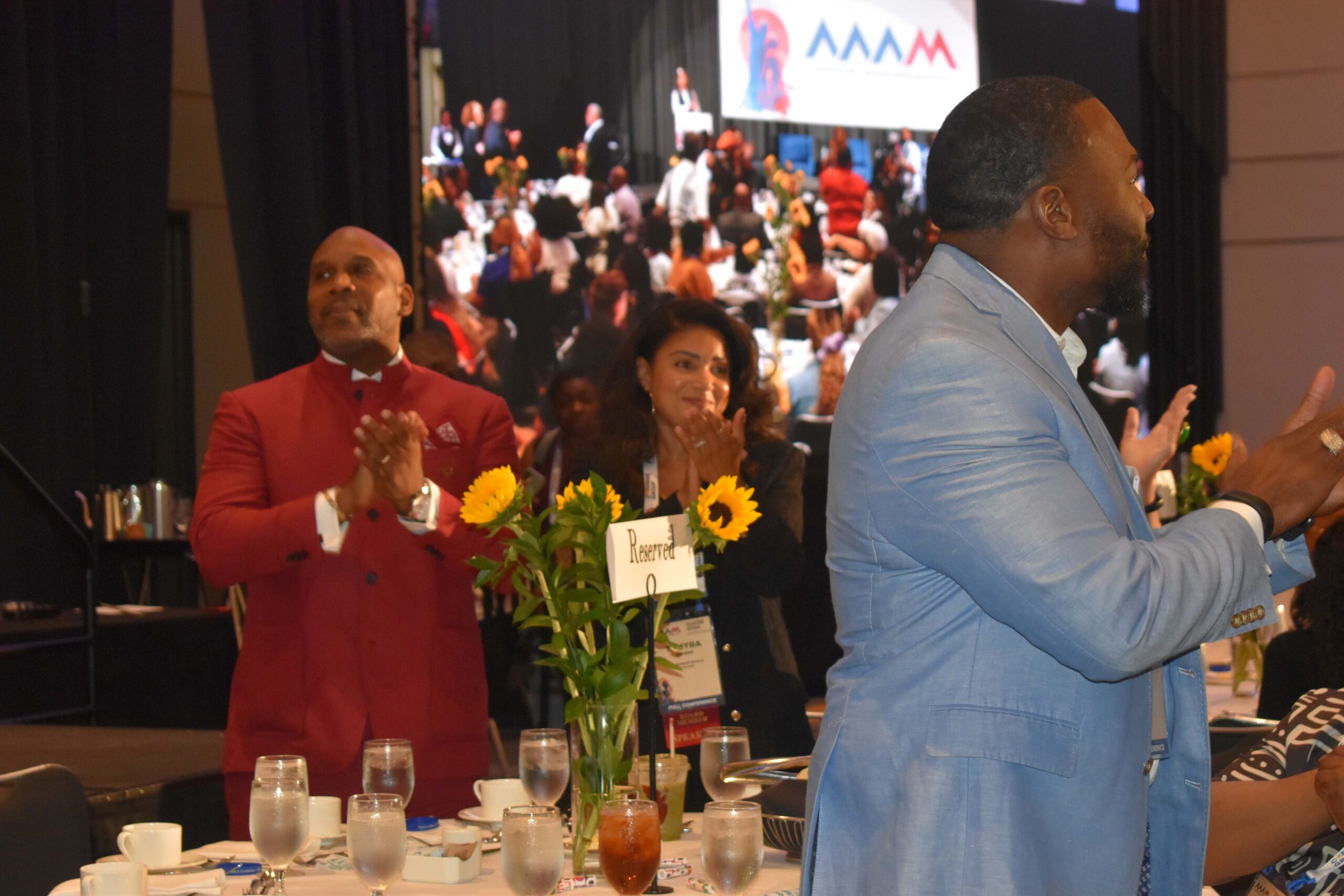

PHILADELPHIA—Black history will not be erased. The Association of African American Museums (AAAM) held its annual conference in Philadelphia, August 19–21, drawing curators, archivists, students, scholars, and elected officials.
The theme said it plainly: “This Land Holds Our Stories: Celebrating America 250 and 100 Years of Negro History Week, We’re Still Making America Whole.”
The gathering convened at a tense moment. Across the nation, efforts to restrict and rewrite Black history have grown louder. The people in these rooms answered with resolve. They shared strategies. They traded ideas. They reminded one another that survival has always been the work.
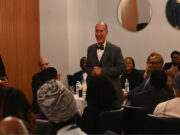
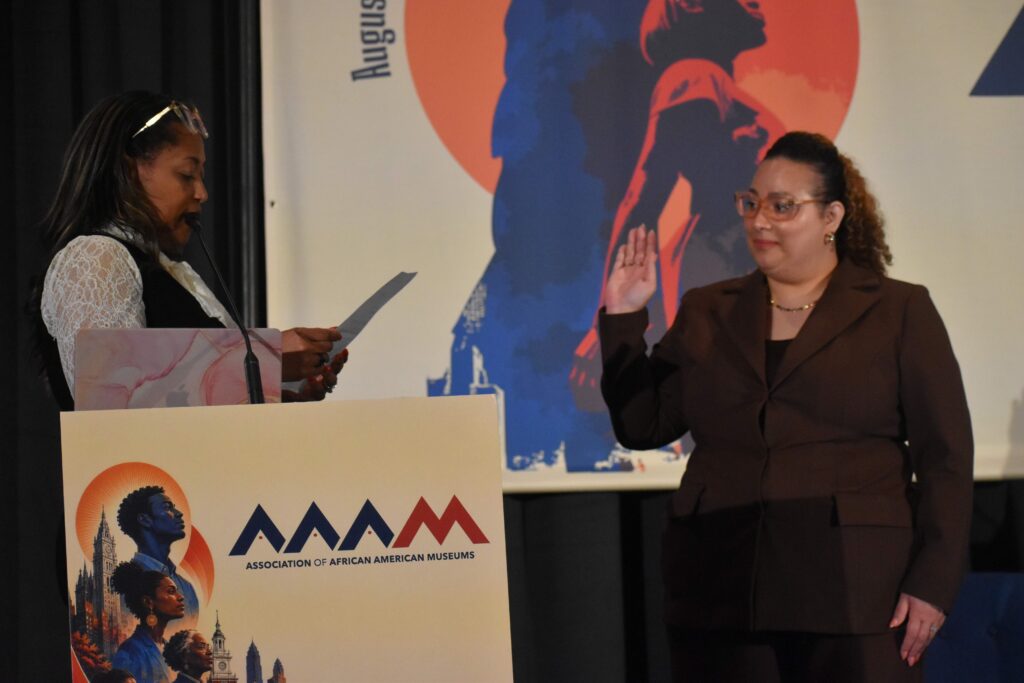
Board Chairman Tamar Smithers-Diakhi did not soften the year’s difficulties. During the closing plenary session she reported, “This has not been an easy year for any of us,” she told the room.
“We have navigated transitions, faced difficult decisions, and experienced moments that tested our leadership and our capacity. And we have done so at a time when there are deliberate efforts to rewrite, restrict, and in some cases erase our history.”
Then she offered a perspective. “But our history reminds us that we’ve been here before. We know how to endure. We know how to build. We know how to move forward together.”
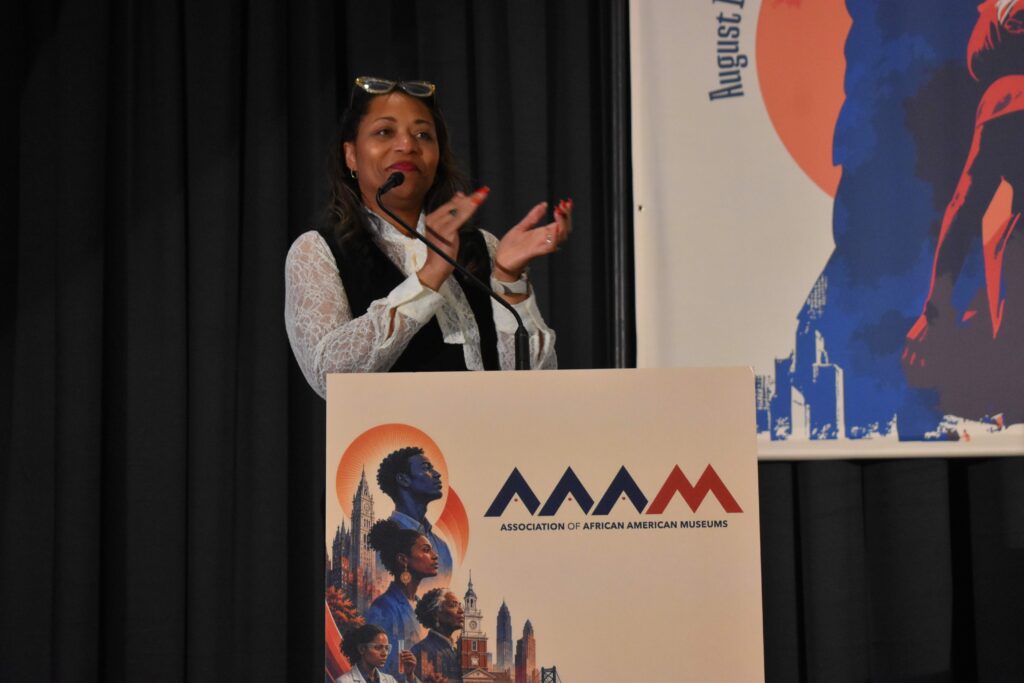
Ms. Smithers-Diakhi framed the mission in words that echoed through the entire conference. “Black history is not adjacent to the American story. It is essential to it. This land holds our stories, and our institutions ensure those stories endure.”
The numbers backed her confidence. AAAM has grown from just under 350 members in 2018 to roughly 1,350 today—nearly 290% growth. Of those, 423 are students and emerging museum professionals.
“The next generation is not simply on the way,” she said. “They are already here. And it is our responsibility to invest in them.”
She added, “Leadership begins with us. We cannot ask our members, funders, and partners to believe in this organization if we are not demonstrating that belief ourselves.”
She pointed toward AAAM’s coming 50th anniversary as both a milestone and a mandate. “It is an opportunity to honor those who built AAAM, while setting a bold vision for the next 50 years and beyond.”
The ‘United States of Amnesia’
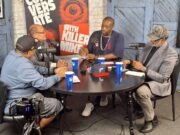
Scholar and cultural critic Dr. Michael Eric Dyson delivered one of the conference’s sharpest addresses during a panel on preserving Black history. “We are living in what Gore Vidal called the United States of Amnesia,” he said.
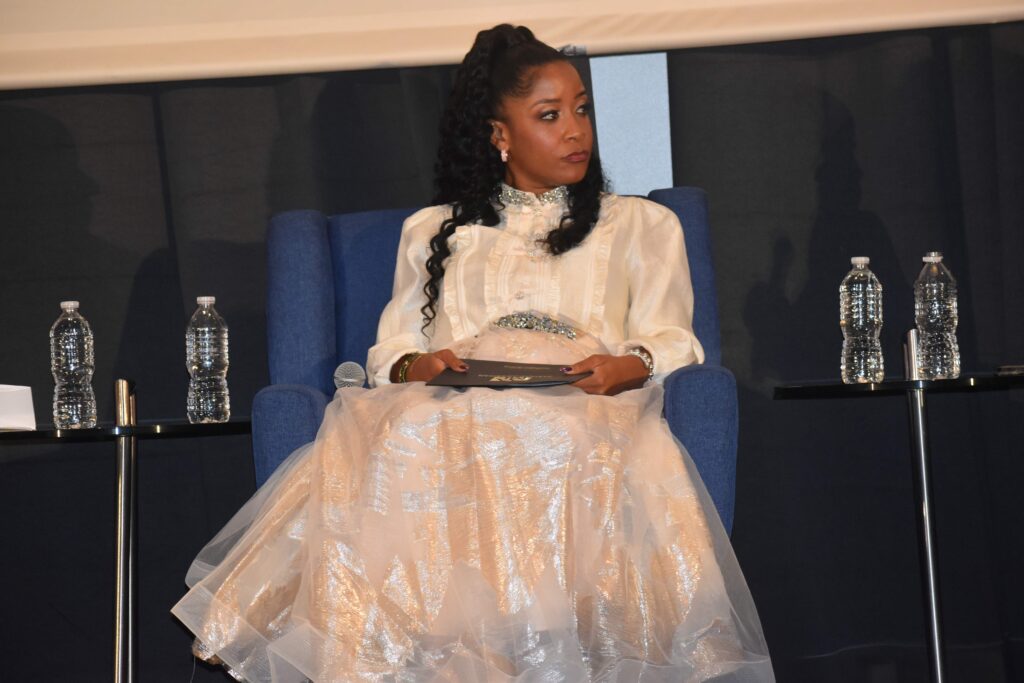
“The attempt by tyrannical, demagogic forces to dictate the terms of history is the clearest example of racialized authoritarian terror—an effort to rewrite our narrative and erase our story.”
For Dr. Dyson, museums are more than buildings. “They articulate the collective memory of a people who have been despised, marginalized, and yet have risen against every odd to become memory warriors.”
He found curation everywhere—even in Black homes. “Think about your grandmother’s front room, the one you weren’t allowed to sit in,” he said. “That was curation.”
He closed his remarks with a personal charge. “Curate your identity. Keep a journal. Record your story. Our uncles, our aunts, our grandparents—they may not have had degrees on the wall, but they had a degree of insight that universities cannot manufacture.”
Pennsylvania State Senator Vincent Hughes, who sat on the same panel, brought the fight down to a local level. He spoke about the President’s House in Philadelphia and the ongoing battle to protect it. He helped secure $3 million in state funding for the project.
“We’ve been here before,” he said. “Like the phoenix, we rise.”
His challenge to residents was direct. “Go into your basement. Go through those boxes. That history you’ve been stepping over for 15 years—it belongs to the world.”
Senator Hughes urged attendees to build “micro-museums across every one of our communities while we fight the larger battles.” His verdict: “It is doable. And it is necessary.”
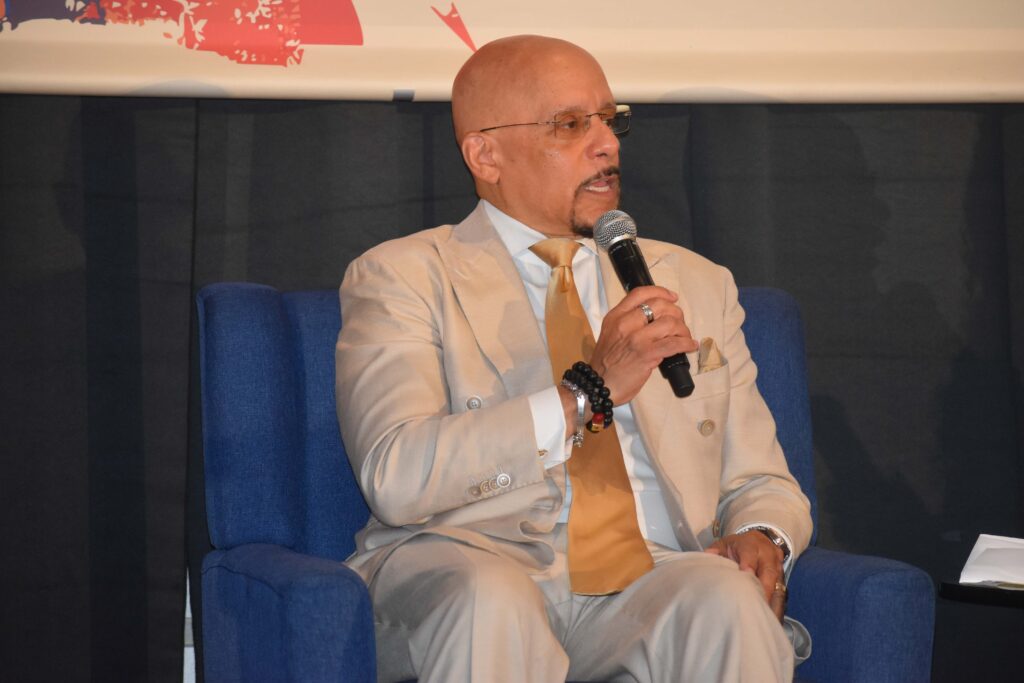
He also spoke about the campaign to save the John Coltrane House. “John Coltrane is John Coltrane,” he said. “He is Beethoven. He is Mozart. He is all of that, wrapped into one extraordinary creative force that still speaks to us today.”
And he pressed organizers to think bigger, pointing to the National Black Caucus of State Legislators’ upcoming Philadelphia conference. “An organized, multi-state effort changes the dynamic,” he said.
‘A sacred space’
For attendees, the conference was part strategy session, part homecoming. Lisa Ross, newly appointed President and CEO of the African American Museum in Dallas, called it sacred ground. “It allows us to be in a sacred space,” she said to The Final Call. “A space of healing, support, encouragement, and inspiration—to be with like-minded people who are the stewards of this work.”
Ms. Ross sees museums as central to education itself. “Museums and libraries are the future of education in this country. If we don’t do it, who will? We have to fight. And we have to fight for our children.”
On funding, she called for a return to community roots. “We have to go back to grassroots. Go back to what we know. Even if you have $5, that matters. We may not have come over here on the same ship, but we were in the same boat. That kind of thinking has to come back.”
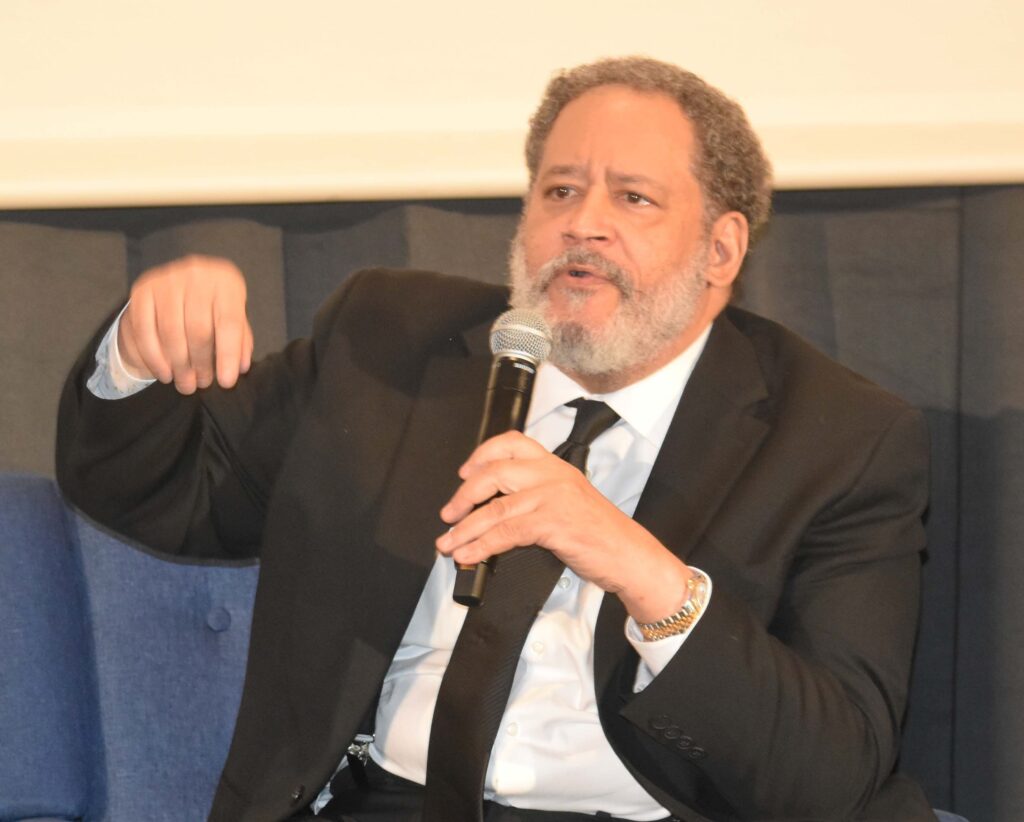
Reaching young people, she said, starts at home. “We can no longer depend on school systems to make that message clear. Our museum is the cultural center of Dallas. We have to provide programming that young people understand—so they know this is home.”
The conference looked forward as much as back. New tools drew serious attention.
Tellicia Mitchell, a digital archivist with Florida A&M University Black Archives in Tallahassee, was struck by the possibilities. “It’s really amazing to be around this many Black people in one space, doing amazing things,” she told The Final Call. One message stayed with her: “LaShaun Moore said, ‘Your Black is welcome.’ There are so many types of Blackness that can be expressed.”
Para Agboga, of the George Washington Carver Museum in Austin, found her most powerful moment at the Barnes Foundation reception, watching young people dream aloud about future exhibits. “I thought: this is what the founders (of AAAM) saw,” she said. “They saw young people continuing to tell these stories.”
Naming the threats
Asking attendees what endangers Black museums, and the answers came fast—and varied. For poet James B. Golden who is affiliated with an upcoming museum honoring the Reverend Jesse Jackson in South Carolina, the threat is plain. “White supremacy. We literally built America,” he said in part.
Ms. Agboga pointed to the responsibility of Black people to support Black museums. “Nobody’s coming to save us.”
For Alisha Rashid, a docent at the African American Museum in Philadelphia, the risk is silence. “The single biggest threat is not being able to tell those stories fully and completely,” she said. “You can have different opinions, but you can’t have different facts.”
Her account of the nation’s founding pulled no punches. “When they created this United States of America, we weren’t included, even though we were making solid contributions. This country was built successfully off the backs of people they enslaved.”
Everyone an archivist
A theme ran through nearly every conversation during the conference: preservation begins at home. Clarissa West-White, an archivist at Bethune-Cookman University, put it simply. “It’s really important for people to understand that they are their own best archivists. Keep the important documents together. Keep them safeguarded. Every family can do that.”
Build from there, she explained. “It doesn’t have to start with a massive building. It really just starts at home.”
Andrea Wright, of the Black History Museum and Cultural Center of Virginia, tied the work to legacy. “We ask ourselves: what kind of ancestor will we be?” she said. She called the movement “important, relevant, needed. Now more than ever.”
Reflecting on the centennial of Negro History Week, Ms. Wright had the vision from that idea stretching across a century. “A hundred years ago, there was someone with the vision, the forethought to say, ‘We need to do this.’ We are almost like a human time capsule. What can we do so that, a hundred years from now, they’ll be talking about us?”
The stakes, in plain terms
AAAM board member Jeff May, chief administrative officer of the San Antonio African American Community Archive and Museum, summed up the spirit at the conference to The Final Call. “This is a conference of people who still care about how our story is being written, spoken about, and presented,” he said. “It matters who’s telling the story. It matters that it’s the whole story.”
Many attendees, he noted, paid their own way. “A lot of people attending this conference came out of their own pockets because their professional development funds have dried up. The people here are taking it personal.”
His advice for the road ahead was practical. “The threats are real. The funding is fragile. The work is hard. But the resolve is harder. This land holds their stories. And these are the people who will keep them.”
