









FERGUSON,Missouri—Twelve years after Michael Brown Jr. was fatally shot by a Ferguson police officer, the pain of his death remains present for the people who loved him and for a community still wrestling with justice, loss and healing.
From August 7 through 9, the Michael Brown Jr. Chosen for Change Organization marked its 12th Legacy Weekend under the question, “What Does Justice Look Like to You?” The observance united clergy, activists, artists, young people and grieving families.
The Aug. 7 community panel, Aug. 8 Black Ball fundraiser and an Aug. 9 memorial gathering reflected one conviction—that Michael Jr.’s life must not be forgotten and the hurt left behind cannot be ignored.
Michael Brown Jr., an unarmed Black 18-year-old, was killed on August 9, 2014, by a White Ferguson police officer, just days after graduating from Normandy High School. His death brought national attention to Ferguson, sparking protests. A grand jury declined to indict the officer.
The family’s annual observance insists that remembrance must also make room for service, faith and the work of helping families endure trauma. At the opening community discussion, participants considered what justice looks like beyond a courtroom or a headline.
Michael Brown Sr. described the emotional weight of the anniversary of his son’s death, while emphasizing that the work continues. “This weekend is like it happened yesterday, as long as Mike is not here, we still have a lot of work to do,” he said.
That work includes building programs that help families living with violent loss, especially children whose pain may be overlooked after tragedy reshapes a household.
Legacy Weekend also showed how the organization has broadened its response to loss. Through Chosen Fathers, Mothers of an Angel and C.O.P.E., (Children Overcoming Painful Experiences), the organization seeks to help people confront grief before it hardens into isolation. The message was clear: healing requires more than sympathy after a crisis, it requires relationships, resources and a place where families can be heard.
The Aug. 8 Black Ball is the annual weekend’s major fundraiser, held at the Touhill Performing Arts Center on the University of Missouri St. Louis campus. This year, the event moved beyond the image of a traditional gala. Its centerpiece, “Rip the Runway for Justice: Fashion is the Statement,” placed fashion alongside advocacy, healing and community purpose.
The program also celebrated regional change makers and raised funds for Chosen for Change, an organization that has served more than 2,500 families affected by violence and systemic inequality. The organization has stood in solidarity with more than 600 families worldwide and donated funds toward the mental health and emotional wellbeing of grieving families.
“Rip the Runway for Justice is much bigger than a fashion show,” said Torrie Danielle Sanders, who directed the presentation. “It was created from a desire to use fashion, creativity and community as a platform for purpose.”
Through her work with Get in Motion, Ms. Sanders said she focuses on creating opportunities that promote wellness, empowerment, connection and positive change within the community.
She wanted to bring that same energy to an event honoring Michael Brown Jr.’s legacy, using the runway to bring designers, models, creatives and the community together around something bigger than themselves.
One portion of the program looked to the next generation. Jada Jamerson, the 12th Michael Brown Jr. Chosen for Change Scholarship recipient, was recognized after writing about what justice means.
The moment, alongside the awards presented that night, reminded attendees that the legacy being honored is not just about looking back; but is also about encouraging a generation that must live with the consequences of unresolved pain and still find a way to pursue dignity, opportunity and change.
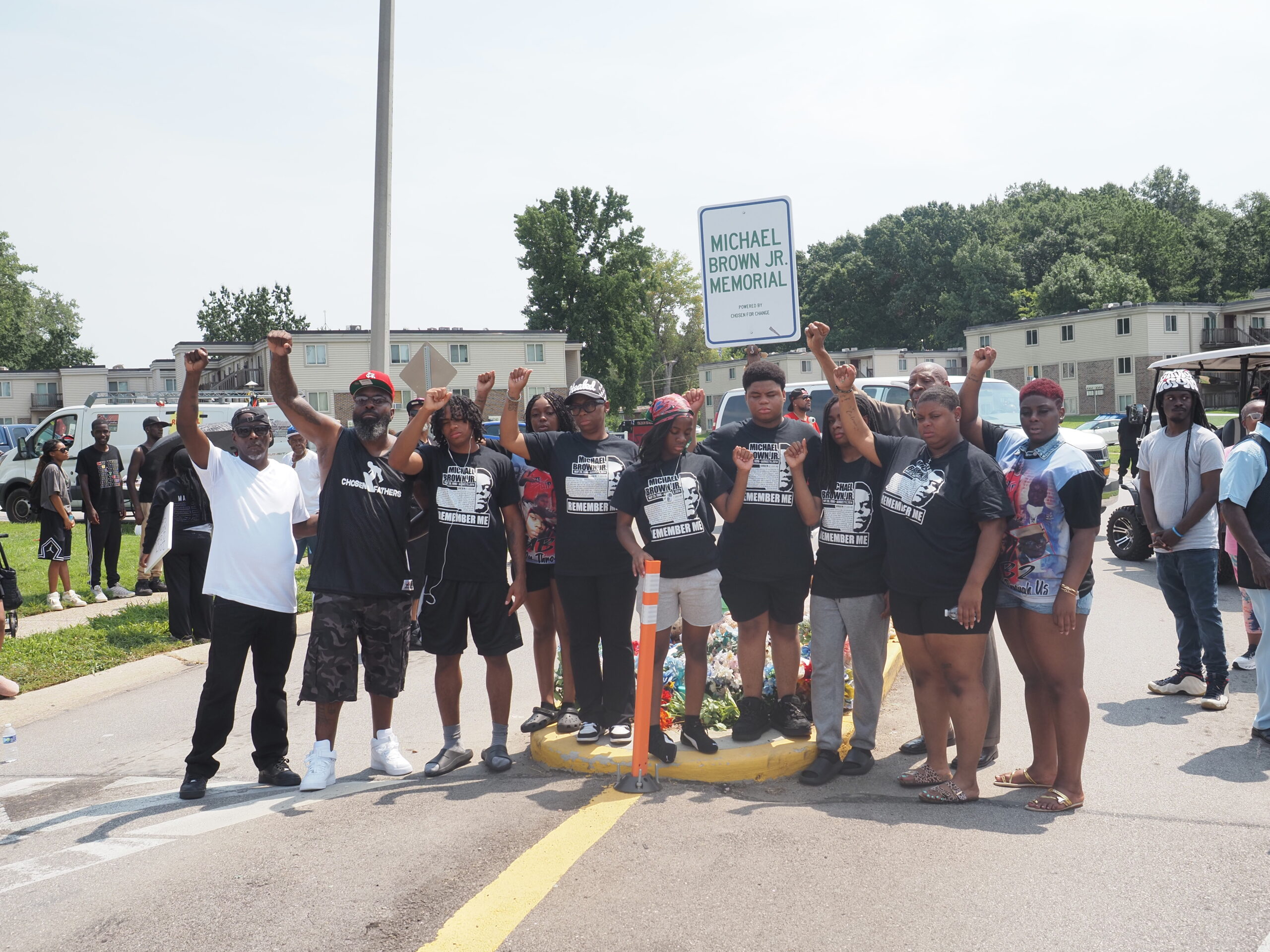
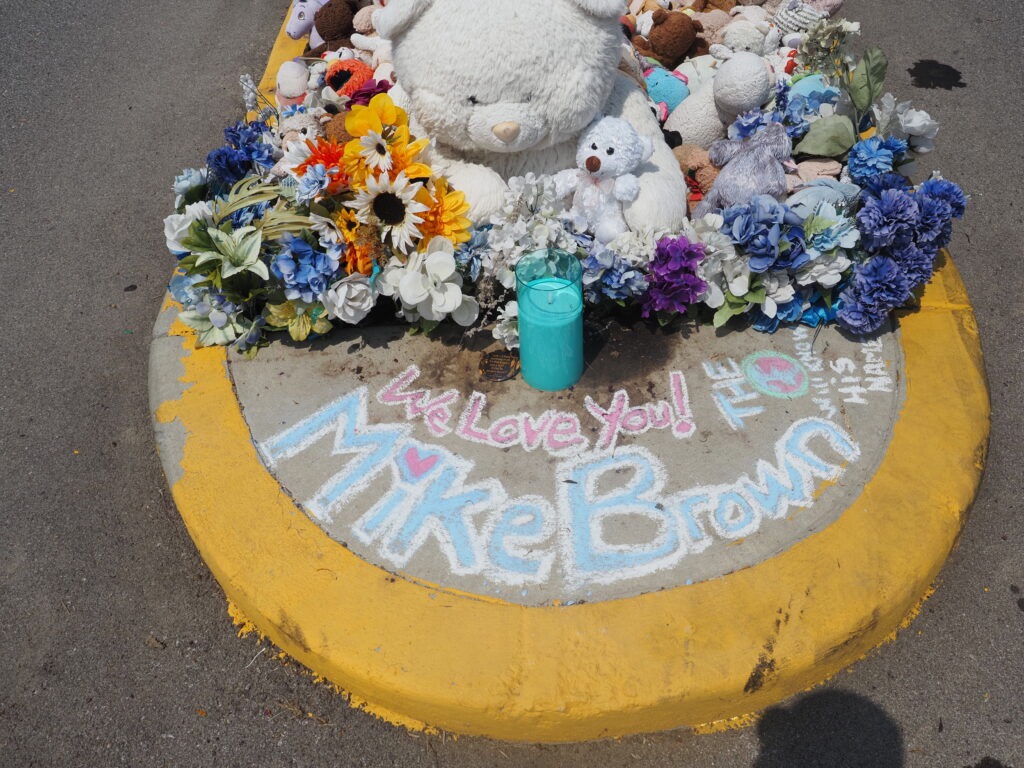
On Aug. 9, family members, friends and supporters returned to Canfield Drive, the place many refer to as Ground Zero, the location where the police officer fatally shot Michael Jr. At 11:55 a.m., the crowd gathered for the annual moment of silence at the memorial site.
Longtime activist Anthony Shahid led a four-minute and 30 second countdown, a period (though shortened) intended to force reflection on the time Michael Brown Jr. lay in the street after he was shot. The stillness stood in sharp contrast to the chants, cameras and upheaval that followed his death in 2014, but it carried a message that the community’s memory has not faded.
“I want you to imagine driving to Chicago for four and a half hours, think about that and imagine Mike Jr. laying out here in this heat for that long,” said Mr. Shahid.
For the Brown family, legacy work has taken different forms while remaining rooted in the same loss. Courtney McSpadden, brother of Michael Jr.’s mother, Lezley McSpadden Head, spoke about the responsibility to hold family together and keep Michael Brown Jr.’s name alive.
“We cannot be divided,” he said. “Keep doing good by empowering our kids, our families and community.” His remarks echoed the weekend’s focus on collective care, not simply individual mourning, but a shared, enduring responsibility.
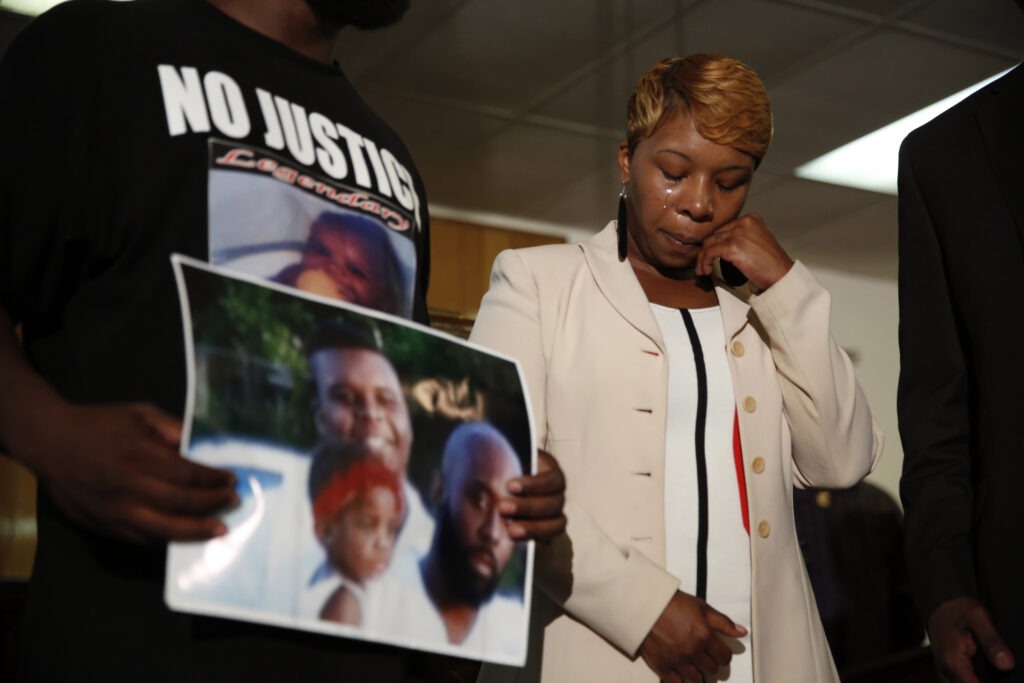
Mr. Brown Sr. also spoke plainly about the continuing anguish faced by bereaved families. “It’s still painful to watch other families who are struggling with the loss of loved ones,” he said. “It’s heartbreaking and sad that we are the only ones that see it’s a problem.”
Cal Brown, Michael Brown Jr.’s stepmother, said the late-night calls from people losing their children have not stopped. “The pain is still here,” she said, adding that people are still trying to make a difference.
That is the challenge carried by Chosen for Change, to honor Michael Brown Jr. while offering practical support to people whose lives have been interrupted by violence and trauma.
Twelve years later, Legacy Weekend did not offer easy answers to Ferguson’s enduring questions. It offered something more difficult and more necessary: a public commitment to remember, to stand with grieving families and to continue working toward a community where justice is felt in the lives of its people.
