



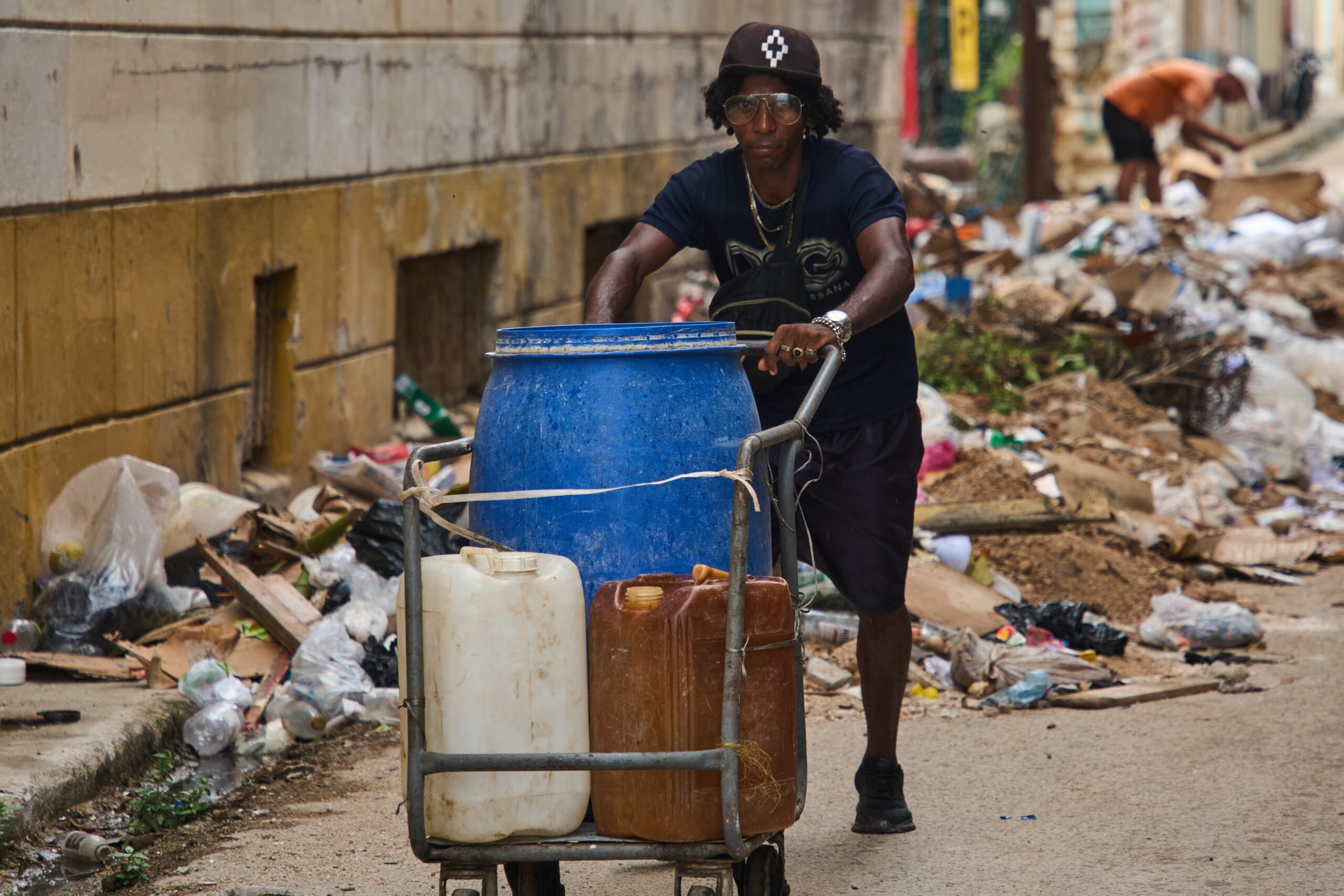

WASHINGTON, D.C.—A delegation of Black civil rights, faith, and professional leaders returned from Cuba with an urgent message: the U.S. blockade is causing profound suffering, and new steps must be taken to break the political stranglehold that has kept the island nation isolated for nearly seven decades.
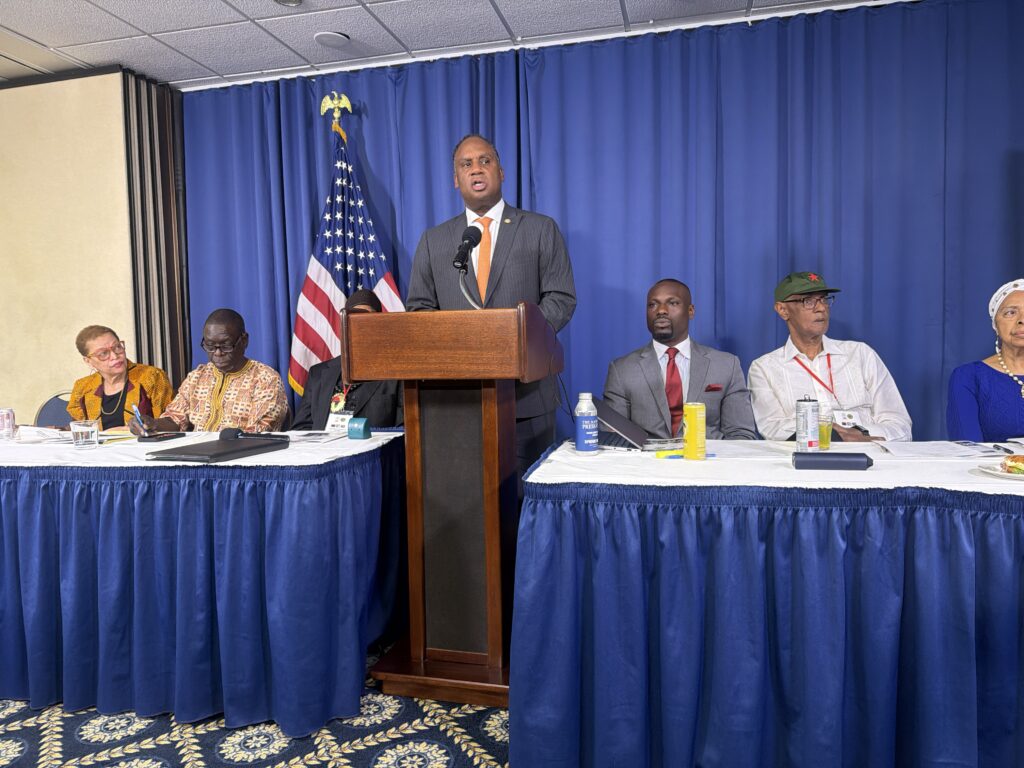
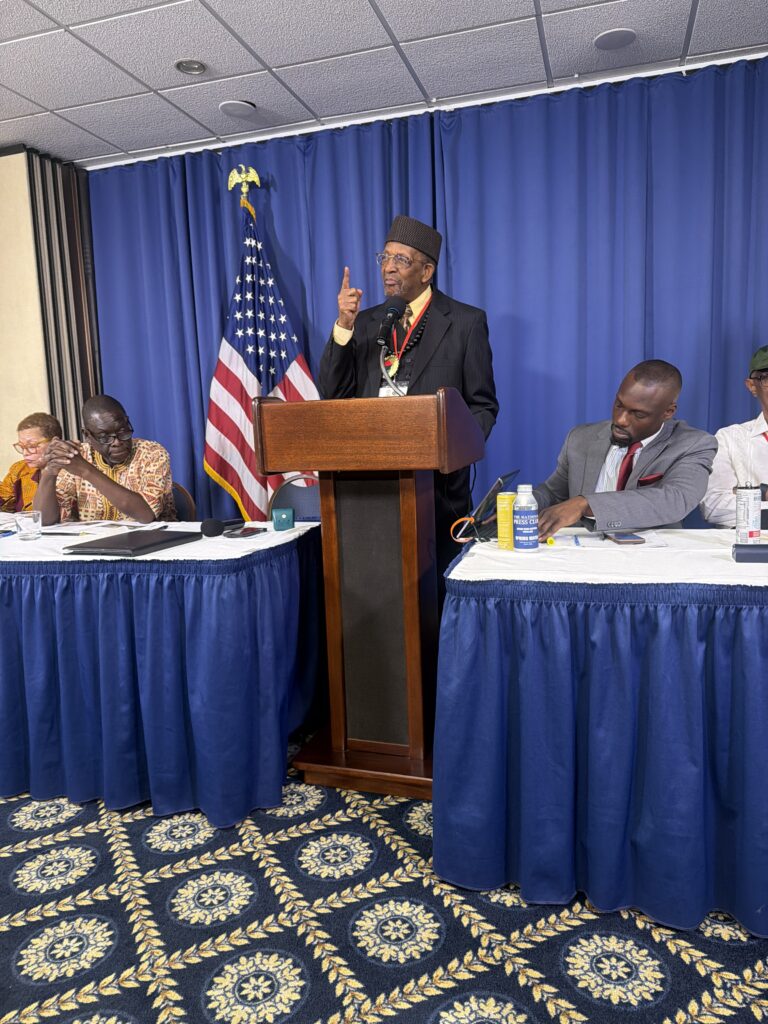
At a June 9 news conference in Washington, D.C., the Institute of the Black World 21st Century (IBW) and the Pan African Unity Dialogue (PAUD) unveiled a sweeping action agenda contained in a communique following their May 2026 emergency delegation to Cuba. The trip was for the delegation to witness firsthand the impact of what they called “economic asphyxiation” by the U.S. government.
“Right off of our shores, we are strangling and denying a sovereign nation the ability to have access to oil, and we know that equals death,” said Congressman Jonathan Jackson (D-Ill.), who traveled to Cuba in April and addressed the news conference. “Beyond these numbers, there are real people.”
Rep. Jackson, whose father, the late Rev. Jesse Jackson, was a longtime friend of Cuba, recalled visiting a maternity ward in Havana where ventilators had failed due to power surges caused by the fuel embargo. He drew sharp contrasts between U.S. policy toward Cuba and its relationships with other nations that are considered “communist.”
“The president is best friends with the Communist Party in Russia. The United States’ biggest trading partner is communist China. And yet we have this ongoing fight with the sovereign people of Cuba,” Rep. Jackson said. “It’s time the United States recognizes the island of Cuba. People have their own right to self-determination.”
What the delegation witnessed
The 24-member delegation visited Cuba from May 26-30 and included economists, psychologists, social workers, publishers, clergy, and community organizers.
They met with Cuba’s President Miguel Diaz-Canel, Deputy Foreign Minister Carlos Fernández de Cossio Domínguez, and Esteban Lazo Hernandez, president of the National Assembly of People’s Power, Cuba’s equivalent of the Speaker of the House.
Dr. Ron Daniels, president of IBW and convener of the delegation, described an hour-long meeting with President Diaz-Canel that far exceeded expectations.
“He said, ‘We’re being accused of being incompetent. I dispute that. But what if we were incompetent? Being incompetent is not a rationale for invasion or for collective punishment of people,’” Dr. Daniels recounted.
“There are no thousands of people being slaughtered on the streets of Havana anywhere. And yet America can have relationships with everybody, but not Cuba,” said Dr. Daniels.
Delegates visited the Hermanos Ameijeiras Clinical Surgical Hospital, where doctors described gut-wrenching decisions about which patients would receive dialysis or life-saving surgery due to shortages of medicine, equipment, and electricity caused by the blockade.
“One of the doctors spoke up. He was being strong, but his voice cracked and he began to cry,” Dr. Daniels said. “He was not crying for himself. He was crying because he could not do what he loved to do most, serve his patients.”
Dr. Julianne Malveaux, economist and president emerita of Bennett College, said the suffering was visible in small but devastating details. She met a woman who had money to buy a chicken but was afraid to purchase it because she didn’t know how long her electricity would last to cook or preserve it.
“Her survival method is that if she buys a chicken, she shares it with her neighbors, hoping they will share with her,” Dr. Malveaux said. “The people are lifting each other. But I don’t know how many times I almost cried.”
She also described meeting a young boy who attended school only on Tuesdays. “The teachers are not in the classrooms every day. They can’t get there. If children don’t go to school every day, you are basically setting them up for generational failure.”
A legacy of solidarity
The communique issued by the delegation begins with a salute to actor-activist Danny Glover and cultural strategist James Early, whom Harry Belafonte called “the Paul Robeson of our era.”
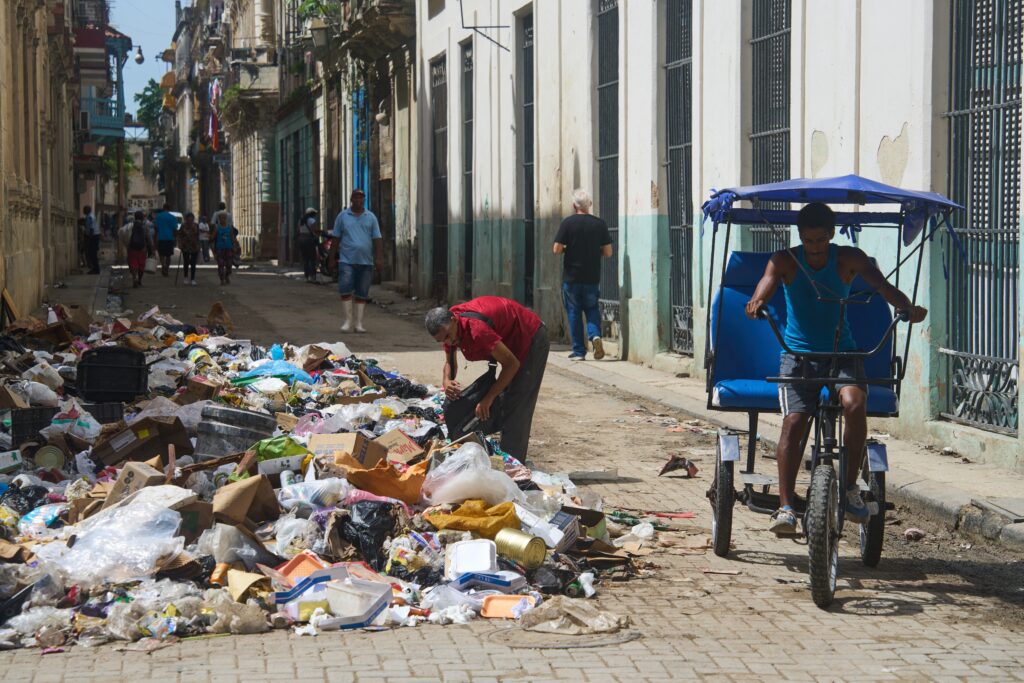
Dr. Daniels noted that Early, who has visited Cuba for nearly half a century, observed homeless people and beggars on the streets for the first time, including children and pregnant mothers pleading with tourists for a dollar to buy food.
One striking encounter was with an Afro-Cuban “Trump supporter” who recalled that life was better after President Obama normalized relations with Cuba. “Tourists came in large numbers. The injection of dollars created opportunities,” the man told delegates. With the repeal of the Obama accords and the reimposition of the fuel embargo, he said life had become “virtually unbearable.”
“He was not so much a Trump supporter as a desperate human being who wanted Trump to invade, oust the government and end the embargo,” Dr. Daniels said. “He was hungry. He was hurting.”
Next steps: Humanitarian aid and political action
The delegation announced a two-track action agenda.
For humanitarian assistance, IBW will channel aid through Pastors for Peace, in partnership with the Martin Luther King Center in Cuba, honoring the legacy of Rev. Lucius Walker.
The organization will also:
- Encourage adoption of neighborhood community centers like the Karibuni Community Center
- Promote cultural-historical tourism focused on Afro-Cuban contributions
- Organize an African American women’s delegation for dialogue with Afro-Cuban women, led by Dr. Malveaux
- Facilitate board meetings of civil rights and professional organizations in Cuba
On political education and engagement, the agenda includes:
- A major forum on Cuba at the Congressional Black Caucus Foundation’s Legislative Conference, the first of its kind, according to Dr. Daniels
- Delegations of Black mayors, state legislators, and legal experts to exchange with Cuban counterparts
- Bringing Cuban officials, including the head of Cuba’s Commission on Racism, to the U.S. for dialogue
- A sustained civic engagement strategy to “break the hold of the Cuban community in Florida and its allies that have held U.S. policy hostage for 77 years.”
Dr. Daniels was blunt about the political calculus and said that ending the blockade is part of the Black agenda.
Dr. E. Faye Williams of the World Congress of Mayors, who has traveled to conflict zones including Iraq, Libya, and Haiti, said she had never been treated with such openness as in Cuba.
“The people of Cuba did not lie to us. They did not keep us from seeing anything we wanted to see,” she said. “We met two young women from California and New York studying at the Latin American School of Medicine. Some of our people are alive today because of the work they have done and are doing there.”
Rep. Jackson closed his comments with a call to action rooted in ancestral legacy. “On behalf of my family, I say thank you for having worked with my father over all these many years. He is now with the ancestors, sitting high, looking low, proud to know that you are continuing the work. The mantle was passed, and you’re carrying it forward.”
Dr. Daniels echoed Rev. Jesse Jackson’s famous refrain: “Hopeless people never wage revolution or reform struggle. Even if people are suffering, if they can see a promise for tomorrow, we have an obligation to keep hope alive. Every time we go, when people see us and things are happening, somebody is fighting for us. Somebody is trying to change our conditions.”
The full communique and action agenda are available at IBW21.ORG.
