









“We want equal education—but separate schools up to 16 for boys and 18 for girls on the condition that the girls be sent to women’s colleges and universities. We want all Black children educated, taught and trained by their own teachers.
Under such schooling system we believe we will make a better nation of people. The United States government should provide, free, all necessary text books and equipment, schools and college buildings. The Muslim teachers shall be left free to teach and train their people in the way of righteousness, decency and self-respect.”
The above are the words of the Most Honorable Elijah Muhammad, Eternal Leader of the Nation of Islam. The words are from Point No. 9 of “What The Muslims Want” in The Muslim Program, published on the inside back page of The Final Call.
The Most Honorable Elijah Muhammad and his wife, Mother Clara Muhammad, were early pioneers of independent education. He established Muhammad University of Islam (M.U.I.) in Detroit in the early 1930s and instructed his followers to take their children out of the public school system.
His National Representative, the Honorable Minister Louis Farrakhan, has continued to warn Black people about how the public school system harms Black children.
“Elijah Muhammad taught us if a man won’t treat you right, what would make you think that man would teach you right?” the Honorable Minister Louis Farrakhan said in his Holy Day of Atonement 2018 address.
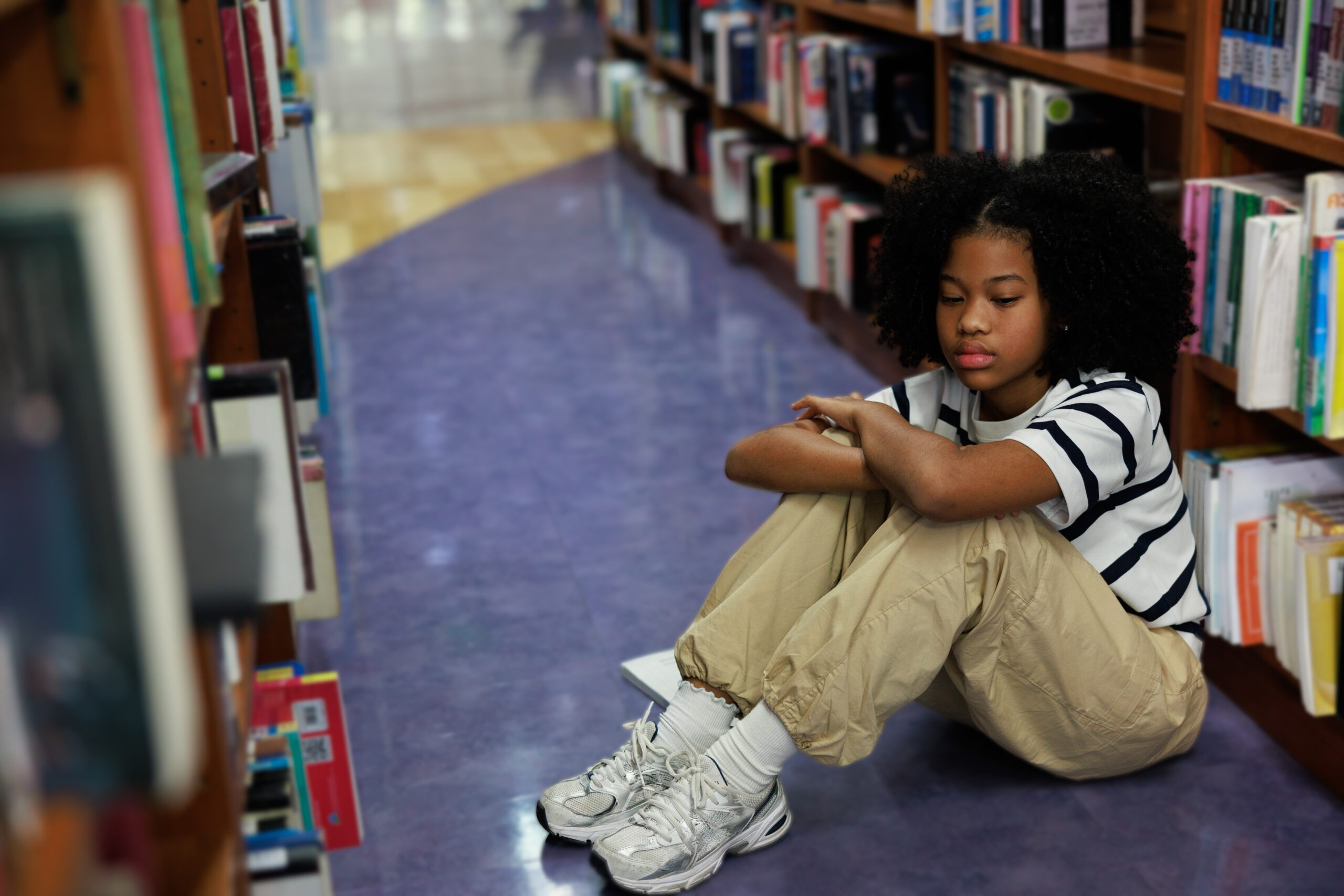
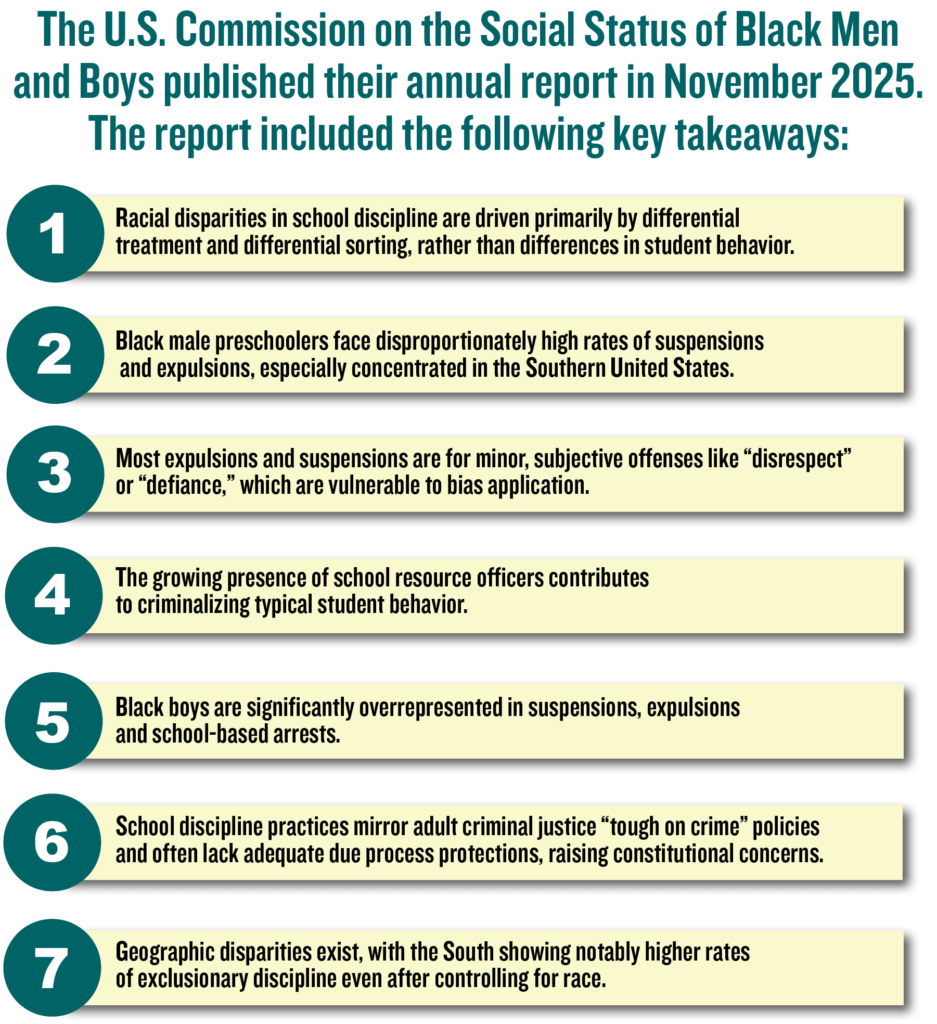
Not only are Black children being taught incorrectly, but too often, through school discipline policies, they are disproportionately pushed out of the classroom itself and into the jailhouse, in what is known as the school-to-prison pipeline.
Recent studies and reports from 2025 and early 2026 reinforce decades of earlier research on the evidence of bias in school discipline, early childhood disparities and the link between school discipline and incarceration. And like years prior, Black children are disproportionately impacted.
In early 2025, the U.S. Department of Education’s Office for Civil Rights released data for the 2021-2022 school year. Black students accounted for 15% of total K-12 student enrollment but represented 36% of students confined in justice facilities.
19% of students secluded, 26% of students physically restrained, 40% of students mechanically restrained, 28% of students who were referred to law enforcement and 33% of students subjected to school-related arrests.
A February 2026 study published in the journal Science Advances found that as more Black people move to suburban and majority-White neighborhoods, racial gaps in school discipline often widen, suggesting that, along with school policies, racial dynamics also play a role in Black students receiving more discipline and harsher discipline in schools.
“The data and statistics are getting worse, and you don’t even have to go by data and statistics. Just go to a school, talk to the teachers, talk to the administrators, and you can see that it’s not that the school systems are falling. They have already fallen,” M.U.I. Student Interim Director Talib ul Hikmah Karriem said to The Final Call.
He traced parallel’s of school discipline disparities that impact Black boys back to Pharaoh’s plan in the book of Exodus in the Bible: “Come on, let us deal wisely with them, lest they multiply and it come to pass, when there befalleth any war, that they join also unto our enemies and fight against us … .
And the king of Egypt spoke to the Hebrew midwives … ‘if it be a son then ye shall kill him; but if it be a daughter then she shall live.’ …
And Pharaoh charged all his people, saying, ‘Every son who is born ye shall cast into the river, and every daughter ye shall save alive.’” Today, Black boys are frequently overly punished in schools in terms of suspensions and expulsions.
Janel George, associate professor of law at Georgetown University in Washington, D.C., explained how school discipline disparities impact Black children.
She specializes in education law and has conducted extensive research on school resource equity, segregation and discriminatory school discipline policies. Such policies impact the entire life trajectory of a student, she said to The Final Call.
“They may have decreased likelihood of graduating from high school,” she said. “Even if a suspension is an in-school suspension, the child is still being removed from the general classroom, so that still has an impact on them.
They’re still losing out on that instructional time. Their stigmatization when they return to the classroom. It’s harder to reengage, so they often deal with lower grades.”
She shared one example of a student who missed days of her advanced placement course and test preparation. Others have been more prone to early contact with the criminal legal system.
She noted that in more recent cases, the records of minors are being shared with immigration authorities or other agencies. In addition, students who are perceived to be threats are often under surveillance.
She defined “exclusionary discipline” as anything that takes a child out of the general classroom, whether it’s an in-school suspension, long-term suspension, expulsion or involuntary transfer to another school.
Origin of the pipeline
School discipline disparities have existed for decades. A March 2025 study published in the Sociology of Education journal explicitly names “anti-Blackness in school discipline.”
Ms. George marked these disparities as emerging during the height of school integration, often exercised in response to student protests against mistreatment.
“The research shows that there is an inherent bias, in particular to young Black boys, as it relates to what is considered behavior issues or problems in school. There’s been a concerted effort to … label them as behavioral disorders.
There’s been an effort to medicate young Black boys,” Mr. Karriem said. “At the root of all of this is the idea and plan found in the scriptures as it relates to the destruction of boys by Pharaoh.”
He added that, in the modern sense, that plan looks like the 13th Amendment that still allows for slavery and involuntary servitude as punishment for conviction of a crime.
“Every law that was produced after the Emancipation Proclamation, they tried to find ways through the legal system to get, in particular, Black men and Black boys back into prison. So now here we are using the education system,” he said.
“They’re seeking ways to destroy the capacity of young people to be enlightened and to grow and develop as a reflection of God and as a productive human being.”
Sharif El-Mekki, founder and CEO of the Center for Black Educator Development, highlighted the need for safe learning spaces for Black children.
“When we talk about safety, we’re talking about cultural, intellectual, spiritual, emotional safety,” he said to The Final Call. “We can’t think for one second that being Black in America and being Black in American schools are vastly different. … It parallels the overall system.”
Role of the Black educator
Research shows that disciplinary measures against Black children decrease when they are educated by their own people. Black educators find this to be true.
“There’s something to shared experiences. Having a teacher that has a shared ancestral background, shared context of life experiences. … Understanding why we behave the way we behave,” Mr. Karriem said. “And it doesn’t mean that we just accept behavior that is destructive to the class.
No, but there are ways that you can handle it, speak to it, and again, that understanding allows for a teacher to work with a student much longer than one who is imposing their own personal values that a student or child in a particular community may have never been exposed to.”
Mr. El-Mekki agreed that Black children thrive more under Black educators and are less likely to be suspended, expelled or referred for discipline.
“They’re not even being referred for discipline because there’s a better understanding of who the children are, seeing ourselves in them, realizing a Black framework for teaching,” he said.
He operates with the mindset of, “I’m training my replacement.”
“That means you can be that warm demander, or that understanding of culture, that supportive system that’s saying, ‘I see myself in you,’” he said.
“If I’m developing a student who I believe is my replacement in society, and I want them to be even better, stronger, faster, smarter than I have been on my journey, then that investment looks very different than if I’m just here to teach content to a bunch of kids that I also have low expectations for.”
Black teachers and educators have higher expectations for Black children and higher morale in their work, which speaks to a stronger sense of purpose, Mr. El-Mekki added.
“As a Black teacher, I knew some of the traps and tricks that I faced, and I was able to share that. I was able to share lived experiences of being Black in America, being Black in American schools, being able to share content that was Black authors, Black history, all these things that are constantly under duress when people don’t want to teach truth,” he said.
Transforming school discipline
Mr. El-Mekki was raised in a Black school that enacted a shared value system of collective work, responsibility and accountability over traditional school discipline.
“I should have the freedom from disruptions. I should have the freedom from poor teaching. I should have the freedom from being distracted in a classroom.
And so, they raised us to view the classroom as a sacred space and having high expectations about how we performed, how we interacted, how we engaged,” he said.
“It was about building a community and being responsible to the community and the community being responsible to us. I think that is the balance that we need to strike as we lead classrooms, schools and districts.”
Mr. Karriem underscored the importance of including Allah (God) as the Headmaster of the school. “You can’t hope for a better situation, righteousness, a level of decency, a level of respect between student and teacher and teacher and student;
You’re not getting that without God. When we remove God from the scene, then what do you think will come in the place of that vacuum?
Just the opposite, and that is exactly what we see playing out,” he said. “We have to set up our own independent schools under new righteous teachers and conduct that will respect the will and way of Allah (God).”
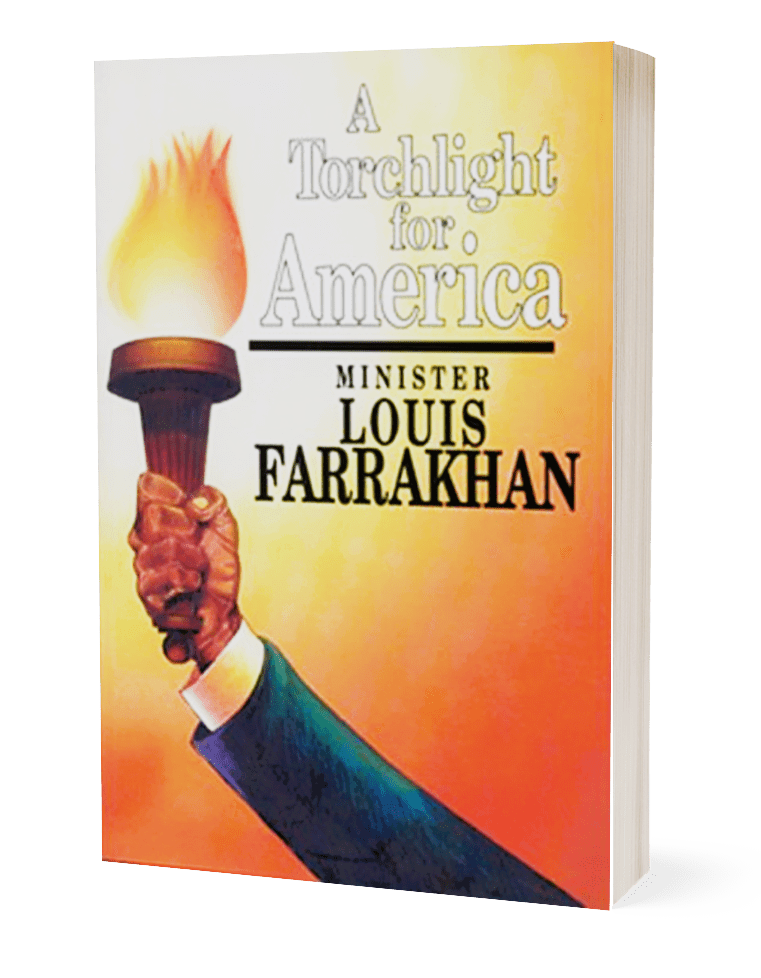
The Honorable Minister Louis Farrakhan explained that true and proper education starts with the knowledge of Allah (God). In his 1993, book, “A Torchlight for America,” in chapter 4, “Fixing the Public School System,”
Minister Farrakhan writes in part, “Recognition of God is the proper beginning point for understanding every discipline. If we cannot honor God, the Supreme Teacher, then how can the children honor their teachers?
We have this thing all backwards. You don’t pledge your allegiance to a flag, which is merely the symbol of a nation. You pledge allegiance to God, and you work for your flag and country,” Minister Farrakhan said.
“A while ago I coined the phrase, ‘he who gives the diameter of your knowledge prescribes the circumference of your activity.’ If you gain a limited knowledge, then you restrict the possibilities of what you can and will achieve.
The capacity of man’s brain is infinite. Therefore, the greater one’s knowledge grows, the greater becomes one’s sphere of activity until it encompasses and reflects mastery of self and mastery of the universe,” he continued.
“The knowledge of God is infinite. I would argue that leaving God out of our schools limits our education and confines the scope of what we are equipped to do and achieve,” Minister Farrakhan added.
