





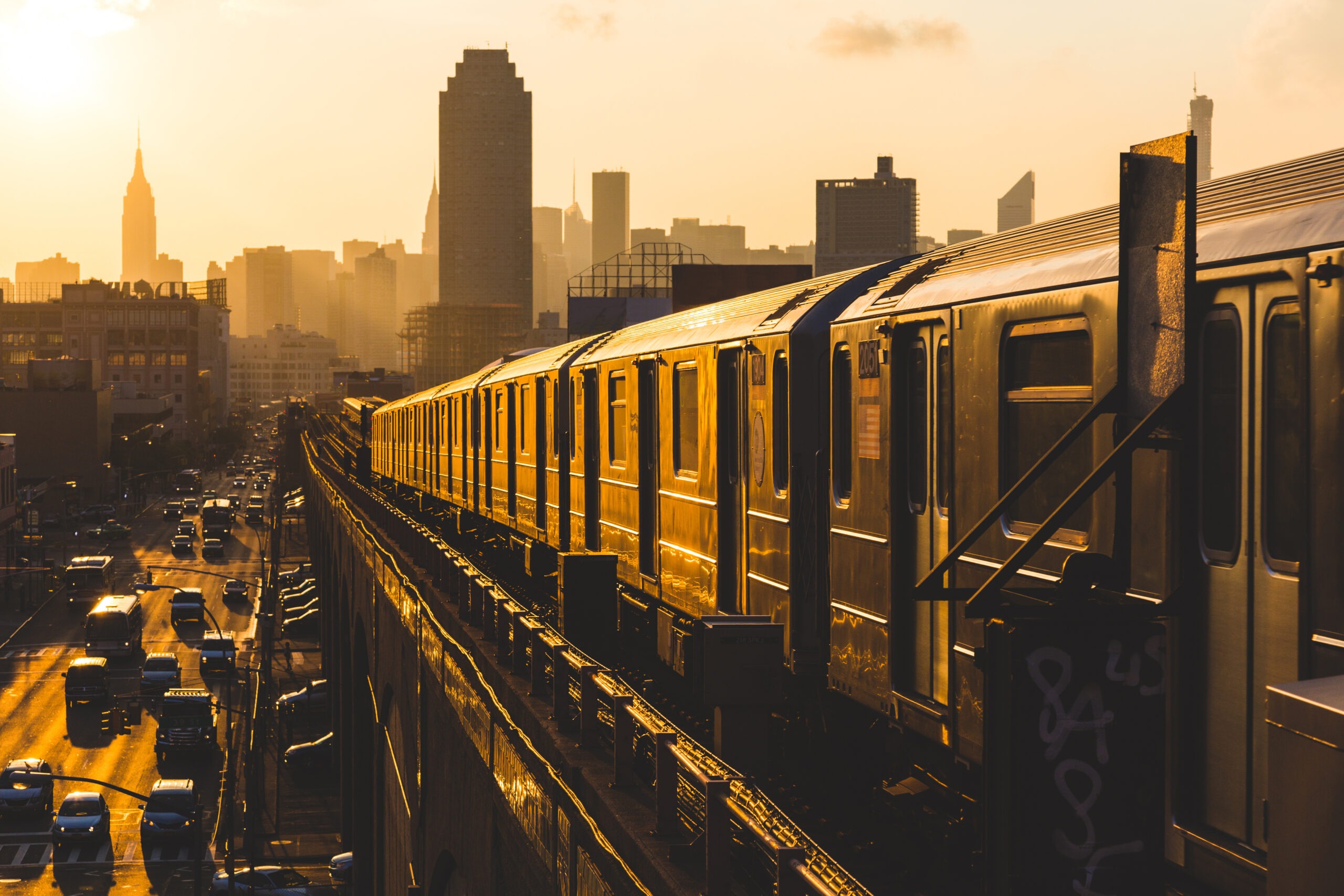

From Chicago to Los Angeles, Houston to New York City, some of the country’s largest and most populous cities are facing financial stress.
According to analysis by The Pew Charitable Trusts, published earlier this year, at least 20 of the country’s 25 largest cities must close budget gaps, as cities experience budget challenges related to rising costs, revenue sources that are struggling, reduced federal support and increased fiscal and economic uncertainty.
When cities are plagued by financial stress, essential services such as transit and infrastructure can be affected, further marginalizing already marginalized communities. Transit systems in various cities are experiencing funding gaps, with cities adding bus and rail systems to their budget cuts.
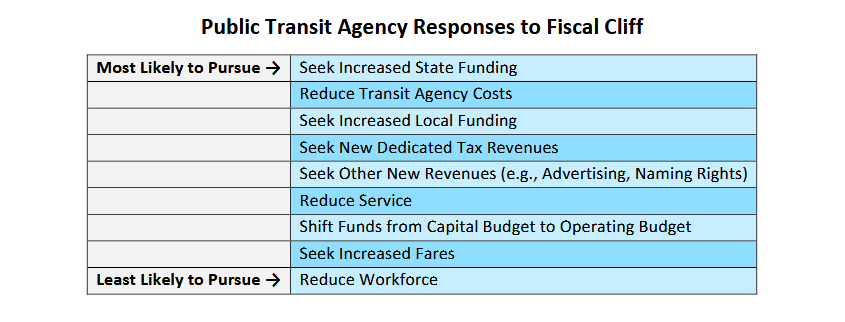
The American Public Transportation Association (APTA), a nonprofit organization comprising more than 1,500 member organizations, surveyed more than 200 of its public transit agency members in 2023 on budget shortfalls. More than half said they were facing a fiscal cliff, or the threat of economic decline, in the next five years.
In August of this year, the organization sent a letter to the U.S. Department of Transportation urging the government to invest in public transportation. It called for $138 billion for public transit and $130 billion for passenger rail over five years, which it says would help tackle the more than $140 billion backlog in repairs needed.
Public transportation includes buses, light rail, subways, commuter trains, streetcars and trolleys, cable cars, van pool services, ferries and water taxis, paratransit services for senior citizens and people with disabilities and monorails and tramways, according to the APTA.
The Honorable Minister Louis Farrakhan, National Representative of the Most Honorable Elijah Muhammad, addressed some of America’s challenges, including budget deficits, in his 1993 book, “A Torchlight for America,” in the chapter, “Rebuilding America’s Economy.”
“Present and future generations of the American people are held in servitude to financial instruments as a result of the enormous federal debt and the annual budget deficits,” Minister Farrakhan wrote on page 67.
Nation of Islam Student Southwest Regional Minister Dr. Abdul Haleem Muhammad is an urban planner based in Houston. He also referred to Minister Farrakhan’s book on America’s budget deficit and its impact on the poor and working class even today.
“Clearly, the government has to raise taxes dramatically to reduce the debt and budget deficit. But taxes must be distributed fairly. The government can’t let the corporations and the rich use their lobbyists to continue to lay the burden of taxes on the poor, the middle and working classes,” Minister Farrakhan wrote on page 69, Student Min. Haleem Muhammad pointed out.
“Neither can they balance the budget on the backs of the poor Black people and other people of color, particularly as it relates to public transportation and mobility,” Student Min. Haleem Muhammad added.
He referenced a 2017 report by the APTA titled, “Who Rides Public Transportation.” Non-White communities made up 60% of riders, and 24% of riders were Black, according to the report. While 13% of U.S. households had incomes below $15,000, 21% of transit-using households had incomes below $15,000. Most riders used transit to get to and from work or to shop.
“The overall majority of people who ride public transit are non-White, with Black people comprising the largest single group. So, when you cut funding for public transportation, when you refuse to invest in public transportation infrastructure, particularly as it relates to the inner cities, then what you have is a situation whereby these persons find it difficult to get back and forth to work,” Student Min. Haleem Muhammad said. “Public transportation is a necessity because most of the poor don’t have vehicles or have cars.”
Ranked by the number of unlinked passenger trips, the Southeastern Pennsylvania Transportation Authority (SEPTA), which serves the greater Philadelphia area, is the 7th largest transit agency in the country, according to APTA’s 2025 Public Transportation Fact Book. Yet, in August, the agency faced a deficit of more than $200 million. In September, it reduced services by 20%, a move a judge reversed, saying it was discriminatory toward poor and minority communities, according to The Associated Press.
Pittsburgh Regional Transit is the 26th largest transit agency and faced similar issues. It threatened to eliminate more than 40 bus routes and reduce more than 50. Instead, in September, it cut its infrastructure budget by two-thirds, canceling or postponing the improvements needed.
In Missouri, Kansas City’s transit system ranks 37th among the APTA’s top 50 urbanized areas with the most transit travel. The agency planned to cut almost half of its routes and reduce weekend service and operating hours in early 2025, according to KCUR, Kansas City’s National Public Radio member station. KCUR published an updated story in December reporting that, though the city is giving an additional $13 million to the Kansas City Area Transportation Authority, the agency still plans to cut two bus lines and limit hours on more than a dozen.
Racism and transit
Transit agencies are attributing part of their financial concerns to low ridership since the COVID-19 pandemic. Though ridership has been increasing again, it remains 15% below pre-pandemic levels, according to reports by APTA.
Dr. Destiny Thomas, founder and CEO of the California-based Thrivance Group, a professional services firm working to bring transformative justice into public policy, urban planning and community development, feels it’s important to connect transit to historical and current racism and she attributes that connection to reasons why Black ridership in particular might be low.

“Mobility justice is really not a new term. It’s very simple. It’s our freedom of movement. It’s a combination of freedom of movement and self-determination,” she said to The Final Call. Yet, the U.S. has attacked Black mobility from day one, she added.
“The arresting of our mobility as a people became its primary tactic in enslaving us. We were brought here in shackles because they know that there’s something really powerful about our ability to move the way we move individually, the way we move as a community and even the ways we communicate with each other …,” she said.
Since the Trans-Atlantic Slave Trade, when Black people were kidnapped and shipped to America in chains, Black movement and mobility have always been restricted and controlled in this country. From the restriction of movement on the plantation to sundown towns—towns that were too dangerous for Black people to remain in or travel through, especially after dark—the White ruling class of America created and continues to uphold laws and policies that actively work against every aspect of Black livelihood.
For Dr. Thomas, Black mobility and movement are also about being outside and taking up space. “Of course, you can’t forget about the beautiful impact of the Million Man March and how, at least in my generation, that was my very first exposure to seeing the power of taking up space with a sea of Black folks all there on one accord, getting along and strategizing and making a city nervous about and have a sense of urgency about doing right by Black folks,” she said, referring to the historic 1995 gathering when the Honorable Minister Louis Farrakhan called one million Black men to the National Mall in Washington, D.C., and almost two million showed up under the theme of atonement, reconciliation and responsibility.
Building better transit systems
From the Plessy vs. Ferguson Supreme Court case, which upheld the doctrine “separate but equal” after Homer Plessy, a mixed-race Black man, sat in a Whites-only train car in Louisiana, to the Montgomery Bus Boycott, America’s history of public transit has been intertwined with social movements for freedom, justice and equality for Black people.
Now, urban planners are challenged with rethinking Black transit and Black mobility.
Student Minister Haleem Muhammad recommended regular maintenance of the current transit system and building out an affordable multimodal transportation model to give people options. Multimodal transportation would combine two or more transport modes to get a person from point A to point B.
“There should not be a disproportionate burden placed on the poor, middle class and working classes, because it’s the working- and middle-class people who use public transit. The rich don’t need it. They have limousines, drivers, helicopters, airplanes,” Student Minister Haleem Muhammad said.
“If America is to receive favor from Allah (God) and His Christ, then they must heed the call of the Honorable Minister Louis Farrakhan to be fair, just and equitable to the least of those, to those who are in most need of mercy and fairness,” he said.
“America’s in trouble with her budget deficits and her debt, national debt, and she’s going to have to make sacrifices. But that sacrifice should not be borne on the poor, working class and middle class alone,” Student Min. Haleem Muhammad continued.
“The rich will have to pay their price, and public transportation should not be on the cutting block while corporations receive massive tax cuts and billionaires and corporations receive those massive tax cuts and benefits,” he said.
