









Now that some of the dust has settled after the 2026 midterm elections, we can make several observations and draw a few conclusions. One is that people are still dissatisfied, angry, and concerned with government on all levels, and two is that, once again, Black people came to the rescue of the Democratic Party in several key races.

The media and political pundits are dubbing the recapturing of the U.S. House of Representatives and the Senate by the Democrats from the Republicans as a so-called “blue wave,” or “blue-nami” (blue tsunami). However, others called it a “Black wave,” due to increased voter turnout by Blacks around the country.
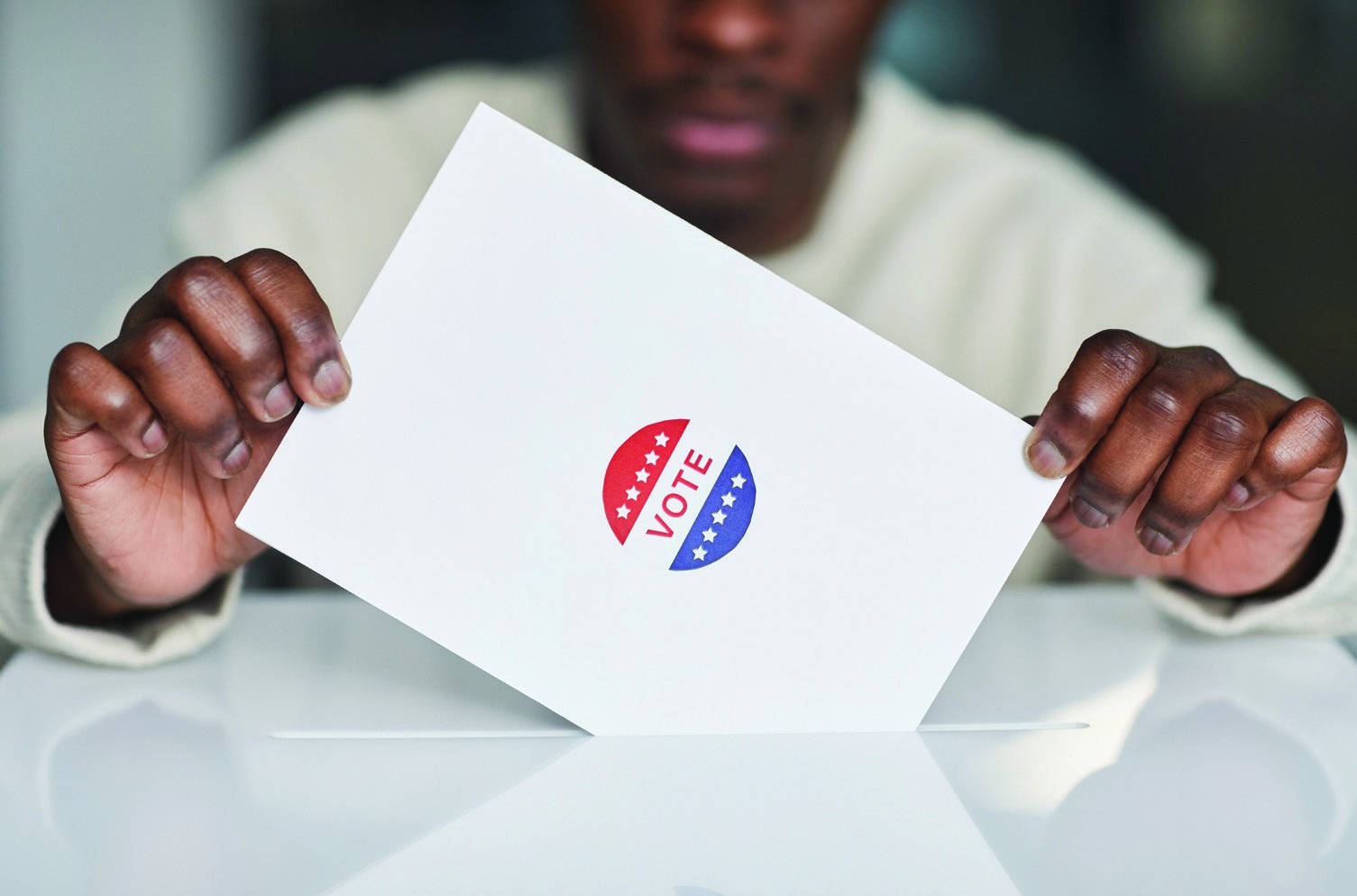
According to the most recent data available, Black women voted for Democrats at 92-94% and Black men at 84%, which was the highest of any other group. The Associated Press reported that, “Polling and the results from Election Day showed an uptick in Black turnout and support compared with re-cent election cycles.”
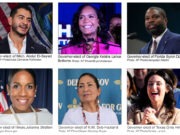
Many “firsts” included the election of four new Black governors: Keisha Lance Bottoms in Georgia; David Crowley in Wisconsin; Aaron Ford in Nevada; and Republican Byron Donalds in Florida.
Maryland Governor Wes Moore won re-election to make a total of five Black governors who will hold office at the same time, the most in U.S. history.
Stacey Plaskett won her election, becoming the first woman and first Black woman elected governor of the U.S. Virgin Islands. Several Somali and Nigerian Americans were elected to state offices nationwide.
The midterms also saw the election of Muslims, Native Americans/Indigenous and Latinos on various government levels, including: Darializa Avila Chevalier, the first Afro-Latina Muslim who will be in Congress from New York; Abdulrahman Mohamed El- Sayed, the first Muslim U.S. Senator, and Aber Kawas, the first Palestinian American Muslim woman elected to the NY State Legislature.
California and Texas elected their first Latino governors, and New Mexico elected the country’s first Native American/Indigenous female governor, Deb Haaland, who served as Secretary of the Interior in the Biden administration.
And Peggy Flanagan was elected as the first Native American/Indigenous woman to serve in the U.S. Senate, from Minnesota after first serving as that state’s lieutenant governor.
However, if this country’s history has shown us anything, it is that politics alone is not the solution to our problems, and there is always a backlash to Black progress and gains.
So, while our people are expressing happiness and celebration over the success of the most recent “blue wave,” our enemies have not stopped plotting and planning against us. Also, once those who are voted in take office, that is only the beginning.
“Folks are celebrating all the blue this morning. Blue wave. Blue tsunami. Historic wins for women, Black and Brown candidates. But do the Democrats really know what to do with power once they have it?” asked Dr. Stacey Patton, a pro-fessor and author in a post on social media.
The Most Honorable Elijah Muhammad, Eternal Leader of the Nation of Islam, posed the following question in His book, “The Fall of America,” in the chapter titled, “The National Election.”
He writes, “How much have the two parties (Republican and Democrat) done for us for the last century in the way of freedom, justice, and equality? Regardless of what party wins, the die is always set against us (the Black people of America).”
The Most Honorable Elijah Muhammad also taught on what types of politicians our people should look for. In His book, “Message to the Blackman in America,” in the chapter, “Put Muslim Program To Congress,” He writes in part, “There are many Black men and women who make splendid politicians.
They could accomplish considerable good if they–like the White politician and his people–were given proper and equal recognition and justice for themselves and their people. If our politicians are to serve us, they must have no fear of the White man when they lead our case in the White courts before White judges.”
In the same chapter, the Most Honorable Elijah Muhammad gives Rep. Adam Clayton Powell as an example of a good politician, even though Mr. Powell was not Muslim.
“A Muslim politician is what you need, but Congressman Powell is not afraid and would not be easily bribed, for he is not ‘Hungry,’” He writes. Later, He notes, “We must give good Black politicians the total backing of our population.”
That backing brings a duty and re-sponsibility not only to those elected, but also to those who voted to put them in office and even those who did not.
The Honorable Minister Louis Farrakhan explained the aim and purpose of political power in a May 1, 1996, message titled, “The Rise of the Indigenous Peoples.”
“We lack political power, but together we can shake this racist and oppressive foundation, because all of the rich have built their world on the backs of the poor.
The political parties of this day do not want the Indigenous or poor people to have any benefit from a government that poor people fight, breathe, die and pay taxes to maintain, and we are taken for granted. What we are looking for is a change in our condition,” Minister Farrakhan said.
“If these political parties build their strength on the masses, and yet do nothing for the masses, then we have a legitimate right now to impose our will on a government that is not moral. We have to send a serious message, followed up with strategies that can force change.
You have more power than you even realize that you have, and that power is not from outside yourself; that power is from within yourself,” he added.
Just because a new party will be “in charge” come January 2027 with the swearing-in of the 120th U.S. Congress, we should be under no illusion or delusion that the conditions of the masses will change. However, we have more power than we re-alize, with Allah’s (God) help and through our unity to “force change,” as Minister Farrakhan noted.
American politics is not the salvation of or the solution to the Black man and woman.
Minister Farrakhan has taught us that politics is a tool we can use, but he also cautioned that politics without economics is symbolism without substance.
It is not enough to have Black, Latino, Indigenous, or Muslim faces in high political places if we do not simultaneously work together in our individual communities to “do for self,” while working and pushing to hold our elected leaders accountable.
No one is coming to save us but us.
