


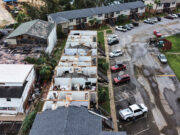








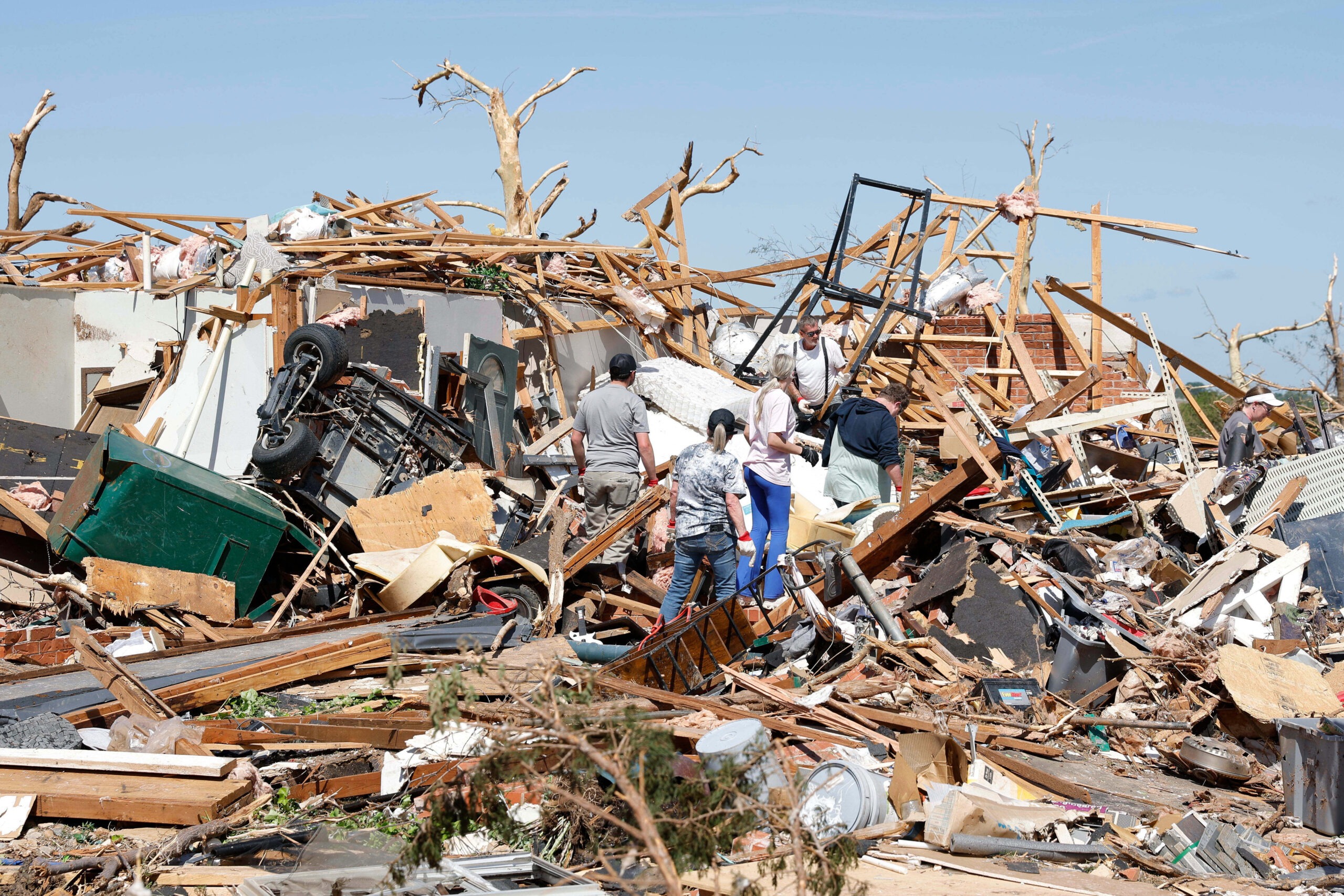

MINERAL WELLS, Texas—Thunderstorms tore through parts of Texas on April 28, sending at least two people to the hospital as powerful winds ripped roofs off homes, flattened buildings and tossed debris through the air.

Multiple homes and businesses were damaged and families were displaced in Mineral Wells, a small city about 45 miles west of Fort Worth. Two people were taken to the hospital and others with minor injuries were treated at the scene, according to Ryan Dunn, the city’s fire chief. There were no immediate reports of fatalities or people missing.
Dunn warned people to stay out of an industrial area where there’s “major damage and major hazards that are all across the roads.”
The wild weather came just days after a tornado-producing thunderstorm left at least two people dead in northern Texas and displaced at least 20 families.
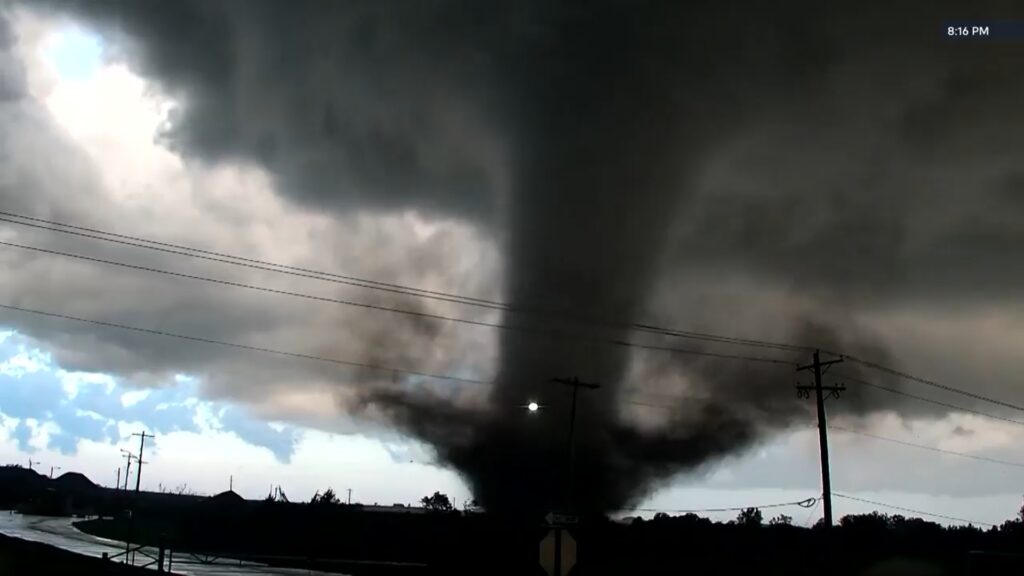
The April 28 thunderstorms, including at least one unconfirmed tornado, were caused by large storm cells that were drifting southeast from north-central Texas, said Brian Hurley, a meteorologist with National Weather Service.
The storms continued April 28 night as they moved across Texas and into Arkansas and Mississippi, according to the National Weather Service. The storms could produce hail larger than two inches, damaging winds and some tornadoes, according to the agency.
In Mineral Wells, where the streets were left littered with fallen trees and other debris, the mayor declared a local state of disaster. The city also instituted a 10 p.m. curfew that was lifted around daylight as authorities continue to assess the damage, said Tim Denison, the city’s police chief. He said the curfew was to “make sure that we keep people out of the areas and also try to help these victims out, and keep their personal belongings safe.”
Officials directed anyone who needed help to the local high school, where the Red Cross was setting up.
Fast-moving storms pummeled parts of the Midwest with hail, strong wind and heavy rain April 27, flooding streets, stranding commuters and downing many trees, including one in western Michigan that landed on a man and killed him.
More than 56 million people in the Midwest and parts of the South were at risk of severe storms, with tornado warnings posted in southeastern Missouri, southern Illinois and northern Arkansas, the National Weather Service said.
A thunderstorm that whipped through Kent County, Michigan, with powerful winds caused a tree to fall and kill a 39-year-old man who had been outside with friends, the sheriff’s office said in a statement.
The friends said “the man warned them to move just before the tree came down, actions they believe likely prevented more of them from being struck,” according to the sheriff’s office. The storm resulted in dozens of downed trees and wires.
Across Missouri, Illinois, Kentucky, Indiana, Wisconsin and Michigan, more than 250,000 people were without power April 27 night.
We Energies in Wisconsin said it had restored power for more than 35,000 customers, but thousands more remained without electricity. Milwaukee said it had nearly 100 emergency calls for downed trees and branches. Trees uprooted by strong winds blocked streets.
In Kansas City, Missouri, the fire department responded to 11 water rescues from vehicles starting at shortly before 6 a.m., Battalion Chief Riley Nolan said in an email.
He said most “were in our typical ‘high-water’ areas following heavy rains.” Nolan said no boats were required and no injuries were reported.
The weather service reported that 3.2 inches of rain fell in a six-hour period ending shortly before 7 a.m. at the Kansas City International Airport.
Hundreds of schools in the St. Louis area closed early, and many after-school activities were canceled.
Temperatures near 80 degrees Fahrenheit and other factors were contributing to “atmospheric instability,” said Evan Bentley, a meteorologist with the National Weather Service Storm Prediction Center in Norman, Oklahoma.
The storms followed rounds of violent weather over the weekend.
Compiled from Associated Press reports.
