






From massive winter storms and record cold in January, to an unanticipated mid-March heatwave in the Southwest, and recent outbreaks of tornadoes striking Illinois, Iowa, Michigan, Minnesota and Wisconsin, between April 15 – 17, officials are now warning that the Northwest, Midwest and Northeast may face unusual flooding as the year progresses.
With the frequency of such disasters continuing to increase across the United States, people and communities are now working to better prepare for the safety and survival of individuals and families by preparing their homes and communities.
Taking the initiative through self-reliance in disaster and emergency preparedness is the best way to reduce hardship when it arises.
The Most Honorable Elijah Muhammad, the Eternal Leader of the Nation of Islam, warned that Allah (God) would punish America with the forces of nature, including rain, hail, snow, and earthquakes.
His National Representative, the Honorable Minister Louis Farrakhan, has constantly taught Black people on the importance of preparing for when these disasters strike.
With an expected El Niño event affecting the West Coast in the coming months, meteorologists are forecasting up to 11-16 named tropical storms during the 2026 Atlantic hurricane season, potentially three to five hurricanes impacting the United States directly, and drought conditions developing across the Southwest.
According to NOAA (National Oceanic and Atmospheric Administration), an El Niño is a climate pattern in the Pacific Ocean that affects global weather conditions when warm water is pushed eastward along the western coasts of the Americas, altering the behavior of the jet stream and influencing wetness or dryness over land.
According to a March 25 article on AccuWeather.com, although this year’s hurricane season may not be as active as last year, it remains vital to be prepared for the likelihood of regional disasters.
“A developing El Niño will be one of the biggest forces shaping the 2026 Atlantic hurricane season and is one reason the number of storms could be near to below historical averages,” the article stated.
“Still, hurricane preparedness is critical as multiple storms could make landfall in the United States this season. The 2026 Atlantic hurricane season will be shaped by a shifting climate pattern in the Pacific Ocean,” the article continued.
The Seventh Regional headquarters of the Nation of Islam, under the leadership of the Honorable Minister Louis Farrakhan, includes Florida, the Caribbean, Central and South America.
Seventh Regional Student Minister Patrick Muhammad of Mosque No. 29, based in Miami, told The Final Call that the region is no stranger to weather-related disasters and that mitigating their impact requires an all-hands-on-deck approach regardless of creed, class, or color.
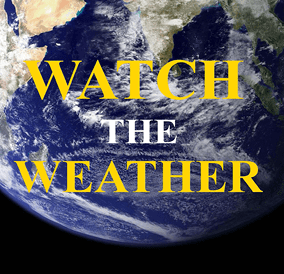
“Minister Farrakhan has been teaching us to ‘watch the weather,’ and we have reminded many of the believers and we have worked with several organizations, who are not registered members of the Nation of Islam, but people in our community, the Black community, the Latin community,”
He said of the mosque’s outreach and ongoing efforts to help make their community into a decent and safe place to live, as taught by the Honorable Minister Louis Farrakhan.
“We have held sessions and seminars at the mosque on disaster preparedness, and we have collaborated with people to have more community members come join with us and learn what we have to say from the guidance of the Honorable Minister Louis Farrakhan, emanating from the Teachings of the Most Honorable Elijah Muhammad.”
Noting that Miami-Dade and Broward Counties have been spared over the last few years, Student Minister Patrick said most hurricanes have affected the northern parts of Florida, such as Tampa and St. Petersburg.
“I was able to travel there for a while and saw the extensive damages that the hurricanes made in those areas,” he said of Hurricanes Helene and Milton in 2024 and others such as the Category 5 Hurricane, Melissa, that struck the islands of Jamaica, Cuba, the Bahamas, Haiti and the Dominican Republic in October 2025 (see Final Call Vol. 45 No. 5).
Weather scientists also believe that strong El Niño conditions originating in the Pacific Ocean will continue to increase through the end of the year, causing flash floods in coastal and mountainous areas, leading to mudslides and a more intense wildfire season in California and the Pacific Northwest.
Nation of Islam Western Region Student Minister Abdul Malik Sayyid Muhammad is based at Mosque No. 27 in Los Angeles. He told The Final Call that the mosque has been working to train people in CPR and to become certified as responders in declared disaster areas.
“We have been taught well on how to do the best we can to prepare ourselves for these major disasters,” Student Min. Malik Sayyid explained. The Western Region, which includes the West Coast, Arizona, and Colorado, is prone to earthquakes, wildfires, mudslides, drought, and in Washington State, volcanic eruptions.
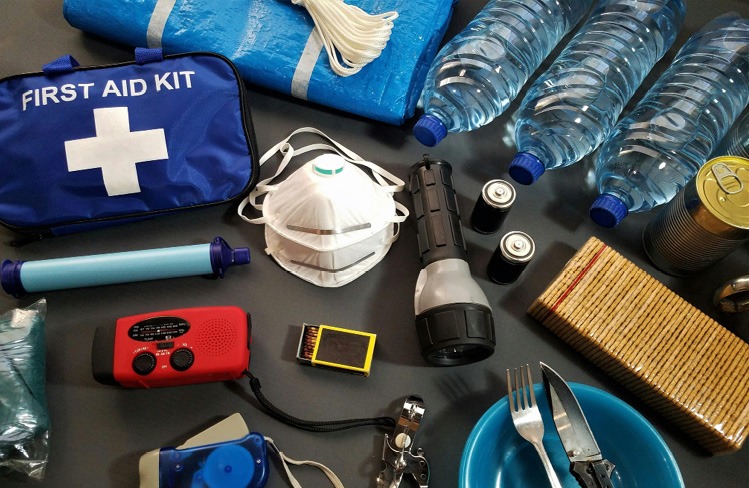
“One of the things we try to emphasize in the Western Region, number one, is for every believer to have enough food and water in their homes to last six months to a year,” Student Minister Malik Sayyid said.
As taught by the Most Honorable Elijah Muhammad and the Honorable Minister Louis Farrakhan. Student Min. Abdul Malik Sayyid said that the COVID lockdowns served as a serious test of their readiness.
He said that through the mosque’s Ministry of Health, an effort continues to make sure believers are storing water and survival kits in their homes, and that community gatherings are being held with first responders and city officials.
Within the ranks of the Nation of Islam, there are first responders, disaster preparedness professionals and others who are proficient in emergency response.
Nation of Islam Southwest Regional Student Minister Dr. Abdul Haleem Muhammad, of Mosque No. 45 in Houston, said that how a community prepares determines how people survive. Student Min. Haleem has a Ph.D. in urban planning and environmental policy. The Southwest Region includes Texas, New Mexico, Louisiana, Oklahoma and Arkansas.
“There are four phases of emergency management: mitigation, preparation, response and recovery,” Student Minister Haleem explained. “Whether it be … flooding, tornadoes, snow, drought, wildfires.
Or various other kinds of natural or manmade disasters, it includes the community accessing whatever information and resources that your local emergency management or homeland security office makes available to the public. Here, it’s called the Office of Emergency Management and has authority in terms of disaster preparedness,” he explained.
He also stressed listening to and enacting the Teachings of the Most Honorable Elijah Muhammad as taught by the Honorable Minister Louis Farrakhan in terms of food and water storage. He also stressed the importance of having alternative methods of energy and communication.
“What do you need to shelter in place if the cell towers get knocked out, do you have a ham radio, walkie-talkies, or a weather radio? Do you have alternative transportation like a bicycle if you are unable to get gas?
Do you have alternative means of cooking? Have you been trained in CPR or have you been trained in medical emergency methods?” he asked. These realities have already affected his city in the recent past.
“These things are important; do you have a garden?” Student Min. Haleem asked. “Are you growing any food for yourself that can sustain you and even beyond when your food supplies run out?
Regardless of where you live, even in an apartment, you can grow something in a pot, but if you’ve got a backyard, you need to plant a garden for food and learn how to can,” he said of activities important to household preparation.
“Depending on the hazard, your response is either going to be one of two things: you’re either going to shelter in place, or you’re going to evacuate,” Student Min. Haleem continued. “You have to be aware of your surroundings and the hazards around you.
Weather phenomenon takes place every season, but it’s happening in more frequency and intensity now,” he said. “Get all the insurances, insurance for your property and for your life, including renter’s insurance, and mutually support one another, the impact won’t be as bad when we’re all working together.”
