





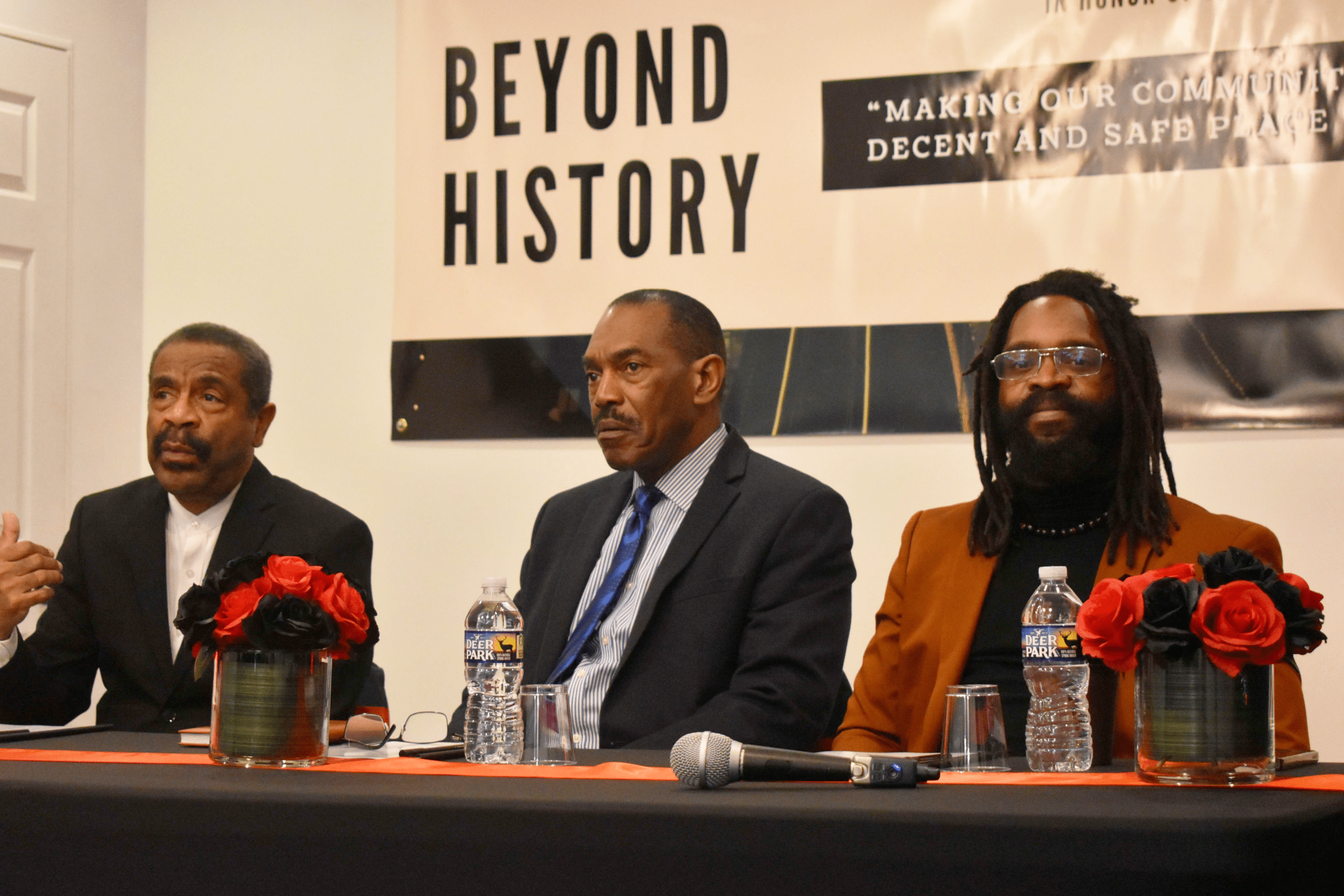

PHILADELPHIA—In a city rich with history and resilience, a powerful gathering took place at Muhammad Mosque No. 12, where faith leaders, educators, and community advocates came together to address the urgent need for safer, more decent communities.
For years, the Honorable Minister Louis Farrakhan has called on the Black community to work to make their communities decent and safe places to live, which was the subject of the keynote message delivered at Saviours’ Day 2026.
The Philadelphia event, titled “Beyond History: Making Our Communities Safe and Decent,” was a call to action rooted in unity, self-improvement and a reclamation of identity.
The panel discussion, hosted during the sacred seasons of Lent and Ramadan, opened with a heartfelt prayer from Reverend Cassius Rudolph of Saints Memorial Church and past special assistant to Reverend Al Sharpton.
“We gather today not just to reflect on our history, but to move forward,” Reverend Rudolph declared. “Safe and decent communities do not happen by accident—they happen when neighbors talk to neighbors, when institutions show up, and when many faiths come together.”

Philadelphia, like many urban centers, faces significant challenges. While homicides have declined from their peak in 2021, the city still recorded more than 400 in 2023, according to Philadelphia Police Department data, with Black Philadelphians disproportionately affected. Poverty, housing instability, and limited opportunities for youth remain persistent issues.
Yet, as Reverend Rudolph reminded the audience, “Philadelphia is filled with brilliance, resilience, and the real possibility of becoming something greater than it is today. But it is up to us to make that happen.”
The evening’s first presentation was delivered by Nation of Islam Student Delaware Valley Regional Minister Rodney Muhammad of Mosque No. 12 who spoke about the transformative power of faith and self-improvement.
“The community will never be better than the people in it,” he said. Drawing on the Teachings of the Most Honorable Elijah Muhammad, he emphasized the importance of reclaiming Black identity and history. “If you know who you are and what you’ve done, then you know what to expect of yourself,” he said.
Student Minister Rodney Muhammad also highlighted the resilience of the Black community, likening it to the earth’s ability to regenerate after a forest fire. “They flooded our communities with heroin and guns, but even still, we produced record numbers of college graduates,” he said. “We don’t fully know how tough we are,” he added.
Minister Quadri Harris, a Ph.D. student at Temple University and college minister, spoke on some of the rich Black African history from 4241 BCE in the ancient Nile Valley. “We don’t know who we are because we don’t know where we come from,” Minister Harris asserted.
He emphasized the importance of teaching Black history as a continuous, unbroken narrative, rather than beginning with slavery. “When our people know who they truly are, much of what ails us begins to heal.”
He called for coalitions between Black Christian and Muslim communities, urging them to prioritize unity over division. “We must not allow our religious differences to prevent us from building coalitions,” he said. “The blueprint is there. We just need to follow it.”
Hugh Clark, a retired attorney and school administrator of Lotus Academy, a Philadelphia-based Afrocentric school, spoke passionately about the role of education in healing the wounds of slavery and systemic oppression.
“Education must be about more than learning—it must also be about healing,” Mr. Clark said. He outlined Lotus Academy’s philosophy of “identity to the third power,” emphasizing the importance of self-knowledge, ethical ideals, and rigorous academic preparation.
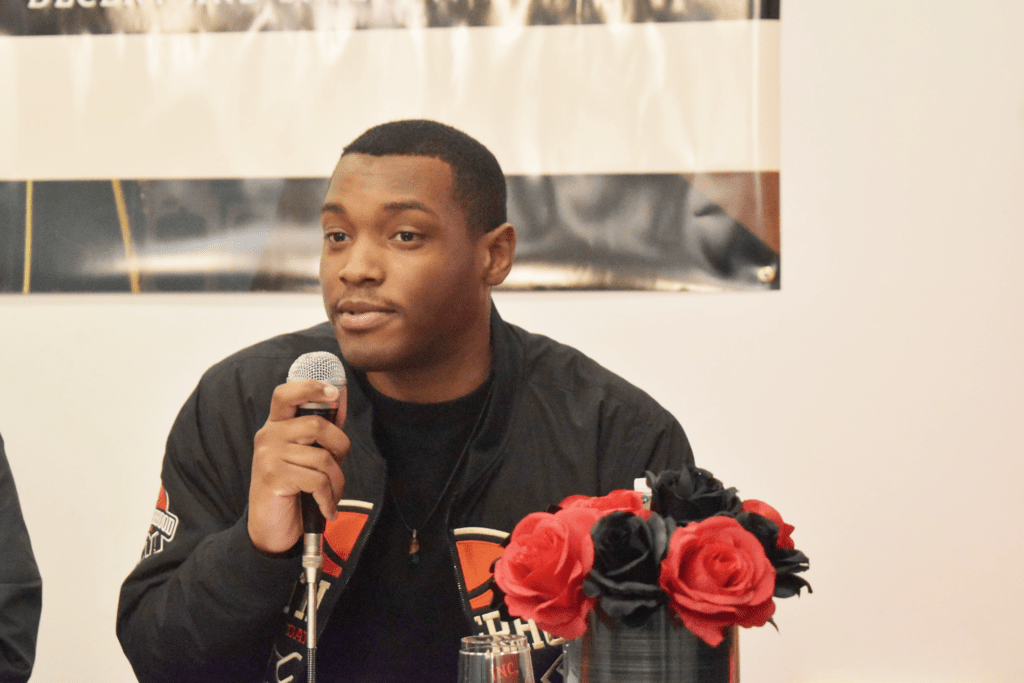
Mr. Clark also addressed the psychological scars left by slavery, noting that self-hatred, instilled during the era of enslavement, continues to manifest in community violence. “Our young people are kings and queens, but they must be taught that because they have been taught the opposite,” he said.
The discussion concluded with concrete steps for community building from grassroots guest organizations. Jabril Yusef of the group, Brotherhood Day, spoke on fostering intergenerational connections by starting with small, personal actions;
Stanley James of the group Philly Truce, spoke on the importance of building trust through consistent, visible presence and team-based community safety efforts.
Brother John Muhammad of Mosque No. 35 in Wilmington, Delaware, suggested holding monthly Black history weekends, adopting a youth to mentor, and creating job opportunities for young people. Bro. John explained that some of our young people who some may think as the “worst,” only “just wanted somebody to talk to.”
The evening ended with a powerful reminder. Reverend Rudolph concluded, “We have enough capital in the Black community alone to build the beloved community that King spoke about. The prophets gave us the blueprint. All we have to do is tap into it.”
As the audience dispersed, the message was clear: the work of making communities safe and decent begins with each individual, each institution, and each act of unity. Together, we can transform our future.
