












CHICAGO—The city of Chicago’s tipped-wage workers, consisting primarily of restaurant workers, number at least 100,000, the majority of whom are Black and Latino women. This is according to the office of Mayor Brandon Johnson. The hourly wages that many of these workers make are barely enough to get by. Mayor Johnson aims to help alleviate some of this hardship.
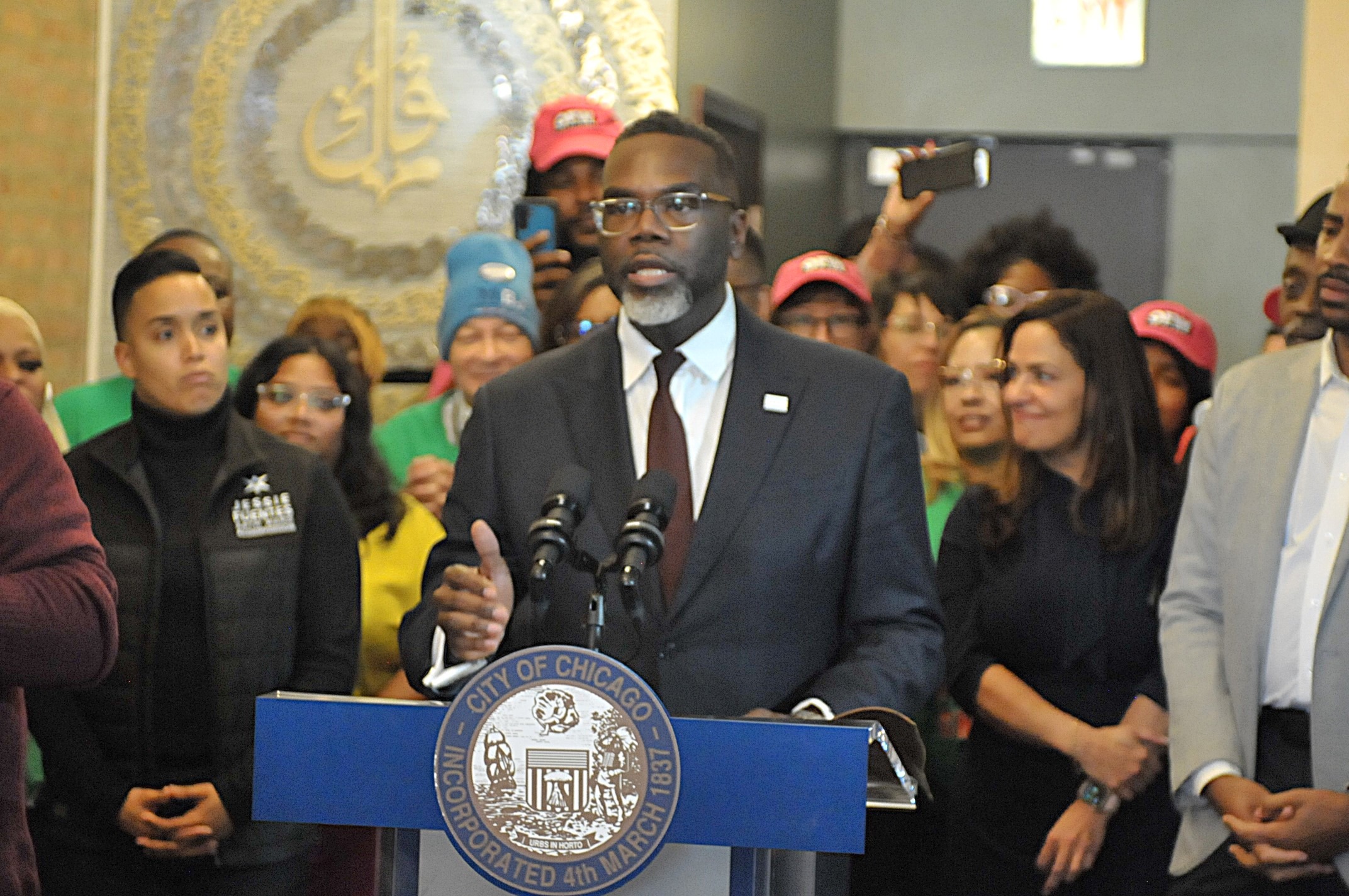
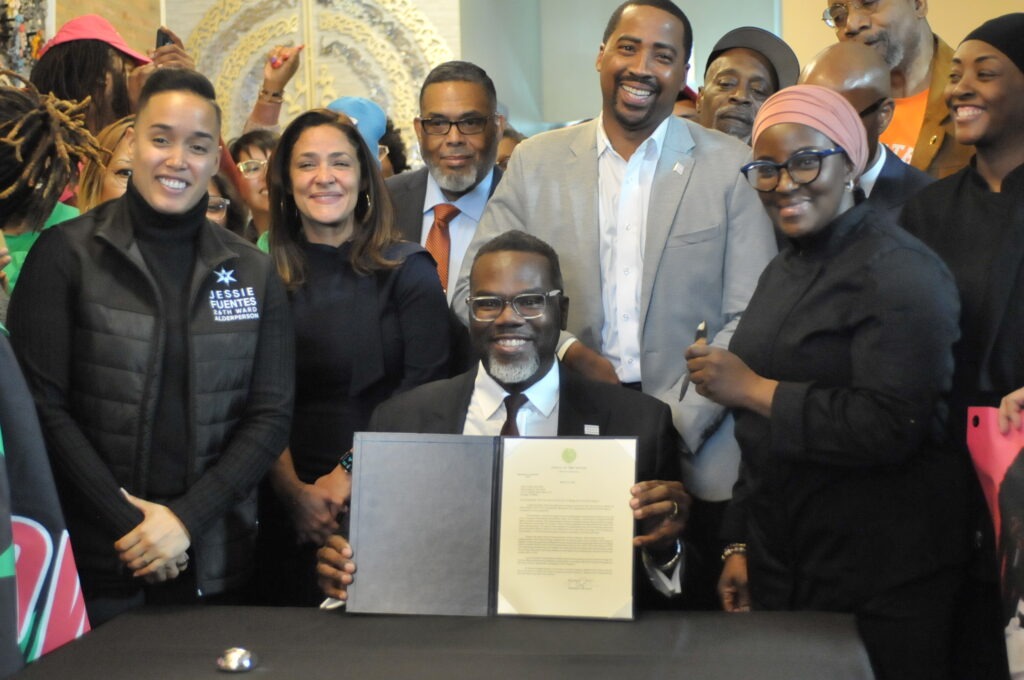
On March 25, Mayor Johnson held a news conference at Let’s Eat to Live restaurant, located at 621 E. 67th Street, where he vetoed a recent City Council measure to reverse the phasing out of the subminimum wage for tipped workers. He overturned the vote that would have halted an increase in the minimum wage that restaurants must pay tipped workers.
Chicago’s standard hourly minimum wage is $16.60 for employers with four or more employees, while tipped workers are paid $12.62 per hour. The Chicago One Fair Wage Ordinance, passed in October 2023, is a phased five-year plan to eliminate the subminimum wage for tipped workers. Each year, wages for tipped workers increase by 8% until they meet the standard minimum wage plus tips.
At the news conference, Mayor Johnson was joined by activists, tip workers and local elected officials as he signed the formal veto.
Mayor Johnson started by thanking Nahla (Carmella) Muhammad, owner of Let’s Eat to Live, for being a shining example of what it means to be a responsible business owner.
“For generations, women in the labor movement have been devalued and looked down upon, in particular Black and Brown women. Today, women in America earn just 81 cents for every dollar earned by a man, at the same job. The majority of tipped workers in Chicago are Black and Brown women,” he said.
“Chicago has a responsibility to lead by example by supporting local businesses, and paying workers fair wages can go hand in hand. The Chicago restaurant industry is not shrinking, it is thriving,” the mayor continued.
According to Blockclubchicago.org and other local reporting, “while the legislation has been embraced by some workers and advocacy groups, the change has also garnered pushback in recent years from restaurant owners and other workers, who have said it’s contributed to higher menu prices, staffing cuts and even the closure of some businesses.”
According to Mayor Johnson, the ordinance has not led to decreased hiring, and argued that more Chicagoans are working in hospitality jobs than before the wage increases were won in 2024.
“So, at a time when the federal government is cutting taxes for the ultra-wealthy, giving them the largest tax break in the history of America, the rich literally got richer with a stroke of a pen. And with a stroke of a pen, I’m going to make sure that working people get paid in our city,” Mayor Johnson said.
Ms. Muhammad is willing to sacrifice to help her employees. “I support increasing wages for tipped workers even if it means a greater burden on my business. Being able to pay my employees a living wage will allow us to make our community a decent, clean, and safe place to live. We are being charged to taking care of our people. People before profit, because without people, there is no profit,” she said.
Cheryl Taylor works as a tip-worker. “I have been a tipped worker for over 15 years, and tipped workers deserve stability. The wage freeze is a step backward, especially when the cost of living is rising; families cannot move forward if wages are stuck in the past.”
Candace Calhoun is also a tip worker. “The wages must meet the cost of living, including being able to pay the babysitter and be able to treat your children sometimes,” she said.
Alderman William Hall represents the city’s 6th Ward. “Today we are saying that wages for all workers matter. The voice of those who are never at the table are being heard,” said Ald. Hall.
Alderperson Jessie Fuentes of the 26th Ward also attended the news conference and supports the mayor’s veto. “I am grateful for the mayor in being able to exercise his power to veto an ordinance that is seeking to freeze the phasing out the subminimum wage in the city of Chicago.
Tip workers deserve to live in a city that they can afford. In a moment where affordability is the conversation not just in Chicago but nationwide; talking about freezing people’s wages is not right,” said Ald. Fuentes.
“Rent is going up, property taxes are going up, food prices are going up, gas prices are going up … and in this moment tip workers are being told that they don’t deserve a raise. Under our watch, it will not happen.”
(Shawntell Muhammad can be contacted at [email protected].)
