







The U.S. and Israel launched an unprecedented, unprovoked joint military operation against Iran on February 28 during the Holy Month of Ramadan. Several media outlets, including the South Africa-based The Debrief Network.com,
Have noted that the war with its escalating hostilities in the Middle East, is now sending “shockwaves traveling through oil markets, shipping corridors, fragile security environments, and financial systems that connect directly to Africa.”

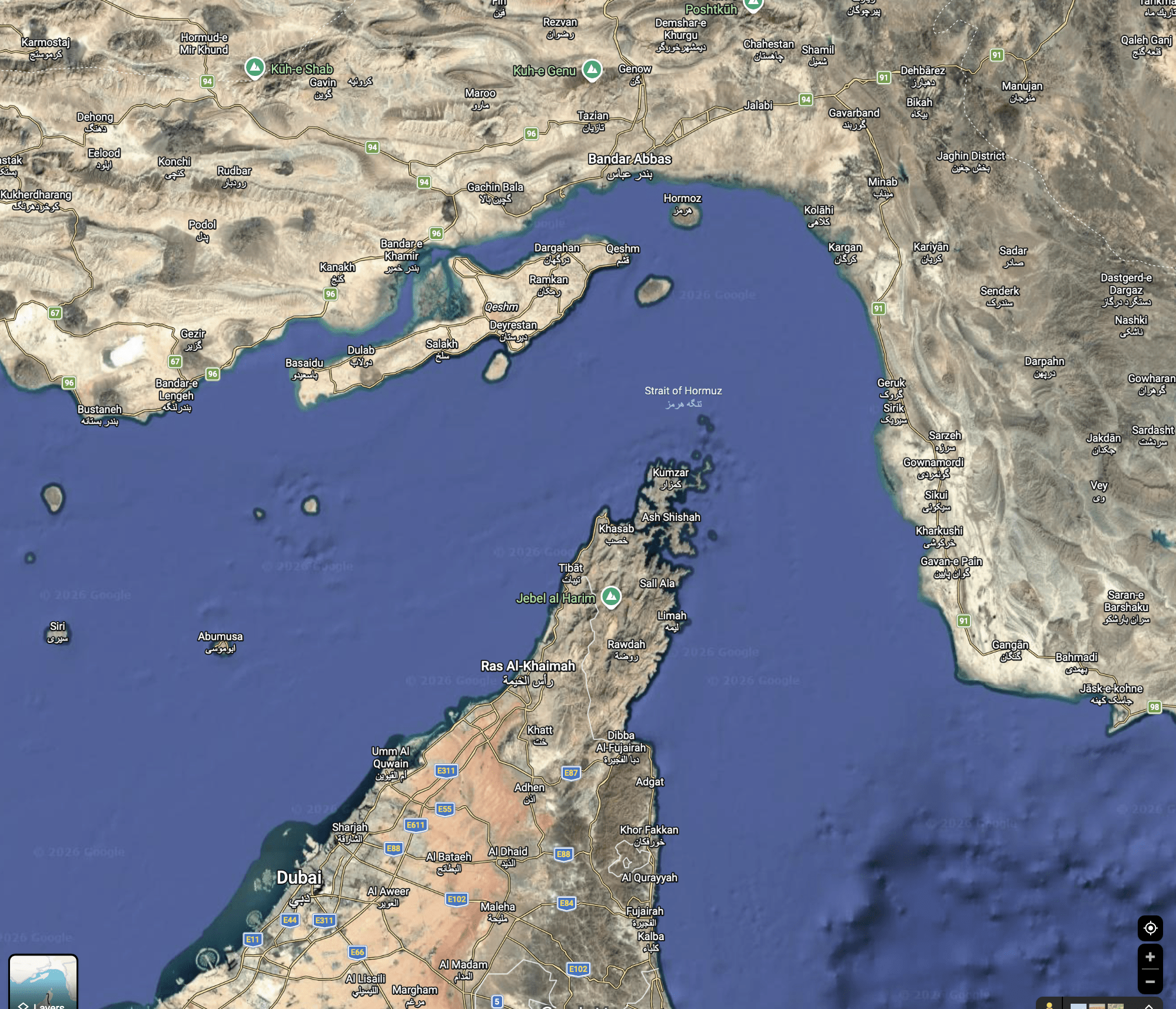
With rising global oil prices triggered by Iran’s closing of the Strait of Hormuz, the increasing economic pressures have reverberated across the African continent, where most countries rely heavily on imported petroleum products.
African countries rank near the front of the line in terms of reliance on fertilizer imports by sea from the Middle East. A March report by the UN’s Trade and Development Agency (UNCTAD) notes that “54% of Sudan’s fertilizer arrives in this way. The figures for Somalia and Kenya are 30% and 26% respectively.”
After Iran’s retaliatory strike on the world’s largest oil export terminal, Saudi Aramco, it followed up by targeting Fujairah Port in the United Arab Emirates (UAE). Fujairah is key because it sits just outside the Strait of Hormuz and handles major oil storage and exports.
“Any disruption there could quickly impact global oil supplies and prices. And we know that when oil prices spike, investors flee to the dollar. … When oil prices rise because of instability in the Gulf, African import bills rise,” explained Dr. Ross Harvey, Director of Research & Programs at Good Governance Africa, to thedebriefnetwork.com.
“When investors pile into the dollar, African currencies weaken. Many countries across the continent carry significant dollar-denominated debt. A stronger dollar means more expensive repayments and higher oil means higher fuel costs.
Countries like Kenya, Egypt, Tunisia, Ethiopia, and Ghana are particularly exposed because they rely heavily on fuel imports and are already managing debt pressure. In South Africa, fuel prices are directly tied to global oil prices and the rand—dollar exchange rate. It does not take long for global shocks to filter through to the petrol pump,” he said.
Iran’s calculated retaliation to U.S. and Israeli air strikes included a blitz of missile and drone attacks on American interests in the UAE, Qatar, Bahrain, Kuwait, and Saudi Arabia. “Tehran’s calculus is deliberate; by targeting perceived U.S.-Israeli allies in the Gulf, it seeks to impose sufficient cost on the region, to push the Gulf States into pressuring the U.S. towards de-escalation.
Iran’s Gulf neighbors are yet to retaliate in what appears to be a deliberate restraint policy despite the strategic pressure and pressing security needs,” reported the International Institute for Strategic Studies on its website, horninstitute.org
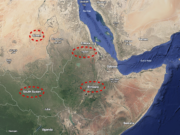
According to theconversation.com, Africa and the Middle East, linked through the Horn of Africa and the Red Sea region, share a tight web of military, political, and economic interactions that enable crises on one shore to quickly affect the other.
“Here, Somalia, Eritrea, Yemen, Sudan, Ethiopia and Djibouti sit along one of the world’s most important trade and geopolitical corridors,” the independent, non-profit news organization noted.
Senior Sudanese Analyst Shewit Woldemichael provides an example of the Sudan. Sudan’s geostrategic position helps explain why outside powers, such as the UAE, remain heavily invested. Sudan sits at the crossroads of the Red Sea, the Horn of Africa, the Sahel and North Africa.
For some regional powers, the war is not only about Sudan itself but also about their own national security interests and the projection of influence in a rapidly changing and contested regional order.
“Sudan’s African neighbors are also being drawn into the conflict, sometimes due to direct national interests and other times due to the incentives offered to serve as transit hubs for arms and supplies.
These dynamics risk worsening existing fault lines across the Horn of Africa and potentially merging multiple regional conflicts, with Sudan at the epicenter, Woldemichael wrote in a commentary titled: “Sudan’s devastating war rages on as regional rivalries deepen.”
Africa’s response to the war being waged in the Middle East will be defined not only by the challenges posed by global geopolitical crises but also by the continent’s ability to navigate them with strategic foresight and measured diplomacy.
“With escalating tensions, Africa should prepare itself for such inevitable political, economic and security shocks through strengthening economic diversification, maintaining balanced and strategic diplomatic engagements.
Enhancing security awareness and strategic preparedness in an increasingly polarized world and importantly, improving energy resilience. Africa should remain informed, prepared and strategically engaged,” noted the Prospect Peace Institute.
Maybe the best advice for Africa came from energy and infrastructure policy expert Lom Nuku Ahlijah, who told The Debrief Network, “This conflict is not only about the final missiles but the real impact and the shockwaves that will be affected in Africa.”
He continued, “And in African countries we need to work as a continent on ensuring that there are significant buffers as far as storage of essential commodities are concerned, as far as foreign action reserves are concerned and also work significantly on strategic diplomacy to ensure that we have options when challenges of conflicts like this arise.”
Follow Jehron Muhammad @Africawatchfcn on X
