







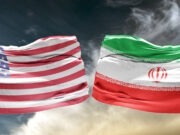
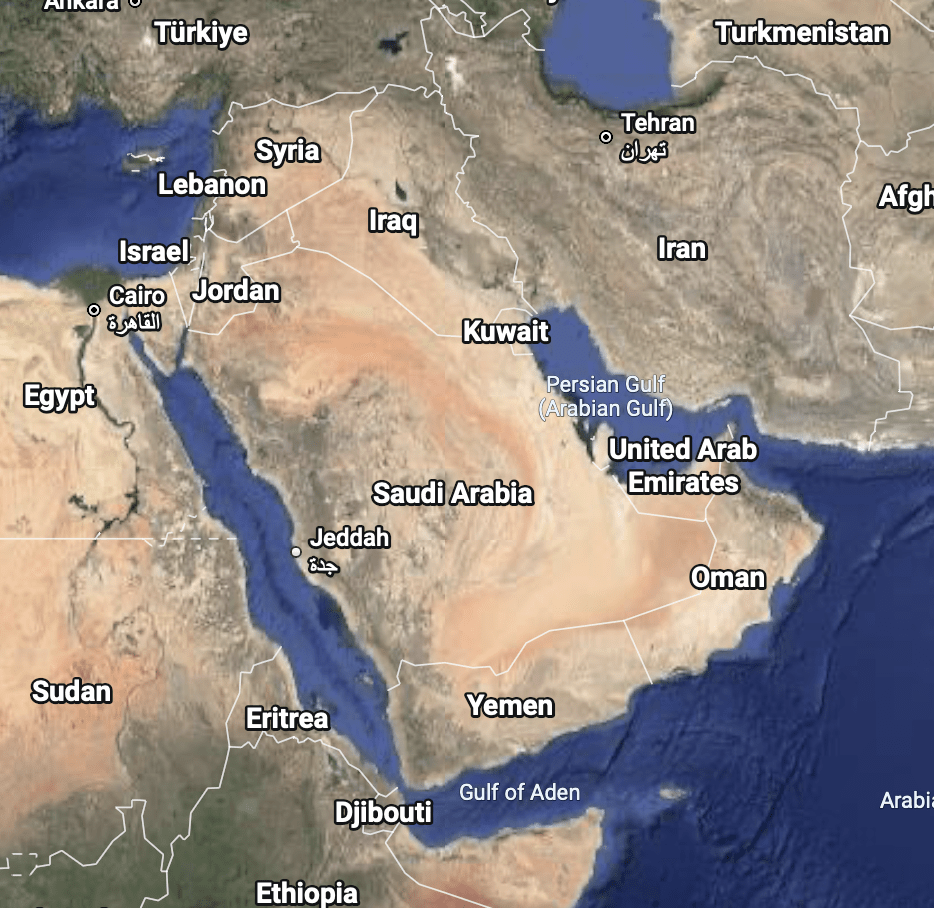

The United States and Israel launched coordinated military strikes on the Islamic Republic of Iran, marking a significant escalation and turning point in the volatile Middle East.
Shafaq News-Tehran reported that Iran’s Supreme Leader, Ayatollah Seyyed Ali Khamenei was killed in the attack. He led Iran since 1989 and was a key figure in the 1979 Islamic Revolution that brought the current theocracy to power.
According to Shafaq News, the 86-year-old leader was killed in an airstrike targeting his compound in downtown Tehran. The Fars News Agency said the attack also killed his daughter, son-in-law, and granddaughter, in addition to one of his daughters-in-law.
Iran’s Supreme National Security Council said that the death of the Supreme Leader “will mark the beginning of a great uprising against the tyrants of the world,” said Shafaq News.
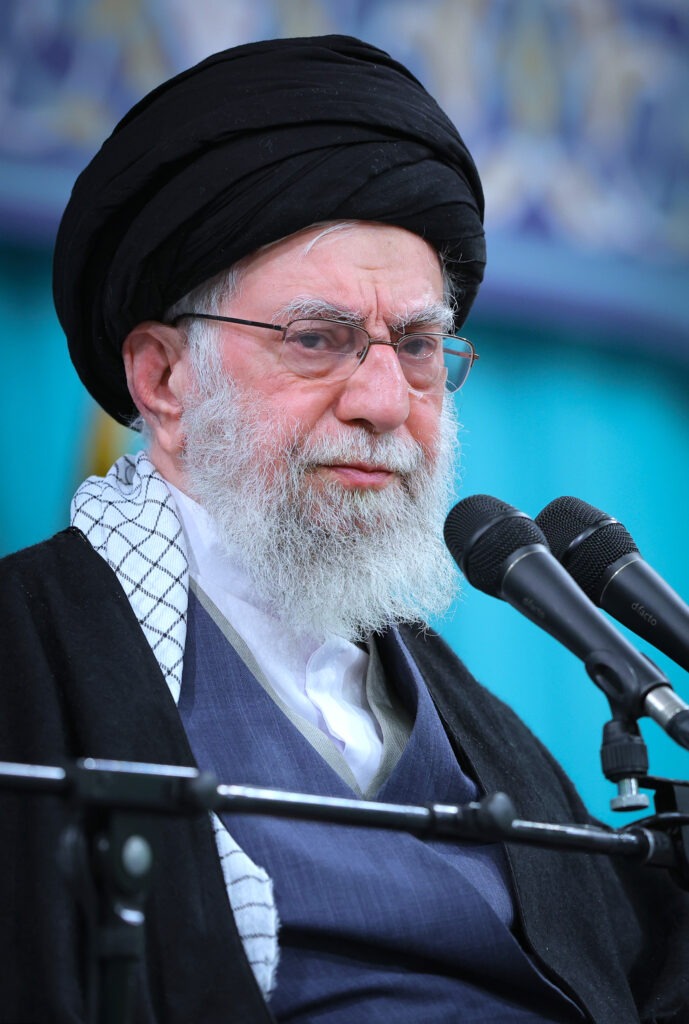
Photo: Office of the Iranian Supreme Leader via AP
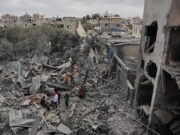
Missiles bombarded multiple cities including Tehran, Qom, Isfahan, Tabriz and others. Plumes of smoke were seen, and explosions were heard in the country, as a long-feared confrontation between the three geopolitical foes materialized.
The strikes followed weeks of a massive military buildup by the U.S. in the region and mounting pressure on Iran to reach a nuclear agreement. In addition, Israel had repeatedly pushed for military strikes on the Islamic Republic as its chief regional rival.
The strikes came mid-morning local time in Tehran and is touted as a regime change operation targeting Iran’s leadership. Iranian officials contend the move was an illegal act of aggression that will not go unanswered.
“(Benjamin) Netanyahu and Trump’s war on Iran is wholly unprovoked, illegal, and illegitimate,” said Iran’s foreign minister Abbas Araghchi, on X. “Trump has turned ‘America First’ into ‘Israel First’—which always means ‘America Last.’
“Our Powerful Armed Forces are prepared for this day and will teach the aggressors the lesson they deserve,” Mr. Araghchi vowed.
As of Final Call presstime, Iran in its defense, had responded with a barrage of missiles targeting Israel and U.S. military installations scattered across the Gulf nations. The headquarters of the U.S. Fifth Fleet, based in Manama, Bahrain, reportedly came under attack.
According to reporting from several media outlets, explosions were reported in the United Arab Emirates, Saudi Arabia and Kuwait. Israeli and U.S. strikes were also reported in Iraq. The afternoon of Feb. 28, an emergency meeting of the United Nations Security Council met to discuss the war.
“We are witnessing a grave threat to international peace and security,” said UN Secretary General Antonio Guterres. “Military action carries the risk of igniting a chain of events that no one can control in the most volatile region,” he said.
The aggression against Iran risks further escalation in an already explosive region and beyond its borders, warned Vasily Nebenzya, Russia’s ambassador to the United Nations.
“Moreover, the fact that Washington, for such a long time and methodically, was building up its military presence in the region only confirms the fact that aggression against Iran was planned in advance,” said Mr. Nebenzya.
“The attack and killing of Iran’s supreme leader is a grave violation of Iran’s sovereignty and security,” said Lin Jian, spokesman for China’s Foreign Ministry in a March 1 statement on its official website. “China firmly opposes and strongly condemns it. We urge for an immediate stop to the military operations,” said the statement.
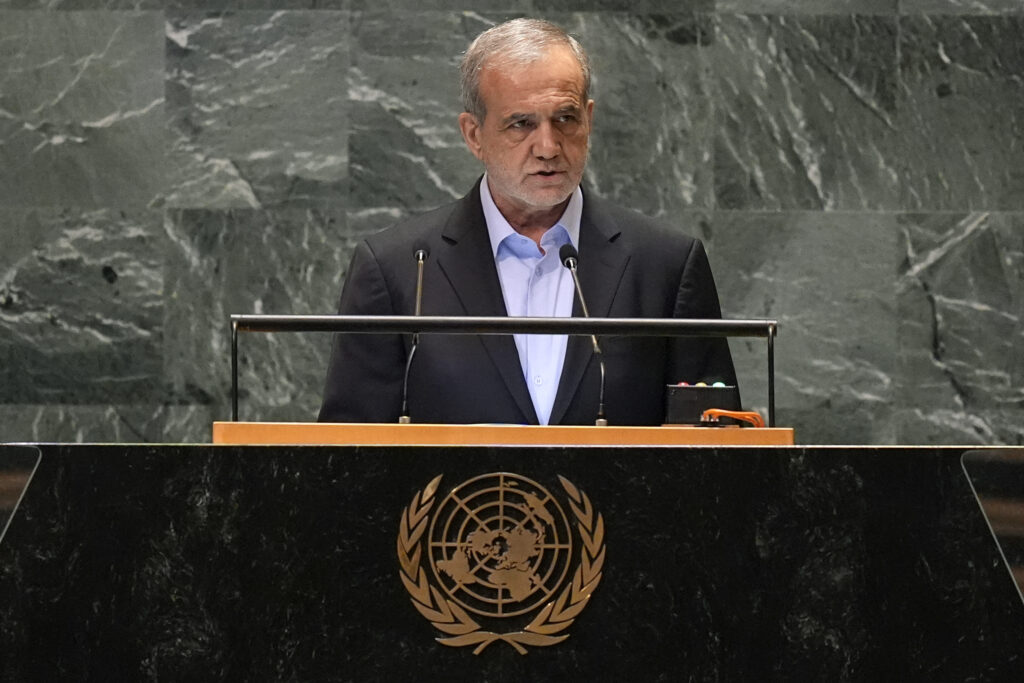
“If common sense does not prevail and diplomacy is not given a chance, our region faces the risk of being dragged into a ring of fire,” Türkiye Pres. Recep Tayyip Erdoğan warned, adding that Turkish authorities were taking precautions against potential spillover effects, reported trtworld.com.
Reactions by allied groups to Iran have threatened involvement in the war. Hezbollah Brigades in Iraq, also known as the Kataib Hezbollah, have announced that they will soon begin targeting U.S. military bases in retaliation for what they described as “aggressions” by American forces.
Other non-state allies also condemned the aggression and swore support. Abdul‑Malik al‑Houthi, leader of the Yemen-based Houthis, condemned the U.S.-Israeli attacks on Iran as “cruel, blatant, criminal, and barbaric, and without any right,” signaling solidarity with Tehran while asserting his group stands ready to respond.
“We are on alert for any necessary developments. It is Iran’s legitimate right to target military bases belonging to Americans who are participating in aggression against the Islamic Republic of Iran,” he said in a statement.
Qatar strongly condemned the targeting of its territory with Iranian ballistic missiles, calling it a violation of its sovereignty and a serious escalation threatening regional stability.
The Foreign Ministry said Qatar reserves the right to respond in accordance with international law. At the same time, it reiterated its longstanding call for dialogue with Iran, urging peaceful resolution to prevent further escalation.
Oman condemned the joint U.S. and Israeli strikes on Iran as a violation of international law and a dangerous escalation. “Neither the interests of the United States nor the cause of global peace are well served by this,”
Said Badr Albusaidi, Oman’s Foreign Minister, and key mediator in the U.S.-Iran nuclear talks. “I pray for the innocents who will suffer. I urge the United States not to get sucked in further” he posted on X. “This is not your war,” he added.
The war started on the heels of Oman-mediated talks between Tehran and Washington over Iran’s nuclear program, that concluded Feb. 27, with negotiations scheduled to resume March 2.
It echoed a prior escalation in June 2025, when indirect talks were also underway before Israel launched its 12-day war on Iran, that the U.S. joined, striking Iranian nuclear facilities, and leaving diplomacy derailed amid the fallout.
The talks were centered on Iran’s nuclear enrichment program, specifically how much uranium Iran is allowed to enrich, at what level, and under what monitoring conditions. Tehran maintains its program is for civilian energy and research purposes and denies seeking a bomb.
Beyond the enrichment issue, disagreements also involved sanctions relief, international inspections, ballistic missile development and Iran’s broader regional role as a power.
In a Final Call interview before the current airstrikes began, Brian Becker of the Act Now to End War and Racism [A.N.S.W.E.R.] Coalition said the Trump administration was “fabricating a threat” from Iran to justify a large military deployment in the Middle East, comparing it to the 2003 invasion of Iraq.
“In fact, this is classic double-speak where the perpetrator of oppression is blaming the victim of their oppression for being the aggressor,” said Mr. Becker.
He contends that the U.S. is unfairly targeting Iran’s nuclear program, which it has consistently declared non-military. Tehran says that as a signatory to the Treaty on the Non-Proliferation of Nuclear Weapons (NPT).
It has the right to civilian nuclear energy, but long maintained it is not seeking nuclear weapons. “Meanwhile, the United States and Israel have a vast quantity of nuclear weapons,” said Mr. Becker.
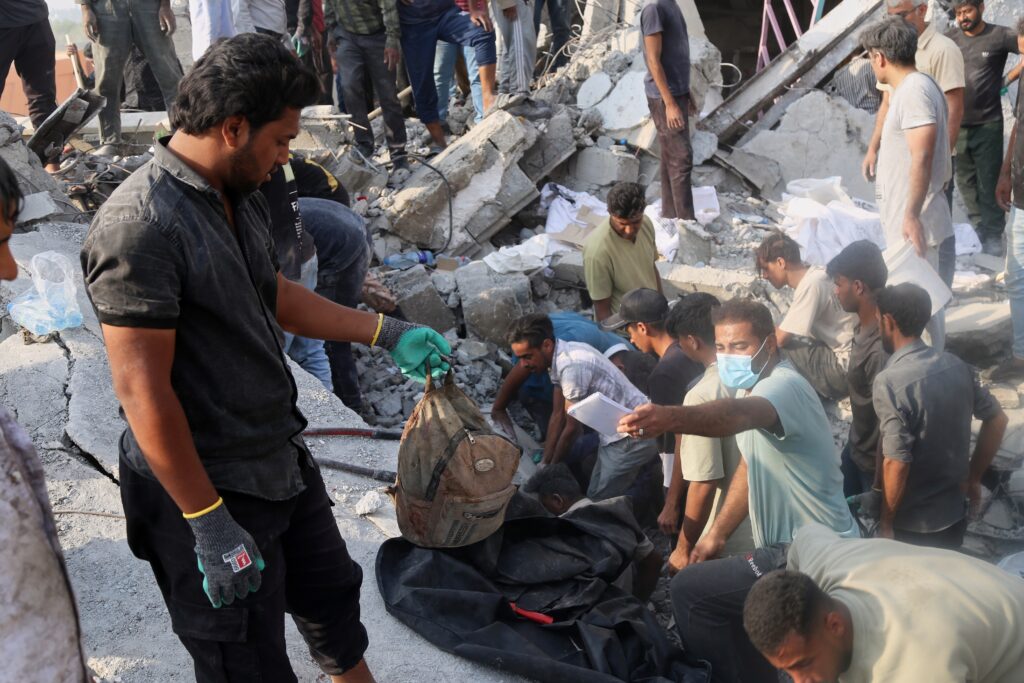
Photo: Abbas Zakeri/Mehr News Agency via AP
The controversy over Iran developing nuclear power is wrought with hypocrisy. The U.S. is a top nuclear power, and history lays bare that she is the only nation that used nuclear weapons—against Japan, resulting in tens of thousands of deaths during World War II.
Therefore, America has no right to speak about nuclear weapons. Israel practices a policy of “nuclear ambiguity” or “deliberate ambiguity” while never officially confirming or denying possessing nuclear weapons.
Despite that, numerous reports and expert analyses estimates that Israel has 80 to 400 nuclear warheads, is not a signatory to the NPT, and has never conducted or openly acknowledged nuclear tests.
Israel’s ambiguity policy allows it to dodge international scrutiny of its program. But as a regional trouble source Israel’s policy raises concerns about accountability and transparency.
Targeting Iran also reflects a broader strategic alignment between the U.S. and Israel aimed at curbing Tehran’s influence as a major power in the Middle East. Israel long pressed America for stronger anti-Iran measures and military action. Tel Aviv and Washington are using the nuclear proliferation issue to justify war on Iran.
The Honorable Minister Louis Farrakhan, National Representative of the Most Honorable Elijah Muhammad and the Nation of Islam has warned America against being baited into conflict with Iran by Israel.
“Our president and the government that supports him should be very, very careful,” said Minister Farrakhan, on Oct.13, 2019, during his Holy Day of Atonement message.
“Because if the trigger of war in the Middle East is pulled by you, using your surrogates, at the insistence of Israel, then the war will trigger another kind of war, which will bring China, Russia, all of the nations, into a war. And it bothers me to say this to you, Mr. President, but the war will end America as you know it,” he said.
In Chapter 33 of His monumental book, “The Fall of America,” the Most Honorable Elijah Muhammad described what is driving America’s global disposition. “America wants everyone to believe she is right in her wicked dealings with the people of earth.
With her might of arms commanding the high seas and the land around the globe, she wishes everyone to think she is right in building up arms and forts in foreign countries and on their shores a bristling, deadly navy with guns trained on foreign peoples’ towns and cities, as a dare without any cause.
This only shows her pride and daring aggressive acts against people who would like to be at peace,” wrote the Most Honorable Elijah Muhammad.
The Final Call will continue following and reporting on this story as it develops.
