






“… I afflict with My chastisement whom I please, and My mercy encompasses all things. So I ordain it for those who keep their duty and pay the poor-rate, and those who believe in Our messages.”—Holy Qur’an Chapter 7, Verse 156.
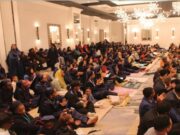
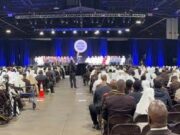
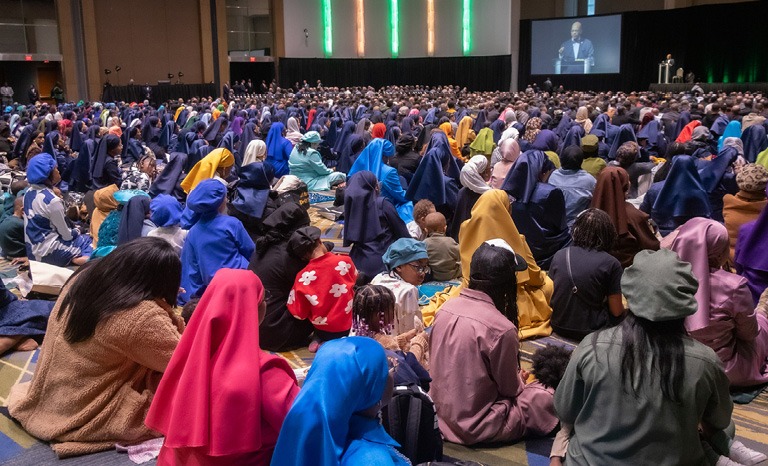
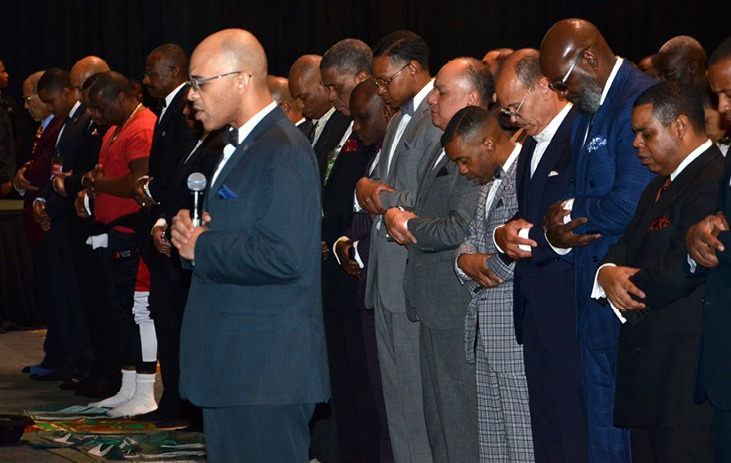
DETROIT—The Muslim Friday congregational prayer service known as Salat-al Jumu’ah at this year’s annual Saviours’ Day Convention was led by Nation of Islam Student National Imam Sultan Rahman Muhammad.
His khutba (sermon) focused on Allah’s (God’s) Divine Mercy, which according to Islamic scholar and translator of the Holy Quran, Maulana Muhammad Ali, prevails over all other attributes.
No matter what a person’s shortcomings, faults, transgressions, or sins, if the believer turns to Allah (God), He will show mercy and forgive, he said in front of a packed audience in the Grand Ballroom at the Huntington Center in downtown Detroit.
According to Imam Sultan, in the Holy Qur’an, Allah (God) said, “If you forget Allah, He will cause you to forget yourself.” Allah (God) in the Holy Qur’an “is reminding us of our relationship to Him,” he said.
What is mercy, Imam Sultan Muhammad asked? The English translation is insufficient, he explained. Mercy in the English language dictionary means compassion or forgiveness shown toward someone who has the ability or power to punish.
“We always think of mercy as forgiveness,” he said, “but the Most Honorable Elijah Muhammad, in accordance with the Holy Qur’an, and according to the ‘original’ (Arabic) language, we learn that mercy is rooted in the very creation of life.”
The Arabic language gives insight into the revelation, said Imam Sultan before the congregation. “It (Arabic) gives us a profound understanding of the shades of mercy, particularly the mercy of Allah (God) The Most High,” he explained. “The Arabic root of the word for mercy comes from the great and chief attribute of Allah the Most High, Al-Rahman, The Mercy.”

The attribute Al-Rahman, explained Imam Sultan Muhammad, “In its root is Rahimah, which connects us to the understanding that Allah’s mercy is like that of a mother. It means womb in its root. It means love in its root.”
“So, every time we say Bismillah Al-Rahman, we’re saying in the Name of Allah, The Most Merciful, The Most Loving, The Womb from whence we have all come,” he said. “Therefore, our connection to the Womb of God is inextricable, it cannot be detached.”
Imam Sultan gave the example of a child in the womb of a mother. He said, “We are a part of, and from the source of all life.” We are “connected” to the creator, similar to how the bonding of a baby when in a mother’s womb can assist in its development after the mother gives birth. Allah’s attribute Rahman, The Merciful, gives without asking, he continued.
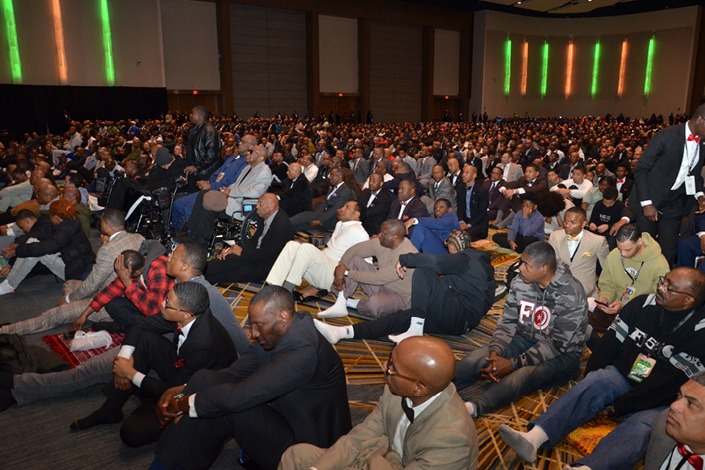
“Did you have to ask your mother for food when you were hungry? If we are to repair our communities, we must treat our people in the way our mothers nurtured us when we were in the womb. We must be tender, we must be loving, we must be merciful,” the imam said.
At the concluding of the prayer service, Student Minister Ishmael Muhammad, National Assistant to the Honorable Minister Louis Farrakhan, performed a Janazah prayer in absentia for all who have suffered the loss of a loved one in 2025 and the first weeks of 2026.
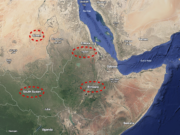
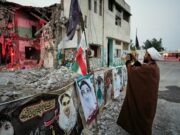
He explained, “To all our Muslim brothers and sisters who died on battle fields and by starvation in Gaza, in the West Bank, in Sudan, in the Congo (DRC), Muslim and human life that are suffering on this planet, Ramadan is to produce empathy.
So, when we are blessed to break our fast, with iftar, when we fill our bellies, we should think about those that don’t even have a slice of bread to put in their mouths.”
