












‘If these brothers were partnered with licensed plumbers, electricians, brick masons and painters, so that they could learn the skill, they could rehab and fix up these old, abandoned houses.’
—The Honorable Minister Louis Farrakhan: ‘A Special Message to Street Organizations,’ December 11, 2004
A recent study published by researchers at the University of Chicago linked eviction rates to gun violence in the city. The study found that every 1% increase in the census tract eviction rate was associated with 2.66 additional shootings within 1,000 feet of an individual’s home.
The study indicated that though violent crime has fallen to historic lows in Chicago, gun violence is still a problem in poverty-stricken neighborhoods.
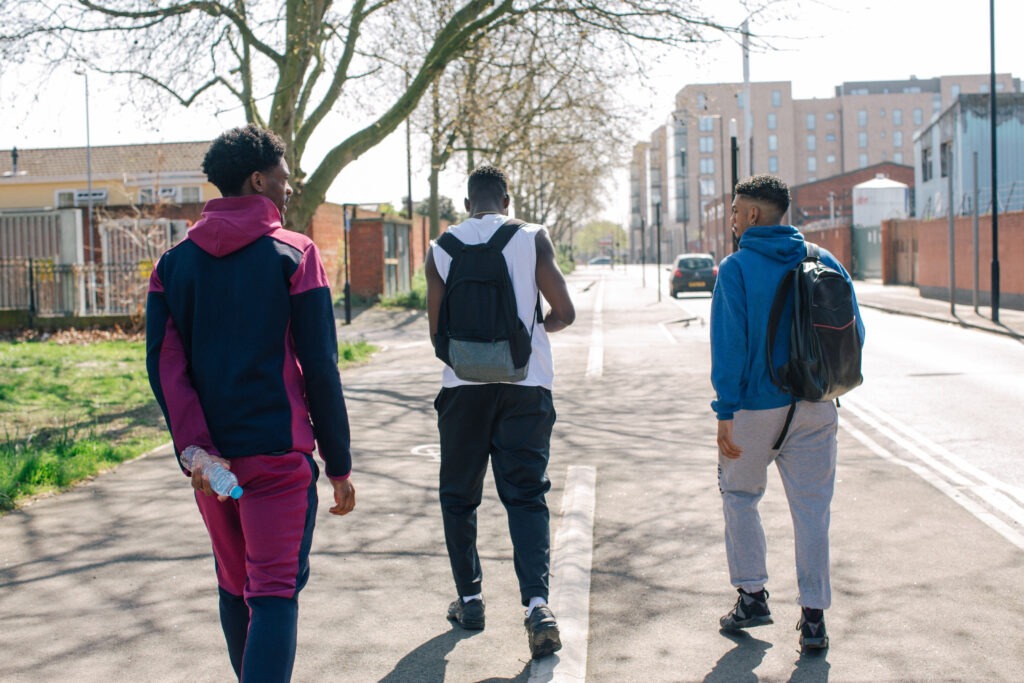
Photo: AdobeStock
Black people are disproportionately impacted by eviction. Past studies from organizations like Eviction Lab and the Center for American Progress found that Black renters face a higher risk of eviction than any other racial group, impacting especially Black women and children.
Negative effects of eviction can include material hardship, depression, stress and disrupted stability, according to the December 2025 study.
The study builds on previous reports examining why people are evicted and how eviction impacts neighborhoods. Past studies indicate that the primary reasons people are evicted are due to low wages but high rents; rent increases, particularly by corporate landlords; discrimination and life shocks such as health crises, unemployment or family issues.
A 2023 analysis by Housing Matters, an initiative by Urban Institute, a Washington, D.C.-based think tank, states that one reason communities with high eviction rates are exposed to more crime is due to eviction diminishing social networks. “This makes it harder for communities to manage local spaces and implement social controls, which can lead to an increase in crime,” the analysis said.
In Chicago in particular, the December 2025 study stated that “firearm violence is concentrated on the South and West Sides,” which are majority Black and Latino, “with a history of structural disinvestment resulting in residential segregation, economic exclusion and stark gaps in life expectancy.”
Gun violence is “concentrated in high-poverty communities,” Anthony Smith, executive director of Cities United, a Black organization based in Louisville, Kentucky, said to The Final Call.
“[We] can really see those linkages without even having a study, but glad there is a study, because at the end of the day, you can just see the things that compound on the folks who are impacted by gun violence and poverty, to lack of housing, lack of education, lack of access to affordable health care,” he said.
“You have to take a holistic approach to reducing community violence, which means you have to pay attention to housing, workforce and education. And that’s the harder thing for us to get systems to do, is pay attention to the wholeness of a person.”
The study also looked at the role eviction might play in “collective efficacy,” defined as a community’s belief in their ability to achieve a shared goal. It found that in neighborhoods with high eviction rates, lower collective efficacy was more strongly linked to higher gun violence, suggesting that eviction may weaken a community’s social bonds.
For Mr. Smith, part of this association stems from people who are forced to move from one community to another due to the displacement eviction causes.
“I’ve got to be disrupted and moved from one community where I know folks, where I’m connected to folks, to a whole other community where I don’t know folks and there’s no security,” he said.
“You create wars, turf wars and things like that that don’t need to happen, because when you are evicted from a place, you have to find housing quickly, and you have to find it wherever you can. And you don’t have those social bonds.”
“It’s harder to shoot somebody that you know or be shot by somebody that you know than it is to shoot somebody you don’t know or who you feel like you’re at odds with,” he added. His organization, Cities United, takes a holistic approach to gun violence reduction and works to redefine public safety beyond “law enforcement, jails and detention centers.”
“Young people got to not just put down a gun. They got to see something that they can pick up,” Mr. Smith said. “How do you create a pathway to better educational outcomes? How do you create a pathway to better economic outcomes so that these young people can see a future?”
He believes it’s important to allow young Black men, who are most impacted by gun violence, to lead the work in creating solutions. “When you think about this holistic approach, making sure that you create room for those who are most at risk and most impacted to be leaders at the table.
And when we talk about leading at the table, it means you get paid and compensated for your time, which hopefully would mean you would have more access to make sure you can pay your rent and not be dealing with eviction notices and things like that,” he said.
The Honorable Minister Louis Farrakhan, National Representative of the Honorable Elijah Muhammad, has taught Black people the importance of working in and taking care of their communities. He has advocated for young Black men to be given opportunities to learn a trade skill that would benefit themselves and their communities.
“You cannot ask the brothers to put their guns down if you do not have anything for them to do in return. You cannot give them lip service. Brothers have children; brothers need jobs and income,” Minister Farrakhan said in a special message to street organizations, delivered in Newark, New Jersey, on December 11, 2004.
“That’s why I am concerned about these city budgets. Why can’t city governments set aside money to train these brothers in building skills?” he questioned. Minister Farrakhan outlined the process that would help young Black men do good for their communities.
“There are many run-down, dilapidated properties. If these brothers were partnered with licensed plumbers, electricians, brick masons and painters, so that they could learn the skill, they could rehab and fix up these old, abandoned houses.
After the city sells the rehabbed buildings, they could put the profits in a Crip or Blood treasure, in order to buy more houses and land to start building their communities,” Minister Farrakhan said. “When you start building, you control the streets, but right now, you do not own any part of the streets that you control.”
“What good is controlling a street if you do not own it?” Minister Farrakhan questioned. “You have to own it. Then, you are justified in controlling what you own. Then, when you own it, you want it run right.” From there, the young men should get involved with their city council, to represent the concerns of their people, he added.
“I do not want to see my brothers lose the promise of God,” Minister Farrakhan said. “They are the leaders of today and tomorrow, but they must be protected so they can grow into the manifestation of their powers.”
