






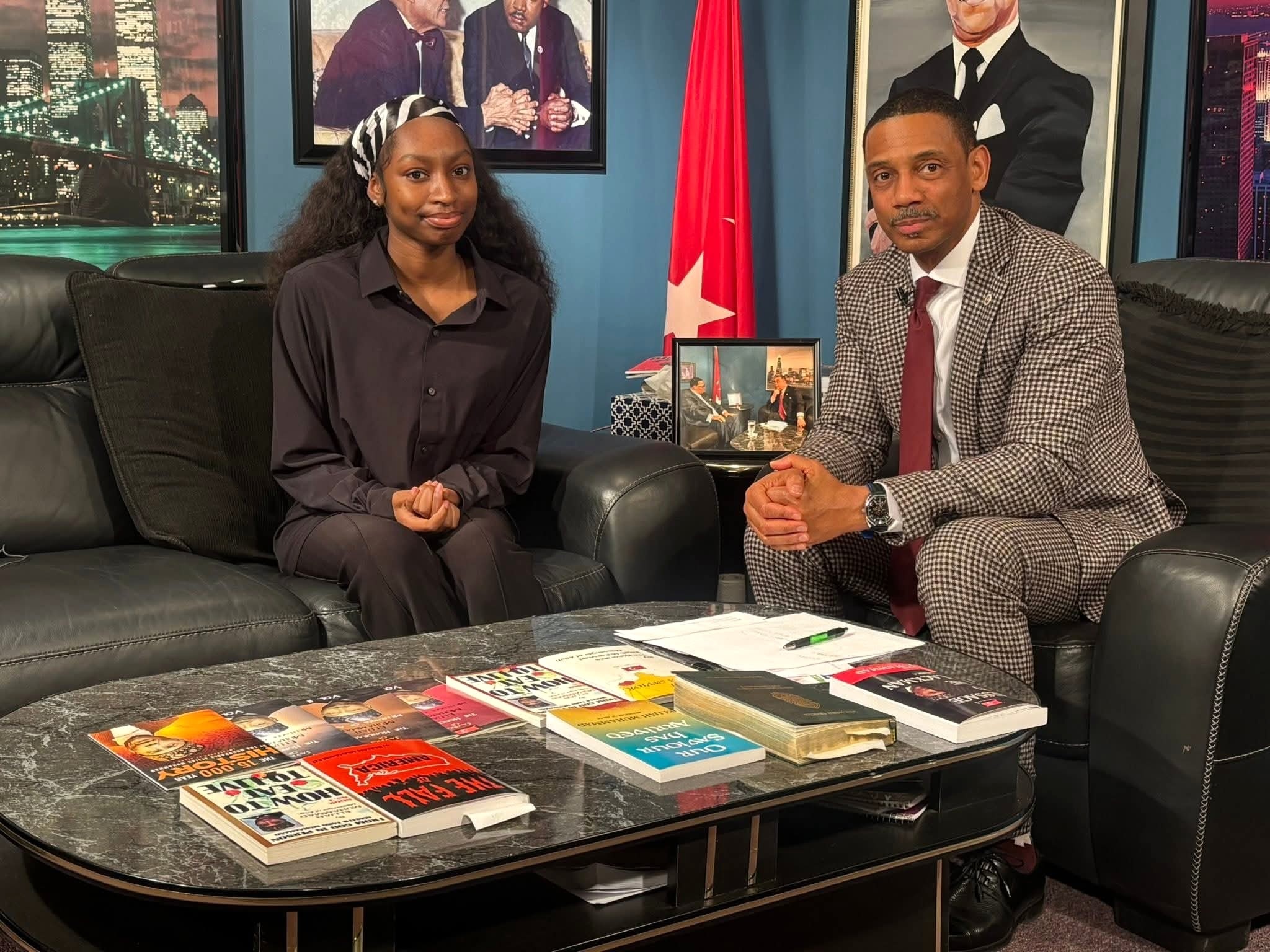

CHICAGO—What began as an ordinary Sunday afternoon at Let’s Eat To Live, a notable, Black-owned restaurant in Chicago’s Woodlawn community, quickly turned into a life-or-death emergency.
Awa ND’iaye, 17, a high school senior at Muhammad University of Islam and employee at the restaurant, helped save a man’s life after he stumbled into the business bleeding from a gunshot wound, just as staff were closing shortly after brunch service.
The incident happened on 621 East 67th Street in Woodlawn, when a young man who had been shot nearby ran to the restaurant screaming for police. Staff soon realized he was losing a dangerous amount of blood from his leg. Restaurant owner Nahla Carmella Muhammad immediately called 911.
But it was the calm focus of Awa, combined with the decisive leadership inside the restaurant, that turned a terrifying moment into a testimony of preparation, faith and community responsibility.
“I heard somebody banging on the door,” Awa recalled. She said she was finishing up a plate for a late customer when she saw someone running outside and then heard the urgent pounding. When the man entered, Awa said it was not immediately clear how badly he was hurt.
“That’s when I noticed where he actually got shot,” she said. “Then we actually saw the blood because at first we didn’t see it.”
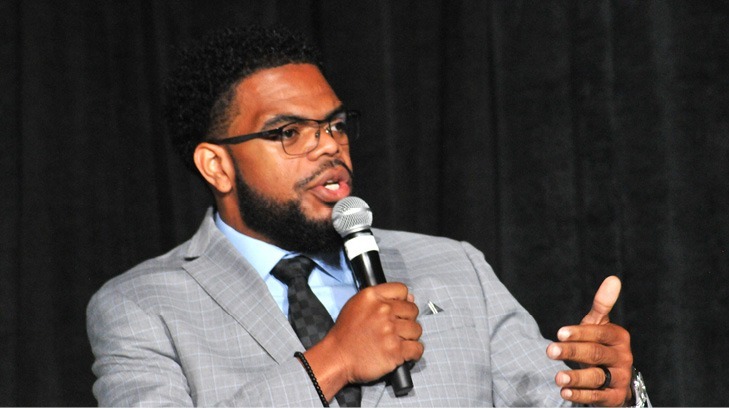
Photo: Haroon Rajaee
A quick-thinking response in a crisis
As the restaurant rushed to help, Awa said Ms. Muhammad asked someone to get towels to stop the bleeding. Awa, remembering her training, grabbed an apron instead.
“I saw that there were aprons there, so I grabbed an apron while my co-worker grabbed a towel,” she said. “I didn’t want her to take it as me trying to talk back … but I told her it’ll be a lot better to tie an apron around his wound to stop the bleeding than a towel that couldn’t really wrap around it.”
The apron was used as a tourniquet and tightened around the man’s leg to slow the bleeding until first responders arrived, according to reporting.
Ms. Muhammad confirmed the apron made the difference. “I went to say give me some towels so that we could stop the bleeding,” she said. “She (Awa) said, ‘no, no, we need an apron … so it can be tied around his leg.’ It worked much better,” said Ms. Muhammad.
Paramedics transported the man to the University of Chicago Medical Center, where he was listed in critical condition.
Training that meets the moment
Awa said she recently completed an eight-week emergency medical training program through the University of Chicago’s Pritzker School of Medicine called MedCEEP, which stands for Medical Careers Exposure and Emergency Preparedness.
The program, founded by Dr. Abdullah Hasan Pratt, teaches youth hands-on emergency skills including CPR, airway simulation, overdose response and bleeding control, while also exposing students to medical careers and mentorship opportunities.
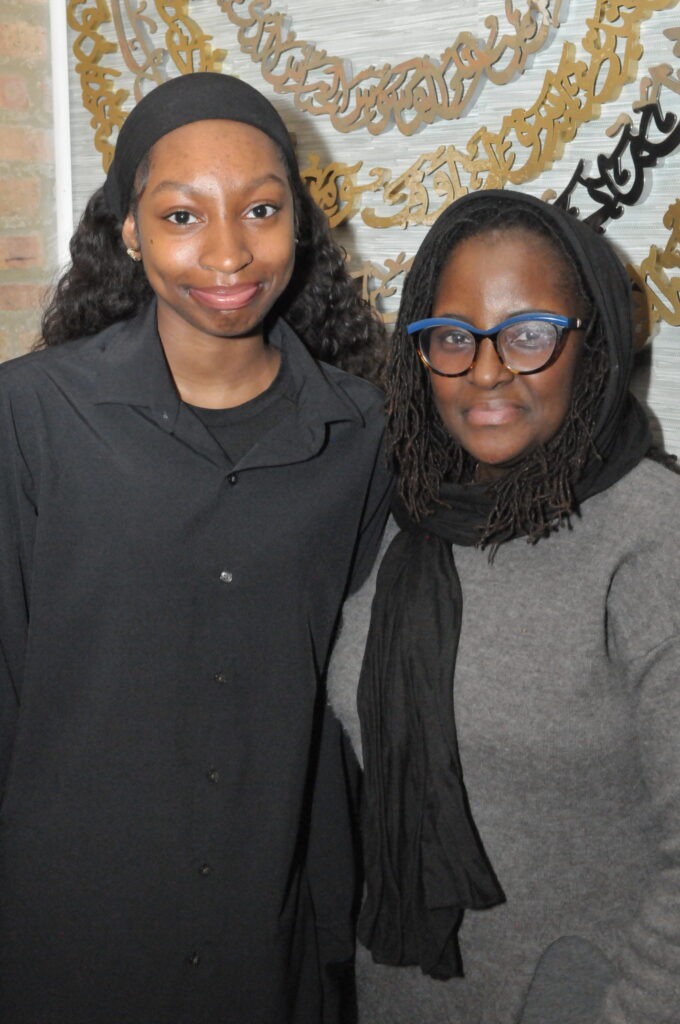
Photo: Haroon Rajaee
“We learned different things like how to deal with a drug overdose, how to stop the bleeding,” Awa said, adding that the program also included discussions on gun violence because of how common it is in Chicago.
The experience strengthened her long-term goals. “At first I was 99.9% sure I wanted to be in the medical field, but that definitely cleared the point one percent,” she said. “I do still want to be a pediatric surgeon.”
Awa also said the incident revealed a sobering truth: training is only powerful if people carry it with them beyond the classroom. “Now it really taught me a lesson to listen to everything else he said.”
She explained, referencing the emergency supplies and wound-care tools students were given during the program. “Now I’m going to strive to actually take it with me now that I see that this is something that’s very real.”
A mother’s pride and a community’s message
Awa’s mother, Karriemah Muhammad, said her daughter’s actions confirmed what she has long believed about the importance of investing in young people’s gifts early, especially in communities facing constant threats.
“I was very concerned … but once I heard what she did and how she used the training she received … I’m just so proud of her,” she said. “It reaffirmed for her, her desire to move into medicine.”
Ms. Karriemah Muhammad urged parents to seek out programs that develop practical skills while removing financial barriers. She noted that MedCEEP is free and offers training that is both relevant and accessible.
“With the MedCEEP program, he offered this training to young people for free,” she said. “That is phenomenal … I’m hoping and praying that it inspires people not only to send their children, but to also financially support it so that it can continue.”
She also emphasized that parents must share resources and opportunities instead of withholding information. “As parents, we need to share information. We can’t gatekeep,” she said. “Even if your child hasn’t expressed an interest … expose them.”
A bigger mission behind the moment
Dr. Pratt, a South Side emergency medicine physician at the University of Chicago Medical Center, said Awa’s response reflects more than one summer of training. It represents a growing standard of readiness being cultivated among young people and students in the community.
He described the ability to remain calm, communicate respectfully and prioritize safety as the mark of someone prepared not just to survive trauma, but to lead through it.
“She calmed the person down who was shot,” Dr. Pratt said. “Who wouldn’t want an Awa right there in your worst moment?”
In previous reporting, Dr. Pratt explained that his work is rooted in both community health research and spiritual responsibility, grounded in principles of self-sufficiency taught by the Most Honorable Elijah Muhammad, the Eternal Leader of the Nation of Islam.
“When we approach violence, I think not only from an evidence-based point of view, from a community-based point of view, but even with the Teachings of the Most Honorable Elijah Muhammad, being able to be self-sufficient has to be at the core root of those solutions,”
Dr. Pratt said. Dr. Pratt is the founder of two initiatives designed to disrupt cycles of violence by building capacity, confidence and preparedness among youth: TRAP (Trauma Recovery and Prevention of Violence) and MedCEEP.
Through TRAP, as reported in The Final Call July 2025, students learn trauma response skills, de-escalation and emotional resilience in some of Chicago Public Schools’ most impacted neighborhoods.
“We looked to focus on Chicago Public Schools that are closest to the problem first,” Dr. Pratt said. “The schools that send us the most children who are victims of gun violence, that’s where we started our ‘Stop the Bleed’ training and the TRAP program.”
MedCEEP extends that mission by introducing young people to medical careers and hands-on preparation. Since its inception, the program has impacted more than 2,000 youth across Chicago and has reported a 98% graduation rate and 100% college acceptance for students who apply.
“If they can learn how to save a life, they can use that as an empowering way to pursue a career in medicine,” Dr. Pratt said. “Everybody should learn this”
Awa said she hopes the public understands what her experience revealed: first aid training is not optional in communities navigating violence. It is essential.
“I believe it’s very important,” she said. “I really don’t think you even necessarily want to have to go into the medical field. I feel like first aid is just a basic training that everybody should learn no matter what.”
—Toure Muhammad, Contributing Writer
