







The United Arab Emirates (UAE) is possibly emerging as a sub-imperial power in Africa. The tiny oil-rich Gulf State is situated on the southern coast of the Arabian Gulf. It played a decisive role in countries during the “Arab Spring” of 2010-2011, including Egypt, Libya, Tunisia, and Yemen.
The UAE’s current support for Sudan’s Rapid Support Force (RSF), headed by Mohamed Hamdan Dagalo, known as Hemedti, is seen by it being one of the principal suppliers of weapons and equipment in the brutal civil war against Sudan’s Armed Forces (SAF), headed by General Abdel Fattah al-Burhan.
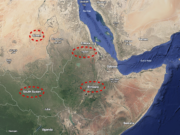
The UAE’s support for the Ethiopian government helped determine the outcome of the Tigray War and accelerated developments in the Horn of Africa and the Red Sea region, including support for Somalia’s breakaway state, Somaliland.
In the framework of a “sub-imperial state” the UAE exhibits the hallmarks of a peripheral nation dependent on the U.S., a core imperialist power, while engaging in imperialist practices within its own region, noted the Transnational Institute (TNI), an international non-profit research and advocacy think tank in its 2025 report: “The emerging sub-imperial role of the United Arab Emirates in Africa.”
The UAE is a key strategic ally and partner of the U.S. under the reported goal of preserving security and stability in the U.S. and Africa. With the Dhafra Air Base, near Abu Dhabi, a shared facility with the UAE Air Force, the UAE hosts the U.S.
Air Force’s 380th Air Expeditionary Wing. In addition, it serves as a key hub for U.S. Central Command (CENTCOM), providing crucial airborne surveillance and command and control in the region.
Having secured U.S. military backing, the UAE’s geopolitical strategy centers on acquiring port concessions encircling Africa, with the goal of positioning itself to dominate global trade routes across the continent.
In its report, TNI noted, “Over the past decades, the UAE has invested close to $60 billion in African countries, making it the fourth-largest foreign direct investor on the continent, after China, the European Union (EU), and the United States. In the last two years alone, the UAE has pledged $97 billion in new investments in Africa, which is three times more than China’s commitments.”
In the section titled “Landgrab: UAE’s African Land Acquisitions,” the TNI report chronicles the UAE’s significant African land investments.
“The UAE has acquired agricultural land in Egypt, Ethiopia, Kenya, Madagascar, Morocco, Namibia, Sierra Leone, Sudan, Uganda and Tanzania. These investments, often extractive in nature, have significant impacts on local populations and ecosystems.
In many cases, water-intensive crops such as alfalfa are grown to feed livestock in the UAE and Saudi Arabia, illustrating that these activities constitute not only land-grabs but also water grabs.
The large-scale production of crops, fruits, vegetables and livestock often results in the depletion of local resources, leading to food insecurity and environmental degradation for the host country,” explained TNI.
The UAE has also become increasingly active in securing mining deals, including critical minerals, such as cobalt, copper, graphite, lithium and nickel, and “gold exploitation” across various African countries, particularly Angola, Democratic Republic of Congo, Zambia, Zimbabwe and Sudan.
The TNI report says that Sudan is a prominent example. “Much of Sudan’s gold is smuggled to the UAE, even during the ongoing war in the country.
Both the RSF and the SAF have facilitated the production and smuggling of this gold to the UAE, a practice that dates back to when these groups were allied against civilian forces during the transitional period between 2019 and 202l.”
Add to the UAE mineral investments, the Gulf state is also responsible for establishing military bases in Africa, “including Chad, Eritrea, Libya and Somalia (including the Puntland and Somaliland regions).
Which have been used by UAE forces and affiliated militias in ongoing conflicts, particularly in Libya, Somalia, Sudan and Yemen,” noted TNI. Somalia has increasingly been viewed as a rear operational base for UAE military engagements in both Sudan and Yemen.
The UAE’s transformation into a sub-imperialist power in Africa demonstrates how a peripheral state can leverage its wealth. According to the BBC, UAE is viewed as a significant contributor to “Somalia’s security economy and politics as the country has a coastline of more than 1,864 miles along the Gulf of Aden and the Indian Ocean—a strategic maritime region hit by piracy and weapon-smuggling that has contributed to instability in both Africa and the Middle East.”
According to Middle East Eye, the UAE’s relationship with the Somali federal government and the breakaway state of Somaliland has drawn controversy for years.
The UAE, which supports secessionist movements and insurgencies across the Middle East and Africa, has developed close ties with local administrations in the Somali regions of Puntland and Somaliland, bypassing Mogadishu.
Omar Mahmoud is a senior researcher at the International Crisis Group think-tank. He told the BBC that Israel, which formed an alliance with the UAE through the Abraham Accords and its recent recognition of Somaliland, provided the backdrop to Somalia’s recent decision to cut ties with the UAE.
“Somalia views this as an infringement of its territorial integrity and believes the UAE played a behind-the-scenes role in supporting the outcome,” Mahmoud said.
Accused by the Somali government of undermining its sovereignty, Somalia subsequently terminated all agreements with the UAE on January 12, ending defense and security cooperation between the countries.
Follow Jehron Muhammad @africawatchfcn on X
