








The Economic Community of West African States (ECOWAS) marked its 50th Anniversary in May of this year. The regional organization, which once symbolized stability and regional integration, is now, with increasing difficulty, trying to justify its existence.

Komlan Ayoulete is a Sahel researcher and geopolitical analyst with a focus on U.S.-Africa relations and France-Africa relations. In his article, “Will ECOWAS Survive Until 2030?”
Published on the website of the Foreign Policy Research Institute, he describes the group as “a faltering union, a nonchalant entity undermined by internal and external problems that, if not resolved, could lead to its complete disintegration in the coming years.”
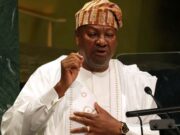
Retired Nigerian ambassador and diplomat Joe Keshi warns that the regional bloc risks collapse unless its leaders embrace the proper governance and discipline that many member states now only give lip service to.
During a recent interview with ARISE News, Keshi said ECOWAS was grappling with deep internal contradictions that make declarations such as a regional state of emergency largely ineffective.
“As it stands today, I really do not see how any state of emergency can be helpful to the continent because of the divergence of views among the leaders themselves,” He said, noting that some member states remain under military rule while others are witnessing attempts by leaders to extend their tenure in office.
Add to that, he argued, the growing crises confronting West Africa are self-inflicted, stemming from leaders’ failure to respect constitutional limits and other governmental norms such as fair elections.
Member states’ constitutions may limit one’s term to five years, but many African heads of state go out of their way to extend their time in office.
That has caused a plethora of problems, Keshi explained, adding that turning a blind eye to other regional leaders amid such abuses has worsened the situation. He accused them of “legitimizing unconstitutional actions by attending inaugurations that endorse tenure elongation.”
During a recent interview, first aired on the Channels Television show Politics Today, Femi Falana, a Nigerian attorney and human rights activist, noted that the environment must be conducive for stopping coups in Africa. He also spoke about leaders’ attempts to hold onto power for multiple terms.
“The rickety democratic systems in these countries might collapse and I mentioned Benin Republic where all the opposition figures are either in jail, in exile or in their graves. In Togo, since 1963, (Gnassingbe) Eyadema the first and (Faure) Eyadema the second have been in power.
In July this year, Paul Eyadema or Nasigbe amended the Constitution of that country and removed term limit completely; no limitations as to how long he can be in power. His father was in power from 1963 to 2005 and he has been in power since 2005; now 20 years.
He has now amended the Constitution to allow him to remain in power indefinitely. The guy in Cote D’Ivoire, at the age of 83, has just been sworn in for a fourth term. He manipulated the Constitution of that country to get himself in power for a fourth term … ,” Falana said.
This is the problem in Africa today, he added. “You have a situation whereby the ruling parties, directly or indirectly, ban opposition political parties, render them impotent so that they cannot challenge you,” Falana explained.
However, according to Amani Africa, an online Pan-African think tank platform that publishes content about African issues, the growing “fragmentation” of ECOWAS is “no longer a theoretical concern but has become a stark reality.”
Despite a six-month extension offer from ECOWAS, the Alliance of Sahel States (AES), including Mali, Burkina Faso, and Niger, formally withdrew from the regional bloc, marking the most “significant crisis in West Africa’s regional integration since the founding of ECOWAS in 1975,” noted amaniafrica-et.org.
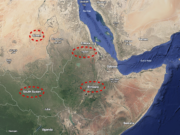
In Africa, the Sahel states are Senegal, Mauritania, Mali, Burkina Faso, Niger, Chad, Sudan and Eritrea. The core group is the countries Burkina Faso, Chad, Mali, Mauritania and Niger.
The creation of AES was not an impulsive response, but the “direct consequences” of frustrations with ECOWAS’’ perceived and real failures. Mali, Burkina Faso, and Niger, having experienced coups d’état and struggling with “severe security challenges, have come to view ECOWAS as an obstacle rather than a reliable partner,” explained Avoulete in his Foreign Policy Research Institute’s article.
It was ECOWAS’ economic sanctions and its consideration of military intervention in Niger after a military junta seized power in July 2023 that was the straw that broke the proverbial camel’s back.
According to Avoulete, the departure of the Sahel states of Niger, Burkina Faso and Mali “is rooted in the perception of ECOWAS applying a double standard in holding its leaders democratically accountable.”
He explained, “While swift condemnation and sanctions were imposed on the Sahelian states following their military takeovers, there is a palpable sense that other member states with less overt but equally damaging democratic deficiencies, such as Togo, have been allowed to operate with impunity.
This discrepancy has created resentment and encouraged the narrative that ECOWAS is more concerned with maintaining a certain image than with genuinely advancing democratic values in the region and addressing the fundamental needs of its populations.”
The rise of leaders who are not beholden to colonial powers like America and France is also making an impact and speaks to the weakening of ECOWAS, as many of those countries still have ties to the West. Some are looking to the AES for future leadership.
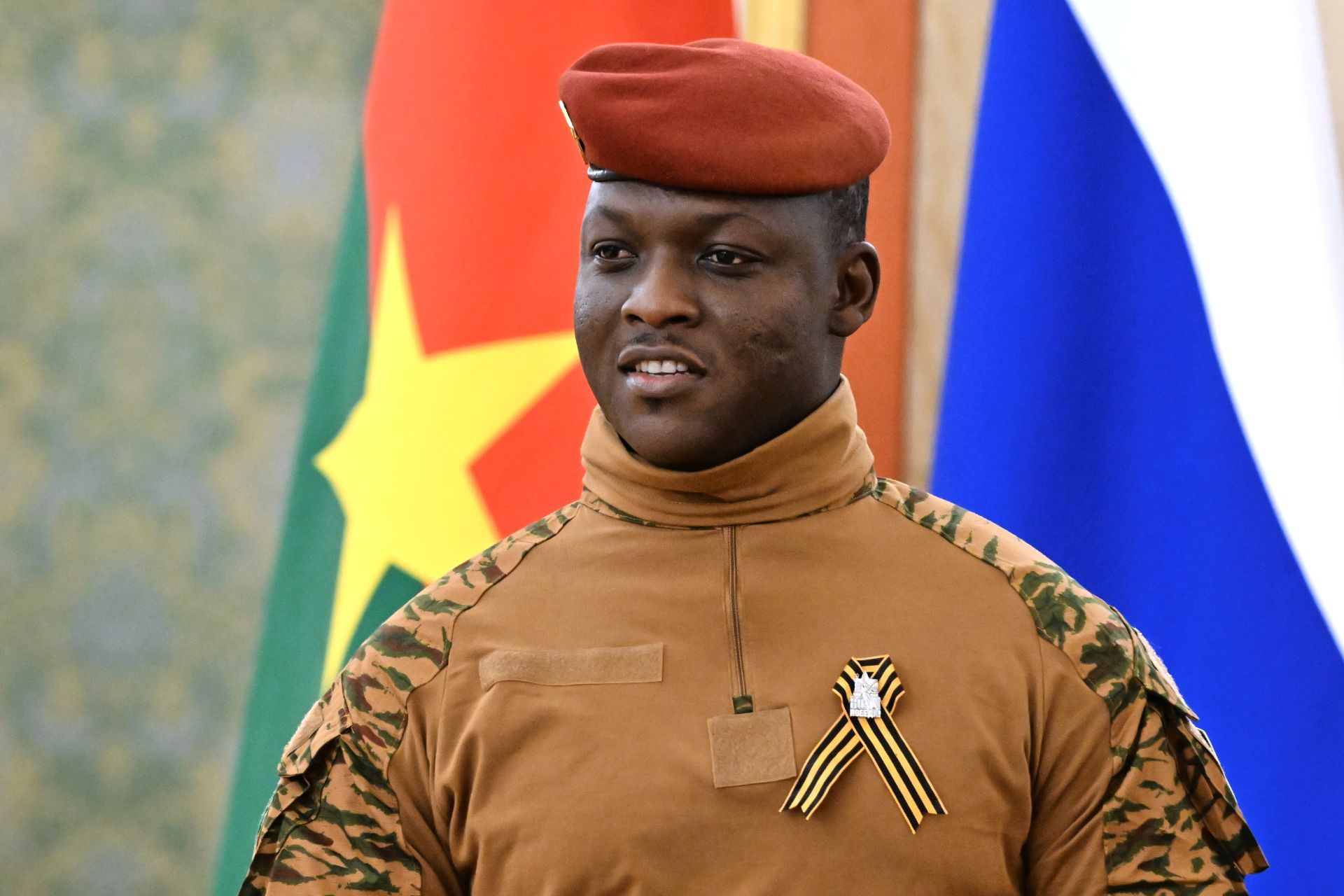
“The recent surge of support for the AES, both on the continent and across the diaspora, and, particularly, for Captain Ibrahim Traoré of Burkina Faso in the face of Western scrutiny and various failed coups, articulates a clear message: The AES represents a powerful alternative, a vision of leadership that resonates deeply within Africa,” said Ayoulete.
Follow Jehron Muhammad @Africawatchfcn on X.
