









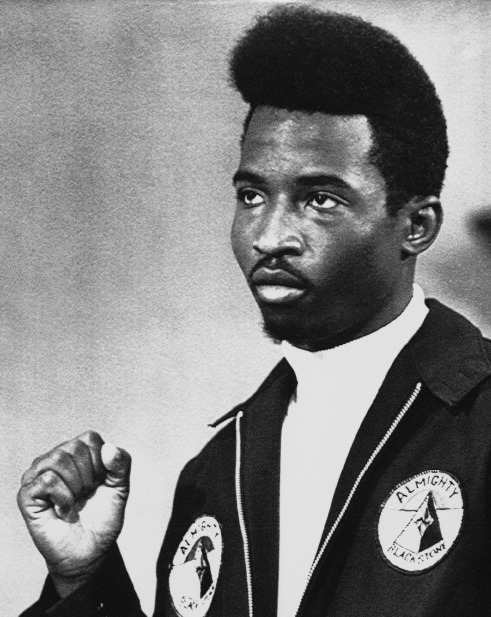

Human rights activists and lawyers advocating on behalf of Jeff Fort, a co-founder of the Black P Stone Rangers, a Chicago-based street organization later known as the El Rukn Tribe of the Moorish Science Temple, are seeking a medical transfer to a geriatric facility for the ailing 78-year-old federal inmate. Mr. Fort is now four decades into a 168-year sentence, including the last 19 years spent in extreme isolation within a high-security prison in Colorado.
In a press statement e-mailed to The Final Call by Black Power Media (BPM), Mr. Fort suffered a fall around October 19, causing him to strike his head on the concrete floor of his cell after experiencing a blackout, of which he has documented histories dating back to 2006 – 2007. He was reportedly rushed by ambulance and later underwent extensive surgery, raising grave concerns over his deteriorating health within the USP Florence ADMAX facility, a prison within the prison complex, the press release said.
Mr. Fort, also known as Abdul Malik Ka’bah and Chief Malik, was convicted of several federal charges, including alleged conspiracy and weapons charges in 1987, an alleged murder in 1981, and a conviction for alleged drug trafficking in 1983. While incarcerated, his health has drastically declined.
“Mr. Fort experiences ongoing difficulty breathing during the day and shortness of breath at night,” BPM said in their written statement. “He also struggles with CPAP therapy and has experienced significant weight loss, dropping to approximately 180 -185 pounds, which is likely linked to dental issues and delays in receiving dentures that make eating difficult. Mr. Fort has been incarcerated for nearly 40 years and has spent the last 19 years in near-total isolation,” the statement continued, noting that confining the elderly to such environments is inhumane and presents severe risks to both mental and physical health.
“The goal is to absolutely, at some point, get him some type of medical clemency, but for now the plan is to attempt to have him transferred to a medical facility,” said Kalonji Changa, chief coordinator of movement affairs and public relations of the law firm For The People, LLC.
“He’s in Colorado ADX, which is a supermax prison, but it’s also what they call the Guantanamo of the Rocky Mountains,” Mr. Changa said to The Final Call in a telephone interview.
“He’s been locked up close to 40 years at this time and it’s a very harsh detention facility. He’s elderly, so the lack of proper medical treatment is always a problem. The conditions have had a devastating toll on his physical and mental health,” he said of the underground prison. He said the facility’s remote location and its elevation of 5,322 feet above sea level contributed to Mr. Fort’s deteriorating health, including the lack of sunlight, human communication, and human contact.
“I would say that if Mr. Fort had the rights that the American government would give to dogs, it would be better than the conditions he has right now,” Mr. Changa insisted. “You can’t imagine a dog locked in a cage that amount of time and lacking any type of physical interaction. In fact, if you kept your dog caged for that amount of time and in solitary confinement for close to 20 years, I’m sure you would be arrested,” he said.
A 2020 paper published through the Northwestern University Law Review titled “The Science of Solitary: Expanding the Harmfulness Narrative,” by Dr. Craig Haney Ph.D., J.D., Distinguished Professor of Psychology at the University of California, Santa Cruz, explored the harmful impact of solitary confinement on inmates.
“Knowledge about the psychological and physical harms inflicted by solitary confinement has evolved considerably over the last several decades. Ironically, growing awareness of its serious adverse effects coincided with the increasingly widespread use of the practice during the era of mass incarceration that began in the 1970s. This recent several-decade period of prison growth also represents the ‘modern era’ of solitary confinement in corrections, in contrast to its widespread—and, for a time, nearly universal—use in the nineteenth century.
“Over a century ago, the terrible effects that solitary confinement had on prisoners led to condemnation of the practice and a long period of relative disuse. Thus, even by the mid-nineteenth century, many state prison systems had concluded that the once widely used harsh form of complete isolation was ‘impracticable, inhuman, and intolerably expensive,”’ Prof. Haney explained in part.
“The basic harmfulness of solitary confinement is now a largely settled scientific fact. A number of articles published in recent years have comprehensively catalogued a wide range of studies demonstrating the adverse psychological effects and other consequences that befall persons who are subjected to this cruel form of imprisonment,” Prof. Haney wrote of its long-term consequences.
For The People lawyer, and lead attorney representing Mr. Fort, Jenipher Jones, told The Final Call that the facility in which he has been sentenced to spend the rest of his life raises troubling questions under a government where the U.S. Constitution is purportedly “the supreme law of the land.”
“He is here in Colorado at the ADMAX facility, which a lot of people misdescribe as a supermax,” Atty. Jones said. She said it is the most secure correctional prison in the United States. “The supermax is next door on the complex, but this is a special facility that the BOP (Bureau of Prisons) reserves for prisoners who are in need of administrative segregation, a unique form of incarceration which is basically a form of solitary confinement. It is way up in the mountains, and he, along with other prisoners, is housed deep down below, underground,” she explained.
“He’s in a singular cell in which everything is totally automated where he would never really have to leave the cell except for outside time or medical or things like that,” Atty. Jones said. “His communications are severely restricted and in terms of letter writing, talking to family members, making outside calls, things like that, everything he does, with the exception of his communications with our legal team, is highly monitored. It’s a form of isolation and surveillance to be better able to keep track of and control prisoners who may be of a particular status,” she said.
“That ADX is notorious, and it’s shocking and would probably be shocking to the average person,” Atty. Jones said.“It’s the most restrictive prison in the United States and it’s one of the most restrictive and isolated prisons in the world. I could go on about the kind of environment that it is and how inappropriate it is for someone his age,” she added.
The BPM press statement said that “Mr. Fort has maintained a near spotless disciplinary record, completed over 100 educational courses, and has been housed in the facility’s ‘honor unit’ for well-behaved inmates.” His daughter LaTonya Fort, who, according to the press statement, faithfully nurses and tends to her father, stated, “My father gave us all the greatest gift anyone could give: He believed in us. Please believe in him and help us work towards his freedom.”
According to the Eighth Amendment to the U.S. Constitution, it states: “Excessive bail shall not be required, nor excessive fines imposed, nor cruel and unusual punishments inflicted.” In the case of Mr. Fort, what he is enduring could be seen as “cruel and unusual punishment.”
“Because of the high level of isolation that is there for Mr. Fort, things like the altitude and his aging body, it has had an effect on him and his health (and) we believe he does need geriatric care like most elderly people do,” Atty. Jones stated plainly.
“This form of punishment is inappropriate. He poses no threat to the public at all, so we are hoping in terms of legal remedies that he will be transferred to a medical facility,” she said.
The press release asks supporters to visit www.freefort.org for more information on how to support efforts to transfer Mr. Fort to an appropriate medical facility and advocate for his clemency based on his age and ailing condition.
