











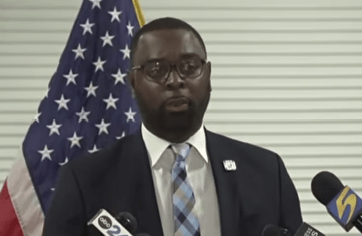

MEMPHIS—If there were any questions or uncertainty on a timetable for the presence of federal law enforcement intervention in the city of Memphis, the Tennessee governor recently addressed it. “We will execute on this operation as long as it takes,” stated Gov.
Bill Lee at a press conference in Memphis, after meeting with city and federal agency officials, including Mayor Paul Young, to receive updates from the Memphis Task Force established by President Donald Trump. The task force includes the deployment of National Guard Troops.
(See The Final Call Vol. 45, No. 2) “We’ve just begun. We do know that this is going to last for months, and we have just begun. In fact, I will tell you that it will last forever,” the governor said during the live-streamed Oct. 14 press conference.
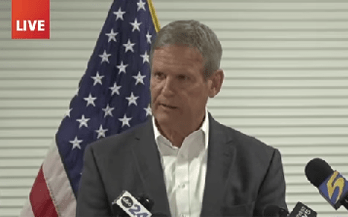
Gov. Lee acknowledged that eventually the surge or the present numbers of agents on the ground will diminish at some undetermined point, but stated, “the collaboration between the U.S. Marshall service.
The Memphis Police Department, the FBI, the Drug Enforcement Agency (DEA) and the Tennessee Highway Patrol, is here to stay.” However, it remains unclear how many “boots” and agencies are actually on the ground.
Initial reports indicated that there would be no more than 150-200 unarmed National Guard deployed. But the first wave of troops, which arrived in early October, was seen patrolling an area near the Mississippi River waterfront wearing protective vests, military fatigues, and holstered guns.
“We said they wouldn’t be armed, and it would be mission dependent and that the decision whether our National Guard are armed or not is determined by the Task Force for what their job is on the ground,” said Gov. Lee.
“I honestly can’t speak to the detail[s] of that, but the role of the National Guard in this mission is to support the law enforcement agencies that are here. It is to provide support for the Highway Patrol.
The Memphis Police Department (M.P.D.), the U.S. Marshal services, whenever there is a presence of the National Guard, it frees the operation of a law enforcement officer with the MPD, for example, to pursue the violent criminals. They are functioning as a support operation, and it is a force multiplier for law enforcement agencies on the ground.”
The governor also shared the latest statistics reported by the Task Force: “We got updated numbers today, 850 violent criminals and known gang members have been arrested, so far, in just the two weeks that have had this operation underway, 175 illegal firearms have been confiscated; 44 missing children have been located and returned to safety.”

According to a report published by Action News 5, from the Department of Justice (DOJ), the charges included close to 300 warrant pickups, narcotics and firearm arrests, homicide, sex offenses, probation/parole violations, and 161 administrative arrests, which the DOJ defined as arrests related to immigration violations.
However, most of the interactions have been through traffic citations, over 3,900. Shelby County Mayor Lee Harris accuses the task force of racial profiling and unlawful stops. He stated that Latinos are being targeted regardless of their immigration status.
“We support lawful [actions] but as you know and heard me say before, we believe that the deployment of the National Guard is unconstitutional. At the same time racial profiling is unconstitutional,” Mayor Harris told reporters.
Governor Lee appears to be encouraging other cities to adopt a similar model of military and governmental intervention, suggesting that the developments in Memphis could serve as a national precedent.
“There are a lot of cities that would only hope to have the resources that are currently available in Memphis. There are cities that could only dream of having the crime reduction that Memphis is having—that we anticipate will have—as it escalates the number of arrests, the number of violent criminals taken off the street;
What that might mean for this city and its transformation. There are a lot of cities that would hope for that transformation in their cities,” he boasted.
But do record arrests address the underlying issues that have historically led to increasing crime rates?
Memphis has a higher-than-national-average poverty rate of 20.8% and a child poverty rate of 32.7%, according to the 2023 Memphis Poverty Fact Sheet. The 4.6% unemployment rate ranks higher than the national average.

And in a majority Black city, there is still a significant household income disparity with a median household income of $41,974 for Black families compared to that of a White family’s median income of $76,860 and $60,376 for Latino families.
Additionally, home ownership, generally a sign of a stable community, has dropped to 46% with over 7,000 single-family homes in Memphis purchased in a short two years by out-of-town and international investors.
However, the prevalence of absentee homeowners and a lack of interest in tenants have led to areas of blight, further worsening conditions in the city.
According to a 2020 study, the educational system in Memphis ranked 468 out of 511 comparably sized cities, with less than a quarter of the population aged 25-plus holding college degrees.
“In addition to the way we police, when we start talking about sustaining, we’ve got to talk about the things that are going to change the trajectory of the lives of the individual,” said Memphis Mayor Paul Young, indirectly alluding to the conditions facing Memphians.
“We can’t ask people to put guns down without putting something else in their hands, so this task force, if you look at the list of the agencies—it was not just FBI, DEA, ATF and those law enforcement agencies, there are also those federal agencies like HUD—so investment in housing.
“There are agencies like Health and Human Services, where we can get more investment in mental health services. The thing that prevents people from moving into a life of crime are the investments that are going to help us sustain the work that we are doing right now.
We want to get violent criminals off the street, and we want to prevent future generations from going that route and the way that we do it, we identify the areas that we can make those proactive investments to make sure that we sustain all of the gains that we have achieved during this moment.”
However, a report was not provided on the potential investments in housing or mental health services or what that may look like.
