




by Charlene Muhammad and Nisa Islam Muhammad
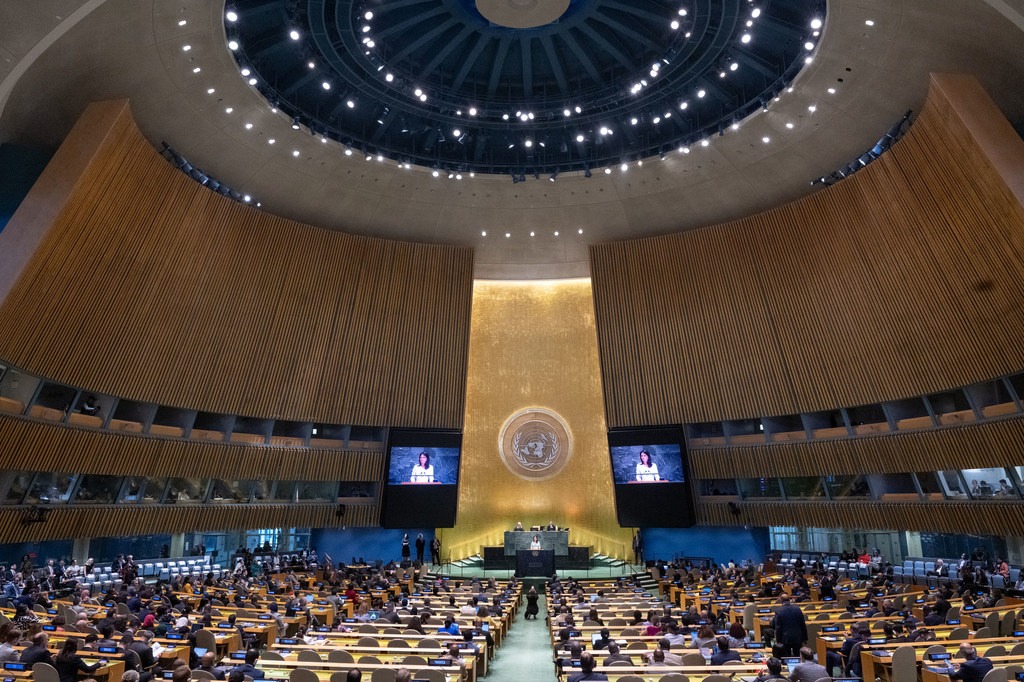
World leaders are currently gathered in New York for the 80th session of the United Nations General Assembly (UNGA) under the theme “Better Together: 80 Years and More for Peace, Development, and Human Rights.”
This year’s gathering is focused on the landmark anniversary and the UN’s relevance for the future, amid rapidly worsening wars and deteriorating geopolitical realities.
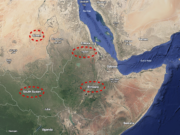
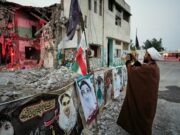
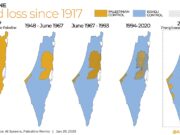
The UN has been seemingly ineffective in helping with what’s transpiring in Gaza, Russia and Ukraine, or the Sudan, where peace seems elusive and death tolls continue to climb. Over its eight-decade existence wars, rumors of wars, famine and injustice continue. This year’s UNGA kicked off Sept. 9 and concludes on Sept. 28.
Chaos and confusion manifesting as wars and winds of looming wars belie the international body’s stated aim for “peace, dignity and equality in a healthy planet.”
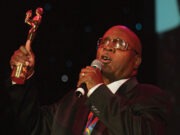
The Honorable Minister Louis Farrakhan, National Representative of the Most Honorable Elijah Muhammad, cautioned the UN on how the nations of the Earth should look toward resolving conflicts to avoid the final great war prophesied of in scripture, called The War of Armageddon.
Minister Farrakhan delivered a major address at the United Nations Plaza on October 16, 1996, the anniversary of the Million Man March, to once again deliver warning and guidance directly from Allah (God).
“We are here to see if there’s something the leaders are willing to do, that you the people are willing to do, to avert this war. The window of opportunity’s very narrow, but maybe we can avert this destruction, if we will hear the Word of Allah (God),” Minister Farrakhan said.
He then referenced the book of Joel, chapter 2, verse 1 of the Bible. “The Prophet Joel said, ‘Blow ye the trumpet in Zion, and sound an alarm in my holy mountain: let all the inhabitants of the land tremble: for the day of the LORD cometh, for it is nigh at hand,’” he added.
Dr. Wilmer Leon, an author, commentator, and political scientist, told The Final Call that though he thinks the UN is still relevant, it is unfortunately not effective.
“It’s relevant because anytime you can have an international organization of that manner, where countries can come together and dialogue and agree about particular issues, particular courses of action, it’s relevant.
However, unfortunately, due to the way the UN is structured, the United States has considerable veto power and control. The UN is not as effective as it should be, because Western neocolonial interests dominate it,” he said.
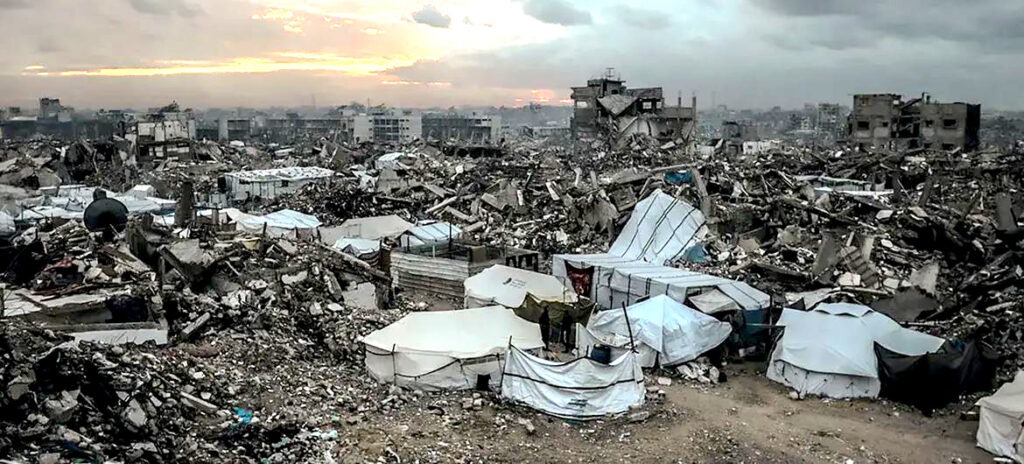
Armed conflicts continue
“Eight decades ago, the founders of our organization gathered in San Francisco. Emerging from the fires of a world war, they envisioned something different.
A global-problem-solving body that could not only prevent calamities like war, but could forge solutions to other age-old problems haunting humanity—poverty, hunger, illness, and inequality,” stated UN Secretary-General António Guterres during his remarks to the opening of the General Assembly’s 80th session.
In an official press statement, he stated: “These efforts, built by the world for the world, and grounded in the values and principles of the United Nations Charter, are what this Assembly is all about. The United Nations provides the place. The Charter provides the tools.”
However, as these world leaders meet, there is still global upheaval.
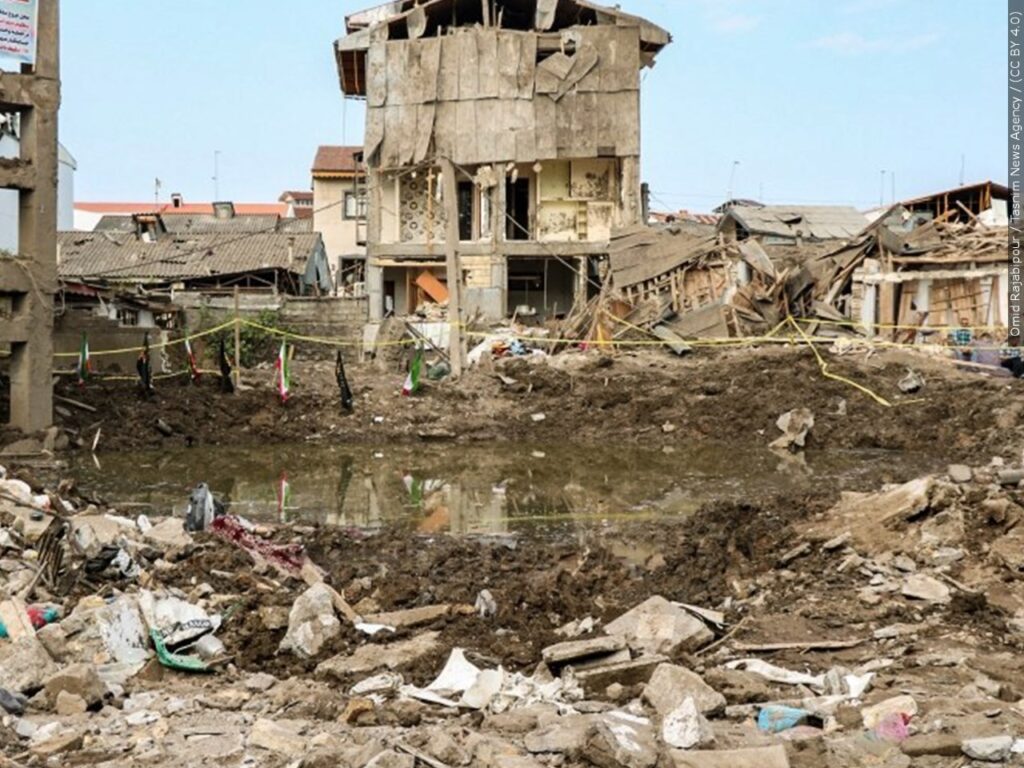
The Geneva Academy of International Humanitarian Law and Human Rights currently monitors more than 110 armed conflicts, some of which make the headlines, while others do not, it notes.
Some of the conflicts started recently, while others have lasted for more than 50 years, as indicated on the organization’s webpage. The academy cites conflicts currently happening in Europe, Africa, the Middle East and Asia.
Challenges and criticisms
Since its founding in 1945, the UN has aimed to shape global norms and encourage cooperation, including the establishment of the World Food Program and the International Women’s Year, among its significant achievements. However, its peacekeeping missions have had a problematic history with UN troops being mired in scandals, including sexual abuse and other violations.
The UN’s dedication to humanitarian aid has played a role in easing some suffering in areas impacted by natural disasters and conflicts. However, political divisions and limited resources have often hindered its effectiveness.
“The UN is not playing the role that it needs to play, because so many people are afraid of the big dog (the United States),” Washington, D.C. activist and UN Association National Capital Area member Luci Murphy told The Final Call.
“Unfortunately, people think that money is the most powerful thing going on. Somebody rich tells you to jump, you’ve got to say, ‘How high?’ It takes a lot of effort and a lot of work to get the other power[s] together, which is the power of people. We have become so siloed, and people are so mistrustful; there are just so many lies being told.”
In recent years, the UN has faced widespread criticism for its failure to address contemporary global issues effectively. Issues like the conflicts in Gaza and Ukraine have challenged the United Nations Security Council (UNSC), with countries like the United States using its veto powers to stop the UN from taking action on many issues.
The Council includes 15 member nations but has five permanent members: the United States, China, France, Russia, and the United Kingdom. Each of these countries holds veto power, allowing them to block any substantive resolutions.
The U.S. not only holds veto power, but it also recently cut $1 billion in UN funding that has impacted the United Nations’ ability to provide some of its most basic services.
Secretary-General Guterres has addressed this criticism and the challenges facing the UN by advocating for reforms to make it more responsive and effective.
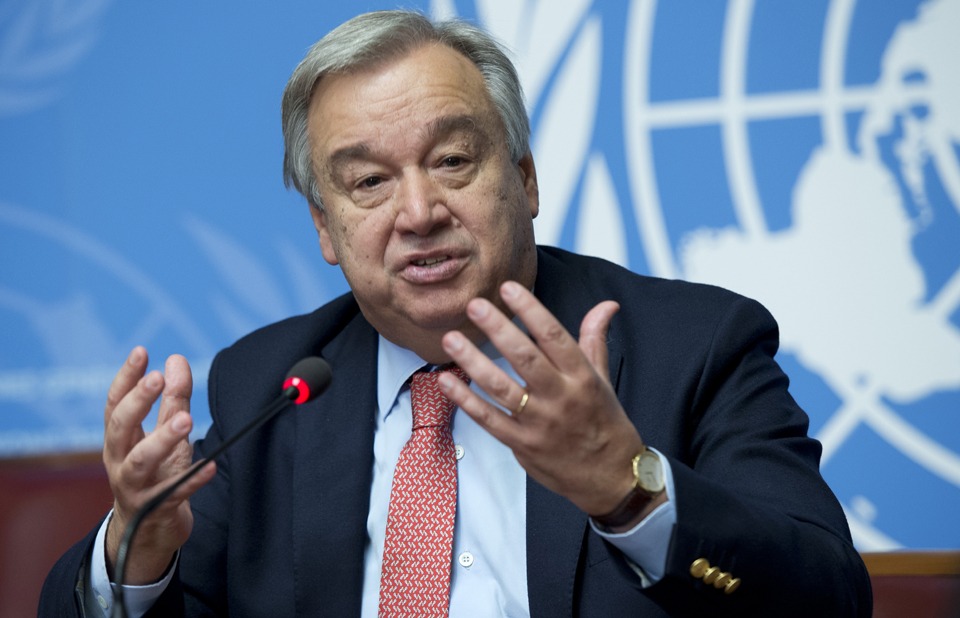
Earlier this year, the UN initiated the “UN80” reform agenda, aiming to modernize its structures and operations. This initiative aims to simplify decision-making, improve coordination among agencies, and ensure that the UN stays responsive in tackling global issues, including technological progress and emerging health threats.
However, the success of these reforms relies on member states’ willingness to commit to meaningful change and allocate the necessary resources.
“Our world is facing challenges on every front. Since the United Nations reflects that world in all its aspects, we feel it in all our work. These are times of intense uncertainty and unpredictability,” said Secretary-General Guterres when he announced the program last March.
The UN resulted from a struggle within the United States political class, ruling circles, combined with the results of WWII, explained Bill Fletcher, an author, activist and former president of TransAfrica Forum, a research and advocacy organization based in Washington, D.C.
“There was not unanimous agreement in U.S. ruling circles about the need for or the desire for a United Nations. And this becomes very important over the subsequent 80 years when you look at the resistance of the United States to various efforts on the part of the UN and efforts to transform the UN,” Mr. Fletcher told The Final Call.
Coming out of WWII, the UN was created in a way that guaranteed problems because of the creation of the Security Council, which was comprised of victors from WWII with certain modifications, Mr. Fletcher explained.
Critics argue that the Security Council is the UN’s real power, and that the U.S. has ultimate veto power. According to Mr. Fletcher, the existence of the Security Council and its veto has essentially meant that the larger powers are always able to block initiatives that, frankly, the majority of the world often wishes to pursue.
“So, the General Assembly votes are more often than not symbolic and are not necessarily translated into a particular activity,” he said.
“I would say the United Nations continues to hold the potential that it can be a troubleshooting and peacekeeping organization, but that means that the different powers, particularly the larger powers, have to be willing to defer to the United Nations on critical things,” he continued.
According to an article published Sept. 17 on UN News, General Assembly President Annalena Baerbock stated that after 80 years of a changing world, “it is time to adapt and evolve for a United Nations that will carry us through the next eight decades to show eight billion people why this Organization still matters.” It is critical to respond to calls for peace in Ukraine, Gaza, Sudan and Haiti, she added.
According to Roger Wareham, an international lawyer with the December 12th Movement International Secretariat, the relevance of the UN is tied to the role it can play in influencing international public opinion.
The December 12th Movement recognizes the importance of international public opinion and its ability to expose the double standard and hypocrisy of the United States, he said.
“It was within that framework that we were able to call for and help organize for The UN World Conference Against Racism in Durban in 2001. We produced the first International Declaration of the Trans-Atlantic Slave Trade and slavery as crimes against humanity, and reparations are due the descendants of the victims, so it has that type of value,” Mr. Wareham told The Final Call.
“Some of the shortcomings of the UN are that they have no enforcement mechanism, aside from the Security Council, which can authorize threats, but aside from that, it’s limited,” he added.
Also, he said Africa is the only region that has no representation with a permanent vote.
“The UN’s relevance is its propaganda value. … It’s been very valuable in terms of us popularizing or just letting people know our situation and the hypocrisy of the United States being played out in big time,” added Mr. Wareham.
The path ahead
As the UNGA celebrates its 80th birthday, its future relies on strengthening cooperation between countries and sticking to its original goals. The recent sessions of the General Assembly provided an opportunity for member states to reaffirm their commitment to the UN Charter and collaborate on addressing pressing global challenges while standing at a crossroads. However, will the UN adapt to the evolving international landscape to determine its continued relevance in the 21st century?
As the world commemorates eight decades of the UNGA, the focus must quickly shift from reflection to action, ensuring that the organization is truly a cornerstone for international peace, development, and human rights.
However, as Minister Farrakhan cautioned the international body in his 1996 message regarding the prophesied War of Armageddon, “This most destructive of all wars is at hand. In fact, we have entered into the door of this great cataclysmic war that will take down almost all of the human family of the earth.
In fact, this time period is prophesied to bring about such destruction, that it is written in the Bible that if these days were not shortened for God’s elect sake, no soul would be left alive on earth.”
He warned world leaders about the consequences of using instruments of war and the impact of warmongering and peace breaking. “This again, is why we’re here at the United Nations, to call the nations to Atonement for murder, violence, and war,” said Minister Farrakhan.
Final Call Staff Writer Brian E. Muhammad and Final Call staff contributed to this report.
