





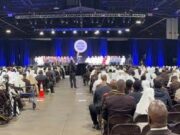


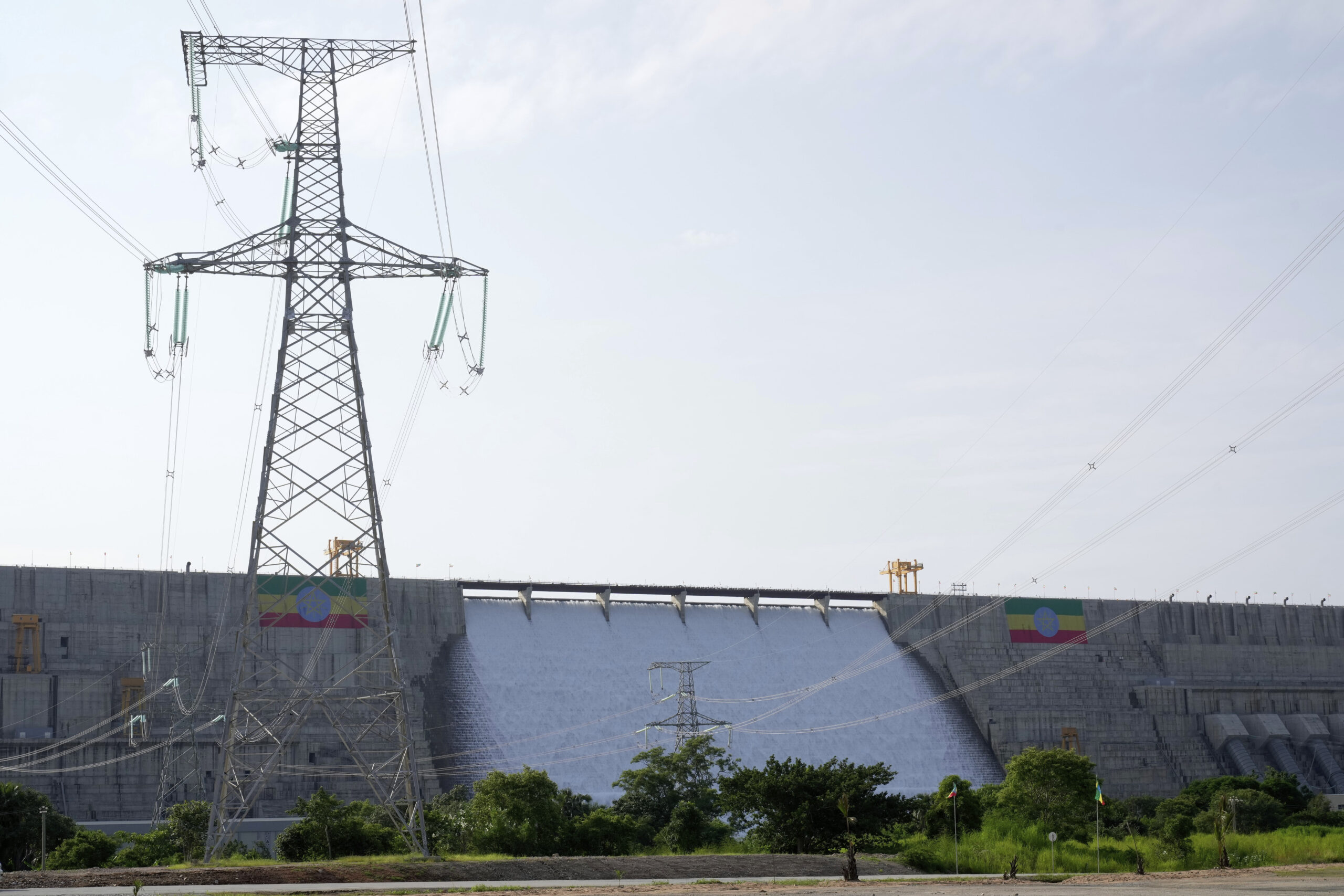

The inauguration of the Grand Ethiopian Renaissance Dam (GERD) on Sept. 9 marked an historic millstone. Construction of GERD formally known as the Millennium Dam, and during the planning stage as Project X, began in 2011.
It is considered Africa’s largest hydropower project and the 8th-largest in the world. The dam will generate 6,000 megawatts of electricity and its reservoir will be able to hold over 70 billion cubic meters of water, which is nearly equal to the flow of the Nile River in one year.
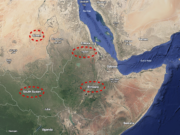
The dam is in the Benishangul-Gumuz region of Ethiopia, on the Blue Nile River, to the east of Sudan. The project, a source of national pride for Ethiopians, was principally financed by the Ethiopian government, and managed by the Ethiopian Electric Power Corporation (EEPCO).
“Ethiopians may disagree on how to eat injera (their stable food), but they agree on the dam,” Moses Chrispus Okello, an analyst with the South African-based Institute for Security Studies think tank, told BBC.
“They do not see it as a pile of concrete in the middle of a river, but as a monument of their achievement because Ethiopians, both at home and in the diaspora, funded the dam’s construction. There were waves and waves of appeals for contributions when construction started in 2011.”
In a statement announcing the completion and upcoming launching of the $5 billion dam, Ethiopian Prime Minister Abiy Ahmed reassured his country’s neighbors about the completed project.
“To our neighbors downstream—Egypt and Sudan—our message is clear: the Renaissance Dam is not a threat, but a shared opportunity,” he posted on the social media platform X.
“It (GERD)) is a symbol of regional cooperation and mutual benefit. The energy and development it will generate stand to uplift not just Ethiopia, but the entire region. Egypt’s Aswan Dam has never lost a single liter of water due to the GERD.
Likewise, Ethiopia remains committed to ensuring that our growth does not come at the expense of our Egyptian and Sudanese brothers and sisters,” he added.
“We believe in shared progress, shared energy, and shared water. Prosperity for one should mean prosperity for all. Ethiopia remains ready and willing to engage constructively with downstream countries.
We extend an open invitation to the governments and peoples of Egypt, Sudan, and all Nile Basin nations to join us in celebrating this historic milestone—Ethiopia’s Renaissance—in September.”
According to Water-Technology.net, the regulated flow of Nile River water from the dam will “improve agriculture and the impact from evaporation of water from the dam will be minimal compared with other dams in Ethiopia, which will help in water conservation.”
Egypt’s Aswan High Dam, as well as other dams in Ethiopia, “equates to around 19 billion cubic meters.” It’s estimated that GERD will reduce the capacity of the Aswan Dam, therefore saving roughly six billion cubic meters of water.
To give context to GERD’s impact on the region we go back to agreements signed in 1929 and 1959. Both agreements favored Egypt, who historically adopted an aggressive approach to the flow of the Nile River.
According to the conversation.com, “The first agreement was made between Great Britain, as the colonial power in eastern African, and Egypt. Cairo was favored over other riparian (situated on banks of Nile River) countries as an important agricultural asset.
In addition, the Egyptian-run Suez Canal was vital for British imperial ambitions.” The British riparian colonies included: Sudan, Uganda, Kenya and Tanganyika (now Tanzania) as well as Ethiopia. They had no say in the outcome of the agreement.
In fact, in the agreement Egypt would receive 48 billion cubic meters of water annually and Sudan 4 billion cubic meters. The 1929 agreement granted Egypt veto power over construction projects on the Nile River or any of its tributaries to minimize any interference with the flow of water into the Nile.
According to Brookings.edu, in 1959 “Egypt and an independent Sudan signed a bilateral agreement, which effectively reinforced the provisions of the 1929 Anglo-Egyptian Treaty.” The 1959 agreement increased the two countries’ share of water, Egypt’s share to 55.5 billion cubic meters and Sudan’s to 18.5 billion.
On Sept. 3 the governments of Egypt and Sudan met in Cairo and in a joint statement, following the meeting, of their foreign and water ministers, claimed the project poses serious risks for “downstream states,” thereporterethiopia.com reported. In the joint statement they said, “(GERD) violates international law and represents a continuous threat to stability in the Eastern Nile Basin.”
However, Yacob Arsano, who teaches hydro politics in the Nile Basin at Addis Ababa University, said Ethiopia was “very careful” with the design and planning of the dam to ensure water flows downstream throughout the year, reported Associated Press.
“Egypt continues to receive the water. Ethiopia continues to send water. So that is the remaining fact and for which how to organize such a shared use of water resources depends on the two sides. All of the upstream and downstream countries need to sit down properly and soberly,” he said.
Habtamu Itefa is Ethiopia’s Water Minister. He explained that his country wants to work with other African nations.
“So the way forward is: let’s work together for more investment,” he said, reported ABC News. “Let’s join hands to propose more projects that can benefit all of us, wherever they may be.
This can be scaled up to Nile Basin countries—to Uganda, to Tanzania, to Rwanda, to D.R.C., to South Sudan, to Kenya, to Ethiopia, to Egypt as well,” he said.
Follow Jehron Muhammad @africawatchfcn on X
