












PHILADELPHIA—State Representatives Gina Curry and Carol Kazeem are leading an urgent fight to bring attention to a critical and often overlooked issue in Pennsylvania—the alarming number of missing Black women and children.
Their proposed solution? The establishment of an Ebony Alert System, a legislative measure aimed at addressing this disparity and improving outcomes for Black and Latino communities in the state.
The statistics speak volumes. Nationally, Black Americans comprised 34% of all reported missing persons in 2012, despite being only 12.6% of the population then.

Fast forward to 2022, and Black girls and women made up 36% of the 271,493 females reported missing, even though they represented just 14% of the U.S. female population. By contrast, Whites and Latinos, who collectively make up 80% of the population, accounted for only 60% of missing person cases.
According to Black and Missing Inc., which posted data on its website from the U.S. Census, 40% of missing persons are “persons of color, yet African-Americans make up only 13 percent of the population.” Black and Missing Inc. is “a non-profit organization whose mission is to bring awareness to missing persons of color;
provide vital resources and tools to missing person’s families and friends and to educate the minority community on personal safety,” the group notes on its website blackandmissinginc.com.
Blackandmissinginc.com also noted that according to the National Crime Information Center’s (NCIC’s) Missing Person and Unidentified Person Files as of February 7, 2024, there were 563,389 persons reported missing in 2023.
These numbers highlight not just systemic neglect but also the compounded biases and media underrepresentation leaving Black children, women, and families without equitable attention or resources.
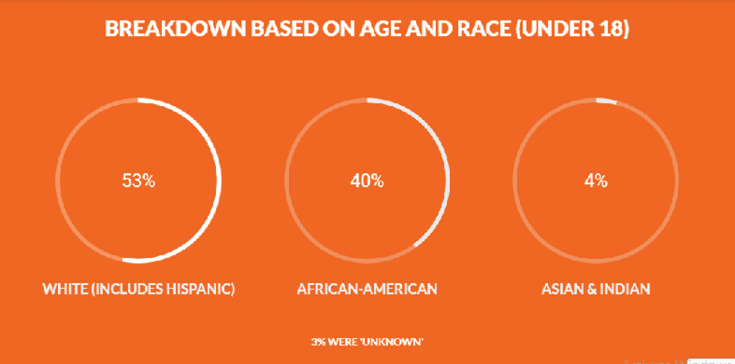
According to blackandmissinginc.com, of those people missing under the age of 18, 53% were White (including Latinos), 40% were Black and 4% were Asian and Indian. The total number of Blacks, Asians and Indians missing under 18 year olds totaled 162,755 the website reported.
While specific data for Pennsylvania isn’t currently available, the national trend underlines an urgent need for action. The Ebony Alert System is designed to be a critical tool for addressing this issue.
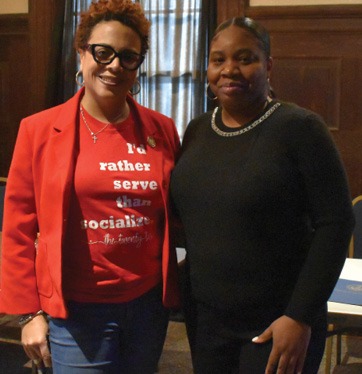
“It’s a double protection system for Black and Brown children who are disproportionately overlooked and too often labeled as runaways, rather than missing,” explained Rep. Gina Curry. The system would function similarly to the Amber Alert but focuses specifically on addressing the systemic neglect faced by children from underrepresented communities.
On January 25, this fight took center stage during a program honoring Human Trafficking Awareness Month, hosted at the Rotunda in west Philadelphia by community activist “Bigga Dre.”
Rep. Curry and Rep. Kazeem were featured presenters, using the platform to advocate for the Ebony Alert System and to reinforce its importance as a legislative priority.
Rep. Kazzem elaborated on the necessity for the system. “There’s a glaring lack of urgency and media attention when children of color go missing,” she stated.
“Too often, they are labeled as runaways, and by the time authorities act, predators have already trafficked them or worse. The Ebony Alert is a critical step in raising awareness and ensuring their cases are given the same priority as others.”
Implementing the Ebony Alert System will require extensive community education to ensure its effectiveness. According to Rep. Curry, many people initially question the necessity of such a system, arguing that an Amber Alert already exists.
She emphasized, however, that the Ebony Alert would not replace the Amber Alert but work alongside it to highlight the disparity and advocate for children who are so often ignored.
“Statistically, Black and Brown children are less likely to be looked for when they go missing,” Rep. Curry stated. “This system ensures a secondary network of attention is activated for these vulnerable children.”
Even with such critical objectives, the initiative faces significant legislative pushback. The Pennsylvania State Police, for instance, have expressed doubts, asserting that the existing Amber Alert system is sufficient.
Advocates for the legislation, however, fiercely disagree. “This is not about segregation,” Rep. Curry stressed. “This is doubling down to help locate all children with a specific focus on those who are most frequently overlooked.”
Rep. Kazeem acknowledged the resistance, adding, “Yes, there’s pushback, but we must remain steadfast. This crisis cannot and should not be ignored.”

The Ebony Alert System’s framework draws inspiration from California, where a similar initiative has already been signed into law. Community groups, activists, and leaders have supported the measure as a vital tool for addressing the disparities in missing person cases involving Black and brown individuals. Pennsylvania lawmakers hope to replicate and adopt California’s model.
State Senator Anthony Hardy Williams, who has thrown his support behind the initiative, characterized the crisis as both a failure in humanity and a particularly acute issue for Black communities.
“We cannot continue to ignore the fact that African American young women are going missing without accountability or processes to find them,” he asserted. “Raising awareness through an Ebony Alert system is critical.”
Additionally, Senator Williams pointed out how California’s system has helped reduce missing children cases by both facilitating quicker recovery and signaling to predators that all children are now being actively searched for. “It’s time we made that same commitment here in Pennsylvania.”
Moving forward, Representatives Curry and Kasim plan to reintroduce the legislation in the current session with the hope of gaining bipartisan support. Community activists, child advocates, and law enforcement are being approached for collaboration to ensure broad adoption and impact.
“This is not an easy fight, but it’s the right thing to do,” Rep.Curry emphasized. “We cannot back down in the face of opposition. Every child deserves to be searched for and protected with the same urgency and attention. This legislation is about correcting inequality and bringing justice to those who have, for too long, been ignored.”
With a timeline in place, Rep. Curry and Rep. Kasim aim to push the bill to a committee vote within the next month and to the House floor for approval by April 2025. The goal is to see this critical legislation signed into law by June.
“Every child is our child to fight for, and we won’t stop until this system is in place,” Rep. Kazzem said.
