







There is noted pride in increased political visibility and the growing success of U.S. candidates with immediate African family ties, but it is still tinged with trepidation that, in all honesty, because of skills and talent that Africa cannot afford to lose.

The history of European acquisition and plundering of Africa’s natural and mineral resources, and the exploitation of its sports figures during the World Cup, can now possibly be seen in the halls of the United States Congress and at the state level.
Political candidates with immediate family roots in Egypt, Ethiopia, Somalia, Ghana, and Nigeria secured major victories in the 2026 United States midterm elections, which Business Insider Africa noted as “breaking national barriers and expanding the African diaspora’s presence in American government.”
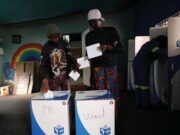
According to the Council on Foreign Relations, a record 23 African-born immigrants from at least 10 African countries, spread across 13 U.S. states, won their races to become lawmakers in various American federal and state legislatures.
These victories extend a run that had seemed to reach a high-water mark back in January when Ugandanborn Zohran Mamdani, with a degree in African studies, became New York City’s youngest mayor in over a century.
Whether the wins at the polls ever translate into warmer relations with Africa, it is way too soon to tell. The most consequential victory came in Michigan, where Democrat Dr. Abdul El-Sayed handily defeated Republican Mike Rogers for an open U.S. Senate seat. In fact, the statewide Muslim community or ummah, that supported him included different schools of Islamic thought and ethnicities.
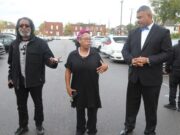
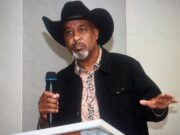
There was also a get-out-the-vote Black rally, hosted by Muslims, including former Brooklyn music mogul, Haqq Islam, and two-time heavyweight boxing champion Hasim “The Rock” Rahman. In majority-Black Detroit, both Black and Muslim communities “showed up and showed out,” to support Dr. El-Sayed, who is of Egyptian descent.
Asked for an example of how Senator-Elect El-Sayed can use his influence, Student Minister Troy Muhammad of Mosque No. 1 in Detroit recommended that the newly elected senator could “utilize his time and energy and influence championing the building of quality educational institutions, providing healthcare and childcare for our youth.”
“We wouldn’t have a problem with the increasing cost of living if we get rid of U.S. ‘forever wars,’ and if we focused less on sending money abroad, like providing weapons of mass destruction to Israel, and put that money into programs supporting the people we say we represent,” said Student Min. Troy Muhammad.
However, African Leadership Magazine noted that Senate-elect El-Sayed’s victory does not represent change in Washington’s policies for Africa and the Middle East, even though he has been outspoken on the genocide occurring by the state of Israel in occupied Palestine.
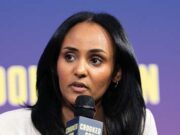
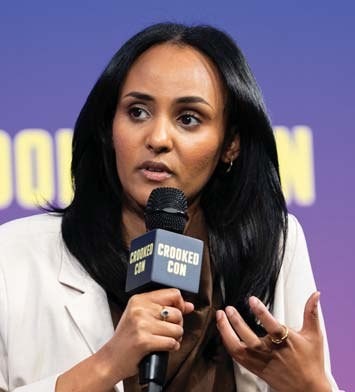
The African Leadership Magazine analyzed the significance of the electoral wins by candidates of African descent. “Three congressional victories illustrate the breadth of these developments. Abdul El-Sayed, the son of Egyptian immigrants, defeated Republican Mike Rogers in Michigan’s Senate election, becoming the first Muslim elected to the United States Senate. Melat Kiros, a 29-year-old Ethiopian immigrant, won Colorado’s 1st Congressional District, becoming the first woman from Generation Z elected to Congress.
In Maryland, Adrian Boafo, the son of Ghanaian immigrants, won the 5th Congressional District, succeeding retiring Democratic representative Steny Hoyer, who had represented the district since 1981.”
Will Jawando is of Nigerian descent and, according to Business Insider Africa, “won the race for executive of Montgomery County, Maryland.”
Born in Maryland to a Nigerian father, Jawando previously worked in the Obama administration and has served on the Montgomery County Council since 2018. Serving a local rather than federal office he carries substantial executive authority.
“Montgomery County has more than one million residents, and its government oversees education funding, housing, transport, policing and other public services in one of the largest jurisdictions surrounding Washington, D.C., reported Business Insider Africa.
Somalis also made gains. Rep. Ilhan Omar (D-Minn.) won re-election and will be serving her 5th term in Congress come January. According to reporting by Voice of America News, “14 Somali Americans have won legislative seats across the U.S. this year. Some also have been elected to city councils, school boards and the boards of parks and recreation in their respective cities. The U.S. midterm elections have proved to be historic for Somalis, with more women elected to public offices than ever before.”
However, African roots don’t mean the newly elected will pursue or push for a common “Africa policy.” They represent American interests and American constituencies, and many belong to the Democratic Party. In addition, they campaigned mainly on domestic issues such as healthcare, housing and the cost of living.
However, the growing number of elected officials with direct family connections to the continent of Africa could potentially create opportunities for increased and more equitable engagement. If this is the case, then it is possible that governments, universities, business organizations, and diaspora institutions may find additional channels through which to present African perspectives in American policy discussions, African Leadership Magazine explained. Only time will tell. Follow Jehron Muhammad @AfricaWatchfcn on X
