











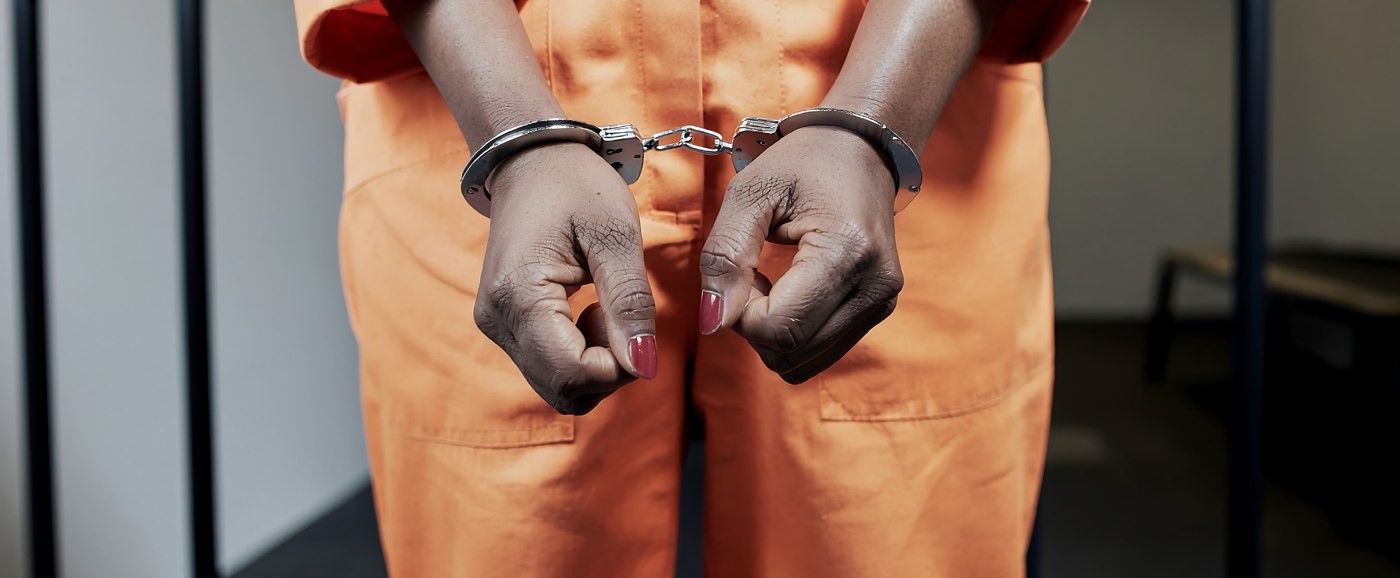

The plight of women and girls in prisons and jails is often relegated to very little mainstream media coverage. Their stories are sometimes buried, and their experiences often get little attention. Prison Policy Initiative published a report, titled “Women’s Mass Incarceration: The Whole Pie 2026,” in October, providing “a detailed view of the 198,800 women and girls incarcerated in the United States.”
LaTanya Jenifor-Sublett was sentenced to 42 years in prison after being convicted under Illinois’ accountability law, which held her legally responsible for a murder committed by someone else.
She was convicted on Oct. 30, 1992, and released on Oct. 4, 2013, serving 21 years. So, when asked about the Prison Policy Initiative’s updated re-port on Women’s mass incarceration in 2026, she said to The Final Call, “The findings are true. I have personal experience of it.”
According to the report, Black women are disproportionately represented in state and federal prisons, accounting for 18% of incarcerated women despite representing about 13% of women in the U.S.
The report looked at women and girls held in state prisons, federal
prisons, local jails, juvenile correctional facilities, Indian country jails and immigration detention facilities. It found that women’s incarceration grew at twice the pace of men’s incarceration for several decades, declined shortly before the COVID-19 pandemic and has been increasing faster again since 2021.
“I’ve been on the inside. I saw the difference in a matter of 21 years: how the prison became overpopulated, how we had to be moved to a larger prison to accommodate women being incarcerated,” Ms. Jenifor-Sublett said. She
serves as the director of programs and supportive services for the Chicago Torture Justice Center.
Women may experience several disadvantages before entering the carceral system, including childhood homelessness or foster care involvement, housing instability in adulthood, unemployment, disabilities, and physical and mental health problems.
According to the report’s analysis of a national survey of people in state prisons, 53% of women had not finished high school, 58% were parents of minor children and approximately 4%, or more than 3,000 women, were pregnant when they entered prison.
Calandra Hulitt, a survivor of domestic violence who has spoken about experiencing postpartum depression and postpartum psychosis, spent more than two decades behind bars following a first-degree murder conviction in the death of her young daughter.
During her criminal proceedings, a psychologist concluded that she had suffered from postpartum depression at the time of the offense. Now, she works with the Chicago-based organization Cabrini Green Legal Aid, helping others negatively impacted by the criminal legal system.
She described several ways women end up in prison or jail: One, self-defense in a domestic violence situation; two, selling drugs to make ends meet for her children or, three, mental health challenges, such as what she experienced with postpartum depression and psychosis.
Ms. Jenifor-Sublett added that many women also end up in prison as accountable co-defendants to their male counterparts. “But,” she said, “instability all the way around is how you get caught up in prison. There’s some instability on every level: Housing, emotional, employment, the support from family, friends, extended family, something is not stable.”
Most women are held in either local jails or state prisons, according to the report. Of those held under local jail authority, about 61% have not been convicted of a crime and are awaiting trial. Women get stuck in jail when they are unable to afford bail, the re-port explains.
“After conviction, the system continues to funnel women into local jails,” the report says. “Women are proportionally more likely to be serving a sentence of incarceration for a property or drug offense and less likely to be incarcerated for a violent offense as compared to men. These differences mean that women are more likely to be sentenced to a term in jail, where people typically serve shorter sentences of up to one year.”
But jails can be deadly for women. The Prison Policy Initiative found that women have a higher mortality rate than men in local jails, including dying from drug and alcohol intoxication at twice the rate of men. In addition, women also died from suicide and other medical problems.
Incarcerated women are also more likely to suffer from mental health problems and experience serious psychological distress, and incarceration only worsens mental health challenges, the report says.
Women in prison also go through various dangers and traumas. Formerly incarcerated women interviewed by The Final Call spoke of racism against Black women, physical harm, sexual assault, stereotyping and emotional and psychological harm inflicted by correctional officers.
“Prison is dangerous. Prison is traumatic,” Ms. Jenifor-Sublett said. “We allow the carceral system to keep our loved ones, our family members, our community members for years, decades, and when they come out dysfunctional, we don’t fight it.”
Prison Policy Initiative also reported that women face significant barriers to adequate health care in both jails and prisons.
While at Cook County Jail in Chicago, Ms. Hulitt recalled suffering an infection following her third C-section. She alleged that the infection resulted from torture by Chicago police detectives whom she identified as associates of former commander Jon Burge. The former commander and officers who worked under him tortured and abused Black people for nearly two decades.
“It was infected because I was tortured in the police station,” she alleges, adding that she was denied medical attention and medication by detectives.
She only received treatment after the infection worsened. She recalled another time when she had gallstones in her gallbladder and developed jaundice, but a nurse denied her requests to see a doctor multiple times. When she was finally seen, she needed emergency surgery.
“They could have solved this problem without me having to go and get emergency surgery. They blew it offfor so long until it got real serious, and I almost died in there because of their neglect,” she said.
When released from jail or prison, women face immediate challenges as they reenter society. The Prison Policy Initiative’s report describes women facing barriers to employment, which can lead to homelessness.

“What has to be acknowledged is the role of a woman in the household, in the community,” Ms. Jenifor-Sublett said. “Whether she’s Black, Hispanic, White, Asian, whatever ethnicity, women hold 15 different roles in the community that men don’t have.
So much so that when men come home, it is very rare that they are expected to immediately take up their kids again, take care of the grandkids, take care of the aging parent, be the usher at church, get a job, take care of their mental health.”
She explained the many different challenges women come home to: Children who may have resentment that their mother left them, grandchildren to make amends with and dealing with a mother or aunt who raised the children for several years and became weary.
She painted the picture: “You’ve been incarcerated and you’re getting subpar, at best, health care. You went to prison at 25. You come home 47, and now you’re in perimenopause and you don’t know why your body is doing these things because nobody told you any of this while you were incarcerated.
And now you’re at home and you have all of these responsibilities. You gotta live in a house, possibly, with people who you haven’t lived with for whatever amount of time.”
Ms. Hulitt is currently dealing with housing barriers due to being a convicted felon, and she desires to work
in health care but has experienced challenges attempting to enter the industry. She believes more affordable permanent and transitional housing options are needed for Black women who come home after imprisonment.
“The first 72 hours is the most critical time in a man or woman’s life once they get set free from jail and prison. That is the most critical time because if they don’t have food on the table to put in their stomach, if they don’t have a roof over their head.
If they don’t have transportation, a way to get around, even a bus card to get around, then we are dealing with a person that can seriously go back and reoffend just to feel that comfort of having the roof back over their head,” she said. “We don’t want that. We want people to get out, be rehabilitated and go into their reentry phase smoother.”
She advised incarcerated women to develop a plan before release so they know where they are going and who will help them. They need someone “to help navigate them, to walk them through this process to show them what worked for these people when they got out and help show them the way that helped them to be successful,” she said. She also noted the need for mental and emotional workshops, especially for those unable to afford mental health care.
Ms. Jenifor-Sublett, who accepted Islam while in prison, desires to see more Muslim sisters visiting women in prison and adopting a Muslim woman prisoner. She advised: Adopt a prisoner, write to them and send them a Holy Qur’an, a prayer rug or a hijab.
“What we can do is grab a hold of our people when they get out and say, ‘You are not alone. You are not alone. We have a sister who owns a bakery. She is willing to hire you in her bakery. We have a sister who owns a beauty shop. She is willing to have you come there and shampoo hair.’”
She added: “Changing the carceral system is going to mean that we are going to fight, and we are going to fight it on a legislative level. But what people need upon their release is support, spiritual guidance. Grab a hold of them. People go from praying five times a day in prison to coming home and not having anybody they can turn to.”
Her parting words? “We have to let [Black women and especially Black Muslim women] know: You’re the Original woman.”
The Most Honorable Elijah Muhammad, Eternal Leader of the Nation of Islam, teaches that the Black woman is the “Mother of Civilization,” and that she must be respected, protected and elevated.
For women who find themselves incarcerated, the Teachings of the Most Honorable Elijah Muhammad and the continued guidance from His National Representative, the Honorable Minister Louis Farrakhan, offer a way out.
In his book, “A Torchlight for America,” Minister Farrakhan urged America to support the Nation of Islam’s Prison Reform Ministry, which has turned the lives of formerly incarcerated men and women around and helped transform them into productive members of society.
“When you look at what the Muslims are doing with our prison program, in the midst of you, here again you see a torchlight. Muslims are relatively crime free, and our rate of recidivism is lower than in the main,” Minister Farrakhan wrote on page 115.
“We respect law and order. Since so many of the inmates are our people, why not let us reform them and help to save the inmates and lessen the taxpayer’s burden? We can handle the inmates for less than what America is paying now. And better, we can reform our people and make them productive members of society.”
