


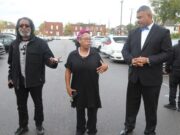
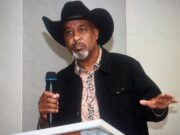







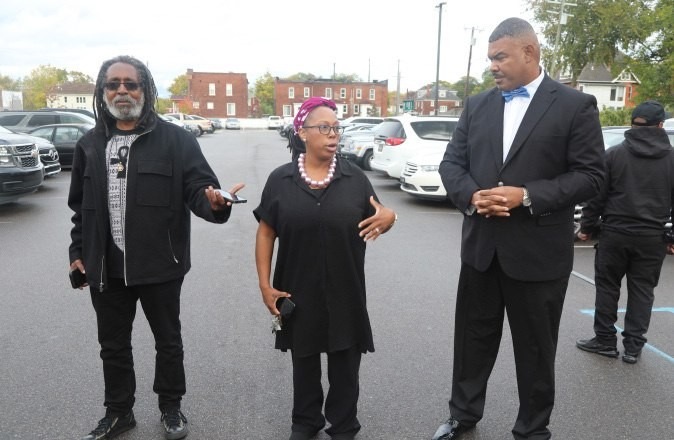

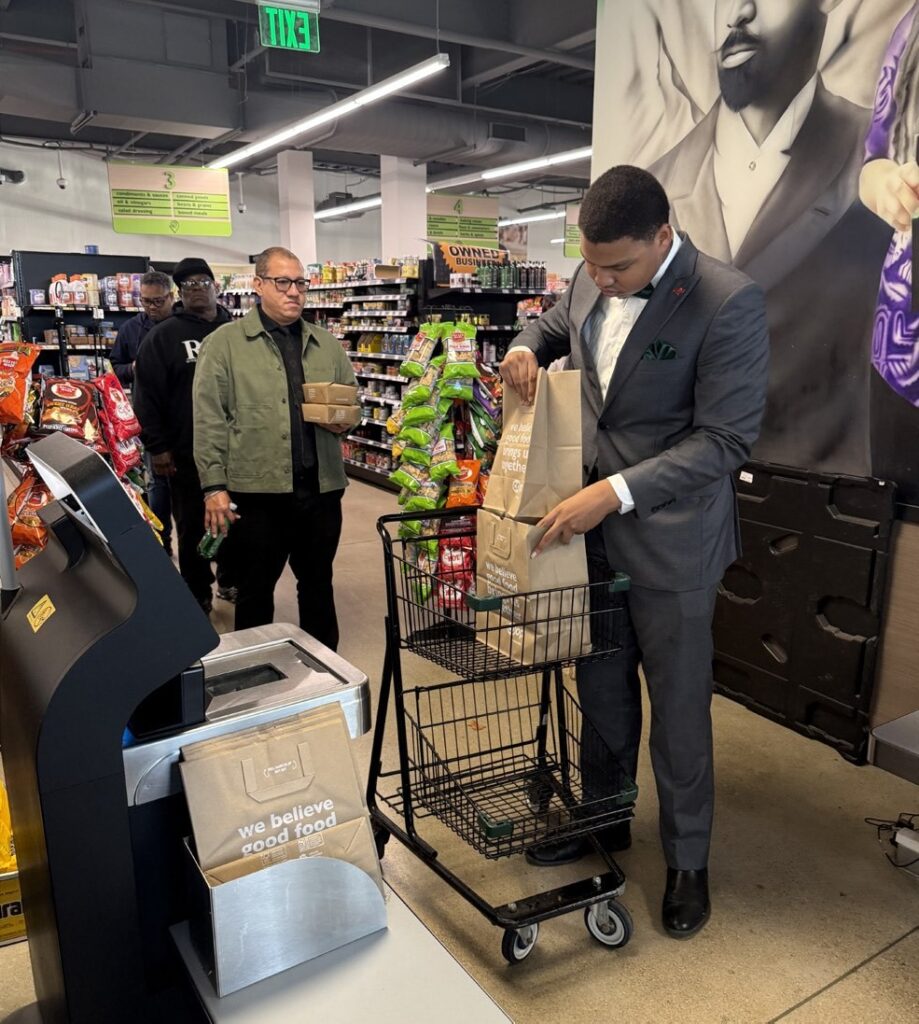
DETROIT—More than 100 Black men in Detroit came together in a demonstration of unity and to support a local Black business. The brothers came together on October 16, and the effort paid tribute to the 31st Anniversary of the 1995 Million Man March and Holy Day of Atonement convened by the Honorable Minister Louis Farrakhan in Washington, D.C.
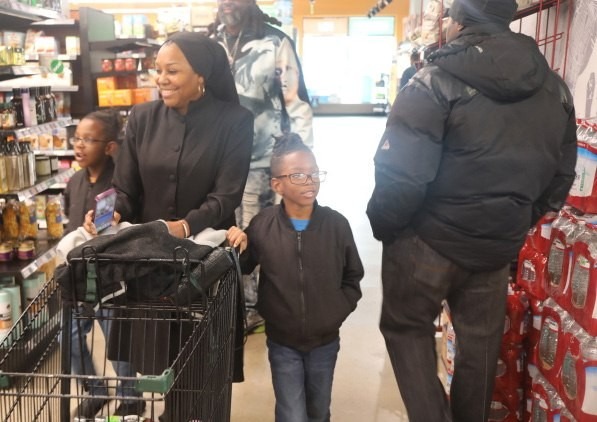
The Black men in Detroit wanted to support a Black-owned business, an aspect of the Million Man March, by demonstrating unity on a local level. Black women also shopped at the co-op to show their support.
“When we thought about the 31st Anniversary of the Million Man March, we wanted to do more than just talk. We wanted to show that the spirit of the Million Man March lived on in our actions and deeds. So, I think this was a great showing of over 100 men coming out and shopping and supporting our own Detroit People’s Food Co-op grocery,” said Student Minister Troy Muhammad of Mosque No. 1 in Detroit.
Opened in 2024, the Black-led and Black-owned food co-op/supermarket is located on the first level of the building, with a banquet hall, conference room, office space and four commercial kitchens.
It was the long-time vision of Malik Yakini, executive director of the Detroit Black Community Food Sovereignty Network (DBCFSN) and a board member of the Detroit People’s Food Co-op.
This year marked the 20th anniversary of the DBCFSN advancing food sovereignty, environmental justice, and Black liberation in Detroit and beyond. The building is called the “Detroit Food Commons,” and the four “Kujichagulia Kitchens” on the second floor are operated by the Detroit Black Community Sovereignty Network. “Kujichagulia” is Swahili for “self-determination.”
“One of the things I understood early on, from reading the Teachings of the Honorable Elijah Muhammad, is that if we want to be free, we have to be able to feed ourselves. It’s as simple as that,” Mr. Yakini said.
“If you got people who hate you feeding you, you’re in a terrible situation. So, one of the first steps toward us being sovereign, independent, and controlling our own lives is controlling the food system from which we get our food,” Mr. Yakini said while taking this writer on a tour of the spacious two-story edifice.
“Those kinds of things that influenced us to develop the Detroit People’s Food Co-op included the example that was set for us by the Nation of Islam. And so not only did the Nation have farms, and still has farms in Michigan and in Georgia, and at one point in Alabama, but also, I’m old enough to remember, in Chicago, the Nation owned ‘Your Supermarket,’” he added.
He then explained to The Final Call how the co-op became a reality. “I was the executive director of the 2006-founded non-profit called the Detroit Black Community Food Sovereignty Network. And, at our very first meeting, we put on the table, the building of a food co-op. We worked on it until 2024,” said Mr. Yakini.
“We diligently worked on the food co-op for 14 years, from 2010 to 2024. And when I say worked on it, I mean, building the community support,” he continued.
“We did more than 40 community engagement sessions in this neighborhood where we went to block clubs and churches and community organizations and sat with people and explained the concept of a food cooperative.”
Mr. Yakini explained that developing the food co-op included raising the necessary funds to purchase the land and build the co-op. “So, we raised the money. We built it from scratch, from the ground up. This was a vacant lot. We started construction in April
Lanay Gilbert-Williams is the president of Detroit People’s Food Co-op. She described the co-op as “a Black-led community-owned grocery store that centers on the needs of the Black community.”
She added, “We are owned by over 5,000 member owners from all over the state of Michigan and have a newsletter with over 11,000 subscribers. We have been open for two years and were over 14 years in the making, and in the organizing stages.”
The difference between a cooperative and a typical grocery store is that this co-op is owned and governed by the community. “So, we divide ourselves into various committees so that we can research, we can discuss, and make decisions for our grocery store,” Ms. Gilbert-Williams explained.
While the co-op does not own a farm, she explained that it is connected to area farms that supply produce sold at the grocery store.
Among the men who participated in the October 16 co-op support was attorney Azhar Tawakkul. “When Minister Troy made the call out, I live in Ypsilanti; that’s a 45-minute drive, but I still came out to help my brother. Atty. Tawakkul said the co-op “represents clean food and economic development.”
He added, “Many metropolitan areas have become food deserts, meaning a lot of businesses, including supermarkets, moved out. All we had were liquor stores and the selling of snack food items and fast food. To see the brainchild of Brother Malik Yakina and the group of brothers and sisters that came together … is nothing short of amazing.”
Arnold Boyd is the owner of Student Transportation Services in Detroit. His company transports students throughout metropolitan Detroit. His company has also provided transportation services during the Nation of Islam’s annual Saviours’ Day Convention. He was also present to support the October 16 efforts.
“I remembered the Million Man March like it was yesterday,” said Mr. Boyd. He recalled that in 1995 he was a student in school and could not afford to attend and his father was deceased. “A guy in my class went. I remember always wanting to attend, so when this opportunity came, you couldn’t have paid me to miss it,” said Mr. Boyd.
While shopping at the co-op, Mr. Boyd, in demonstration of service and brotherhood, paid for the groceries of six other participants.
“To be able to celebrate the anniversary of the March by supporting the food co-op, it really felt good. A lot of brothers showed up,” he said. For more information on Detroit People’s Food Co-op, visit detroitpeoplesfoodcoop.com
