







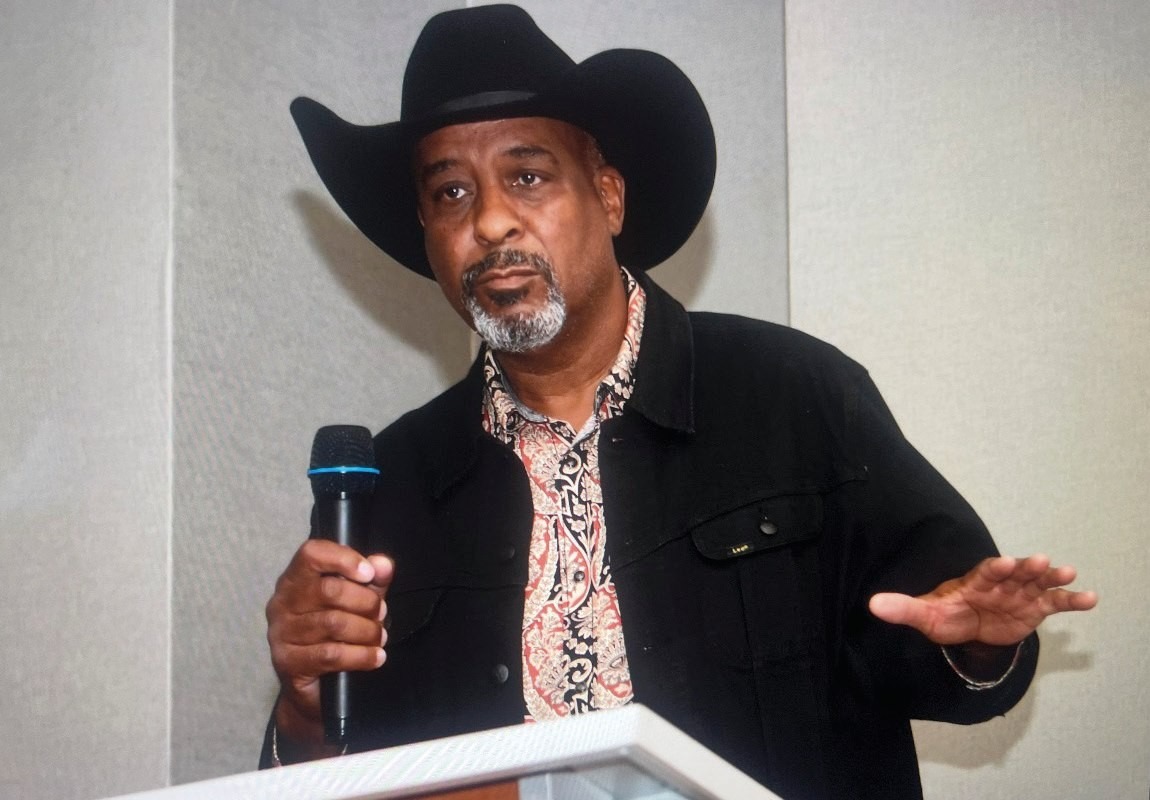

When the National Black Farmers Association (NBFA) held its 36th annual conference in Columbia, S.C., its founder noticed more young faces in the audience than he had seen before.
“There seems to be a spark of interest from the younger generation wanting to get into farming,” Dr. John W. Boyd Jr. told The Final Call. “So, in short, there’s hope for us.”
That hope runs up against high costs, foreclosures and a federal government that growers say has failed them again and again.
The numbers show how far Black farming has fallen. In 1920, Black farmers ran 925,710 farms, about one in every seven in the country, on 41.4 million acres. The most re-cent federal count, the 2022 Census of Agriculture, found 32,653 farms with Black producers on about 5.3 million acres, accounting for only 0.6% of U.S. farmland. It counted 46,738 Black producers, just 1.4% of the country’s farmers.
The number of Black-operated farms fell 8% from 2017 to 2022. Black-operated farms averaged 163 acres, compared with 463 acres for all U.S. farms. Texas has the most Black producers, according to the United States Department of Agriculture (USDA). Mississippi has the highest share, with 12% of its producers Black, followed by Louisiana, South Carolina, Alabama and Georgia.
Mississippi is also the NBFA’s largest state, with 20,000 members, Dr. Boyd said.
‘The engine of our national life’
The call back to the land is not new. “No people can be free with their mouth in the kitchen of another,” teaches the Most Honorable Elijah Muhammad, the Eternal Leader of the Nation of Islam.
“The Genesis of any Nation is ‘farming,’” His National Representative, the Honorable Minister Louis Farrakhan, said during Part 36 of his 2013, 58-week lecture series, “The Time and What Must Be Done.”
“In the Chapter ‘Economic Program,’ under the section ‘A Sound Economic Plan I’ on page 196 of ‘Message to the Black Man in America,’ the Honorable Elijah Muhammad also wrote that ‘the farm’ is the engine of our national life!” Minister Farrakhan noted later in his message.
More than half a century ago, in “Message to the Blackman in America,” the Most Honorable Elijah Muhammad laid out where Black people should begin. The wise way to use money “is first to buy farm land and produce your own food,” noted Minister Farrakhan.
In the book’s chapter “Original Man,” in an article beginning on page 56 titled “Help Self: What Must Be Done With The [so-called] Negroes?” the Most Honorable Elijah Muhammad made clear what owning land would demand. “
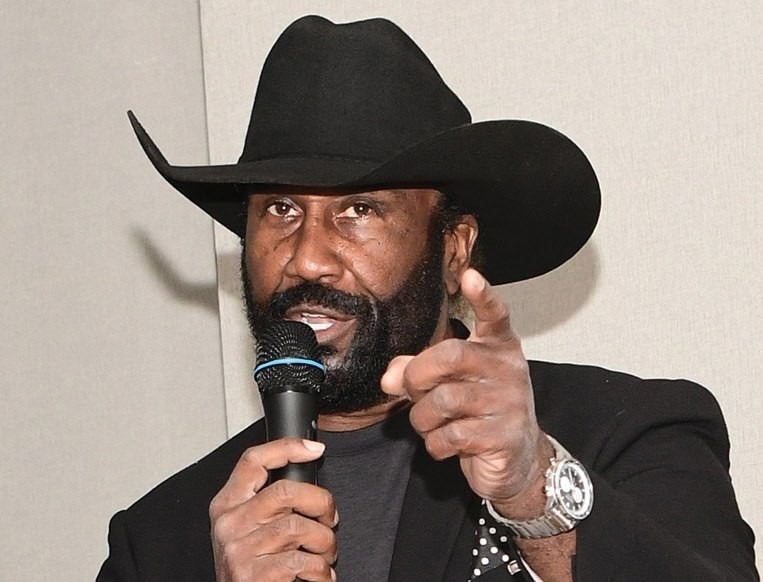
As a people we must become producers and not remain consumers and employees. We must be able to extract raw materials from the earth and manufacture them into something useful for ourselves. This would create jobs in production. [And] we must remember that without land there is no production. The surplus of what we produce we could sell.”
Minister Farrakhan in bearing witness to his teacher and noted that moving out on what the Most Honorable Elijah Muhammad taught would open up areas of trade and commerce for Black people. “Land ownership, my beloved brothers and sisters, is the pathway to wealth,” said Minister Farrakhan.
Thirteen years after that lecture, the call carries new weight. By the latest federal count, Black farmers operate about 5.3 million acres but own only about 3.2 million acres. The farmers who spoke with The Final Call are answering the call, each in their own way.
Inside the convention
The National Black Farmers Association (NBFA) Conference was held Oct. 30–31 in Columbia, S.C., under the theme “Gather. Learn. Build the future of Black farming,” and drew many struggling farmers, Dr. Boyd said.
How to buy land was “a real big topic” this year, including the steps, where to look and where to find resources, said Dr. Boyd, who stepped off his combine mid-harvest to speak with The Final Call. Filling it with $7-a-gallon diesel cost him $1,000, he stated. Fertilizer is up 40%, he said, and he cannot pass the costs on because crop prices are set by the market.
According to Dr. Boyd, the NBFA has 400 pending farm foreclosures and no money to help. “So yes, we’re hurting too,” he said.
He recalled the day Black farmers received letters saying they were eligible for 120% debt relief and would get their deeds back. Some bought tractors and put up fencing, he said.
“And then it was repealed in Congress, so we never got the debt relief,” he said. “We never got the land out of inventory.”
Dr. Boyd stressed one point above the rest. “Democrats have to come up with a message and legislation to help Black farmers,” he said. “They have to, and we have to be a part of the platform.”
Asked what Black people can do more broadly, Dr. Boyd urged voters to call their newly elected representatives once they are sworn in. “Tell them what it is that you expect,” he said. “If you don’t deliver, you won’t be a representative in 2028.”
‘It’s in my blood’
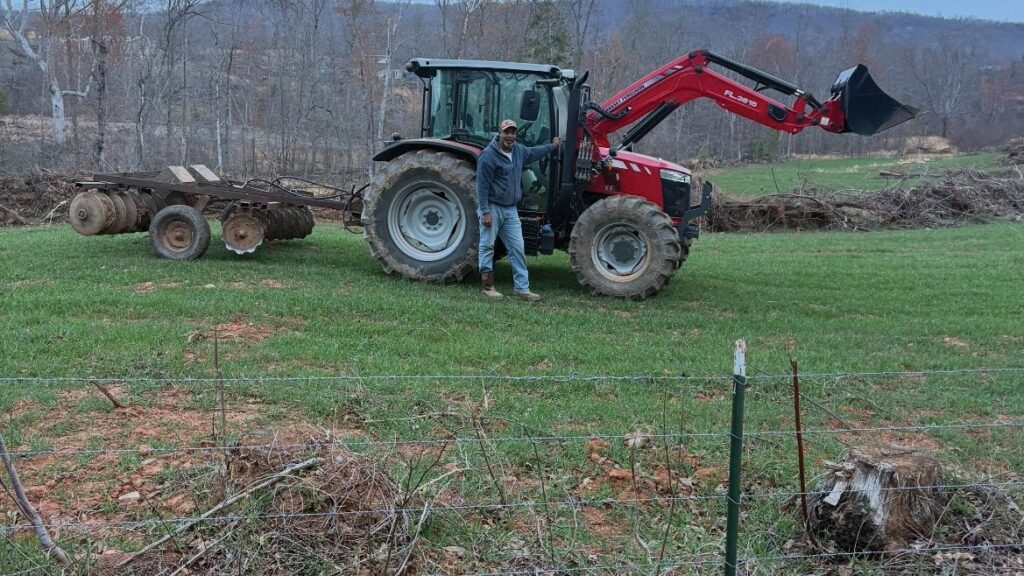
Zachary Morris has been farming since he was 12. “I guess it’s in my blood,” he said. Born and raised on a small farm in Nelson County, in central Virginia, he and his brother Darryl now run the 200-acre family farm, which raises hay for cattle. The family has added land over the years.
From age 14, he spent summers working on a farm in Connecticut, then used the money to buy calves to raise over the winter. He has baled hay on his own land and in other farmers’ fields.
At one point, he drove three and a half hours each weekend to farm and cut timber to make the payments. He took a 10year break when he “got burnt out,” while Darryl, “the rock of the farm,” kept it going, he told The Final Call.
Mr. Morris, named the NBFA’s 2025 National Black Farmer of the Year, said he enjoyed this year’s conference, describing it as “better than any year I’ve gone to it.” Two older farmers from Mississippi he met there five years ago are now like uncles to him.
“You learn so much from people that come from different parts of the country,” he said. He tells attendees to take what they learn back home and spread it around, so people “can know there is some daylight.”
His challenges echo Dr. Boyd’s. He spends $600 to $700 a week on diesel just to run the equipment clearing new land. Fertilizer is expensive and imported, he said. Not knowing what is in imported fertilizer and seed makes it “a national security problem,” he said. His tractors break down, and a repair can take 30 days. “You can lose your crop,” he said.
His first answer for what Black people can do is “Support. Get the word out there.” Then buy Black farmers’ meat and produce. Beef from the farm “is gonna be a little bit more,” he said, “but you know what you’re eating.”
He urged families to relearn buying in bulk and keep a deep freezer, and a generator to protect it in a blackout.
Struggles continue and what we can do
Student Minister Dr. Ridgley Mu’min Muhammad, manager of the Nation of Islam’s Muhammad Farms in Georgia, said the Pigford settlement payments for Black farmers were spread out over almost 20 years while the average Black farmer was already 65 to 70 years old. “By delaying the payment, you effectively wait until they die,” he said.
Black farmers filed Pigford v. Glickman in 1997 over racial discrimination in U.S. Department of Agriculture (USDA) farm loan programs. A federal judge approved the initial consent decree in April 1999.
The lawsuit was settled in April 1999, but only 13,000 Black farmers received compensation, while some 70,000 were turned away as late filers, The Final Call has previously reported. A second, $1.25 billion settlement for many of those late claimants came more than a decade later. Many farmers, including elders who had lost everything, died without ever seeing justice, The Final Call reported.
Farmers had planned to put 10% of the money into a cooperative fund “so that the Black farmers would not just be dependent on the system and the USDA, Student Min. Dr. Ridgely Muhammad said.
Indianapolis-based food grower Sister Vivian Muhammad noted that organic growing costs more, and stores and restaurants pay prices “so low that it almost makes it not worth doing.”
Near her farm, she counts five or more free food pantries within 10 blocks, and “a gas station on every corner selling chicken and a bunch of junk food.” Many neighbors, she said, “don’t have the ‘How to Eat to Live,’” a reference to the Most Honorable Elijah Muhammad’s dietary guidance, and won’t pay what fresh, organic produce is worth.
“We are realizing the command of the Honorable Elijah Muhammad,” she said. “If ever so slowly, it’s happening. We must grow our own food.”
The current presidential administration has made clear not to expect “too much legitimate help from the USDA,” said Vivian Muhammad. However, Black people are “awakening,” she said, to the need to unite, feed themselves and keep from losing more land.
“We need to grow more growers, especially because of the time that we’re living in, with the day of want fast approaching,” she said. “I don’t care if you get a balcony; you can grow stuff.”
Black farm groups and cooperatives nationwide are uniting and “seeking funding independent of the government,” she said.
To find Black farmers nearby, the free online Black Farmers Index, launched in 2020, listed more than 1,300 Black farmers and growers nationwide as of early 2025.
Vivian Muhammad explained that as the country continues to experience weather-related disasters that Allah (God) is bringing upon America and the world, “we have to consider that these natural disasters translate into food shortages and distribution struggles,” she said.
“We need to grow more people that know how to grow food and medicine. These are the types of things that we need to have on our minds right now,” she said.
