









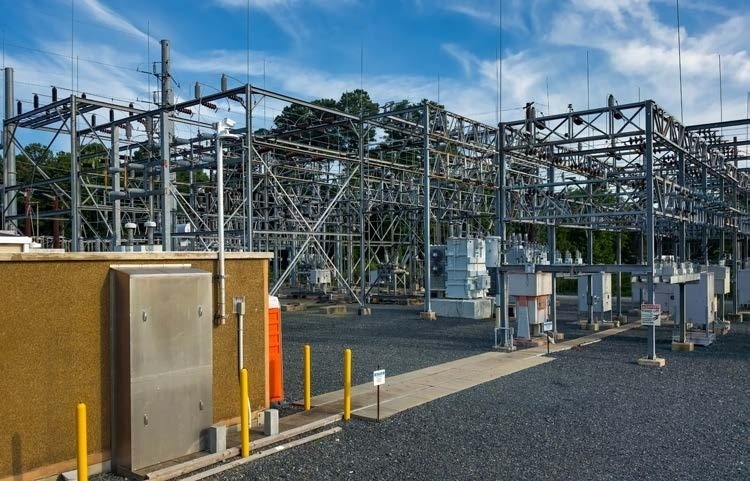

The U.S. recently declared a temporary power grid emergency across several states, another sign of strained and, in some cases, faulty infrastructure nationwide.
The U.S. Department of Energy (DOE) issued an emergency order on Oct. 12, giving PJM Interconnection extra authority to reduce the risk of blackouts from Oct. 13 through Oct. 16. PJM is the regional organization that directs the power grid for more than 67 million people in all or parts of 13 states and Washington, D.C. The states include:
Delaware Illinois, Indiana, Kentucky, Maryland, Michigan, New Jersey, North Carolina, Ohio, Pennsylvania, Tennessee, Virginia, and West Virginia.
According to the DOE, the order was needed to assess the grids as a precaution and reduce the risk of potential blackouts. The agency and PJM pointed to issues such as grid strain from unusually warm fall weather and the fact that many power plants were taken offline for planned fall maintenance and other work.
PJM is one of several regional transmission organizations (RTOs) and does not own the power plants or power lines it oversees, but it directs when plants run and how electricity moves across the lines and makes sure competing power companies and users get fair access to the grid.
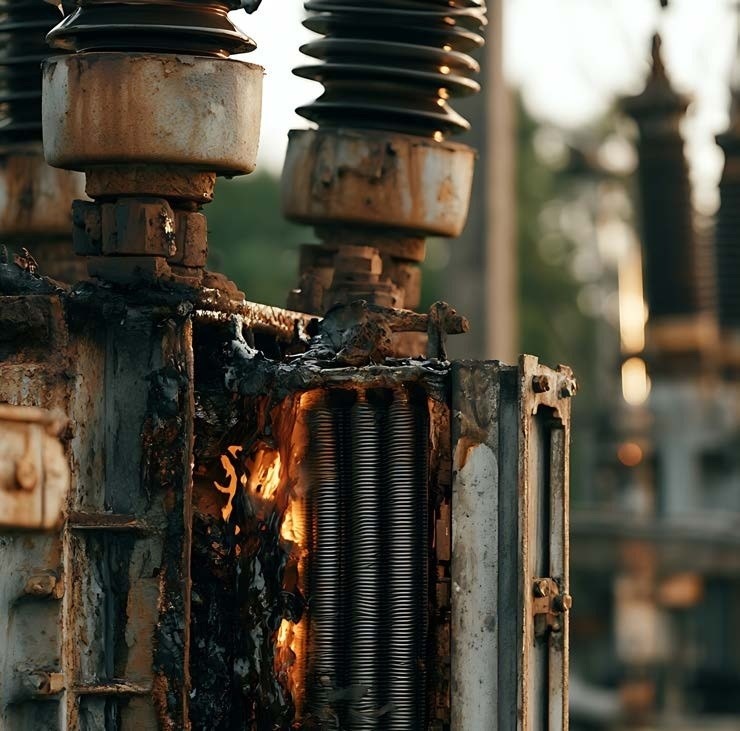
On Oct. 12, U.S. Secretary of Energy Chris Wright issued an emergency order stating in part that “This order will help ensure millions of American families and businesses across the mid-Atlantic have access to affordable, reliable, and secure electricity by making additional power generation, including backup power, available to use as needed.”
No power outages resulted from the temporary order or conditions, Jeff Shields, senior manager of external communications at PJM, told The Final Call. “None of these alerts impact everyday customers; they are directed at owners of generation plants and transmission equipment,” he said.
“It also alerts owners of data centers and other large load customers that conditions are tight and we could be calling on them to move to their backup generators so we don’t have any issues serving regular customers.”
Mr. Shields said PJM has never had to use that authority, calling it “a helpful tool to have at our disposal to protect residential customers from system interruptions.”
For Nation of Islam Student Southwest Regional Minister Dr. Abdul Haleem Muhammad, based at Mosque No. 45 in Houston, who holds a Ph.D. in urban planning.
The emergency bears witness to a warning the Honorable Minister Louis Farrakhan issued on page 67 of his book “A Torchlight for America,” written more than three decades ago. Minister Farrakhan wrote about America’s national debt and the repercussions it could have.
“In 1993, when America’s national debt was approximately $4 trillion, the Honorable Minister Louis Farrakhan warned America about the dangers of the growing federal debt and annual budget deficits. The national debt has now surpassed $40 trillion,” said Student Min. Dr. Haleem.
Student Min. Dr. Haleem said this relates to the DOE’s recent actions because the U.S. has neglected its infrastructure from 2001 to 2025. The U.S. spent approximately $16.8 trillion on national defense and military budgets and meanwhile, critical infrastructure, including the electrical power grid, continues to face serious challenges, Student Min. Dr. Haleem argued.
“So, the question I’m posing is what if a greater share of our national resources had been invested in modernizing our electric grid, strengthening the infrastructure, and protecting our communities?
National security must include the security, safety, and well-being of the American people. If we’d heeded the call of the Honorable Minister Louis Farrakhan in 1993, perhaps we wouldn’t be in the condition that we’re in today,” said Student Min. Dr. Haleem.
According to the “2025 Report Card for America’s Infrastructure” released by the American Society of Civil Engineers, the country’s system gets a grade of D+.
U.S. energy infrastructure consists of facilities and related infrastructure needed to generate electricity from various sources (natural gas, petroleum, coal, solar, wind, nuclear, hydroelectricity), and transmission and distribution (T&D) networks needed to move this energy from its source to communities nationwide,” the 2025 report explains.
“Energy interruptions bear significant costs on U.S. industries and consumers, as even a brief power outage increases production costs and disrupts supply chains,” the report states.
“The U.S. is undergoing a transformational shift in how energy is used and generated through more than 12,500 utility-scale electric power plants.
Consumers and businesses are growing increasingly reliant on data storage facilities, artificial intelligence (AI), and electrified products such as EVs (electric vehicles), to name just a few examples of advancements adding immense strain to an already fragile and aging electric grid,” the report continues.
“Data centers alone are expected to demand 35 GW of electricity by 2030, up from 17 GW in 2022, growing roughly 10% per year. Electricity peak demand growth is at its highest point in two decades. After years of stable growth, summer and winter peak demands are expected to increase 15% and 18%, respectively, by 2034.”
The recent emergency grid order told PJM to run certain power plants when needed. As a last resort, it also let PJM turn on backup generators before or during a Level 3 energy emergency alert.
Level 3 is the last of three alert levels, when grid operators may have to cut power to customers. PJM expected its cushion of extra power to get very thin because demand was high and so many power plants were offline.
In an Oct. 15 post, David Souder, PJM’s executive director of system operations, wrote that “PJM was working with only 66% of our generating fleet’s capacity,” meaning about a third was offline. He described the temperatures as “unseasonably warm, but not extreme.”
The order expired Oct. 16. As of Oct. 22, the Energy Department’s public list of emergency orders showed no extension.
According to Mr. Shields, PJM has always been able to maintain its reserve margins. A reserve margin is the extra power a grid keeps ready in case a power plant suddenly fails. He said investment in new power generation is not keeping up with demand growth.
Student Min. Dr. Haleem pointed out that the recent multi-state emergency grid order was a short-term measure that lasted only four days. However, he urged people to prepare now in case a power outage hits your area.
Just a few years ago, Texas was hit with a winter storm that left millions of people without heat and power for days. The 2021 storm severely strained and overwhelmed the state’s electric grid, causing billions of dollars in damage and 246 deaths, according to NPR reporting.
“Texas is unique in that it operates an isolated power grid. Only pockets of the state are connected to the United States’ eastern and western grids. During the 2021 storm the state’s grid struggled to keep up with surging demand for electricity as Texans turned up their heaters while much of the state endured sub-freezing temperatures for multiple days. Many of the state’s power plants failed as they were not designed to withstand extreme winter weather,” NPR reported in a February 13 article published this year, titled, “It’s been five years since catastrophic Texas blackouts. How much has changed?”
Since the 2021 storm. Texas has strengthened its grid for extreme weather, including adding more batteries to store electricity and increase supply when demand peaks. And, according to a spokesperson for Texas Gov. Greg Abbott, 40,000 megawatts of power have been added to the Texas grid since the storm.
But even those efforts are no guarantee there will be no problems, as Texas, like many states, is also dealing with aging infrastructure. Other vulnerabilities, beyond extreme weather, can also affect electrical and power grids, including possible cyberattacks. A 2024 Reuters article noted that U.S. power grids are increasingly vulnerable to cyberattacks, with the number of susceptible points in electrical networks increasing by about 60 per day, according to the North American Electric Reliability Corporation (NERC).
In January of this year, Texas experienced another winter freeze. It was less severe than the one in 2021 and for the most part the grid held up, although according to several reports, there were some localized temporary power outages and a few deaths due to exposure
Months after a severe storm struck parts of Northwest Indiana, including Gary, there are reports that residents in that city still face occasional and intermittent power outages.
According to reporting by the independent non-profit news outlet Capital B, “Residents say there were occasional power outages before the Aug. 11 storm. But the hardship of enduring a weeks-long blackout has made the recent interruptions even more unbearable.”
Student Min. Dr. Haleem cautioned that it is critical to be prepared for all types of disasters and emergencies. The Most Honorable Elijah Muhammad, Eternal Leader of the Nation of Islam. And the Honorable Minister Louis Farrakhan have taught the importance of storing food and water at home to prepare for such times. Disaster and emergency preparedness plans and actions are becoming increasingly important.
“You got to put together a plan for your family, for your business, for school, for work, home, even when you’re in the car,” said Student Min. Dr. Haleem. He recommended the website weatherwatchmen.org, which includes simple, step-by-step preparation instructions. Disaster preparedness videos are also available on watch.noi.org.
“It’s not too late, but it is late in the day…. we must not procrastinate,” said Student Min. Dr. Haleem.
Final Call Staff contributed to this report
