






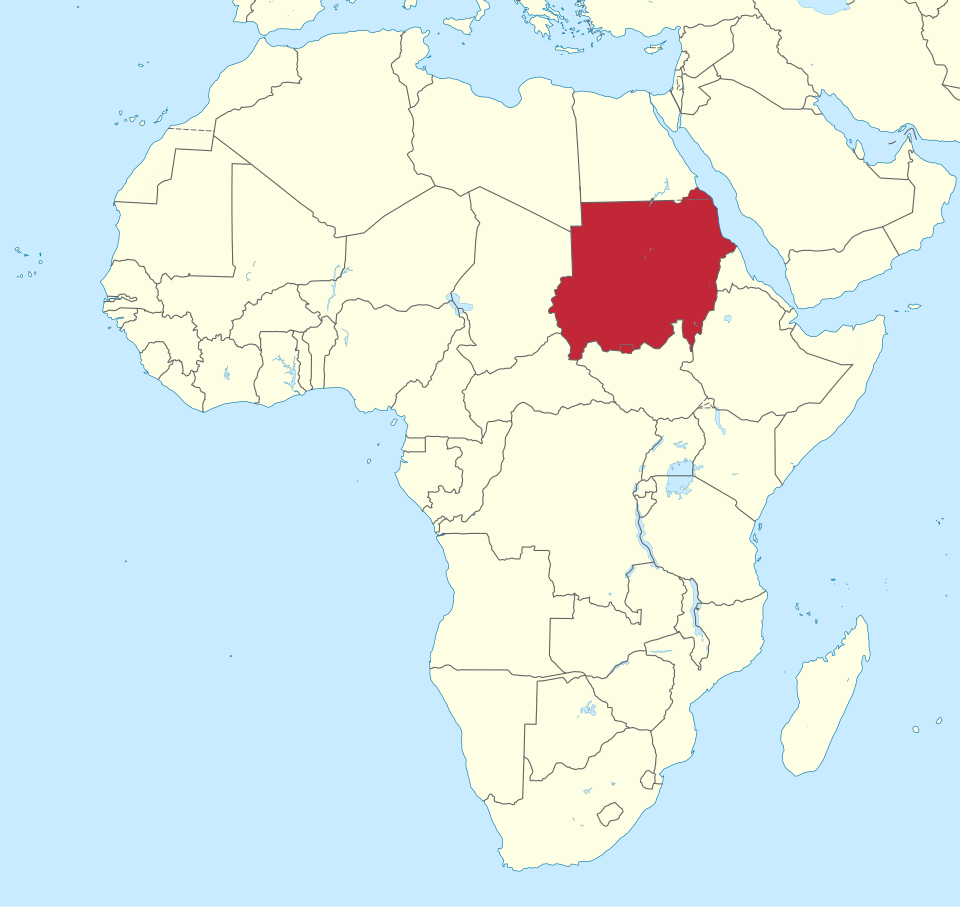

Today’s recurring and unfortunate political and ethnic rivalry between President Salva Kiir and First Vice President Riek Machar has driven South Sudan’s cycles of war since 2013.
In 2015, under the auspices of the African Union Commission of Inquiry, anthropologist and scholar Professor Mahmood Mamdani said South Sudan was not a “failed state; it was a failed transition.”
According to Mamdani, South Sudan’s mandated breakaway in 2011 to form a new independent nation-state was rushed and has also resulted into the recurring violence in the neighboring state of Sudan. Mamdani suggested that for peace to prevail in the world’s youngest nation-state, the current political class should step aside.
Mamdani was part of the African Union Commission of Inquiry panel on South Sudan which sought to inquire into the causes of the violence. He also says the United Nations must take responsibility for doing little or nothing to mitigate the violence when it first broke out in December of 2013.
On July 29, of this year, the Global Center Tracker published by the Washington Center for Peace and Security, released a report titled: “Instability in South Sudan,” on cfr.org.
A synopsis of the report also defines the conflict as ethnic and political rivalry between President Kiir and Vice President Machar. Despite a 2018 peace deal, “the agreement’s core reforms, including army unification, a permanent constitution, and elections, were never implemented,” the report notes.
According to the report, “Kiir’s arrest of Machar in 2025 collapsed the unity government entirely, reigniting conflict that has since displaced hundreds of thousands and pushed the country toward full-scale famine.”
To give substance to South Sudan as a failed state we review its history prior to the 2011 referendum. That history included Dr. John Garang, the prominent Sudanese rebel leader that championed the vision of a united, democratic, and pluralistic “new Sudan,” where he would serve as vice president. He did not support, as Salva Kiir did, the secession of the South.
A developmental economist by profession, Dr. Garang was one of the major influences on the movement that led to the foundation of South Sudan’s independence from the rule of Sudanese president Omar al-Bashir. From 1983 to 2005, he led the Sudan People’s Liberation Army Movement (SPLA/M).
Dr. Garang achieved a core part of this vision when he successfully negotiated the Comprehensive Peace Agreement. Under this historic power-sharing deal, he was officially sworn in as the first vice president of Sudan, July 2005, serving alongside President Omar al-Bashir.
He served as first vice president of Sudan for three weeks, from the Comprehensive Peace Agreement of 2005 until his death, in a July 30, 2005, helicopter crash under questionable circumstances.
His widow attributed his death to an assassination. According to a 2007 report published on sudantribune.com, Ms. Garang, at a public event said: “When my husband died, I did not come out openly and say he was killed because I knew of the consequences. At the back of my mind, I know my husband was assassinated.”
She gave no evidence to back her assertion. An investigation concluded that pilot error was to blame for the crash.
Years prior to the split of South Sudan from Sudan peace talks and negotiations to resolve conflict were taking place. The Honorable Minister Louis Farrakhan, who has always been an arbiter of peace and unity, participated in some of these efforts.
During the 1994 talks in Kampala, Uganda, that included Dr. Garang and President Yoweri Museveni of Uganda, Minister Farrakhan was initially involved. The talks were designed to help settle the longstanding conflicts between North and South Sudan.
As reported previously in Africa Watch, in a January 2020 article published in The Final Call, Minister Abdul Akbar Muhammad, International Representative of Minister Farrakhan and the Nation of Islam, said that Museveni and Garang both had very high regard for Minister Farrakhan and his ability to act as a “neutral arbiter.”
They were preparing for Intergovernmental Authority on Development-hosted peace talks in Kenya. But the American Ambassador to Sudan, Donald K. Peterson, “didn’t want Farrakhan involved,” said Minister Akbar Muhammad, in the Africa Watch column, titled, “Farrakhan’s African influence and the year of Return to the Motherland.”
“Minister Akbar Muhammad added it was ‘reported to me … the talks would actually discontinue unless Minister Farrakhan was removed from the discussion.’ IGAD members obviously had bowed to the wishes of the U.S. ambassador. Not wanting to be ‘where he was not wanted,’ Min. Farrakhan left the talks,” my 2020 column noted.
While appearing on May 7, 2006, on “The Open Line Show,” on 98.7 KISS FM, hosted by the late James Mtume, Minister Farrakhan shared his recollections of meeting in Uganda with Garang. Minister Akbar was also in the studio. Minister Farrakhan said he met with Museveni in Uganda, then he spoke on Garang.
“The most important meeting was the meeting with Brother John Garang, who for 20 years was fighting the government in Khartoum. Why was there a fight? Was it (the fight) over slavery? No time during our talk with John Garang, which was four hours in length, was there ever a mention of slavery. But when I mentioned the word justice John Garang’s wife broke down and cried. She said that I was the only person who came and talked about justice. Now what was the injustice?”
Ms. Garang later expressed deep appreciation for Minister Farrakhan’s willingness to openly address the core injustices and racial and ethnic dynamics at play during a turbulent time when international mediation struggled to bridge the divides in Sudan.
Discussing the history of racism in the region, Minister Farrakhan explained:
“The Arabs have mixed their blood with the Africans that lived in the North. They are Arabized and Islamic. And the same racist poison that has poisoned the bloodstream of Islam has made the Arab north feel superior to the Christian and animist African south. The south is Black, Black, Black … So Black until there is Blue in their color. So, when you have, like the enemy has done to us (race-mixing in U.S.). When you’re lighter, you think you’re better than your Black brother or sister.”
Minister Farrakhan in his divine guidance and insight also warned of the motives of those who want to continue fomenting disunity in Sudan and South Sudan. He also spoke on the power of a united Sudan.
Minister Farrakhan stated in an April 8, 2007, message, “The War of Armageddon: How Strong Is The Foundation, Can We Survive?” that America wanted “to set up a secular government in the Sudan and overthrow the Islamist regime.”
“The Sudan is so rich, potentially, that this area—if cultivated—could feed the whole of Africa. Sudan has oil in the South, oil in the West, and an Islamist regime in the North in the capital of Khartoum. America does not want an Islamist regime in Khartoum,” he said.
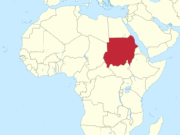
Before 2011, Sudan was Africa’s largest country. With Garang’s reconciliation and coalition government and Min. Farrakhan’s call for “justice” for Sudan’s disenfranchised Black population peace and unity could have been attained. Landlocked Southern Sudan—home of Sudan’s oil and mineral wealth, and arable land along with utilizing the North’s infrastructure, pipeline, and ports to ship oil to market, as a united and strong alliance would be good for the continent.
Follow Jehron Muhammad @Africawatchfcn
