


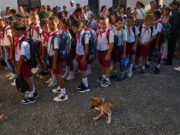

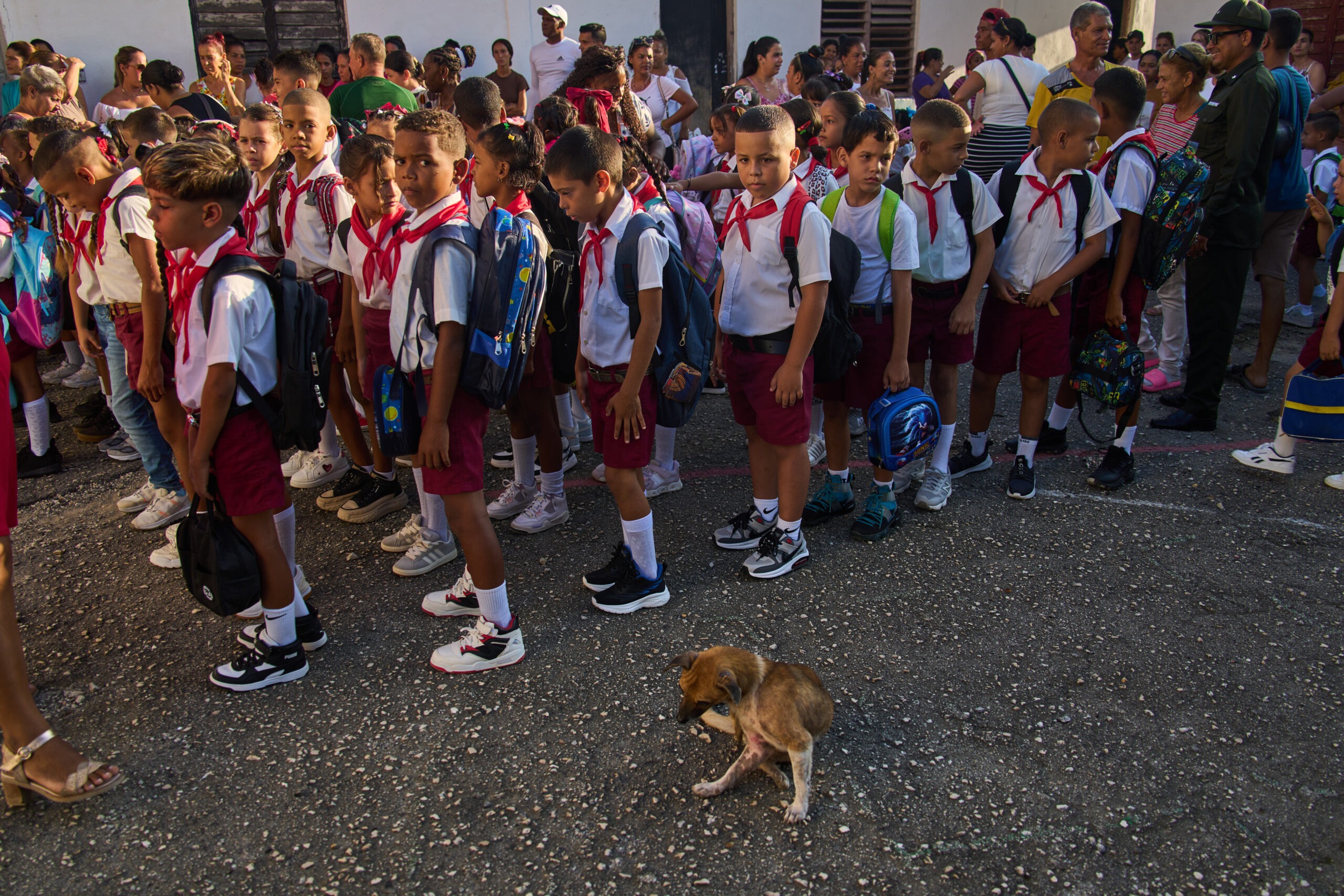

As the sun rose over the small island some 90 miles from Miami, the new school year started with both hope and difficulty. With more than 1.4 million children and teenagers scheduled to go back to over 10,000 schools, the day served as a statement of determination. They were opposing the U.S. blockade, a blockade which Cuban authorities claim is intended to “asphyxiate the nation.”
However, for many families, the day meant making the hard decision to send their children to school or keep their children at home because there was no food for lunch, no shoes, no water, and no way to cope with a school system stretched to its limits.
Mothers shared their anxiety with Marti Noticia, a Cuban newspaper. One mother told the outlet that the country is not ready for the school year to begin, explaining that none of her three daughters are going to school.
If nothing is available, how can they go to school, she asked? Bread cannot be bought for a snack since a single roll costs thousands and thousands of units. With no electricity all night, the situation is even worse.
For these families, the consequences of the unjust U.S. blockade go beyond politics because they affect everyday life. Cuban authorities state that the lack of fuel and electricity, the result of Washington’s harmful “energy blockade,” has made it difficult to distribute food. In some areas, schools can serve lunch for only the first two weeks, leaving parents to worry about how their children will get meals afterward.
A second mother shared her concerns, her voice showing how tired she was as she spoke about the constant struggle: “If the food they are giving us is merely a piece of bread containing bad ham, then what are they going to provide? … Nowadays there is no lunch, no electricity, no water, no transport, and they can’t give the children anything to eat since the prices are too high.”
For families who decided to send their children the first day, September 1, or “sobremesfuerzo,” this extra effort was the price of sending their children to school. For others, it was simply too great a burden.
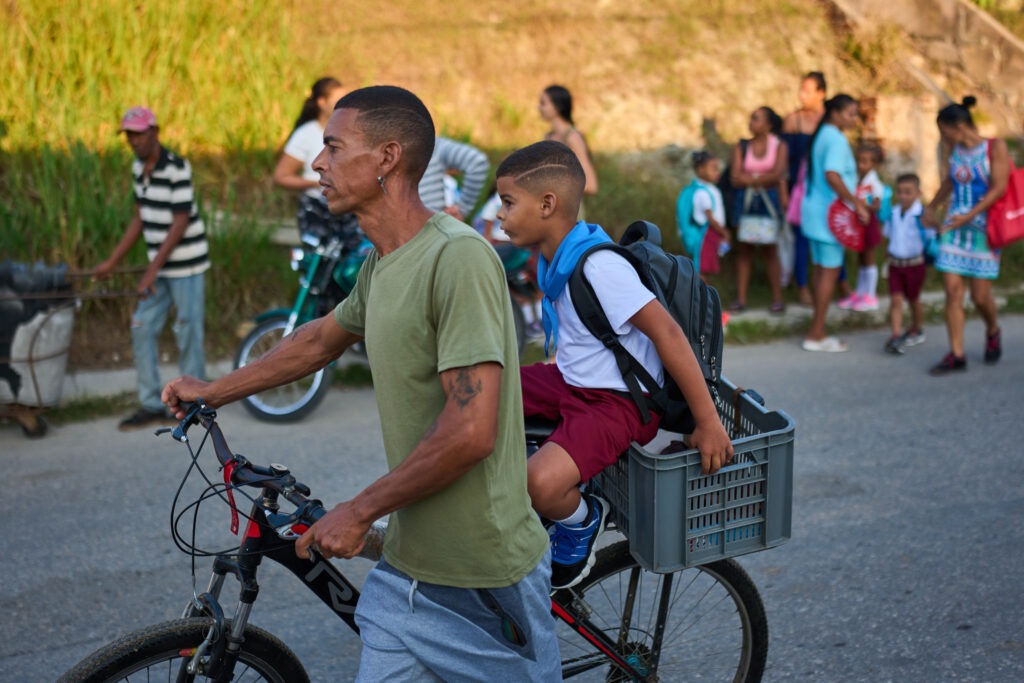
Photo: AP Photo/Ramon Espinosa
‘Everyone is invited’: The struggle to fill the classroom
A major difficulty is the teacher shortage. Cuban authorities explained this is due to the U.S. “maximum pressure” policy, which causes numerous professionals to either leave the country or seek better employment opportunities.
According to Education Minister Naima Trujillo Barreto, only 73% of teaching posts are filled. This leaves approximately 24,000 positions available. Havana suffers the most, with about 3,000 teachers being transferred from the eastern provinces to assist there.
“This is going to be a school year for which our greatest achievement will be the fact that we are able to get through it,” said Minister Trujillo, conveying the great significance of the situation.
In response, the government has developed inventive solutions and is asking university students, retired professionals, and other willing citizens to take over classrooms, showing society’s commitment to education. As Minister Trujillo encouraged, according to the LA Times, “All are invited; anyone who can contribute is welcome.”
The lack of teachers also affects children’s well-being. Families report that many of their children went to school after sleeping little because of the heat, without eating breakfast, and therefore found it difficult to concentrate. These are a few of the difficult decisions many families must make.
The fabric of the crisis: Uniform shortages
School uniforms are also affected by the blockade. Because of power cuts and difficulties importing materials, textile factories have ceased operations; as a result, only 12% of the demand for primary school uniforms is being met.
Due to inflation, the cost of uniforms has risen to between $2 and $5, a sum which The Straits Times points out is high given that the average monthly income for Cubans is only $10.
This places additional pressure on families already coping with inflation and shortages, since parents often must hire private tailors or modify their children’s old uniforms. This extra effort shows how committed they are to their children’s future.
“The schools are now relying on households and on the parents,” lamented Yannay Miranda to the AFP (Agence France-Presse), a mother of a six-year-old.
Although acknowledging the sacrifice, President Miguel Díaz-Canel stressed the importance of the effort and said that defending social programs such as education, even against the U.S. “plan of asphyxiation,” is a revolution which must be defended.
The struggle to get children to school started last school year when the blockade took effect. Yemaris Roriquees Lopez explained to The New York Times in a podcast that she would leave her house in a village in western Cuba every morning at 7 a.m. with her two sons, ages twelve and four, and stand on the side of the road hoping someone would drive by offering a ride to her children’s school.
A country’s future against all odds
Despite the difficulties, Cuba’s attitude is one of firm determination. Roberto Morales Ojeda, a senior party official, posted on social media that the beginning of the school year means “overcoming the rigors of the blackout, rising above the burden caused by shortages, and looking for alternatives when others would have decided to give up.”
To cope, schools are adjusting schedules to use daylight, focusing on core subjects when power is available and allowing students to wear comfortable clothing instead of uniforms. A few mothers are concerned about what the future holds and told Marti Noticias that “Children are not going to have a future the way we are.”
However, people such as Kasumy Chiu told The Strait Times, “We woke up to no electricity … but so long as they have the opportunity to learn, we are willing to make sacrifices.”
Many Cubans refer to the blockade as genocidal and argue that its aim is to starve the country and deprive it of its independence. Yet Cuba and its people will not surrender. The school year spanning 2026 and 2027 demonstrates that although America may restrict supplies, it cannot stifle the human spirit, a parent’s love, or a nation’s determination to secure its children’s future. As a commentary in the Cuban-based Granma stated, “No one will be able to steal our hope.”
Yet when the first day is over, there are empty desks left behind, gently serving as a reminder of the families whose strength was not sufficient and for whom hope had to continue through the night.
