










“America has done the worst work of deceiving other peoples and making false friendships with them.
Now her turn has come.
No one wants to trust her for friendship, for she has deceived many nations.”
—The Most Honorable
Elijah Muhammad, “The Fall of America,” from the chapter “America’s loss of friendship”The Trump administration appears desperate to find a face-saving way out of the six-month U.S.-Israel conflict with Iran following the Aug. 17 expiration of the 60-day, so-called Memorandum of Understanding (MoU), a 14-point pathway to peaceful settlement of the war that was violated weeks after the June 17 signing.

By all accounts, Iran is in the driver’s seat to dictate the course of the war. President Donald Trump can agree to their demands, which include lifting a naval blockade, withdrawing U.S. forces from the region, lifting sanctions, releasing frozen Iranian assets and paying war reparations.
Or he can escalate with more attacks, which already has been unsuccessful, resulting in a widely reported U.S. missile shortage to intercept the barrage of incoming projectiles from Iran on U.S. allies in the Gulf.
America’s stated goal for its Feb. 28 unprovoked attack with Israel was to prevent Iran from acquiring a nuclear weapon. The Islamic Republic has always remained consistent in stating any uranium enrichment is for medical research and peaceful civilian energy, and not for nuclear weapons.
While Mr. Trump continues to state that as his goal, other objectives were regime change and to cause the Iranian people to revolt against their government.
The initial U.S.-Israel assaults succeeded in killing several levels of Iran’s leadership, including the Supreme Leader Ayatollah Ali Komeinei, but destruction of the infrastructure and deaths of civilians, including 150 schoolgirls in classes, has apparently solidified the masses behind the resistance.
Within a few months of the joint U.S.-Israel attacks, Israel is no longer a participant, leaving the Trump administration to resolve a conflict that critics argue Israeli Prime Minister Benjamin Netanyahu enticed him to enter. The war and the Trump administration’s subsequent actions are causing tensions and loss of friendship with U.S. allies.
Imad Hadad of the American Human Rights Coalition told The Final Call in an interview that the Iran war is a lose-lose situation for the U.S.
Prime Minister Benjamin Netanyahu is “the only beneficiary, and this war is more of a proxy war on his behalf and Israeli interests’ behalf,” he said. Escalation of the war invites anti-American sentiment and hostility against America’s interests in the region, he added.
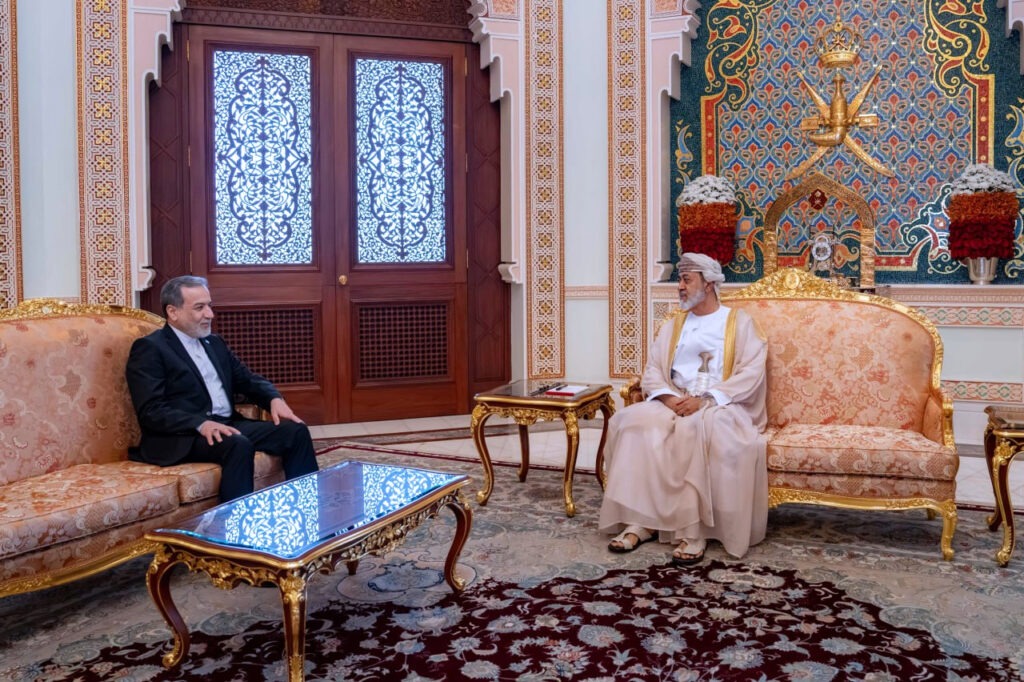
The anti-American sentiment has perhaps been amplified by Mr. Trump. He has criticized U.S. allies in previous statements, but recently, using expletives, he has threatened to “bomb” U.S. ally Oman, whose coast borders the Strait of Hormuz and who has previously acted as a mediator for the peace process.
Mr. Trump has distributed a “loyalty survey” to NATO allies, questioning their commitment to join in the war he started. Mr. Trump has even signaled to ally South Korea that the U.S. may not be as committed to its defense against China as previously agreed and praised North Korean leader Kim Jung Un.
Without official notice but only through a post on his Truth Social platform, President Trump instructed the Pentagon to shorten a recent South Korea-U.S. joint military exercise, alluding to South Korea’s refusal to join the Iran war.
The post described the joint military exercise as a signal to Kim Jung Un’s North Korea “that is totally inappropriate and hostile to a Country that, as long as Donald J. Trump has been President, has been unthreatening and respectful.”
The three-page questionnaire, titled “Questions for NATO Allies & Other Key Stakeholders,” asked whether the NATO country has publicly supported U.S. foreign policy priorities and whether they previously allowed the U.S. to access their bases and air space to attack Iran.
It also asked if the country is willing to withdraw those restrictions, according to Al Jazeera. Use of bases and airspace became a contentious issue during the outset of the war.
Key to settlement in the war is the reopening of the Strait of Hormuz, a body of water through which 20% of the world’s oil and critical commodities travel. Traffic through the strait, which was open prior to the U.S.-Israel attack, has been reduced to a trickle and has damaged the world economy. Reopening the strait has become the administration’s immediate obsession.
The expired MoU called for Oman and Iran to develop a plan to reopen the strait. Oman and Iran recently announced they’ve reached an agreement and reportedly were preparing a public statement at Final Call press time. The Trump administration has firmly stated that Iran would not control the waterway.
“Until the United States fulfils its commitments under the agreement … the Strait of Hormuz will not reopen,” said Iran’s parliamentary Speaker Mohammad Bagher Qalibaf.
The Trump administration has been openly criticized for having no strategy to defeat Iran prior to the attack. Iran, on the other hand, has been preparing for such an attack for decades, according to observers of the U.S. destabilizing activities in Iraq, Syria and Libya.
Robert Pape is a University of Chicago political science professor and author of “Bombing to Win” and other books on war and terrorism. He also authors “The Escalation Trap” Substack on the Iran war.
He said on a recent Mario Nawfal podcast that Iran wants to coax the U.S. into escalation of the unpopular war so oil and other commodity prices stay high in the U.S., which will negatively impact Mr. Trump’s popularity. Keeping the Strait of Hormuz closed is critical to that objective.
“I think they have a fairly coherent political goal to break America’s will to attack Iran after the midterms by breaking the Trump presidency in the midterms,” he said regarding the prospect of Democrats taking over one or both houses of Congress, thereby presenting a roadblock to Trump’s agenda.
President Trump’s popularity has been declining in poll after poll. Most recently, an Aug. 17 Reuters/Ipsos survey showed Mr. Trump’s approval rating at 33% and his disapproval rating at 64%. The poll surveyed 1,166 U.S. adults and was taken Aug. 14-17.
The administration’s latest effort to force Iran to reopen the strait was an “Economic D-Day” pronouncement. Mr. Trump and Treasury Secretary Scott Bessent announced a plan to put an economic stranglehold on Iran’s economy and threatened severe economic repercussions to any nation that does business with the Islamic Republic.
The Iranian government responded to America’s latest threat. “Tehran says U.S. President Donald Trump’s ‘most crushing economic operation ever’ against the Islamic Republic is doomed to fail like previous Washington’s pressure campaigns against Tehran over the past 14 years.,” noted PressTV.co.uk, the country’s state-run media apparatus.
Iranian Foreign Minister Abbas Araghchi responded firmly on X regarding Mr. Trump’s latest threats. “We have seen this movie before. Same bull. Different bullies,” he wrote.
Press TV also reported that its country’s foreign ministry condemned a new round of U.S. sanctions “stating that the measures amount to ‘economic terrorism’ and ‘crimes against humanity.’”
“Economic sanctions and pressure are the other side of the same coin as military war and aggression,’” the ministry said, stressing that Washington’s reliance on both policies has placed global peace and security at risk,” reported Press TV on Aug. 21
Mr. Trump’s “strategy” is not sitting well with many countries. “These most recent incidents build on previous fractures with traditional allies over the war,” wrote Deputy WashingtonBureau Chief Sara Ruthven in an Aug. 18 article published on TheNationalNews.com, titled, “Iran war leaves US increasingly isolated on world stage”
“The rest of the world has concluded they’re not going to continue following the United States down the rabbit hole,” Morgan State political science professor Wilmer Leon told The Final Call, adding that China and Russia are major supporters of Iran.
“Other countries have come to the conclusion that the war in Iran is lost, not over, but lost. And they have to start looking out for their own interests. But Donald Trump hasn’t gotten the memo. He still thinks he can bully his way through this.
“The problem is he had absolutely no plan going in, so failing to plan is planning to fail. And that’s exactly what has happened.”
