









The United States of America is the prison capital of the world and has been for some time. According to Prisonpolicy.org, “With nearly two million people behind bars at any given time, the United States has the highest incarceration rate of any country in the world. The nation spends about $445 billion every year—not to mention the significant social cost—to lock up nearly 1% of the adult population.”

This country has a history of unjustly locking up Black men and women who dare critique, criticize, or point out the injustices perpetrated against our communities. While the U.S. government is often quick to point to other countries in its accusations of holding “political prisoners,” and others who have been incarcerated abroad, it fails to look in the mirror at its own injustices.
The Most Honorable Elijah Muhammad understood the wickedness of the U.S. government when it came to unjust imprisonment of Black people and spoke to this in “The Muslim Program,” which is published weekly on the inside back page of The Final Call.
Under “What The Muslims Want,” in Point No. 5 it states in part: “We want freedom for all Believers of Islam now held in federal prisons. We want freedom for all black men and women now under death sentence in innumerable prisons in the North as well as the South;”
and in Point No. 6, it states in part: “We believe that the Federal government should intercede to see that black men and women tried in white courts receive justice in accordance with the laws of the land—or allow us to build a new nation for ourselves, dedicated to justice, freedom and liberty.”
America has held many Black political prisoners who have languished behind bars for decades, have died while still incarcerated or after being released while sickly, in old age, and die soon after. Imam Jamil Al-Amin, Dr. Mutulu Shakur, Kamau Sadiki, and Sundiata Acoli are just a few of the names.
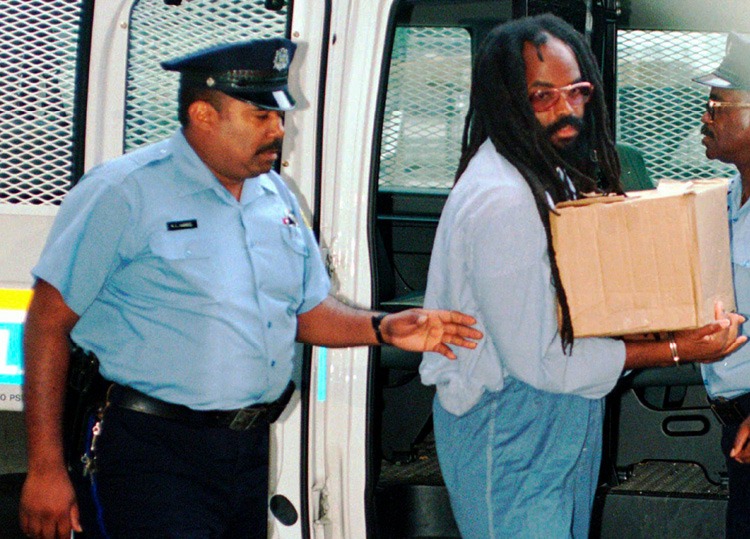
Also on this list is Mumia Abu Jamal. He and his supporters, including the Coalition to Free Mumia, have been fighting for his freedom for decades. This December will mark 45 years of his imprisonment. The former journalist, activist and Black Panther was convicted in 1981 of killing a Philadelphia police officer.
He and his supporters have always proclaimed his innocence. His trial was fraught with inconsistencies and observers argue he did not receive a fair trial. While behind bars, Mumia has suffered many health issues, but his resolve remains, despite these conditions.
He is serving time at Mahanoy Correctional Institution in Pennsylvania, on a life sentence with no chance of parole. His original death sentence was overturned in 2011 after federal courts ruled his original 1982 sentencing instructions were unconstitutional.
Amnesty International and other human rights organizations have appealed for his release or, at the very least, for a new trial. Recently, the UK-based, The Guardian reported that Mumia “is taking his claim that he has been subjected to arbitrary imprisonment for a crime that he did not commit to a new tribunal: the United Nations in Geneva.”
On July 28, according to theguardian.com, “… Abu-Jamal, 72, lodged a petition with the UN’s working group on arbitrary detention, a body within the Human Rights Council. It marks the latest attempt by the internationally renowned prisoner and prolific author of 15 books to seek relief, having exhausted all domestic channels through state and federal courts.”
The cruel and unusual punishment of Mumia’s incarceration speaks volumes about the U.S. “injustice system.” In the 20-page petition to the UN Working Group on Arbitrary Detention, it states:
“Mr. Abu-Jamal’s mandatory sentence of life without parole (LWOP), also known as Death by Incarceration (DBI), is inherently arbitrary because it is indefinite and contains no meaningful periodic review of necessity or reasonableness;
it is also unreasonable as applied to Mr. Abu-Jamal in light of his advanced age, declining health, and the lack of any risk he poses to the public, rendering his continued detention arbitrary under the Working Group’s Category I.
“Mr. Abu-Jamal has been continuously targeted for his political expression and associations, prior to his arrest, at trial, and over the course of his incarceration and appeals, raising questions as to violations of this Working Group’s Category II;
his judicial processes and the decades-long repression of his political speech have also been influenced by discrimination on the basis of race, raising questions as to violations of this Working Group’s Category V.”
The petition was submitted by the Abolitionist Law Center, American Civil Liberties Union, the California Coalition for Women Prisoners, Center for Constitutional Rights and the Release Aging People in Prison Campaign.
The fight to free Mumia is not over, and it is important that we continue to advocate for him and other brothers and sisters who continue sitting in prisons and jails in U.S. correctional facilities for crimes they did not commit.
The Honorable Minister Louis Farrakhan has also been one of the strongest voices speaking out on Mumia’s plight and fight.
“My dear brothers and sisters, right now as we speak: Mumia Abu Jamal is absolutely a prisoner of conscience. A ‘prisoner,’ that if they get their way, they will sentence my brother, and order his death. But in a hearing, they wanted to give him a new trial, where his attorneys could produce evidence that might lead to Mumia Abu Jamal’s freedom!
But those that oppose it are seeking, now, to overturn the lower court ruling, and sentence my brother to death. Mumia Abu Jamal is a political prisoner,” Minister Farrakhan stated, during part 24 of this 2013 lecture series, “The Time and What Must Be Done.”
“What is a ‘political prisoner?’ According to the American Heritage Dictionary, a ‘political prisoner’ is ‘a person who has been imprisoned for holding or advocating dissenting political views,’” Minister Farrakhan continued.
So, while the U.S. points its fingers at other countries for the treatment or mistreatment of their political prisoners, it is hypocritical for those in governmental authority to ignore what is happening in America’s own backyard.
We must not forget! Free Mumia Abu Jamal and all political prisoners unjustly locked up in the prison capital of the world!
