










Will Netanyahu’s expansionist goals commit U.S. to continued conflict?
In the mind of Israeli Prime Minister Benjamin Netanyahu, the state of Israel extends well beyond its current borders. Referred to as “Greater Israel,” the concept calls for Israel to annex more of Palestine and parts of Lebanon, Syria, Jordan, and Egypt.
The colonial settler state attempted to occupy parts of some of those territories in the past, withdrawing from them after intense fighting from resistance forces and international condemnation.
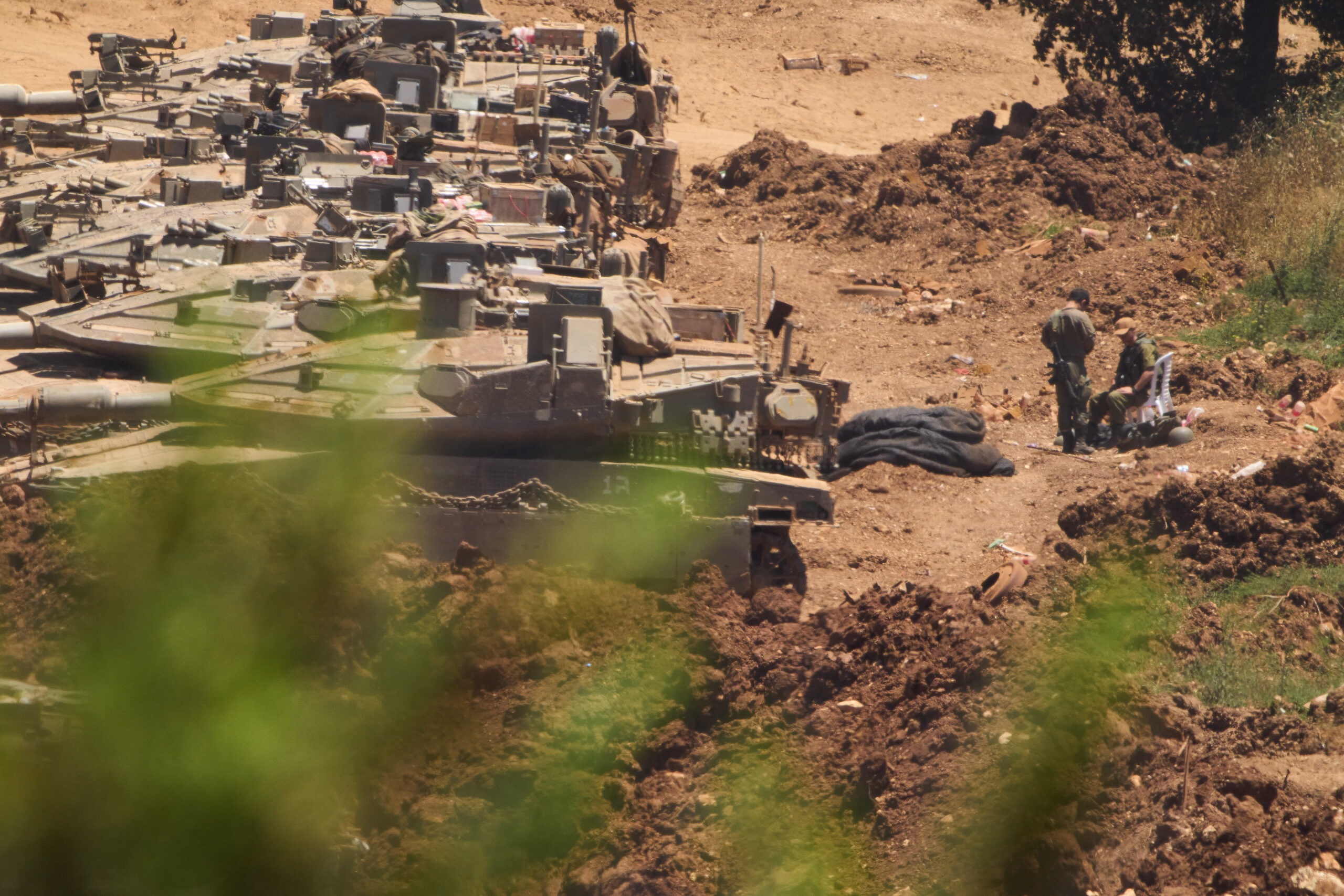
The state’s current occupation of Lebanon and Mr. Netanyahu’s ultimate dream of the “Greater” annexation have observers wondering if Iran will be another “forever war.”
“You have two proxies of the U.S.-Israel and Lebanon,” Dr. Wilmer Leon, radio host and political science professor at Morgan State University, told The Final Call. “The concept of ‘Greater Israel’ and its stated objective of the elimination of Lebanon, Iran and Palestinians, as well, you can’t negotiate with that.”
By many accounts, President Trump, who campaigned on no more “forever” wars, was encouraged by Mr. Netanyahu to join Israel in an unprovoked attack on Iran on February 28. Iran and its support of Hezbollah in Lebanon are the primary obstacles preventing Israel from exerting full dominance in the region.
America’s war on Islam came to light when retired Army General Wesley Clark revealed in 2001 that the U.S. planned to take out seven Muslim countries. The last of those countries still in the way is Iran.
Late last year, Mr. Netanyahu raised concerns about his expansionist ideas in an interview when he stated he “very much” identifies with the vision of a “Greater Israel,” framing it as a “historical and spiritual” mission, according to the middleeasteye.net and other news outlets.
In February, U.S. ambassador to Israel Mike Huckabee caused an uproar when commentator Tucker Carlson, in an interview, asked the ambassador if he supported Israel controlling historical lands described in the Bible as belonging to Jewish people, which today includes parts of other nations.
“It would be fine if they took it all,” Mr. Huckabee said. The Trump administration later said the comment was taken out of context.
But it is one held by many in the conservative wing of the Israeli government. Israeli opposition leader Yair Lapid said that he would support “anything that will allow the Jews a large, broad, strong land and a safe haven for us.”
“Zionism is based on the Bible. Our mandate over the land of Israel is biblical, [and] the biblical borders of the land of Israel are clear. … Therefore, the borders are the borders of the Bible,” Mr. Lapid reportedly said.
“The whole cause of the strife is due to the ideology of Zionism that eventually developed into the state of Israel,” countered Rabbi Yisroel D. Weiss of the Neturei Karta orthodox Jewish community to The Final Call. “They use the Jewish religion as a facade, a cover for nationalist endeavors.”
A Memorandum of Understanding (MoU) framework to discuss peace between the U.S. and Iran calls for a total ceasefire and withdrawal of Israeli forces from Lebanon.
Mr. Netanyahu has vowed to neither leave Lebanon nor stop fighting Hezbollah. A recent “agreement” between Lebanon and Israel, however, signals possible compromise.
Lebanon agreement raises concerns
According to the framework, Israel will withdraw from two “pilot zone” areas in southern Lebanon, transferring the sites to the Lebanese military, under the proposal signed in Washington on June 26.
Much of the agreement focuses on establishing “sovereignty” of the Lebanese government and disarming Hezbollah resistance fighters. The governments “commit to establishing a military coordination group, with U.S. support and participation, to ensure overall implementation” of the agreement.
Also, the Lebanese government “welcomes the readiness of the United States to support” militarily such efforts in disarming “all non-state armed groups.”
The signing prompted protests in the streets of Beirut, Lebanon, with many displaying flags in support of Hezbollah.
Critics of the proposal point out:
- the role of the U.S. as a potential dishonest broker;
- the inability of the Lebanese military to effectively defend the country against future Israeli aggression;
- the agreement may pit the army against Hezbollah if they do not disarm.
Critics also note that Israel will pull out of Lebanon pending the “verified disarmament” of non-state armed groups.
“The United States is unlikely to act as a neutral mediator and will almost certainly align with Israeli positions whenever disputes arise over the interpretation or implementation of the agreement,”
Said Karim Emile Bitar, a professor of international relations at the Saint Joseph University of Beirut, in an article posted on Aljazeera.com. “This creates a fundamentally asymmetric negotiating environment in which Lebanon has little leverage and few effective guarantees.”
Israel’s Defense Minister Israel Katz said Israeli Defense Force (IDF) soldiers will remain in Lebanon until Hezbollah is disarmed, Al Jazeera reported.
Imad Hamad, director of the American Human Rights Coalition, told The Final Call the Hezbollah resistance “was not formed in a vacuum.” At one point Israel occupied Lebanon for more than 20 years and has a history of invading Lebanon, he said, adding, “that’s why the resistance was formed.”
Muhammad Sankara of the U.S. Palestinian Community Network (USPCN) suggests Israel and the U.S. are playing a game of divide and conquer. He said language in the agreement could pit the Lebanese Army against Hezbollah if carried out as written. He also said Israel doesn’t currently occupy the two “pilot zones” they agreed to withdraw from.
“It’s clear the U.S. and Israel are hoping to launch Lebanon into a civil war with Hezbollah,” Mr. Sankara told The Final Call. Their plan follows the “Gaza model” used against Palestinians: destabilize, disarm and make Lebanon a colony of Israel.
He described the Lebanese military as an “underdeveloped, under resourced, glorified police force armed by the U.S. with pre-1980s military equipment.”
Not face-to-face yet
While still debating control of the vital Strait of Hormuz and whether there will be fees charged to pass through, mediators for Iran and the U.S. reportedly reached agreement in Doha to release $6 billion of Iran’s frozen assets.
The indirect talks were mediated by Qatar and Pakistan even though the U.S. had sent envoy Steve Witkoff and President Trump’s son-in-law Jared Kushner to the region. Iranian authorities have said its negotiators will not sit down for peace talks with the Trump administration until all the points in the MoU have been upheld.
Terms of the MoU expire 60 days from its signing, which occurred on June 17. Mr. Trump said he went to war to prevent Iran from developing a nuclear weapon. Professor Leon said those goals already existed before the U.S.-Israel attack.
“Everything Donald Trump claims he was trying to accomplish already existed in the JCPOA,” Professor Leon said, referring to the Joint Comprehensive Plan of Action negotiated in 2018 by President Barack Obama. “Whether it’s a non-nuclear Iran, an open Strait of Hormuz, all of that was already agreed to.
“Resistance forces are winning,” he concluded. “If they weren’t winning, the United States and Israel would not be talking about negotiations. They don’t negotiate when they have the upper hand.”
Will Netanyahu’s expansionist goals commit U.S. to continued conflict?
