


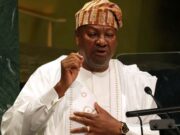

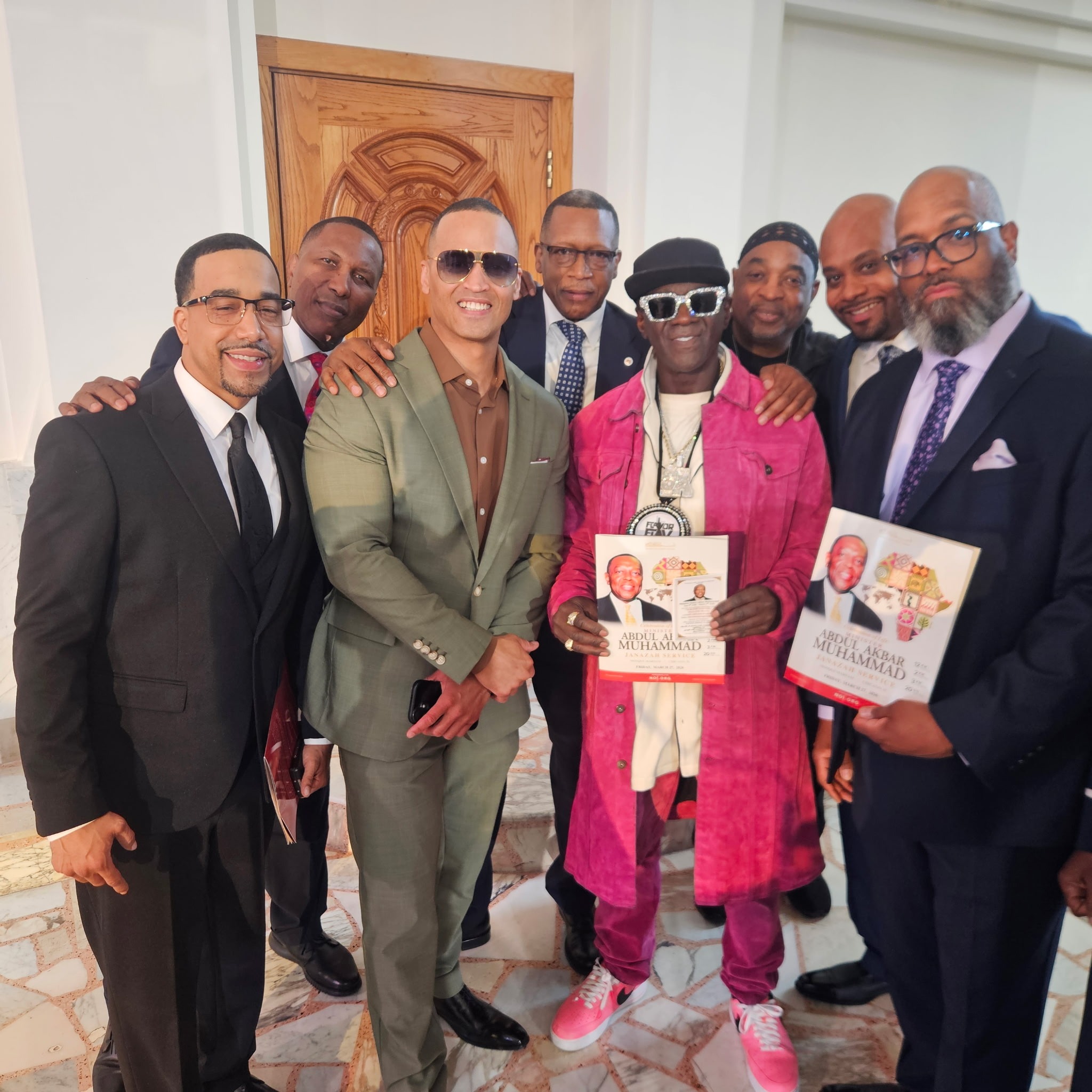

Minister Abdul Akbar Muhammad, the International Representative of the Honorable Minister Louis Farrakhan and the Nation of Islam, returned to Allah (God) on March 17, leaving an indelible mark on the world (See The Final Call Vol. 45 No. 25 and No. 26).
Whether through the stroke of his pen or the power of his vocal delivery, Minister Akbar could tell a good story filled with facts and figures. He had an encyclopedic mind of memory on a switch, says Chuck D, a hip-hop industry pioneer, co-founder and frontman of the iconic rap group Public Enemy, Rock and Roll Hall of Fame inductees.
Minister Akbar was a genius and a world diplomat who opened up global opportunities for the group. Minister Akbar had an ability to simplify complex historical and geographical concepts, and the ability to engage and energize youth through cultural bridging, said Chuck D, in reflections shared during a telephone interview with Final Call National Correspondent Charlene Muhammad. Here are edited excerpts from his remarks and reflections.
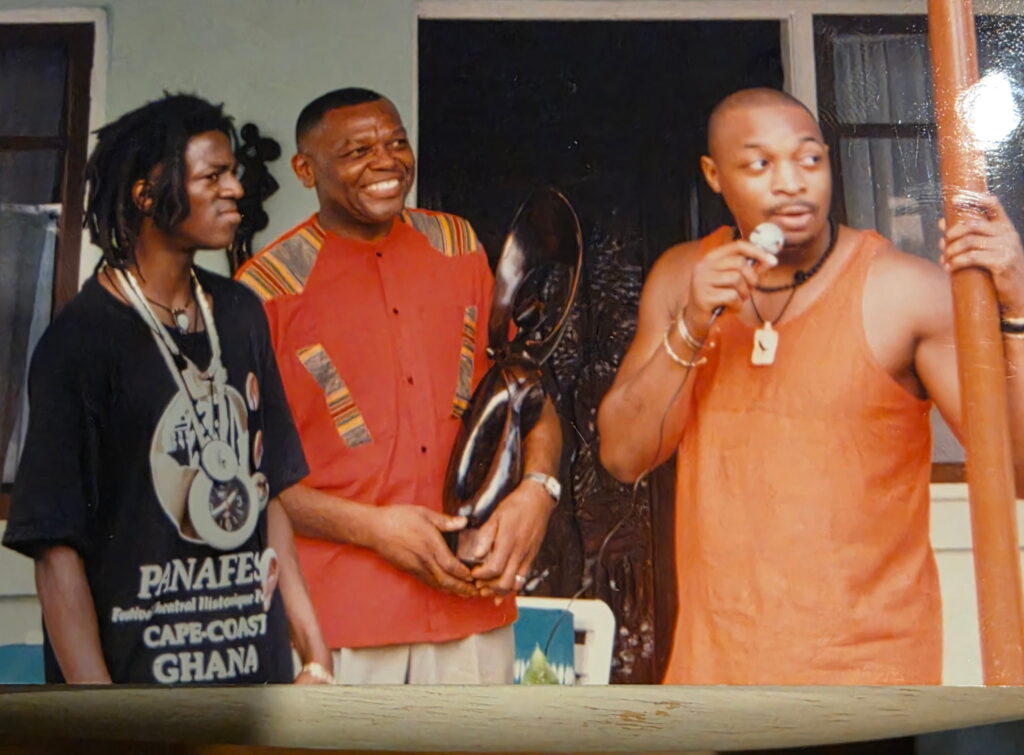
Chuck D (CD): I always considered him a genius. He’s seriously, one of the most under-acknowledged, geographical, historical, social, Black geniuses I think we’ve had as a people.
I first became knowledgeable of always seeing him in the backdrop in the 1980s, behind Minister Farrakhan, and when Brother Akbar spoke, I really felt that I was listening to a world diplomat, even before it was explained to me.
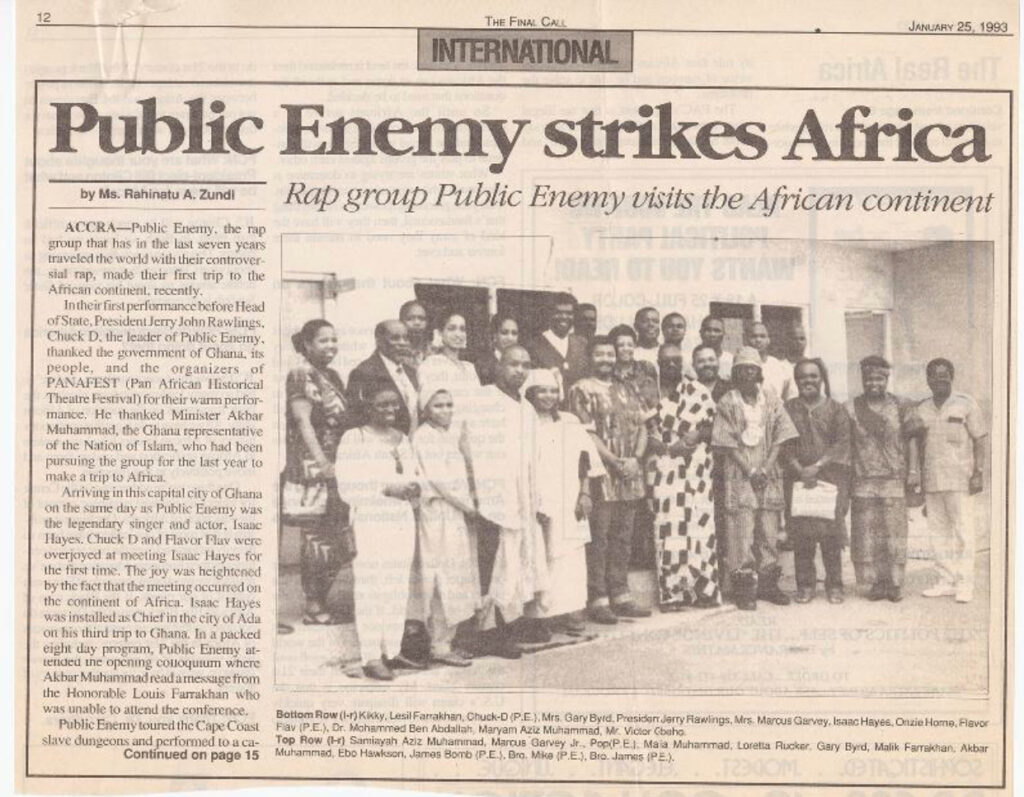
Coincidentally, it was Brother Akbar that opened up parts of the world with the Nation of Islam to my eyes and my group’s eyes, Public Enemy, and the whole genre of the world.
Brother Akbar not only opened up the opportunities with the Nation of Islam, but he opened up the knowledge, wisdom, and most of all, the overstanding of where we were going.
Because everywhere in the world outside of the United States narrative was always under some other definition, from somewhere else—European or United States. Brother Akbar was able to make us see the places we went to through the world under our own lens and historical. And not only just historical, but accountable and responsible lens when we went there.
So, Brother Akbar was always not only giving us a backdrop of the rest of the places in the world, with his 154 countries experience … he aspired to open up the understanding of how the countries or the territories became to be.
He’s the first one that really broke down the 54 nations inside Africa. What was behind this? What was behind that? Opening up the Caribbean, synonymously breaking down how we’re all worlds people … . We’re not relegated to one spot on the planet Earth.
We are the world, for real. And Brother Akbar broke it down in layman’s terms to us … and he’s a New Yorker, so I guess he could break it down to every New Yorker, as well, right? And that was just his attributes.
And if I have any regret, it’s in the later years, where I would dip in and out of Atlanta and my mom needed hip surgery. So, as I passed the pandemic, I had to spend X amount of time in Atlanta and I never got around to go by Brother Akbar’s home.
And that’s one of the things, and you kick yourself, too, because with our elders, you’ve gotta kind of make time. And I made time for my mom, who was bouncing back from hip surgery, and I would be like “OK Brother Akbar. I’m going to stop by.”
But I would also like to give the utmost salute to Brother James Norman of Public Enemy and the S1Ws (Security of the First World unit of Public Enemy) because he made time and diligence to continue to stay connected to Brother Akbar Muhammad’s family … .
Brother Akbar Muhammad is a giant of a man, and I regret that I had time pass between us that didn’t allow me to embrace it even more than saying it posthumously. But Brother Akbar is always here. …
One of Brother Akbar’s favorite sayings that he used to say to me and the guys, he says, “Hey, brothers, everything is real. … You’ve gotta do what you’ve gotta do, just keep your head on straight. Accountabilities and responsibilities, but you know what? Everything is real.” That was a Brother Akbar line.
You don’t replace people like that. That’s why documentation is important, and we have to find new people and new energies that find out how to do the same thing, or now similar things in new ways. And that’s one thing the Minister (Farrakhan) told me, like 30 years ago. He said, build proteges … also take the time to document.
