



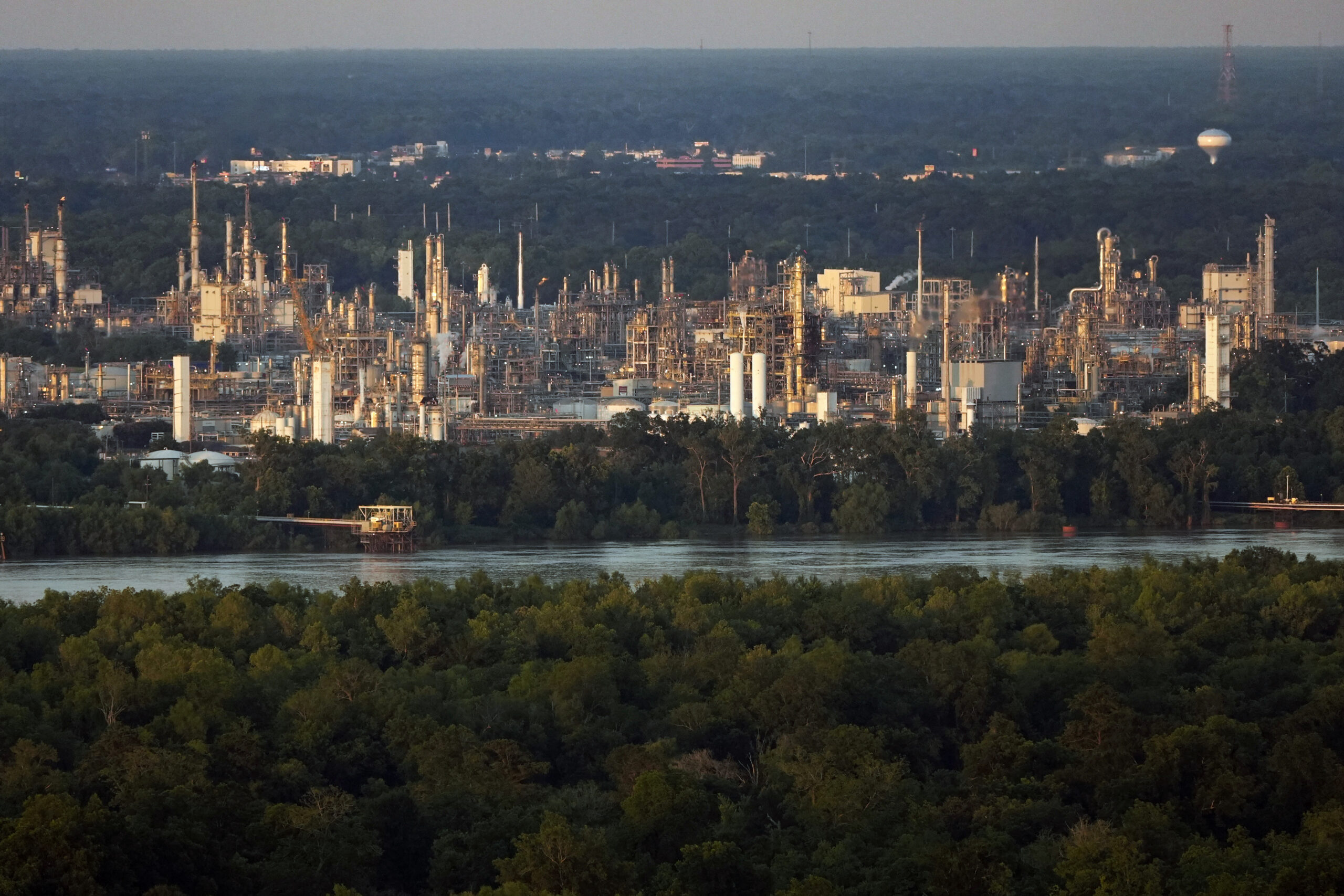

Black residents in St. James Parish, Louisiana, prevailed in court in early February after fighting for three years to stop the influx of industrial facilities that they say are poisoning the environment and their health, contributing to what is known as the state’s “Cancer Alley.”
Inclusive Louisiana, Mount Triumph Baptist Church and RISE St. James filed a lawsuit against St. James Parish on March 21, 2023. The parish failed to have the case dismissed in 2025 and had recently made another attempt to dismiss it.
On Feb. 9 of this year, a federal district court denied the parish’s motion to dismiss and allowed all claims to move forward into discovery, including the claims that the parish’s decades-old land use practices violate the 13th Amendment as a vestige of slavery and the 14th Amendment’s Equal Protection Clause.
According to the Center for Constitutional Rights (CCR). CCR represents Inclusive Louisiana and Mount Triumph Baptist Church. RISE St. James is represented by the Tulane Environmental Law Clinic.
“Inclusive Louisiana, Mount Triumph Baptist Church and RISE St. James brought this action against St. James Parish for its decades of environmental racism and discriminatory siting of industrial facilities in predominantly Black communities in the Parish,” the case webpage says.
“The lawsuit seeks a moratorium on all new sitings of industrial facilities and expansions of existing facilities, protection of unmarked cemeteries of people once enslaved in the Parish and a court-monitored process involving directly-affected communities to help assess remediation and guide transformation.”
Inclusive Louisiana and RISE St. James are Black grassroots organizations fighting for the same goal: to protect residents in St. James Parish against industrial pollution and to stop the proliferation of petrochemical industries. Mount Triumph Baptist Church is a majority-Black congregation also advocating against industrial pollution.
As a longtime advocate for the poor and oppressed, the Honorable Minister Louis Farrakhan, National Representative of the Honorable Elijah Muhammad, has warned the Black community of the U.S. government’s plan to depopulate the Earth through poisoned food, air and water.
“The U.S. government is killing people by toxic food, water, air and medicine,” he said during his “Justifiable Homicide: Black Youth in Peril” lecture series in 2007.
Minister Farrakhan has also spoken about the U.S. government’s failure to enforce the 13th, 14th and 15th Amendments of the Constitution and the continued practice of redlining.
“Laws have been passed, such as the 13th, the 14th and the 15th Amendments, but none of them have been enforced,” he said during an interview with Pastor Jamal Bryant on Aug. 3, 2015. “The flag of America flies over the state capitals where we don’t get justice. The flag of America flies over redlining … .”
St. James Parish is 51% White and 47% Black, according to the U.S. Census Bureau. Yet, despite the almost even divide between the parish’s Black and White populations, Black residents argue that land use policies steer industrial facilities toward the parish’s majority-Black 4th and 5th Districts while protecting White neighborhoods.
“Since construction of the first plant in the parish in 1958, at least 28 out of 32 plants have been placed in the 4th and 5th Districts. No facility has been allowed to locate in majority-White parts of the parish in nearly 50 years.
In the now-industrialized areas of the parish, dubbed ‘sacrifice zones,’ residents face elevated risks of cancer, respiratory ailments and newborn health harms,” stated CCR’s press release on the Feb. 9 court victory.
Climate organizations define a “sacrifice zone” as an area with high levels of air or water pollution from industrial facilities, where economic interests are prioritized over human health.
Residents who live in sacrifice zones experience higher rates of asthma, cancer and other illnesses due to continued exposure to toxic chemicals. These zones are often located in Black communities due to historical harms, such as redlining, and their vestiges and present-day manifestations.
Louisiana’s Cancer Alley, an 85-mile stretch from Baton Rouge to New Orleans, is a well-known example of a region plagued with sacrifice zones impacting Black residents.
The Climate Reality Project, an organization focused on developing climate solutions, described how Cancer Alley got its name due to the high concentration of chemical and fossil fuel plants spewing dangerous pollution and explained that these plants are often built near poor and Black towns.
The organization notes that Cancer Alley is far from unique, as across the country, nearly half of those living close to industrial pollution are non-White, and Black people are 79% more likely than White people to live in places where industrial pollution is highest.
“For generations, our community has lived under a racist land use system that placed polluting industries in our backyards while ignoring our health, history and human rights. The court’s decision to allow every one of our claims to move forward affirms what we have long known:
Environmental racism is real, and it must be confronted,” Gail LeBoeuf and Barbara Washington, co-founders of Inclusive Louisiana, said in a joint statement, according to the CCR press release.
“This fight has always been about protecting our families, honoring our ancestors, and ensuring a future where our children can breathe clean air and live with dignity. We are grateful the court has recognized the seriousness of these harms, and we will continue pushing forward until true justice is achieved.”
“How many of us have to die? This ruling affirms what we know in our hearts and our faith: God did not create our communities to be sacrificed,” Sharon Lavigne of RISE St. James said, according to the press release. “Our prayers, our ancestors, and our fight for justice have been heard. We will keep standing for life, dignity and the sacredness of this land.”
