

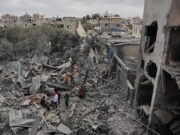








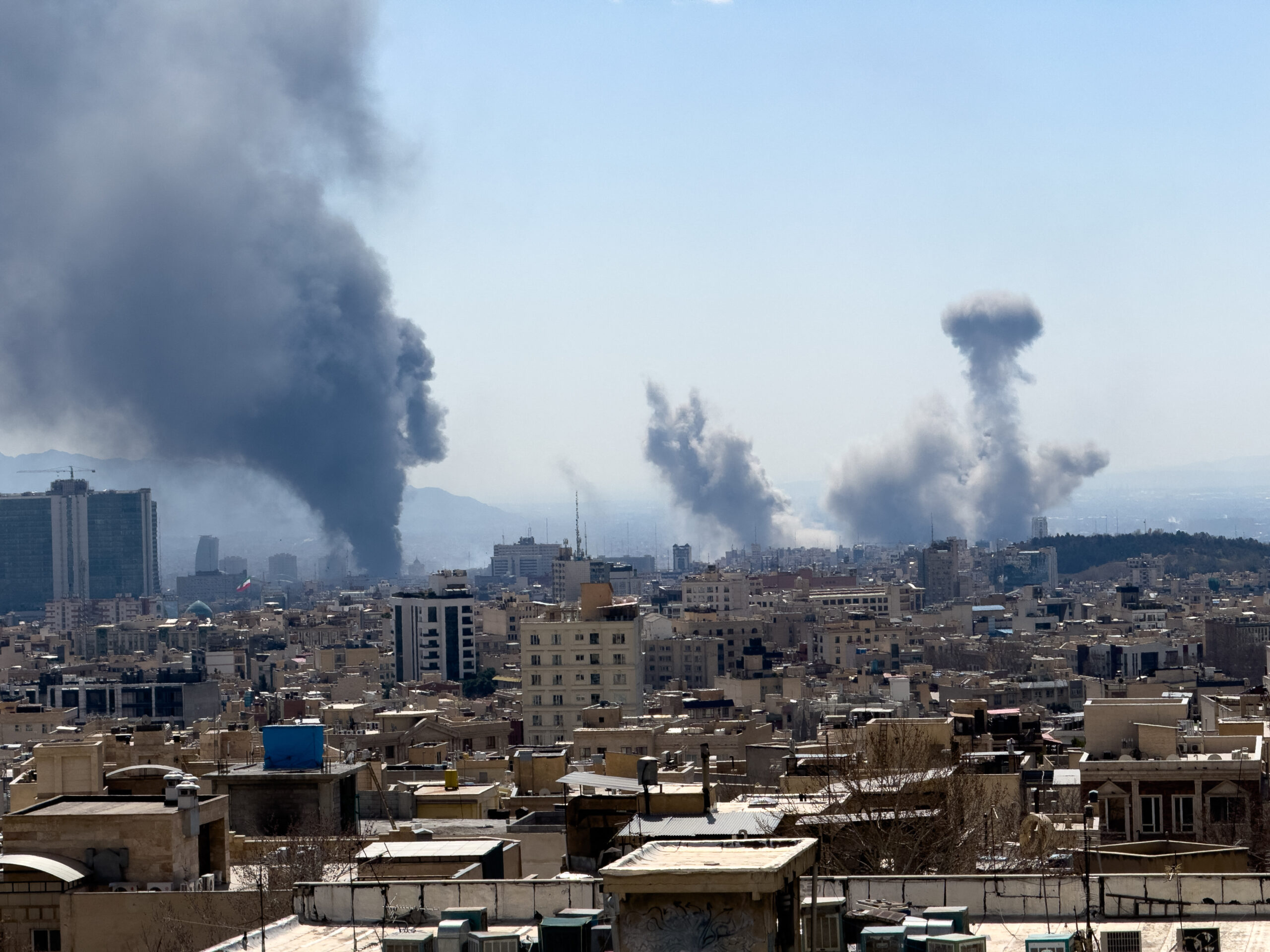

The attacks by the United States and Israel on the Islamic Republic of Iran and the subsequent counter-defense by Iran has spiraled into what analysts and observers have long warned about—a broader war. The fighting is causing significant damage in Israel, Iran and other countries, mostly in the Gulf, raising the risk of major economic repercussions worldwide.
Critics argue that the joint U.S.-Israeli attacks were “illegal” and “unprovoked,” triggering a response by Iran, not limited to the soil of Iran, but in nations in the region. Iran fired retaliatory missiles and drones into Israel and American military installations scattered in the Arab Gulf nations.
Several nations have now become involved in the conflict, directly or indirectly. Saudi Arabia, Oman, Jordan, Iraq, Bahrain, Qatar, United Arab Emirates and more. Israel has also attacked Lebanon and has encroached deeper into that country in an attempt to defeat Hezbollah, who are allies of Iran.
At Final Call presstime, Al Jazeera reported that “The death toll from Israeli attacks on Lebanon” had risen to at least 217 people, according to the Lebanese Ministry of Public Health. And as a result of the Israeli attacks, 95,000 people have been displaced.
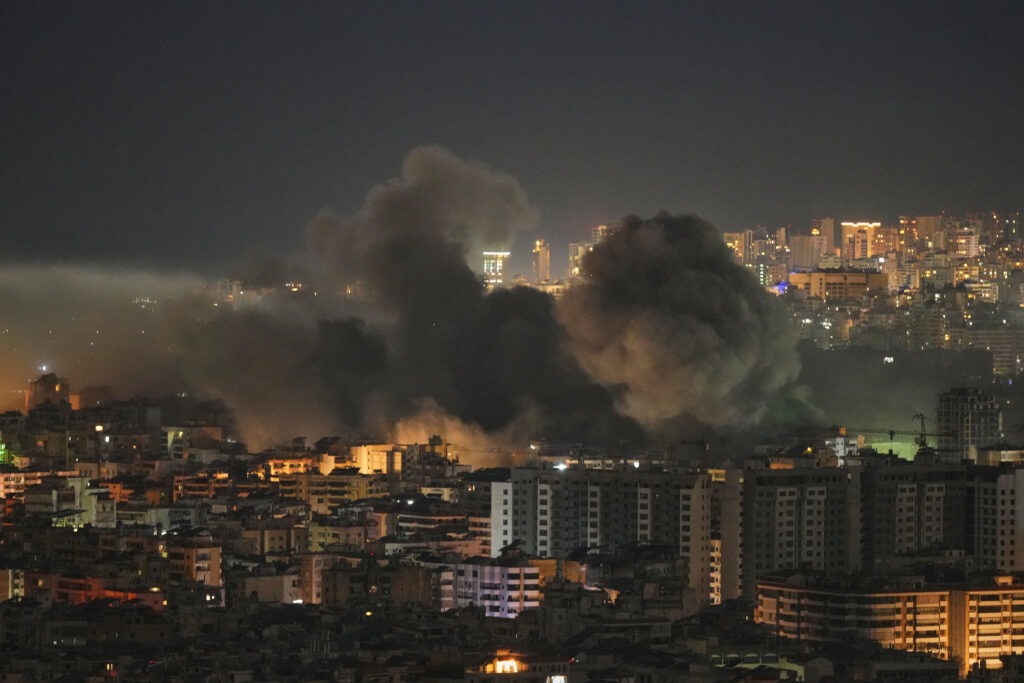
Photo: AP Photo/Hassan Ammar
Lebanon’s Prime Minister Nawaf Salam said, “the consequences of this displacement, at the humanitarian and political level, may well be unprecedented,” according to Al Jazeera.
“Our country has been drawn into a devastating war that we did not seek and did not choose,” he added, the outlet reported. Lebanese state media said early on March 6 that Israel had launched air strikes on several towns in southern Lebanon.
The instigation of war by the U.S. and Israel has quickly engulfed the region.
“The so-called spreading into the Gulf states was no more than a strategic consideration based on the fact that the nation (U.S.) that attacked Iran has its bases in those states,” said Ajamu Baraka, director of Black Alliance for Peace North South Project For People(s) Centered Human Rights.
“Therefore, those nations become legitimate military targets to undermine the ability of the U.S. to effectively wage war against them,” he explained.
Anti-war advocates and analysts argue that urgent steps are needed to contain and extinguish the widening war. However, inflammatory rhetoric by U.S. officials, more missiles, and killing are fueling further escalation.
Several European nations, including the U.K., France, Greece and Italy, are becoming involved, some by sending military equipment to bolster air defense systems for some of the Arab Gulf nations.
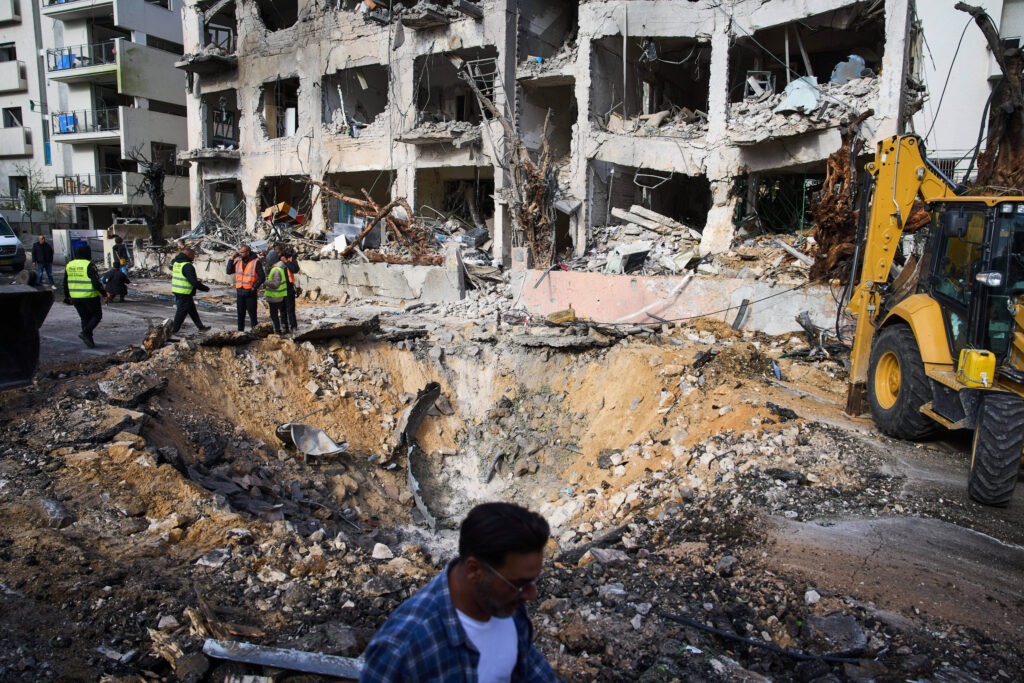
Photo: AP Photo/Oded Balilty
By Final Call presstime, the deadly bombs of aggression from the U.S. and Israel had killed over 1,200 Iranians according to PressTV, the Iranian state news media. As the intensity of the fighting increases, the death tolls are expected to rise on all sides.
On March 3, a mass funeral was held for 165 elementary-age girls and staff, slaughtered in an airstrike on their school compound in Minab, Iran. The United Nations Human Rights Office has called for an inquiry by the parties involved into what exactly happened and by whom.
“The High Commissioner (Volker Turk) calls for a prompt, impartial and thorough investigation into the circumstances of the attack,” UN Human Rights Spokesperson Ravina Shamdasani said at a Geneva press briefing.
“The fear … panic … anxiety experienced by millions of people in the Middle East and beyond is palpable—and was entirely avoidable,” said Ms. Shamdasani. “The situation is worsening and widening by the hour, playing out our worst fears,” she continued.
“UN Human Rights Chief Volker Türk says he is deeply shocked by the impacts of the widespread hostilities on civilians and civilian infrastructure since the conflict erupted,” added Ms. Shamdasani.
Mischief of mischief-makers
The war is the culmination of a U.S.-led, Israeli-instigated anti-Iran agenda. For America, this second attack on Feb. 28, like the previous one in June 2025—when it joined Israel’s 12-day war—is a war of choice that was in the works long before the airstrikes started.
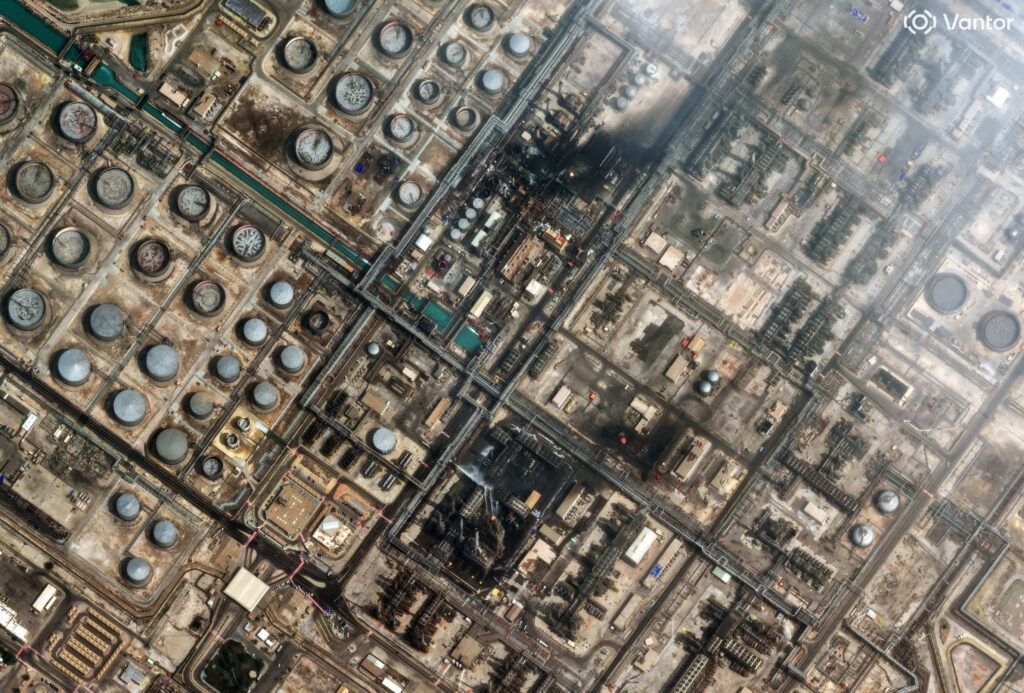
Photo: Satellite image ©2026 Vantor via AP
America was forewarned against pursuing a course of action that would lead to war. The Honorable Minister Louis Farrakhan, National Representative of the Most Honorable Elijah Muhammad, and the Nation of Islam has cautioned and warned successive U.S. presidents not to be entangled in a war with Iran instigated by Israel.
Minister Farrakhan visited Iran in November 2018 and issued a statement at the time, explaining his reasons for the visit and offering guidance on U.S.-Iran relations that can be heeded in the current crisis.
Some 47 years ago, Iranian students threw off the yoke of American domination through the overthrow of the Shah of Iran, a brutal dictator and tool of U.S. foreign policy. “While the Iranians have problems to solve, as do every nation and people on earth, they are a proud and independent people,” said Minister Farrakhan in the 2018 statement.
“They do not wish to be under the thumb of America again,” he continued. “As I said several times in Tehran, the U.S. sanctions are a mistake. And, while dialogue should be a good thing, the U.S. has a history of lying and breaking her commitments,” said Minister Farrakhan.
Shifting reasons for war
The U.S. and Israeli governments’ reasons for striking Iran were twin scripts that included, blocking Iran from obtaining a nuclear weapon by terminating its nuclear program, and degrading Iran’s ballistic missile capabilities.
In addition to these came the “elephant in the room” reason from U.S. Secretary of State Marco Rubio. He claimed America attacked Iran first to pre-empt an imminent attack on Iran by Israel, which he reasoned would bring retaliatory strikes against American interests by Iran.
“There absolutely was an imminent threat,” said Mr. Rubio. “And the imminent threat was that we knew that if Iran was attacked—and we believed they would be attacked—that they (Iran) would immediately come after us,” he explained. “And we were not going to sit there and absorb a blow before we responded,” he said.
Mr. Rubio spoke the quiet part out loud, said Seyed Abbas Araghchi, Iran’s foreign minister, by confirming what was widely believed.
“Mr. Rubio admitted what we all knew: (the) U.S. has entered a war of choice on behalf of Israel. There was never any so-called Iranian ‘threat,’” Mr. Araghchi said in a March 2 post on X. “Shedding of both American and Iranian blood is thus on Israel Firsters. American people deserve better and should take back their country,” he said.
Congressional pushback
Some U.S. lawmakers condemned the strikes as a colossal mistake as they debated a war powers resolution to curtail the war continuing without congressional authorization. However, in a tense vote on March 4, Senate Republicans rejected the resolution by a 53-47 vote.
“Donald Trump has just gotten America into an endless war,” said House Democratic Minority Leader Hakeem Jeffries in a press conference hours before the vote.
“We’ve already tragically lost the lives of six American service members,” Rep. Jefferies said, adding, “because Donald Trump, without justification and without coming to Congress, has gotten America into a Middle Eastern war that we know will not end well,” he said.
Rep. Gregory Meeks (D-NY), the Ranking Member of the House Foreign Affairs Committee, argued the war was a choice made by the Trump administration without clear objectives or a defined endgame, leading to potential escalation and failure.
“The question is, was there any imminent threat requiring the use of force? The administration has not presented one,” said Rep. Meeks. “In fact, the word imminent does not appear even once in the administration’s own War Powers notification,” he contended, while debating the draft resolution on the House floor.
Senator Tim Kaine (D-VA), a member of the Armed Services and Foreign Relations Committees, said the preemptive attack on Iran was unconstitutional. “For months, I have raised hell about the fact that the American people want lower prices, not more war,”
Said Senator Kaine in a statement, “especially wars that aren’t authorized by Congress, as required by the Constitution, and don’t have a clear objective,” he said.
The cost of war
With all things considered, war costs are mounting. An estimated price tag is currently $1 billion per day. Officials are weighing a supplemental funding request for $50 billion to sustain operations and replenish weapons stockpiles. The potential spending comes as many Americans face rising housing, energy and health care costs.
Anti-war activists denounce such war spending as a misplaced priority amid growing economic pressures at home.
“Already the White House is asking for $50 billion more, while people in this country have so many critical needs that we’re not paying for,” said Madea Benjamin, activist and co-founder of CODEPINK, a pro-peace group. “Everybody should be appalled that Trump has dragged us into yet another senseless war in the Middle East,” she said.
Ms. Benjamin said the war is based on lies because Iran never possessed a nuclear weapon and called it a tragic repeat of the Iraq war that left countless Iraqis dead. Along with the spilled blood of Iraqis, were thousands of American lives lost and maimed, and trillions of U.S. dollars all wasted. “This is a war for Israel and weapons manufacturers, not for the rest of us,” said Ms. Benjamin.
U.S. boots on the ground?
With regime change in Iran being threatened by the U.S., boots on the ground is not ruled out because governments cannot be deposed and taken without direct ground activity.
Mr. Baraka pointed out that the Trump administration is preparing the American people for the possibility of U.S. ground troops in Iran. “What that means is for Black people, who have a disproportionate number in the military … our young people will be put in harm’s way to protect and advance the interest of Zionism and U.S. imperialism. We must reject that,” he argued.
Media reports circulated that the CIA and Israel’s Mossad were planning a ground offensive involving Kurdish fighters, long at odds with Tehran. Various Kurdish militant groups operate along Iran’s rugged western frontier with Iraq, where Iranian security forces have periodically clashed with Kurdish insurgents. Kurdish leaders, however, denied that any such plan was underway.
“Reports that speak about a role of the Kurdistan Region and the allegations claiming that we are part of a plan to arm and send Kurdish opposition parties into Iranian territory are completely unfounded,”
Said Peshawa Hawramani, spokesperson of the Kurdistan Region Government in an X post. “We categorically deny them and affirm that they are being published deliberately and maliciously,” he said.
Before acting, there was debate inside the White House over the advisability of carrying out another war against Iran and another in the Middle East, observers said.
“Iran is a country of 90 million people, that’s bigger than France, bigger than Germany, bigger than the UK,” said Brian Becker of the Act Now to Stop War and End Racism (A.N.S.W.E.R.) Coalition.
“It’s a country from the Global South, but still, it has a vast military capacity, and so those forces in the Trump White House that are cautioning restraint are aware that this attack on Iran could spin out of control and constitute a major, profound, decisive setback for the U.S. and its Israeli proxy in the Middle East,” he said.
In a remark on the perpetuity of nations, Minister Farrakhan explained in his 2018 statement that to survive, America must turn away from yesterday’s policies, move forward in a new spirit, and seek a new direction. “Despite U.S. efforts to foment disunity and rebellion inside of Iran, the Iranian people may not be as gullible as America believes.
Iranians have the right to resolve their own problems without outside interference, just as the U.S. has claimed its right to conduct elections free of Russian influence. Self-determination is a right of every nation,” said Minister Farrakhan.
