









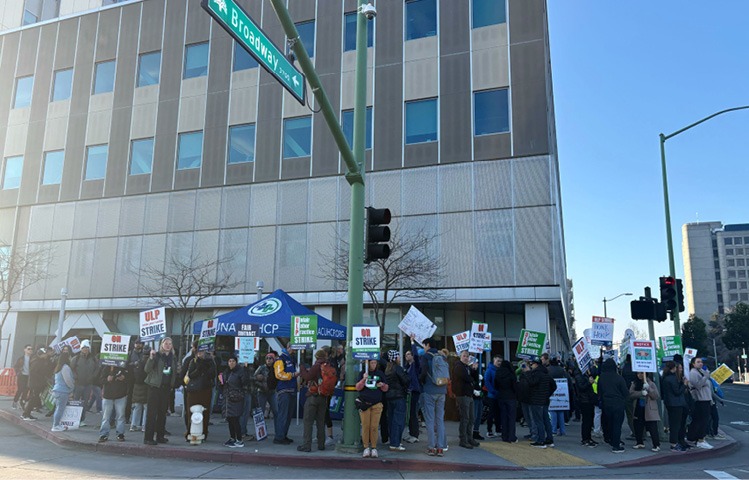

LOS ANGELES—Nurses and health care professionals in California and Hawaii launched a strike at Kaiser Permanente on January 26. This comes on the heels of nurses in New York recently launching a strike. (See The Final Call, Vol. 45 No. 16)
The workers in New York and Hawaii say they want safe staffing levels, timely access to quality care, and fair wages for frontline caregivers.
The “Unfair Labor Practice” (ULP) strike at more than two dozen Kaiser Permanente hospitals and hundreds of clinics stems from Kaiser’s alleged unfair labor practices, practices at facilities across California and Hawaii, according to the United Nurses Associations of California/Union of Health Care Professionals (UNAC/UHCP).
The united organization represents more than 40,000 registered nurses and health care professionals in the two states, including optometrists, pharmacists, physical, occupational, and speech therapists, case managers, nurse midwives, social workers, clinical lab scientists, physician assistants, and nurse practitioners, hospital support, and technical staff.
It is part of the Alliance of Health Care Unions, which bargains a national contract for 23 local unions covering dozens of hospitals and hundreds of clinics from Hawaii to Washington, D.C.
They did not go on strike to make noise, said Charmaine S. Morales, RN, president of UNAC/UHCP. “We’re striking because Kaiser has committed serious unfair labor practices and because Kaiser refuses to bargain in good faith over staffing that protects patients.
Workload standards that stop moral injury, and the respect and dignity that Kaiser caregivers have been denied for far too long,” she said, in a press statement.
“Striking is the lawful power of working people, and we are prepared to use it on behalf of our profession and patients,” continued Ms. Morales.
The strike would continue until an agreement is reached, according to UNAC/UHCP, which has been bargaining with Kaiser since May 2025.
“In December, Kaiser management left the table and negotiations stalled. The union filed an unfair labor practice (ULP) charge against Kaiser at the National Labor Relations Board.
Alleging the employer unlawfully walked away from the table and also attempted to bypass the agreed-upon national bargaining process. Kaiser’s illegal conduct badly undermined the bargaining process established in federal law,” indicated UNAC/UHCP in a press statement.
Their escalating actions across California and Hawaii in recent months included a massive five-day strike in October, according to UNAC/UHCP. The group specified that workers say that “persistent staffing shortages are driving burnout and turnover, delaying care, increasing workloads, and leaving fewer experienced caregivers at the bedside and in the clinic.”
UNAC/UHCP indicated that some core issues driving the contract negotiations include Kaiser’s unfair labor practices, safe staffing, fair wages and economic security, and retirement and benefits security.
Kaiser Permanente says it has been bargaining with UNAC/UHCP and the Alliance of Health Care Unions for more than seven months, the longest negotiations in national bargaining history, to reach an agreement on a new set of national and local contracts.
“These negotiations come at a time when health care costs are rising, and millions of Americans are at risk of losing access to health coverage. This underscores our responsibility to deliver fair, competitive pay for employees while protecting access and affordability for our members. We’re doing both,” stated a Kaiser press statement, issued a day before the strike.
“Our Alliance employees already earn, on average, about 16% more than similar roles at other health care organizations, and in some markets, they earn 24% more. Our current proposal builds on that, keeping Kaiser Permanente among the best-paying employers in health care.
This proposal includes the strongest compensation package in our national bargaining history: a 21.5% wage increase over the life of the contract, with 16% within the first two years.
When step increases and local adjustments are factored in, the total average increase is approximately 30%—one of the strongest nursing contract offers in California this year.”
Calling the strike unfortunate, Kaiser noted that not all of the Alliance’s unions currently in negotiations were participating.
“Despite the union’s claims, this strike is about wages. This open-ended strike by UNAC/UHCP is unnecessary when such a generous offer is on the table. The strike is designed to disrupt the lives of our patients—the very people we are all here to serve,” argued Kaiser, in its press statement.
“We’re here for our patients,” said Hector, an emergency room registered nurse, who reportedly has worked at Kaiser for decades. “We want better staffing.
We want safer staffing, because workplace safety is a big part of our staffing, so we can take care of patients better,” he told KTLA News reporter Jacqueline Sarkissian, on day one of the strike, from East Hollywood.
Since COVID-19, four years ago, they have experienced a lot of burnout, and their pleas for better staffing have fallen on silent ears, he said. “When you have over 30,000 health care professionals start the largest strike in the United States, that’s a testament as to what we’re fighting for, and we’re serious about patient care,” added Hector.
“We are always understaffed, people waiting two, three, four, five hours for us in the emergency room,” said a female strike participant to an ABC News affiliate in San Diego on day two of the strike.
Dr. Sheldon D. Fields, 14th president of the National Black Nurses’ Association, Inc., told The Final Call, first and foremost, that nurses, and nursing, as the largest segment of the health care workforce, and the most trusted health care profession, or profession, in general, have a moral and ethical obligation to uphold their code of ethics that guides their entire practice.
“That calls us to advocate for our patients, and what people often misconstrue, or they only think, that these types of actions by nurses is about their own interests, like their pay or other benefits, and that is not the primary reason,” he said.
It is more about safe nurse-to-patient staff ratios, not money, explained Dr. Fields, who is also research professor and inaugural associate dean for Equity and Inclusion in the Ross and Carol Nese College of Nursing at Penn State University. “How can these institutions double the pay for the nurses that are filling in at the moment, if it was only about money?” he asked.
“But my true hope is that those institutions, those administrators, will truly find the compromise that needs to happen and in a good negotiation, everybody walks away from the table, probably not completely happy, but that’s what compromise is all about.
And I want to encourage my colleagues to remain diligent, because they are fighting for the greater good and I truly do hope that we can resolve this, as we all continue to work on the goal of optimal health equity for everybody in the country,” said Dr. Fields.
The strike in California and Hawaii came as nurses in New York entered their third week on picket lines. Nearly 15,000 nurses went on strike after stalled negotiations with three of New York City’s wealthiest private hospital systems.
The strike, which began on Jan. 12, was organized by the New York State Nurses Association (NYSNA), a labor union of about 42,000 nurses and health care professionals.
Nurses are resilient, and they will pick up exactly where they left off, said Dr. Fields. “The real issue will be, what is happening and then how do you work with the institution to clear up the back log that this has created, and making sure that people are still able to get what they need,” he added. Final Call staff contributed to this report.
