



WASHINGTON, D.C.—What began as a bold effort in the mid-1990s to stem gun violence has become a sustained movement to interrupt violence, uplift at-risk youth, and rebuild neighborhoods in D.C.
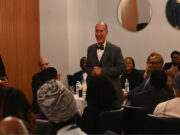
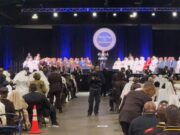
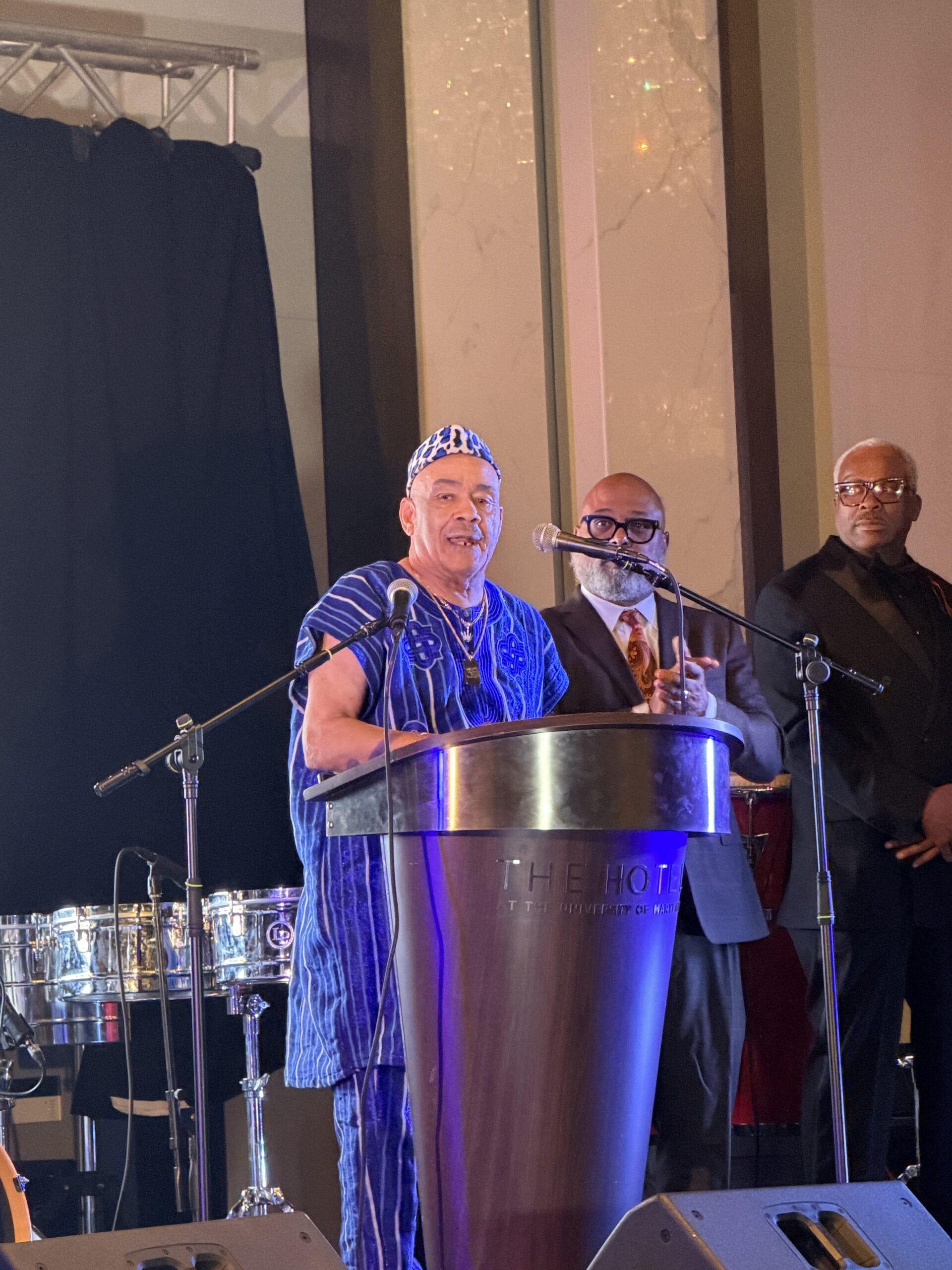
The city recently celebrated the 30th anniversary of Cease Fire … Don’t Smoke the Brothers and Sisters, Inc. (DSTBS), a grassroots organization founded and led by Brother Al-Malik Farrakhan (no relation to the Honorable Minister Louis Farrakhan or the Farrakhan family). The gala brought together community members and residents to recognize the efforts of the program.
“I was his lawyer,” said retired judge Richard Ringall at a recent gala commemorating Bro. Al-Malik’s achievements. “He would get in trouble, and I would get him out. He would get in trouble, and I would get him until one day I couldn’t get him out.”
Then known as Leroy Green, Al-Malik Farrakhan was a leader from the start. According to his biography, he was a member of two street organizations. Wherever he lived.
He “took on the position of leader and protector in his communities, something that continues to this day. Unfortunately, his early years were plagued by long periods of incarceration,” his biography notes.
Bro. Al-Malik’s biography also states that while serving his last sentence, he was repeatedly beaten by Los Angeles County Sheriff’s Department deputies because of trying to quell conflicts between opposing gangs and reveal sheriffs who were members of the Ku Klux Klan.
The last beating, which took place in 1986, left him unable to speak, paralyzed from the neck down for three and a half years, and reliant on a wheelchair.
After 21 years of incarceration and years of street-level experience, Bro. Al-Malik returned to Washington, D.C., in 1993 and began meeting with local “crews” and street organizations. In February 1995, five rival gangs convened at Mayor Marion Barry’s office and publicly declared a truce—a foundational moment for Cease Fire … Don’t Smoke the Brothers.
The organization was formally incorporated on April 7, 1995, months before the historic 1995 Million Man March, which was called and convened by the Honorable Minister Louis Farrakhan.
Nation of Islam Mid-Atlantic Student Regional Minister Abdul Khadir Muhammad told the gala audience a healing story about Bro. Al-Malik. “In the parking lot of Union Temple Baptist Church.
The Honorable Minister Louis Farrakhan prayed with our brother and put his hands around his face. This is when he was wearing the crutches and told him, ‘The next time I see you, I want to see you walking.’”
Student Min. Abdul Khadir explained the power of brotherhood, unity and prayer.
“The next time Minister Farrakhan came, he (Bro. Al-Malik) was still on the crutches,” said Student Minister Abdul Khadir. He shared that Minister Farrakhan repeated his prayers and the next time he came to D.C., that Bro. Al-Malik had begun to walk.
From its D.C. headquarters, DSTBS has operated, in part, with the mission of “restoring peace, protecting our youth, and rebuilding communities from within.” This work includes street-level outreach (walking blocks, speaking directly with youth and former gang members);
Mediation and truces (convening rival factions and organizing moratoria on killings, youth development); mentoring, vocational training, entrepreneurship and advocacy; and family services (coat drives, hot meals, community events to build dignity and hope.)
The D.C. Council passed a resolution (CER26-0080) formally recognizing Bro. Al-Malik and his organization for three decades of service. The gala, held Oct. 26, was hosted by Ward Eight Councilman Trayon White and Prince George’s Councilman Calvin Hawkins.
Over the past three decades, the organization has transformed the narrative of “us versus them” to “we are in this together.” Bro. Al Malik Farrakhan’s experience, from street life to incarceration to leadership, gives authenticity to the mission.
The milestone offers a chance to reflect on successes—such as reducing firearm violence in some areas and reengaging youth—while also recognizing the challenges ahead: generational cycles of trauma, changing gang structures, and systemic inequalities still persist.
“Why are we losing our babies? It’s by design. That young Black brother just crossed the street. He’s my enemy. It took me a long time to learn that he’s not.
When I was out there, trying to kill one that looked like me because I hated my eyes, eyebrows, and hair, it was called self-hatred. I didn’t like myself,” he said during remarks at the gala. Bro. Al-Malik transformed his life and took a leadership role in helping bring peace to the streets of D.C., and his work continues.
The gala also included remarks from Bro. Al-Malik’s children, Nation of Islam Student Minister Jamil Muhammad, Rev. Willie Wilson of Union Temple Baptist Church, and former D.C. Assistant Police Chief Dianne Gromes.
—Nisa Islam Muhammad, Staff Writer
