









Raids in Charlotte and plans for New Orleans, St. Paul have cities on edge
A sweeping federal immigration enforcement surge descended on Charlotte, North Carolina, as agents from the Department of Homeland Security (DHS), including U.S. Border Patrol and ICE, arrested more than 250 people over several days, according to DHS officials and community reports.
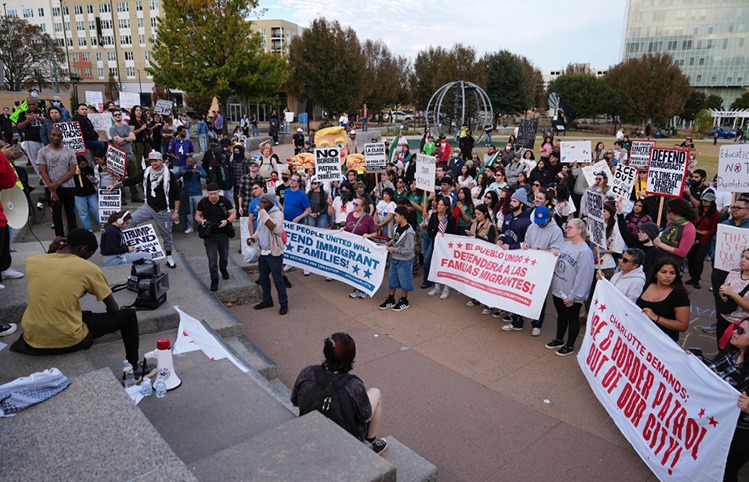
The operation—dubbed “Operation Charlotte’s Web”—sparked sharp backlash from local leaders, faith communities, and immigrant advocates, who accuse authorities of sowing fear and violating civil liberties.
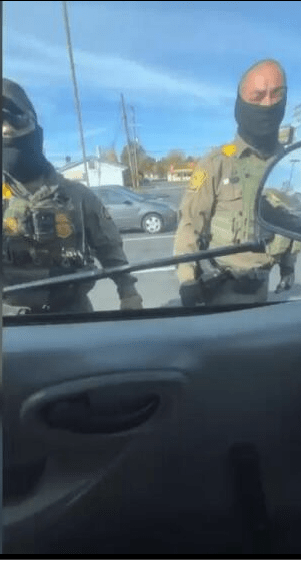
Kassandra Ottley is a Charlotte community activist. She told The Final Call, “When they hit the ground, they started going into immigrant communities and just snatching people. One young man was coming out of the supermarket, they ran up on him, tackled him, and ICE’s faces are covered. They don’t have any identifying markers on them unless you know their jackets might say ‘Border Patrol.’ They don’t have any documentation, and they’re just taking people.”
“There’s also video of a gentleman in his truck. He said he was stopped twice, and the second time, ICE was telling him to get out of the truck. While he was talking, they broke his whole window, yanked him out the window. He is a U.S. citizen. They’re saying they’re here to get criminal illegal aliens, right, but that’s not what it looks like they’re doing,” said Ms. Ottley.
As community members trembled with anxiety, local bakeries shut their doors, and even a churchyard where parishioners were doing yard work became a scene of sudden arrests.
But amid the fear, one figure had stood firm—Sheriff Garry McFadden, of Mecklenburg County. He refused to bow to pressure. He made clear: his office would not cooperate blindly in an operation that threatened to tear families apart and sow panic across his community.
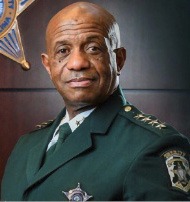
Sheriff McFadden told The Final Call, “I’m not living on Martin Luther King’s dream. I have to live my dream. My kids have to say, when my grandfather was living, this is what he did. My grandfather was the first Black sheriff in Mecklenburg County, and this is what he did. I treat my brothers and sisters, even inside my detention center, with humanity and respect. If you come inside my detention center, you will not see people walking around in chains and handcuffs. Why? If you treat somebody with dignity and respect, you may get dignity and respect back,” he said.
How does he respond to critics who think this community deserves what’s happening to them because they voted for President Donald Trump?
He reminds them of the history of Black people in this country who were and are targeted. “This is not about Latinos; that’s what they make it seem like. Brothers from Africa, Haiti, Jamaica, and other places that we visit are being arrested, too.”
While the Department of Homeland Security says its goal is to target “public safety threats,” particularly noncitizens with criminal histories, residents disagree. They argue that the raids are instilling more fear in the community.
Rev. Corine Mack, president of the Charlotte-Mecklenburg chapter of the NAACP, told The Final Call, “There’s a lot of fear in the Latino community. There is some support and collaboration happening between White, Black and Latino, which is always a good thing.”
Charlotte remains an ICE target. Between January and June 2025, ICE arrested 436 people in Mecklenburg County (which includes Charlotte). In May, there was a notable surge, with over 400 arrests occurring across the state. During that month, ICE carried out more extensive operations in Charlotte. Almost half of those detained had no previous criminal records, and 20% were apprehended solely for lacking documentation. More than 80% of the individuals arrested were from Mexico, Honduras, Guatemala, Nicaragua, and El Salvador.
Student Minister Corey Muhammad, of the Nation of Islam’s Mosque No. 36 in Charlotte, has been working with residents to quell the fear and anxiety. “I’m connected with many of the community activists, doing what we can to help, and provide some sense of calm. Many of our brothers and sisters in the Latino communities and others are afraid of what they see happening right now,” he told The Final Call.
“More protests are being planned, but right now, the city government is working on ways to provide help to families that have been impacted when their loved ones are caught up in ‘Charlotte’s Web’ operations. I’m also working with community leaders, as well as being abreast of what the city government is doing.”
As Charlotte tries to deal with the fallout, federal agents hit Raleigh, N.C., and also St. Paul, Minnesota, but haven’t released details of their arrests in St. Paul.
“Today in St. Paul, ICE HSI and law enforcement partners conducted court authorized law enforcement activity and served a search warrant in furtherance of a federal criminal investigation. There is no threat to public safety, and the investigation remains ongoing at this time,” a spokesperson for ICE told the media. “ICE HIS” is Homeland Security Investigations, which is the primary investigative arm of ICE.
In a recent statement, St. Paul Mayor Melvin Carter said, “Though we don’t have many details right now, I share the concern and fear this raises for our workers, families and entire community. Remember you have rights.”
Local and federal reports point to a similar enforcement surge headed to New Orleans. Internal DHS planning documents obtained by the media suggest an operation, reportedly called “Swamp Sweep,” could begin as early as December 1. Approximately 250 Border Patrol agents are expected to be deployed to southeastern Louisiana, staging out of New Orleans.
The operation reportedly aims to arrest around 5,000 individuals over a period of up to 60 days, spanning multiple parishes, including Jefferson, St. Bernard, and St. Tammany, and extending north toward Baton Rouge, as well as parts of southern Mississippi. Federal documents suggest agents will use a portion of the FBI’s New Orleans field office as a command post and store equipment at a nearby naval base, including “less-lethal” munitions like pepper balls and tear gas.
Louisiana Gov. Jeff Landry, a Trump ally, has publicly welcomed the enforcement surge, while New Orleans city officials face tension between local priorities and federal directives.
