




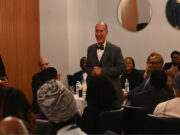






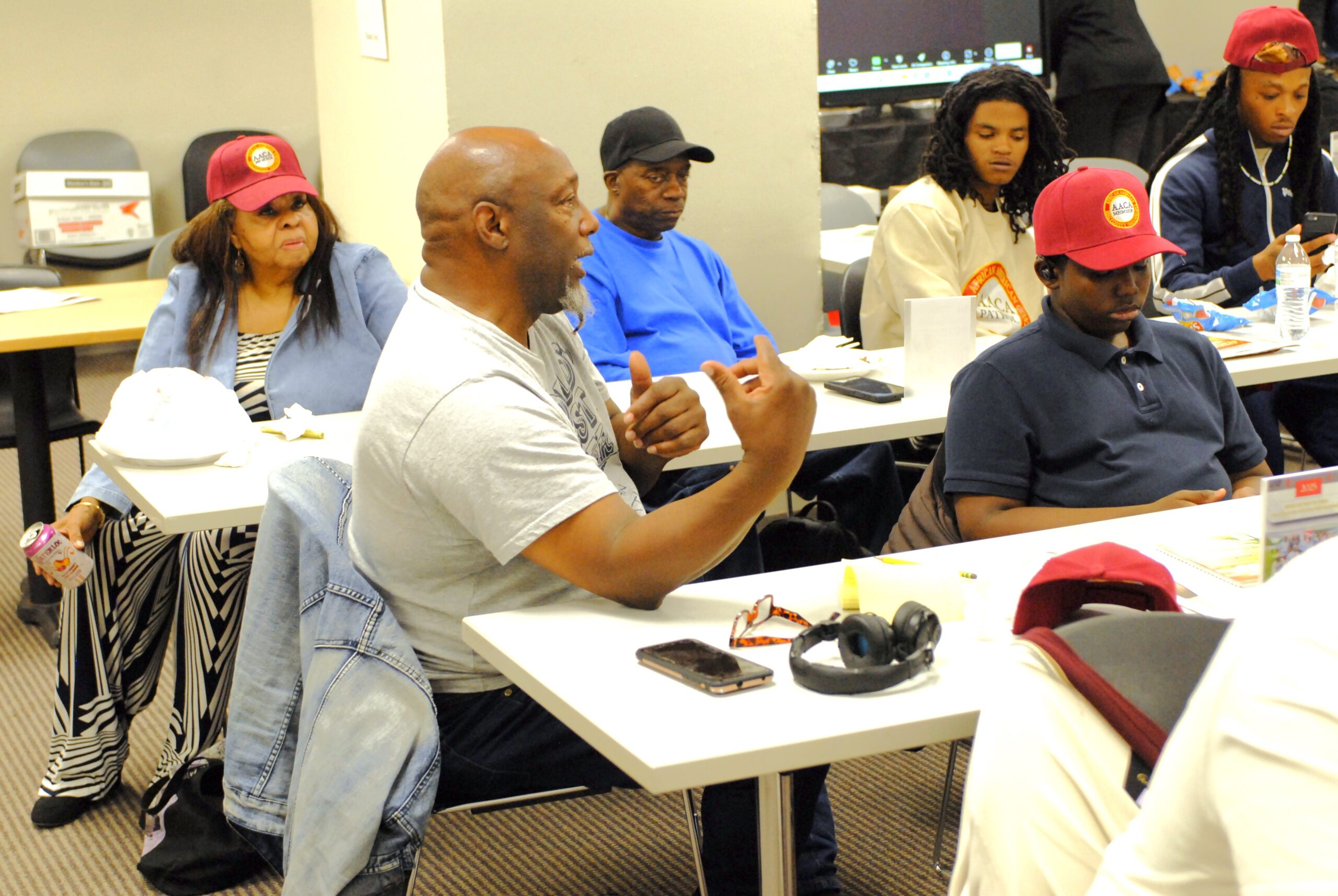

CHICAGO—On Chicago’s West Side, community leaders, elected officials, and formerly incarcerated residents from throughout the city gathered for the Returning Citizens Summit, Sept. 26, with a focus on helping people reenter society and confronting systemic failures in the criminal justice system. The event, held at Malcolm X College and hosted by Alderwoman Jeanette Taylor (20th Ward) in partnership with Transforming Reentry Services (TRS), brought together survivors, advocates, and organizations to share firsthand accounts and propose solutions rooted in healing, family, and dignity.
“The government does a piss poor job of supporting people who come back,” Ald. Taylor said. “Too often we don’t talk about the people who come back and don’t go back. At the end of the day, it’s our responsibility to make sure returning citizens know they came home to a community that values them and wants them to succeed.”
Women are the fastest-growing segment of the prison population. Most are mothers, and their absence devastates families. Participants urged policy changes, greater investment in reentry, and a shift in how Black and Latino women are perceived upon their return home.
Contrary to stereotypes, most incarcerated women are not hardened criminals but survivors of abuse, poverty, and trauma. Nearly 80% have experienced gender-based violence.
Dyanna Winchester of the Women’s Justice Institute said the system ignored her humanity. “When I was going through my trial and in Cook County Jail, they didn’t see who I was. They didn’t see that I was a mother, that I had survived abuse and trauma. They only saw the crime.” She shared that her oldest son was killed by gun violence while she was incarcerated. “The system punished not just me, but my children. If I had been a part of my son’s life, who can say what kind of path he would have led?”
Charlis Harris, also of the Women’s Justice Institute, recalled the reunification bus rides with her children. “Those visits kept me and my kids alive,” she said.
False narratives—such as the idea that children are “better off” when mothers are behind bars—were condemned. “Don’t punish my children for what I may have done,” said another panelist.
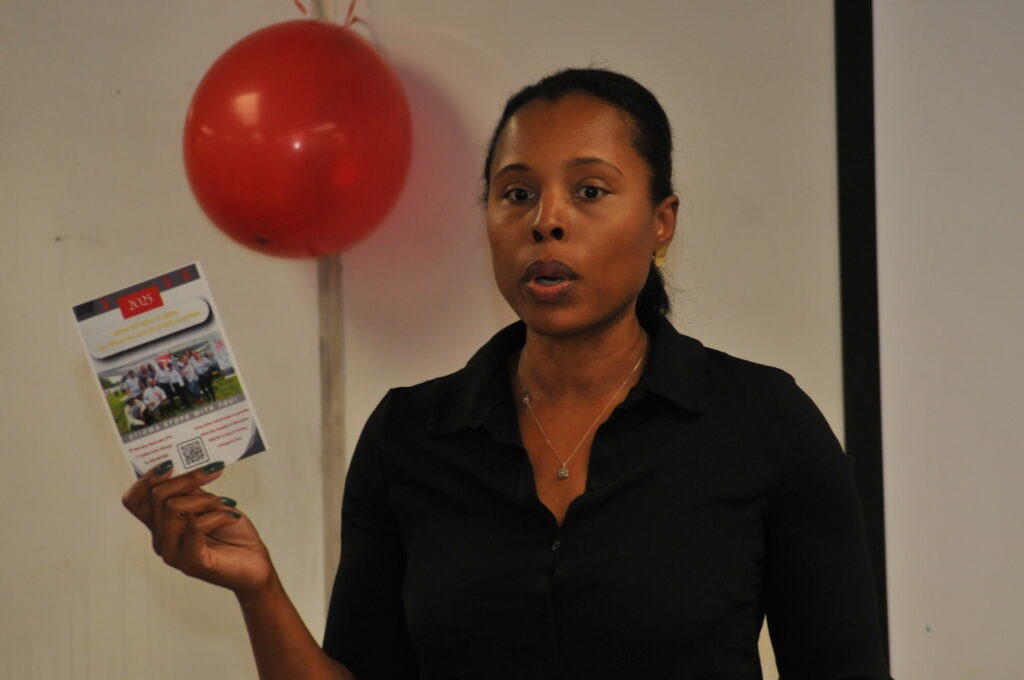
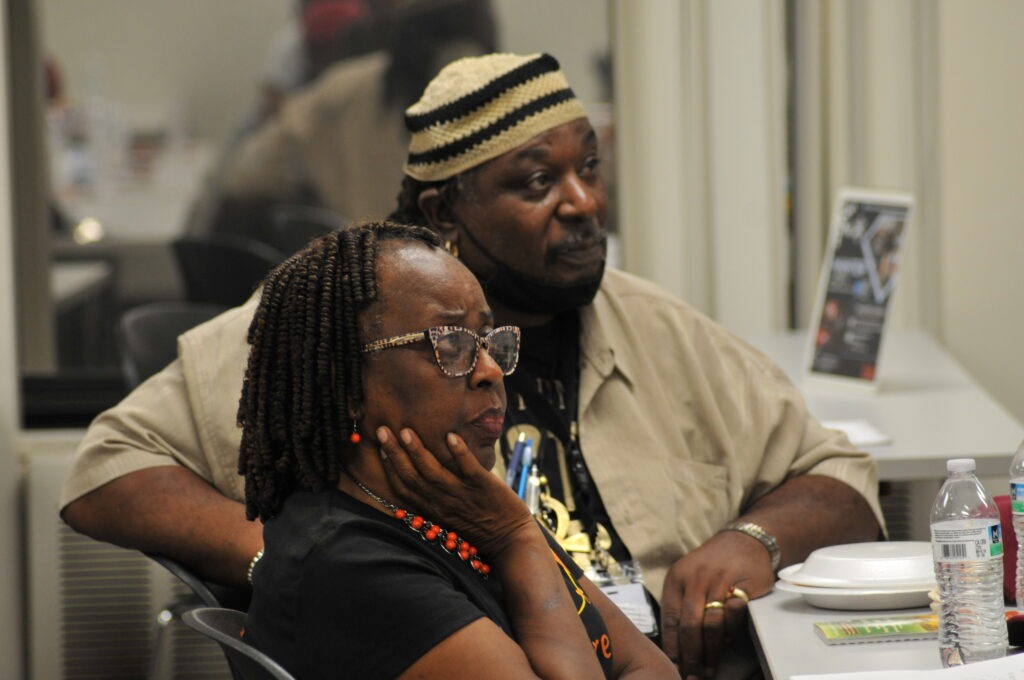
Release does not mean freedom from punishment. “When I came home, people assumed I needed housing and a job. But nobody asked me what I really needed,” said Jei Jei Webster, community navigator with the Illinois Prison Project. “I needed to unpack mentally. I didn’t even realize a hug from my mother would feel foreign to me.”
Cecilia Colón of Giving Others Dreams (GOD) shared that after losing her sister to gun violence, she was denied custody of her nieces because of decades-old convictions. “Who I was at 17 is not who I am at 50,” she said.
Tan Jennifer Sublett of the Chicago Torture Justice Center, who spent 21 years incarcerated, returned home only to learn she no longer “qualified” for services. “We make people qualify their pain,” she said. “We’ve been in prison—that should be enough.”
This cycle, they said, reflects a system designed not for rehabilitation but for warehousing human beings.
Cook County Commissioner Michael Scott told The Final Call that incarceration impacts nearly every Black family. “Somebody in your family—your cousin, your uncle, your niece—has been touched by this system,” he said.
Prynce Israel, a summit attendee, emphasized the importance of prevention. “It was inspiring to see women who turned their lives around,” he said. “Young people hear these stories and realize, ‘I don’t want that to be me.’”
The struggle of Black women behind bars is part of a longer history: from slavery and family separation, to the war on drugs, to today’s prison industrial complex. Appropriately, the program opened in prayer, invoking Allah’s (God’s) guidance and protection.
The Nation of Islam teaches that every Black person is redeemable. History affirms this truth: Malcolm X and countless others found light behind prison walls and emerged as leaders. It is why the Muslim Program of the Most Honorable Elijah Muhammad proclaims in Point No. 5 of What the Muslims Want: “We want freedom for all Believers of Islam now held in federal prisons. We want freedom for all Black men and women now under death sentence in innumerable prisons in the North as well as the South. We want every Black man and woman to have the freedom to accept or reject being separated from the slave master’s children and to establish a land of their own.”
As the Honorable Minister Louis Farrakhan has long reminded, America’s justice system is rooted in racism and profit, not rehabilitation. Speaking directly to inmates at Cook County Jail in 1997, he counseled: “If you will grow and develop and let time serve you rather than you serve time, then … the jail can’t hold you any longer.”
In 2022, Black women were imprisoned at a rate of 64 per 100,000, 1.6 times higher than White women, according to The Sentencing Project. Latina women were incarcerated at 49 per 100,000, about 1.2 times the rate of White women.
While the imprisonment rate for Black women declined 69% between 2000 and 2022, they remain disproportionately affected. In contrast, the rate for White women rose 18% during that same period, The Sentencing Project reported. From 1980 to 2016, the female prison population grew more than 700%, according to the Prison Policy Initiative. As of year-end 2022, approximately 87,800 women were in state and federal prisons, representing a nearly 5% increase from 2021, according to the Bureau of Justice Statistics.
The women leading the conversation at the Returning Citizens Summit were not asking for pity; they are demanding justice and recognition of their humanity. They are organizing reunification rides, hosting support circles, pushing for legislation, and mentoring youth.
“Supporting women coming home isn’t just about them,” said Radie Kilpatrick, a participant who is now a property owner. “It’s about giving their children a chance and giving our community a future.”
At its core, the gathering was a declaration: returning residents are not throwaways. They are mothers, daughters, leaders, and builders of tomorrow. And in their fight for justice, they are also fighting for the soul of Black America.
Lunch was provided by ChiFresh Kitchen, a worker-owned cooperative founded and staffed by returning residents. The business serves as proof of what reentry support can look like in practice: formerly incarcerated individuals not only finding employment but also building ownership and creating opportunities for others. Their presence at the summit underscored the theme that returning citizens, given resources and respect, can become leaders in strengthening families and communities.
Support at the event also came from several businesses, nonprofit organizations, city and state departments and other entities.
