











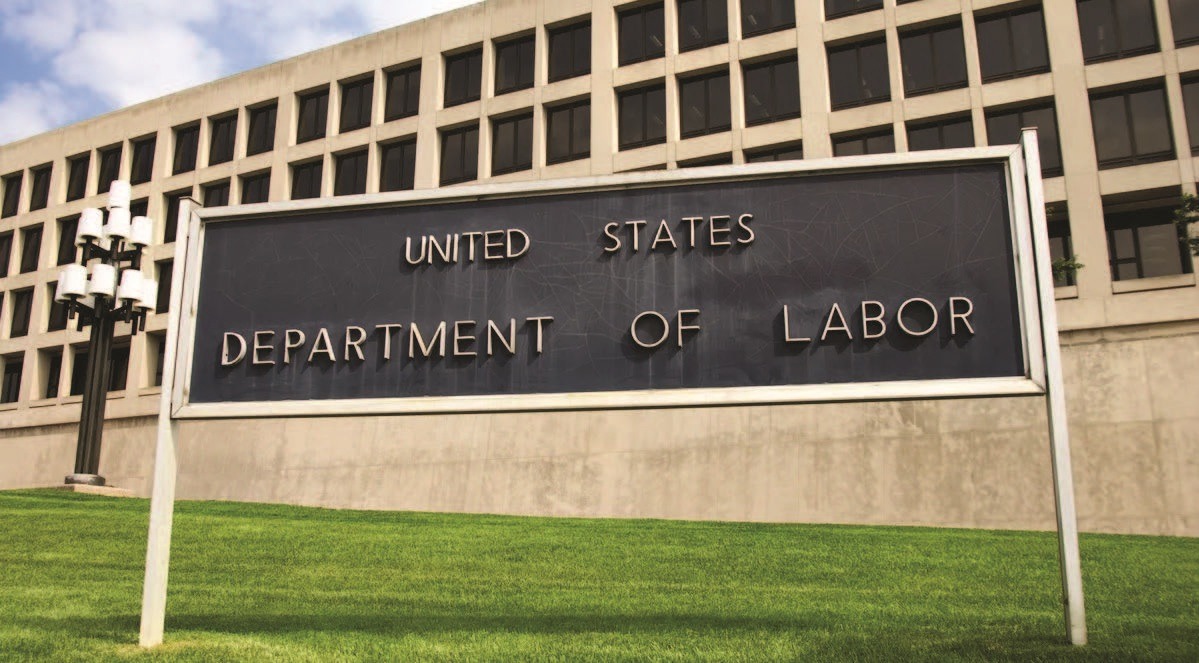

A federal judge has blocked the U.S. Department of Labor’s closures of some of the 99 Job Corps centers that were paused from operating nationwide. Job Corps is the nation’s largest free, residential career training and education program in the U.S.
It serves primarily low-income young adults ages 16 through 24. U.S. District Judge Andrew Carter Jr. issued a temporary restraining order on June 25 barring the federal government from taking any further actions to shut down 99 centers across the country.
This came after the National Job Corps Association (NJCA) filed a motion on June 3 in U.S. District Court for the Southern District of New York, after the Department of Labor began a pause in operations at the contractor-operated Job Corps centers.
On July 23, Judge Carter narrowed his decision to apply only to the 30-plus centers directly involved in the NJCA lawsuit, according to Politico. “I am bound by CASA,” said the judge, during a hearing on the matter, the outlet reported.
Judge Carter was referring to the Supreme Court’s recent ruling in a case known as Trump v. CASA that significantly restricted judges’ abilities to impose nationwide injunctions against the executive branch, such as the one Judge Carter issued in June against the U.S. Department of Labor (DOL).
“The DOL’s unilateral elimination of Job Corps is illegal,” argued NJCA and other plaintiffs in their complaint.
The plaintiff pointed out that the U.S. Congress created the Jobs Corps in the Economic Opportunity Act of 1964, an effort of President Lyndon B. Johnson’s War on Poverty, to tackle the problem of youth unemployment.
The inspiration for Job Corps came from the Civilian Conservative Corps, a 1933 work relief program that gave millions of young men and also young women employment on environmental projects.
“Shutting down Job Corps campuses will mean forced displacement of all these students. … Many of these students came from homelessness or foster care and have no place to go. As one student puts it: ‘I finally feel like I belong somewhere.
The program gave me more than an education. It gave me stability. It gave me peace. It gave me purpose. I now feel safe, supported and seen,’” noted the complaint. “If the center closes, I’ll have nowhere to go. No money. No plan. No home.
I will be scared for my safety. It makes me feel alone again. This place is the only place where I’ve ever felt safe and grounded. It’s the only reason I have hope,” it continued.
The DOL’s cancellation decision did not comply with Congressional requirements that it: “establish written criteria to … determine when a Job Corps center … is to be closed and how to carry out such closure,” which be submitted to four Congressional committees,” read the complaint.
NJCA argued that those individuals harmed by the closure of the centers would include displaced students, including formerly homeless youth; experienced professionals serving those students who will be laid off;
Successful businesses that have long operated Job Corps centers and will have to shut down; and communities that count Job Corps as a key part of their fabric.
“We are appreciative. As a program, it was an unfortunate situation to begin with, but we are pleased that the courts see the value in the process and supporting that Congress has the autonomy to impact Job Corps and the funding and not the president of the United States directly,” stated James Harris, former center director at the Benjamin L. Hooks Job Corps Center in Memphis, Tennessee, from 2004-2018.
Next steps, according to Mr. Harris, are assisting students who exited the program. If they had not completed their program, they do have the ability to return, even if they have completed a portion of their program, he said.
Job Corps offers both technical training and high school diplomas, so if a student has completed his or her technical training and not a high school diploma, he or she can return to complete that, he said.
In addition, Job Corps is even extending an opportunity for individuals who may have wanted to go to advanced training, he said. “We are opening the gates to get our young individuals back in the program,” Mr. Harris told The Final Call.
They are hoping to remedy the problem centers have experienced in not being able to enroll students since the U.S. Department of Labor put a freeze on background checks in April, he added.
“It’s a great ruling in favor of keeping our students who are at risk in an environment where they can obtain more skills,” said Timothy Muhammad, a former GED instructor for Job Corps in New Orleans.
The program in New Orleans has done a great job in helping students, according to Mr. Muhammad. Students attended classes in uniforms representing their specific disciplines or endeavors, whether the medical field or nursing, and were focused and serious about acquiring that skill, he explained.
