









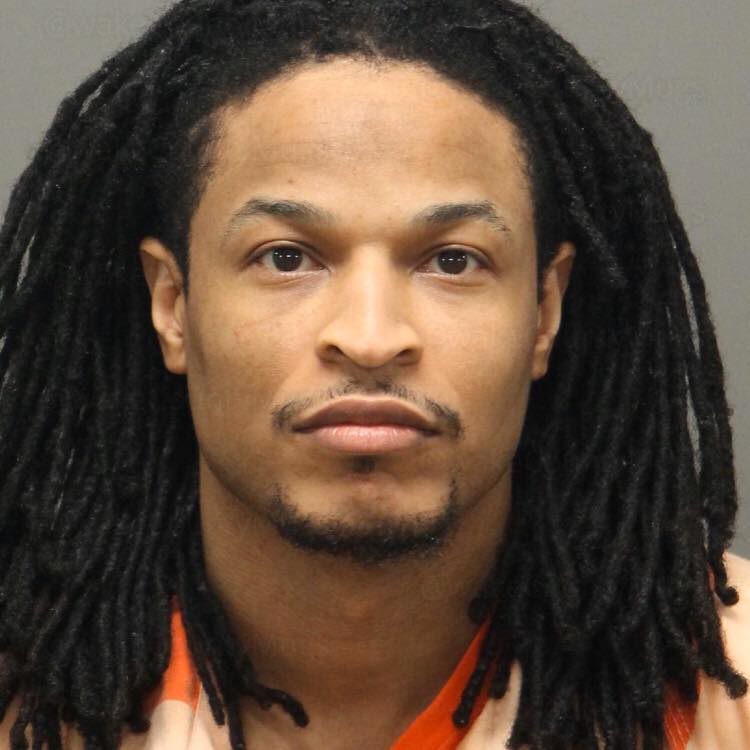
Hasson Bacote, 38, had a rough early life. He survived a traumatic birth, parental abandonment, the death of an aunt, physical and sexual abuse in foster care and separation from his older brother, according to the Center for Death Penalty Litigation.
He and two others were charged with murder in the fatal shooting of 18-year-old Anthony Surles during a home robbery in 2007. He was sentenced to death for felony murder in the Superior Court of Johnston County, North Carolina, by a nearly all-White jury in April 2009.

At a two-week hearing from late February to early March 2024, Mr. Bacote’s legal team argued that racial discrimination played a role in his death penalty sentencing. Almost one year later, on February 7, Superior Court Judge Wayland J. Sermons Jr. ruled that racial discrimination did in fact play a role.
Shortly before the judge’s ruling, former N.C. Governor Roy Cooper commuted Mr. Bacote’s sentence to life in prison, along with the sentences of 14 others on death row.
“I am deeply grateful to my family, my lawyers, the experts, and to everyone who fought for justice— not just in my case, but for so many others,” Mr. Bacote said after the ruling, according to news releases by his defense team.
“When my death sentence was commuted by Governor Cooper, I felt enormous relief that the burden of the death penalty—and all of the stress and anxiety that go with it—were lifted off my shoulders. I am grateful to the court for having the courage to recognize that racial bias affected my case and so many others.”
The ruling could affect the 90-plus people on death row who filed motions under N.C.’s Racial Justice Act.
The Racial Justice Act
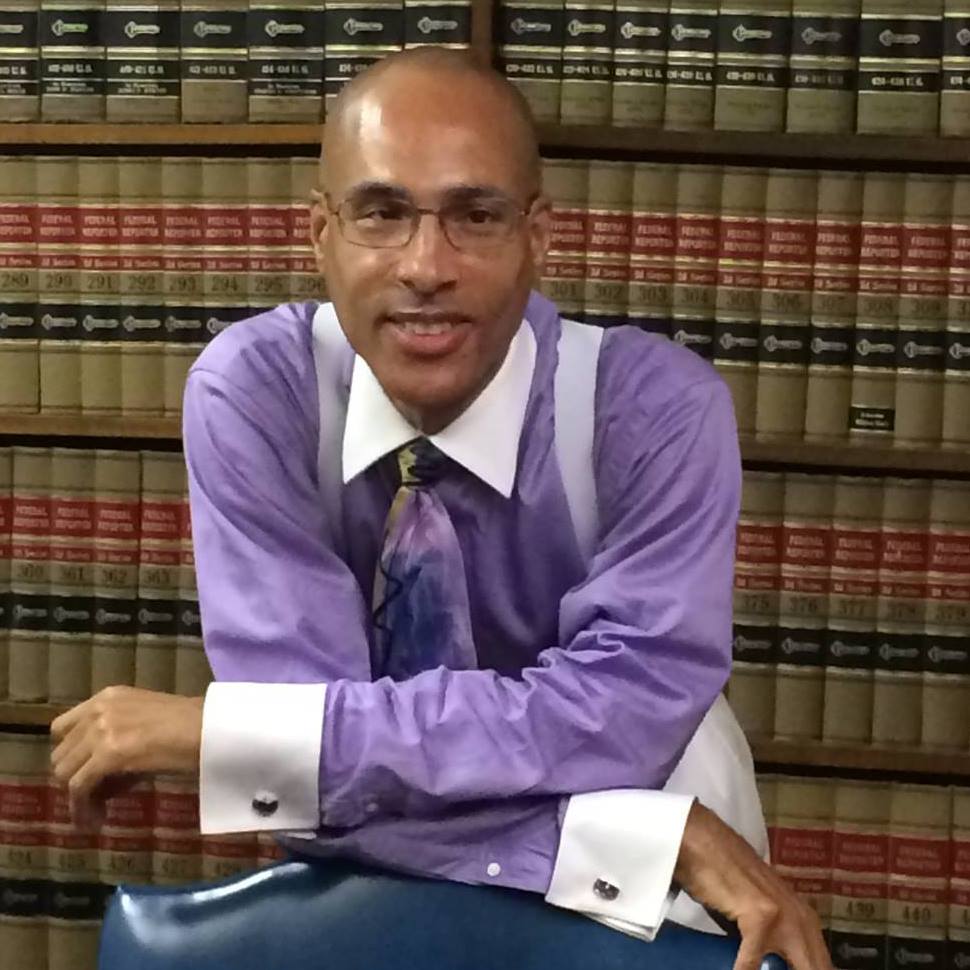
Attorney Gretchen Engel is the executive director of the Center for Death Penalty Litigation, one of the organizations representing Mr. Bacote. The others are the American Civil Liberties Union (ACLU) Capital Punishment Project, the ACLU of North Carolina and the NAACP Legal Defense and Educational Fund. Attorneys Jay Ferguson and Henderson Hill also represent Mr. Bacote.
“Those of us who’ve done this work for a long time know that racial bias persists in the death penalty and manifests itself in many different ways,” Atty. Engel said to The Final Call.

She explained how hard it is to prove intentional discrimination based on race. Enter the North Carolina Racial Justice Act, a short-lived law passed in 2009 and repealed in 2013 that, according to the ACLU, “allowed people to challenge their death sentences if they could show race played a role in their trials.”
“What the act originally said was if race is a significant factor in decisions about who gets the death penalty, either who goes to trial or who should be punished, the decision of the jury to sentence, or the decision about who serves on the juries in capital cases—if race is a significant factor in any of those decisions in the county, the prosecutorial district or the whole state, then that death sentence can’t be carried out, and the person has to get a life sentence,” Atty. Engel said.
Four cases successfully proved racial discrimination in 2012 before the act was repealed. The North Carolina Supreme Court ruled in 2020 that those who filed claims under the act before it was repealed still had the right to pursue their claims. According to the ACLU, Mr. Bacote’s case was the first to move forward since the Supreme Court ruling.
Atty. Engel believes close to 100 of the 121 people on death row in the state fall under the act. The remainder were either sentenced after the act was repealed, did not file a claim at the time or withdrew the claim.
Racism in death row sentencing and jury selection bias
Though North Carolina has not executed anyone since 2006, death penalty sentencing is still being pursued.
“To be totally frank, the reason that someone would get the death penalty in North Carolina is because they are Black, their victim is White and their case was tried prior to reforms,” Noel Nickle, executive director of the North Carolina Coalition for Alternatives to the Death Penalty, said to The Final Call.
“Those predictors, particularly the race of the victim, are very indicative as to whether someone would be sentenced to death. You’re two to three times more likely to be sentenced to death in North Carolina if your victim of the murder is White,”
She added. Ms. Nickle cited statistics that more than half of the people currently on death row in the state were found guilty by an all-White or nearly all-White jury, a statistic also stated by the Equal Justice Initiative.
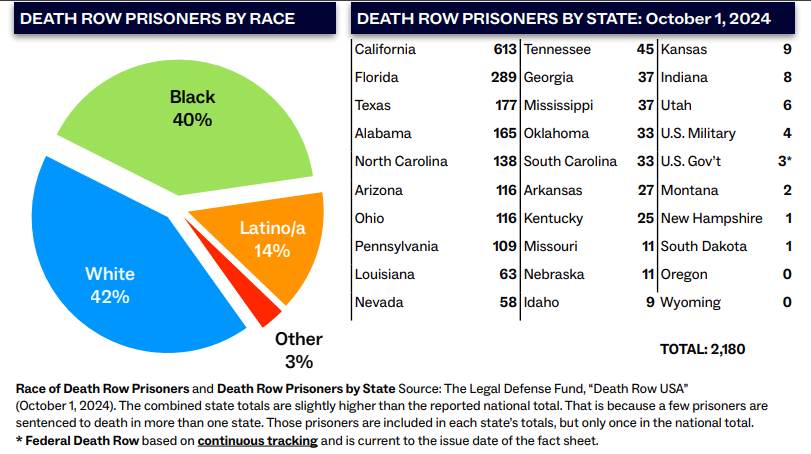
Of the 50 U.S. states, North Carolina has the fifth largest number of death row inmates. Fifty-two percent of those on death row are Black, and 41 percent are White, according to the N.C. Department of Adult Correction.
Ms. Engel said in their most recent case, Mr. Bacote’s case, the state provided 680,000 pages of transcripts, jury questionnaires and prosecutors’ notes about potential jurors. The 680,000 pages included notes on jury selection in 176 capital cases between 1985 and 2011, according to NBC News.
“Many of those notes we put into evidence as exhibits because they demonstrated racial bias, where people are writing very disparaging and clearly race-based comments in their notes,” Atty. Engel said.
“So, all of that evidence, six weeks of it, three different times, two different judges, and we keep getting the very same result, which is the court saying race is playing a role in these decisions, in jury selection, and in fact, also played a role in jury sentencing in Johnston County for Black defendants.”
If a jury in Johnston County was deciding between life and death for a Black defendant, the defendant would have a 100 percent chance of being sentenced to death, while a White defendant would have a 50/50 chance, Atty. Engel explained.
During the 2024 hearing’s closing arguments, Ashley Burrell, senior counsel at the Legal Defense Fund, said that of the 17 capital cases reviewed, all six Black defendants were sentenced to death while more than half of the White defendants in the remaining 11 cases were spared death sentences, according to NBC News.
The judge also found problems with the prosecutor in Mr. Bacote’s case. Atty. Engel described the prosecutor, N.C. Assistant District Attorney Greg Butler, as someone who has bounced around and worked in many different offices around the state.
“Something that the judge really focused on was his (Atty. Butler’s) very disparaging remarks he would make about defendants that were often racially coded.
So, there’s a reference to the three young Black men as ‘predators of the African plane,’ and there’s the reference to Mr. Bacote as a ‘thug,’” Atty. Engel said. “There are other defendants who were prosecuted by that same guy. So arguably, all those people should get relief as well.”
She believes the judge’s findings in Mr. Bacote’s case should result in a bigger response by the governor and attorney general and disagrees with the judge’s opinion that each case should be handled individually.
Mr. Bacote’s case was first assigned a judge in 2011, but his case did not become active until 2021, she said. It still took four more years for the judge to release the recent findings of racial bias.
“The idea that out of these close to 100 people, each one of them has to spend 7, 8, 9, however many years litigating this issue? That’s ridiculous, and it’s very inefficient,” she said.
She recommended the governor set up a commission to review cases, and in the meantime, officially pause executions. The attorney general “could also conduct his own review and say, well, these are the cases we’re concerned about. … Here are all the people who should have their death sentences commuted,” she said. “Or you can get rid of the death penalty altogether.”
When it comes to racial bias in jury selection, “It’s always been there,” Houston-based attorney Athill Muhammad said to The Final Call. He served on the legal team for Tyrone M. Williams, a Black man who faced the death penalty in a 2007 immigrant smuggling case.
He pointed to the landmark 1986 case, Batson v. Kentucky, where the Supreme Court of Kentucky ruled that the use of peremptory challenges, the objection of a proposed juror, based on race violates the Equal Protection Clause of the Fourteenth Amendment to the Constitution.
The case gave birth to the “Batson challenge,” the objection of an opposing side’s attempt to exclude a juror if race, ethnicity or gender is the suspected reason for exclusion.
“When you make that objection or challenge that Black jurors have been stricken from serving on the jury, it’s sort of like you’re saying that the jurors had a right to be on the jury. They had a constitutional right to serve on the jury, and the defendant had the constitutional right (to be judged by a jury of his or her own peers),” Atty. Athill Muhammad said.
He explained how widespread racial bias in jury selection is and how Black jurors are also sometimes stricken from the jury pool by Black prosecutors.
“The thought is that a Black juror will be more sympathetic. And certainly, if it’s a criminal accusation, a Black juror would be more sympathetic to the Black person who was on trial being accused of a crime. And so that thought permeates these prosecutors’ offices, even if the prosecutor who is trying the case is Black him or herself,” he said.
