








by Nayaba Arinde
NEW YORK—“The fact that my mother did not die in chains in a space unworthy of her humanity, not cowering, or dispirited, or uncommitted, or acquiescent, is a testament to the fortitude of the human spirit and this is indeed triumphant,” Kakuya Shakur said of her mom, Assata Olugbala Shakur, who died with her freedom and legacy intact.
The Queens, New York-born, Cuban-exiled Black Panther Party activist had been living in Cuba since her escape from New Jersey’s Clinton Correctional Facility in 1979.
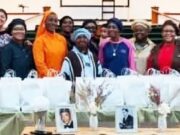
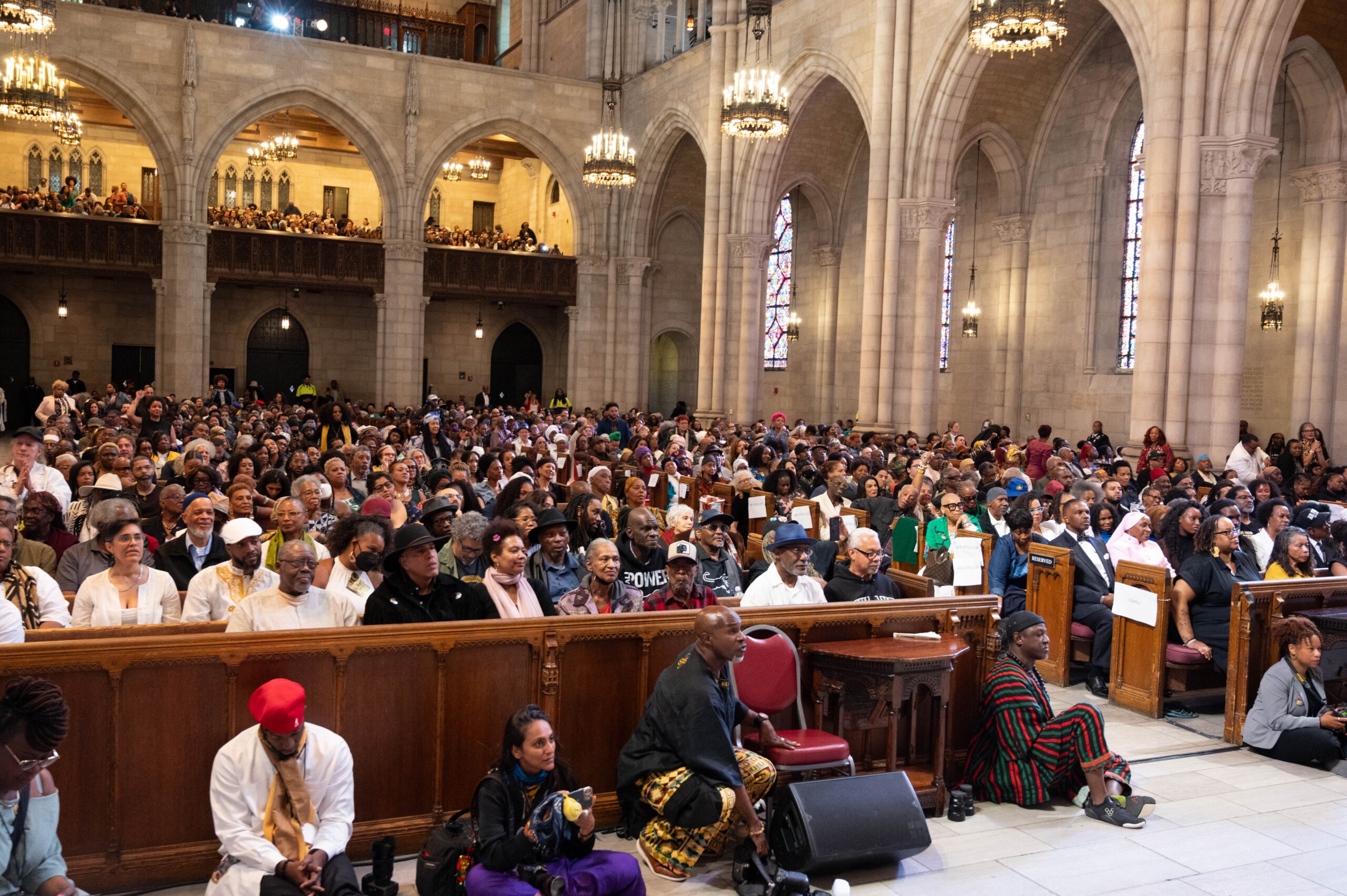
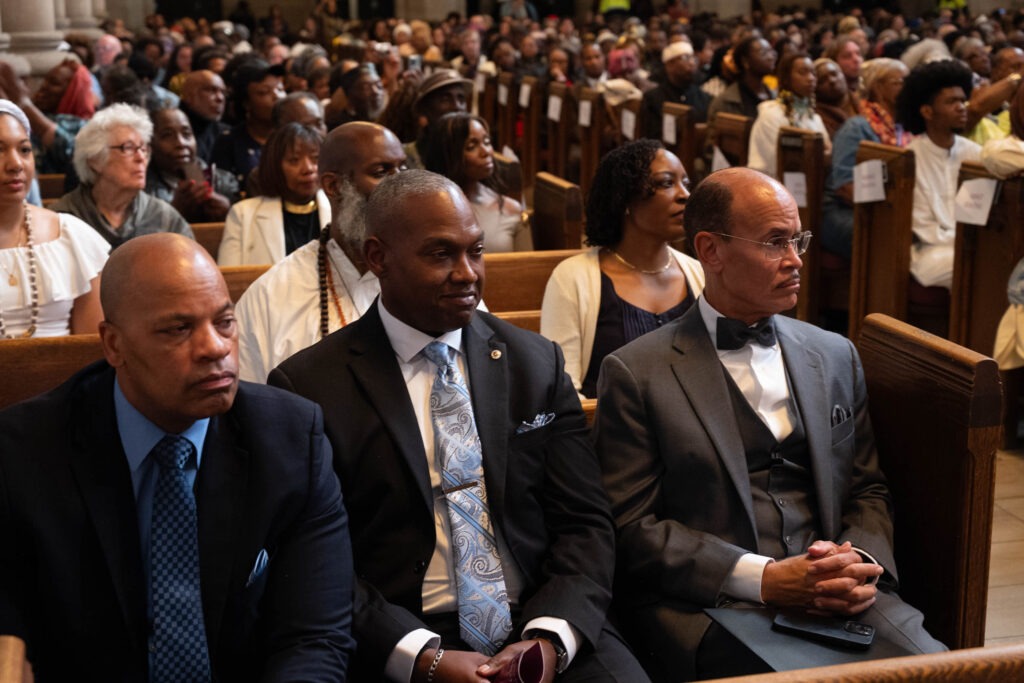
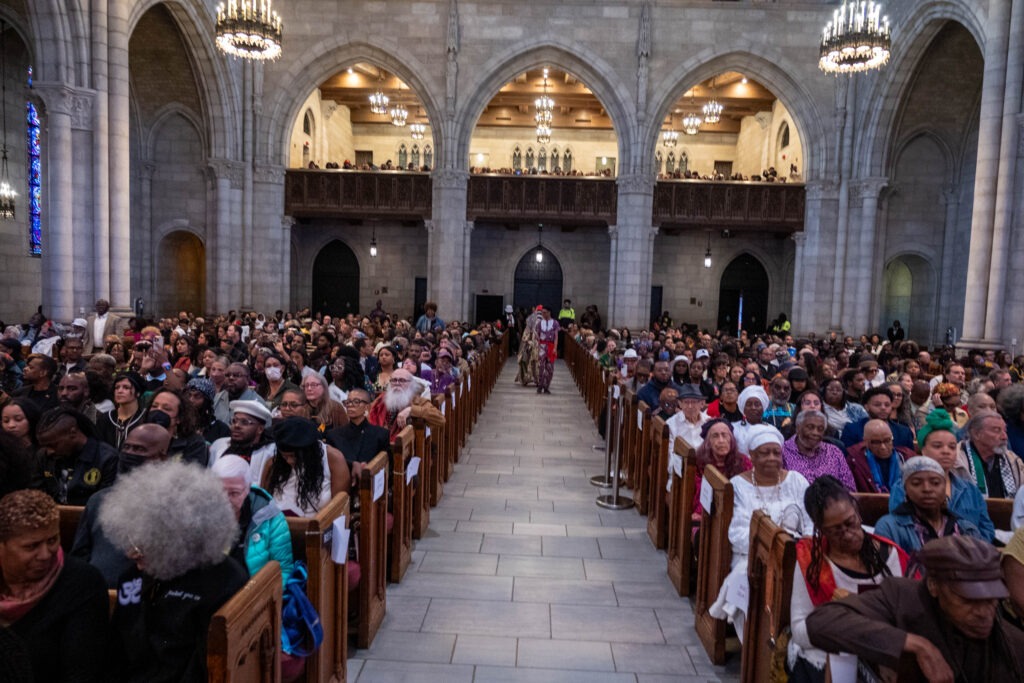
The Black liberation fighter was celebrated with hundreds in attendance at a memorial at Riverside Church, on Saturday, May 30, in New York, called, “Carry It On—A Celebration of the Life and Legacy of Assata Shakur.”
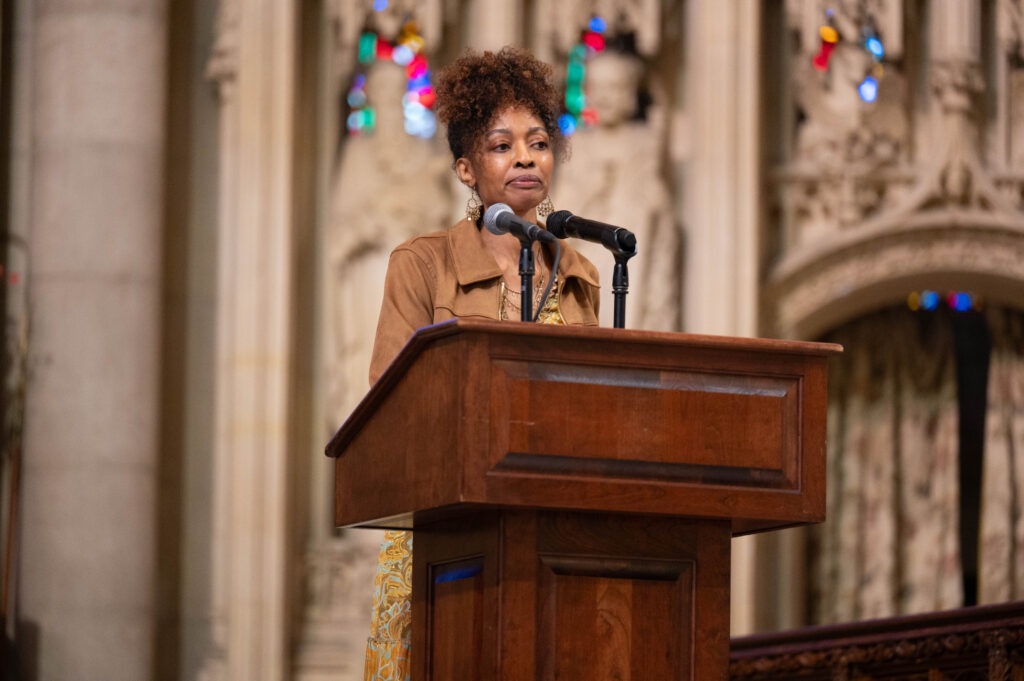
The tributes were powerful and heartfelt. None more so than the loving presentation by Kakuya Shakur, who grew up mainly in Cuba with her mother. “I want to thank you mommy for being my mother, for loving me in a tradition rooted in liberation,” she shared with those gathered in attendance for the tribute and memorial.
“For teaching me to question the status quo of human cruelty … to question who we are if we never realize that we have nothing to lose but the weighty degradation of our chains,” Kakuya Shakur added.
Assata Shakur passed away on September 25, 2025, in Havana, Cuba. She was 78.
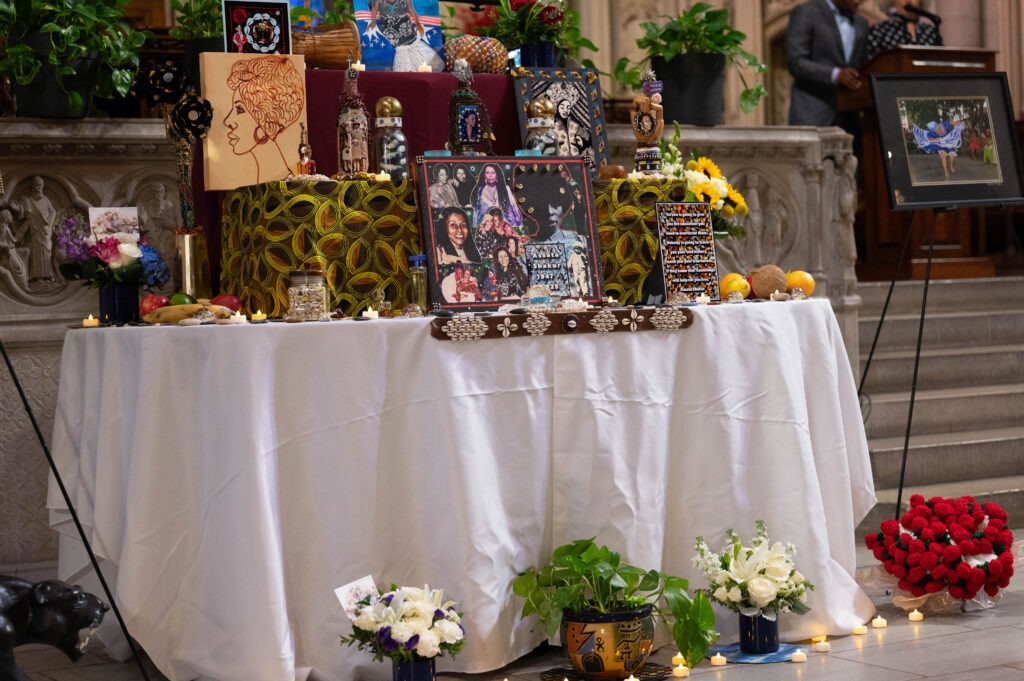
Fresh fruits, mood lights and long-stemmed sunflowers surrounded Assata’s multi-layered art work at the front of the main hall, packed by hundreds of people from the grassroot political panorama of the New York area.
There was the “Free the land!” and “Free ‘em all,” call and response, and reminding the crowd that it is there that Dr. Martin Luther King Jr. delivered his historic speech, “Beyond Vietnam: A Time to Break Silence.” Dr. Adriene Thorne opened the program. Activists Dara Cooper and Monifa Bandele emceed the event.
National Assistant to the Honorable Minister Louis Farrakhan, Student Minister Ishmael R. Muhammad also attended the program. In comments to The Final Call from Mosque No. 7 in New York, about the gathering he said, “It was a most beautiful, dignified service to honor our sister who was charged with a crime that she is innocent of.
And not only was she lifted and honored so beautifully by those who spoke, but I enjoy hearing us thank the Cuban government and the Cuban people, and Comandante Fidel Castro and his brother Raul Castro.” He added, “They (Cuba) made good on their promise to care for her and to keep her safe. So, that was beautiful that everybody gave thanks to the Cuban people.”
Asked about the Honorable Minister Louis Farrakhan’s position, Student Minister Ishmael Muhammad replied that the Minister also felt “extreme gratitude and thanks for her (Assata Shakur’s) sacrifice and what she contributed to the cause of freedom and justice.”
“They arranged to meet every time the Minister went to Cuba—maybe with the exception of one time for security reasons, he saw our sister,” Student Minister Ishmael Muhammad added.
On May 2, 1973, state troopers stopped Black Panther Party member Assata Shakur and two other members on the New Jersey Turnpike. There was a shootout, and Black Liberation Army (BLA) member Zayd Malik Shakur was killed, along with a state trooper.
Despite sustaining two gunshot wounds, Assata Shakur was charged with the murder of the slain state trooper. She was convicted of the 1973 first-degree murder of New Jersey State Trooper Werner Foerster. Her supporters have always campaigned that she was unfairly charged and was innocent.
On Nov. 2, 1979, Shakur escaped from New Jersey’s Clinton Correctional Facility and remained in Cuba until her passing last year. In 2005, classified erroneously as a “domestic terrorist” by the FBI, the government put a $1 million reward for her capture. Placing her on the Most Wanted Terrorist List, the feds raised the reward to $2 million in 2013.
Assata Shakur was the godmother to hip hop legend Tupac Shakur, and on his birthday June 16, 2017, President Donald Trump during his first term in office in his Cuba policy speech, made his extradition demand. President Fidel Castro, and next his brother Raul, refused to give her up.
Riverside is the church where Fidel Castro delivered an historic four-hour speech on September 8, 2000, to an audience of an estimated 4,000 people.
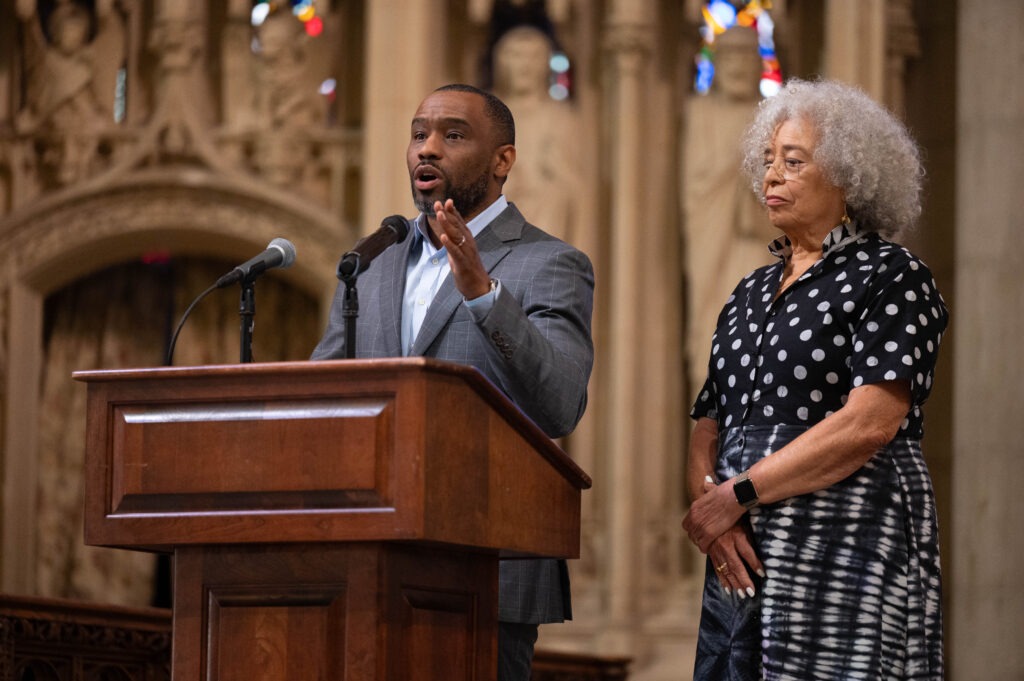
Political and cultural commentator Marc Lamont Hill also presented alongside political activist Angela Davis at the event.
Ms. Davis reminded folk that Assata Shakur did indeed call herself, “A reluctant warrior, a reluctant struggler,” adding that, “She embraced that role, she said, as the only viable response to the prevailing conditions of oppression.”
Ms. Davis added that Assata Shakur could have been an artist, a gardener, or a sculptor, but the freedom fighter was the “paragon of revolutionary commitment.”
She said that people should, “Make a collective commitment to ‘Carry it on,’” when it comes to what Assata Shakur fought for.
Saying that, “Freedom is always a collective project,” quoting Assata herself, Dr. Hill said, “We must resist our oppressors … we must organize.” He suggested that everyone should embrace the autobiographical author, poet, and organizer and see the “beautiful complexity of Assata’s work,” which ultimately illustrates the “power and the possibility of collective struggle.”
“After more than 50 years of isolation,” Kakuya Shakur said gently, “after 50 years of quietly counteracting the mainstream narrative amongst ourselves, this is a liberating moment that allows my family to affirm the truth of who my mother was.”
She added, “I want to give thanks to all of the people who kept my mother free, a modern-day underground railroad of people that cherished her, and ensured her safety.”
Kakuya Shakur revealed, “My mother is my most influential shero. My mother understood that she was born into resistance … she willingly accepted the inevitability of struggle … and the commitment of winning this struggle … for Black and all subjugated people.”
Assata Shakur’s longtime lawyer Lennox Hinds, Professor Rosemari Mealy, Lisa Brock, and Tracey A. Matthews, were also among the speakers.
Remote tributes came as a call from the still-incarcerated political prisoner Black Panther journalist Mumia Abu Jamal, and a video sent by Indigenous activist Leonard Peltier.
Monifa Bandele greeted the Panther Cubs, BLA cubs, Republic of New Afrika cubs, MOVE members stating, “We see you and we salute you.”
The names of elder political activists and currently and formerly incarcerated “political prisoners” like Sekou Odinga, Mutulu Shakur, Sundiata Acoli, Kamau Sadiki were called.
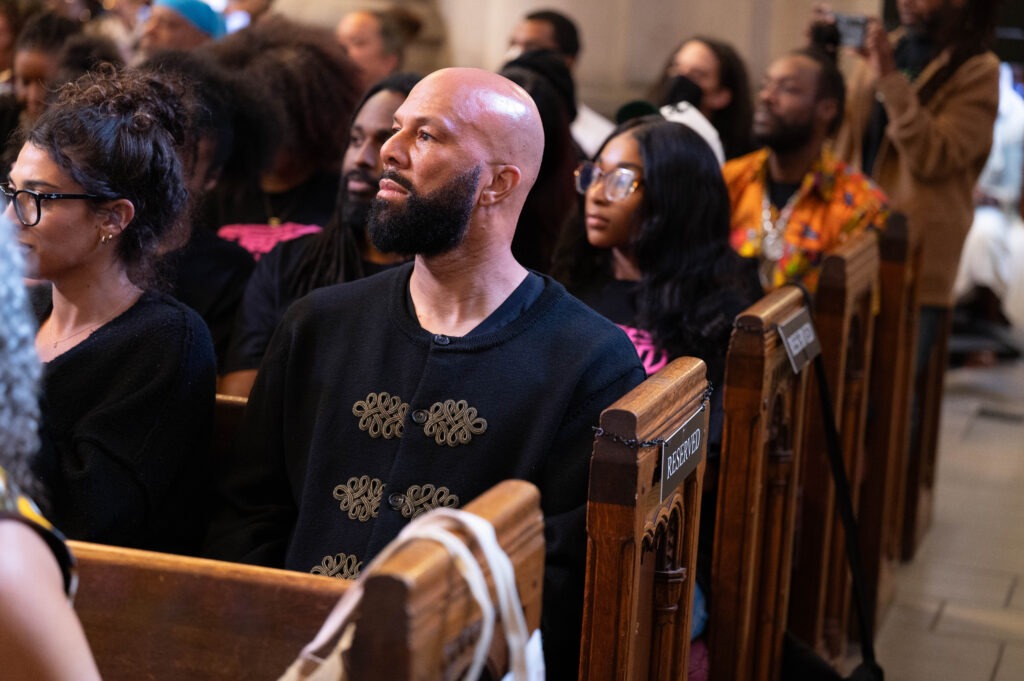
Beloved by hip hop artists in Havana and in the U.S., with Tupac as her godson, Assata Shakur understood the artistry, and Angela Davis shouted out rappers like Common, Killer Mike, and Rapsody.
There were several cultural offerings throughout the evening tribute, including, Sweet Honey in the Rock, Asase Yaa African Dance Theater, Oma Yesa, Mumu Fresh, Sharp Radway, and Common.
Kakuya Shakur said of her mother, “She loved being a woman revolutionary steeped in the strength that gave me life barreling through the stony walls of a United States prison … she loved being my mom. So, mommy on this day, I hope that you are coiled in the rapture of love … and are sun swept and dripping in the fold of loving arms.”
Monifa Bandele said, “Assata lives y’all, no movement can survive unless it’s constantly growing and changing with the times. … That’s why political work and organizing is so important.” Nayaba Arinde is a freelance Editor-at-Large and award-winning reporter and activist. Follow her on Instagram @NayabaArinde1
