









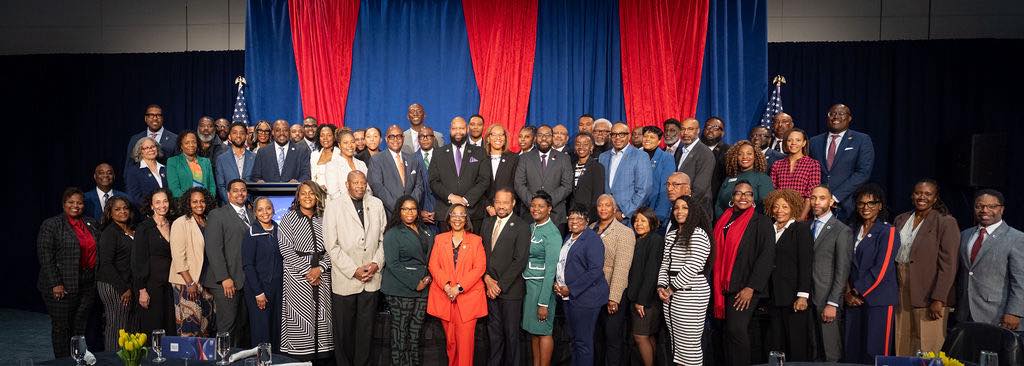

WASHINGTON, D.C.—Black mayors representing more than 25 million Americans recently gathered at the Ronald Reagan Building and International Trade Center for the African American Mayors Association’s (AAMA) 12th Annual Conference.
Amid a political moment defined by federal assaults on Black institutions, voting rights, and municipal governance, the two-day gathering carried the weight of resistance and the urgency of purpose.
AAMA Executive Director Phyllis Dickerson set the tone at the opening press conference.
“Over the next two days, Black mayors from across the U.S.—the largest gathering of its kind—will engage on policies, innovations, and opportunities shaping our cities,”
Ms. Dickerson declared. The agenda during the conference, which was held April 9-10, covered housing and community development, transportation infrastructure, migration and public safety, and reproductive and maternal health, closing with a Legacy Awards reception honoring exceptional public servants.
‘Struggle Is in Our DNA’
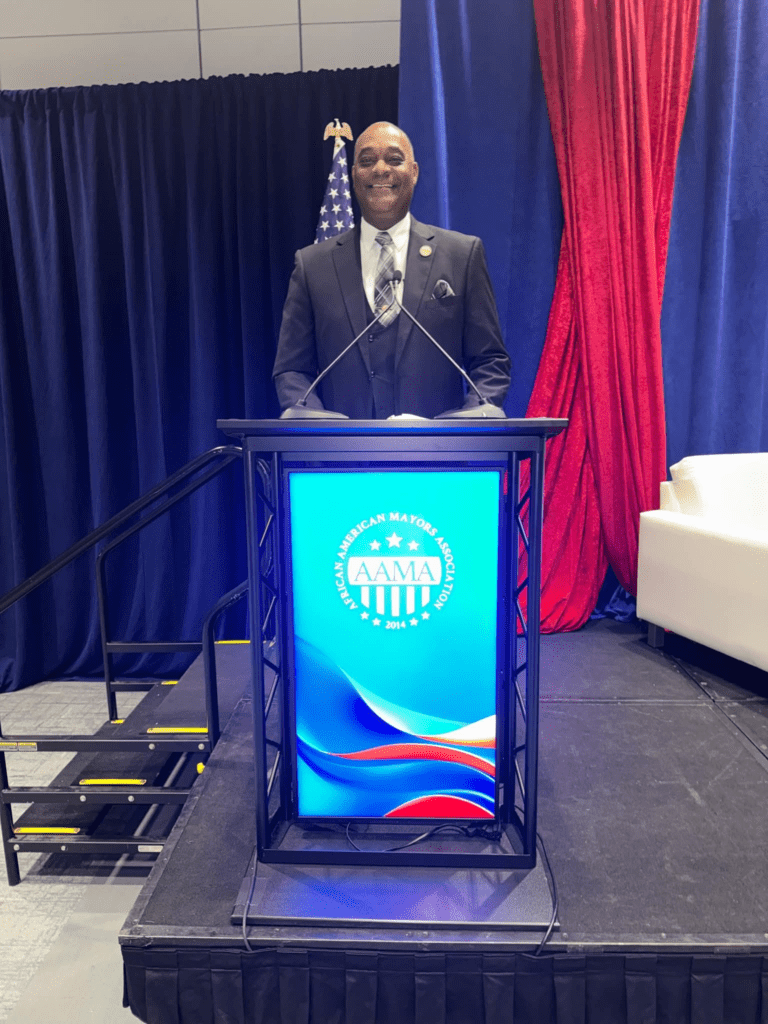
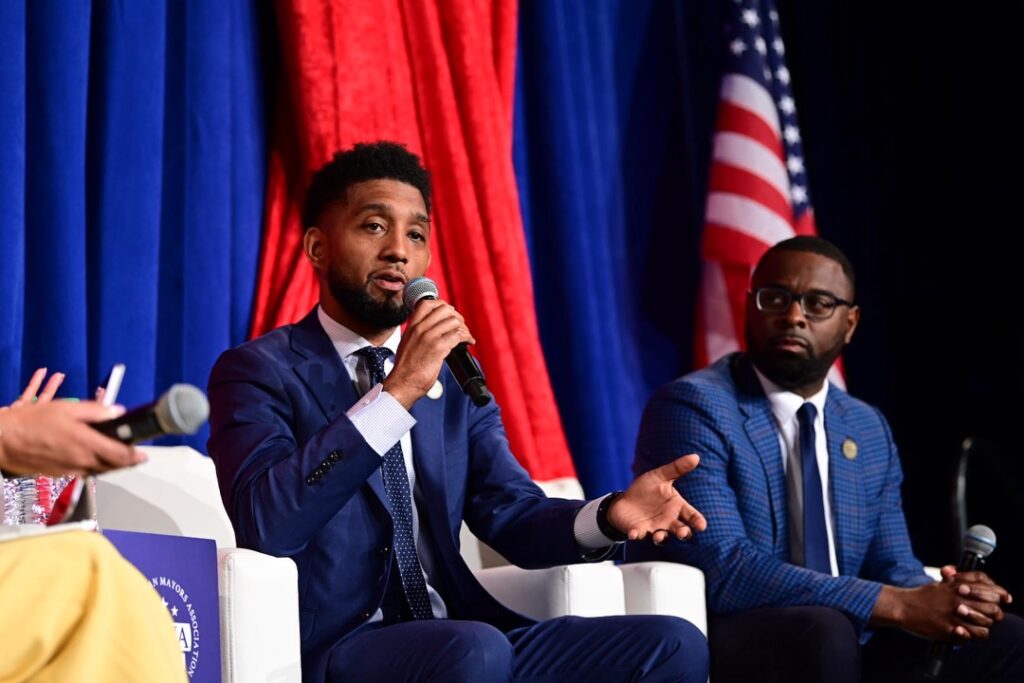
AAMA President in Savannah, Georgia, Mayor Van Johnson set a defiant tone, citing the association’s yearlong campaign to counter federal misinformation about Black-led cities.
“In over 50 stories across TV, print, and radio, AAMA mayors were front and center in the national conversation, setting the record straight and telling it like it is,” Mayor Johnson said.
Mayor Johnson also sounded the alarm on elections, calling the upcoming midterms “probably the most important midterm election ever.” His message was unequivocal: “Election security is not a partisan issue. It is a governance issue.
It is about trust—trust that every eligible voter can cast a ballot, that every ballot will be counted, and that every election reflects the voice and the will of the people, independent of any interference.” He closed by handing the mic to incoming AAMA president, Mayor Brandon Scott, the mayor of Baltimore, Maryland.
Black mayors leading the way
Mayor Scott drew laughter, declaring Baltimore “the greatest city in America” before turning serious. He cataloged the pressures: federal funding cuts, economic turmoil, gas at $5 a gallon, and “targeted attacks on Black leaders, Black culture, Black organizations, Black institutions across this country.”
Against that backdrop, he offered data the federal narrative has suppressed: “Whether it’s in Birmingham, whether it’s in Oakland—where violent crime dropped 25% last year—whether it’s in Chicago where they fell by 54% last year.
Or just a few minutes up the road in Baltimore, where we had the lowest amount of homicides ever recorded, a 50-year low. Black mayors are leading the way.”
Mayor Scott framed his fellow mayors in unsparing terms: “These leaders are fighting the fights that many people are not prepared to fight, the fights that many people are afraid to fight—and fighting the fights that are necessary for their constituents to make it to where we all want to go. A better tomorrow. But a better tomorrow starts with the work that you put in today.”
‘Housing Is the Foundation’
Mayor Sonia A. Brown of Glenn Heights, Texas, anchored the conference’s housing agenda in moral terms. “Housing is not a side issue. It is the very foundation of our communities—the foundation of public safety, economic growth, strong schools, and healthy families,” she said.
“When a child knows where they will sleep at night, they perform differently. When a senior can afford to age in place, they can live with dignity.” Mayor Brown noted that four generations now share the same workspace—an unprecedented reality that makes affordable housing not merely desirable but essential.
Her call to action was direct: “Across this country, Black mayors are not waiting. We are now leading. We are rethinking rezoning, investing in affordable housing, addressing homelessness with dignity, and partnering with the private sector to build mixed-income communities that bring people together instead of separating them by zip code.”
She closed with a charge: “At the end of the day, it’s about people. It’s about stability, it’s about dignity, and it’s about making sure every family in every city has a place to call home.”
Abrams, Kaepernick, and the mandate of local power
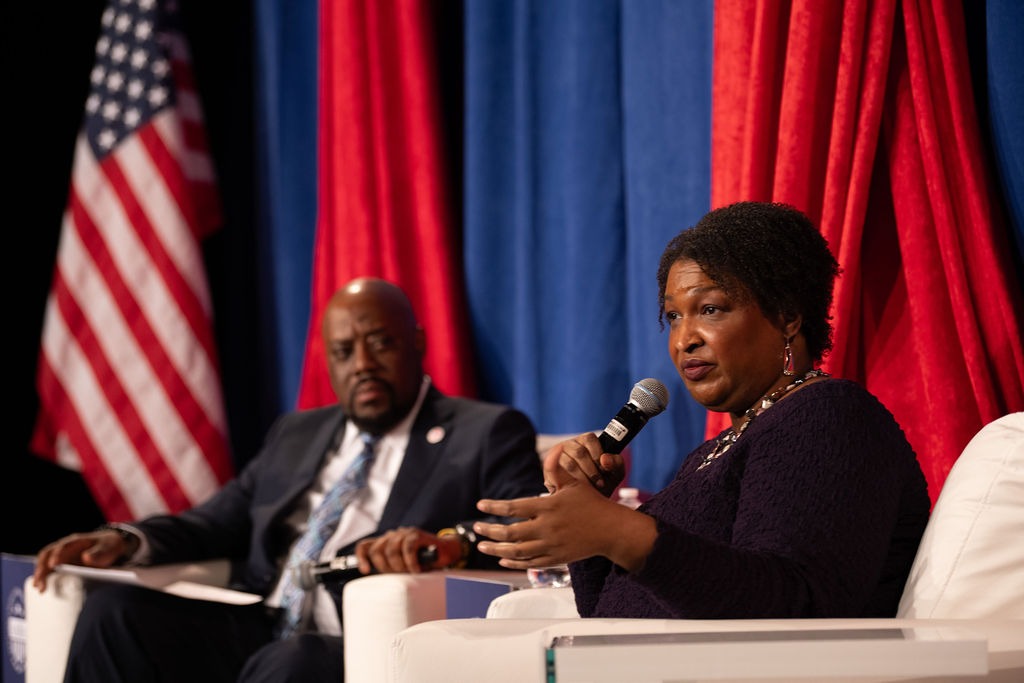
The convention’s opening day’s fireside chat featured Stacey Abrams—former Georgia state representative, voting rights advocate and the first Black woman to become a major-party gubernatorial nominee—who energized the assembled mayors at a moment when democratic infrastructure faces sustained federal pressure.
Mayor Marcus Muhammad of Benton Harbor, Michigan, told The Final Call, “Listening to Stacey Abrams, she was encouraging the Black mayors. She told us, ‘Your local mayor is so important in a time like this. All politics start local. And it helps if that local mayor is Black.’”
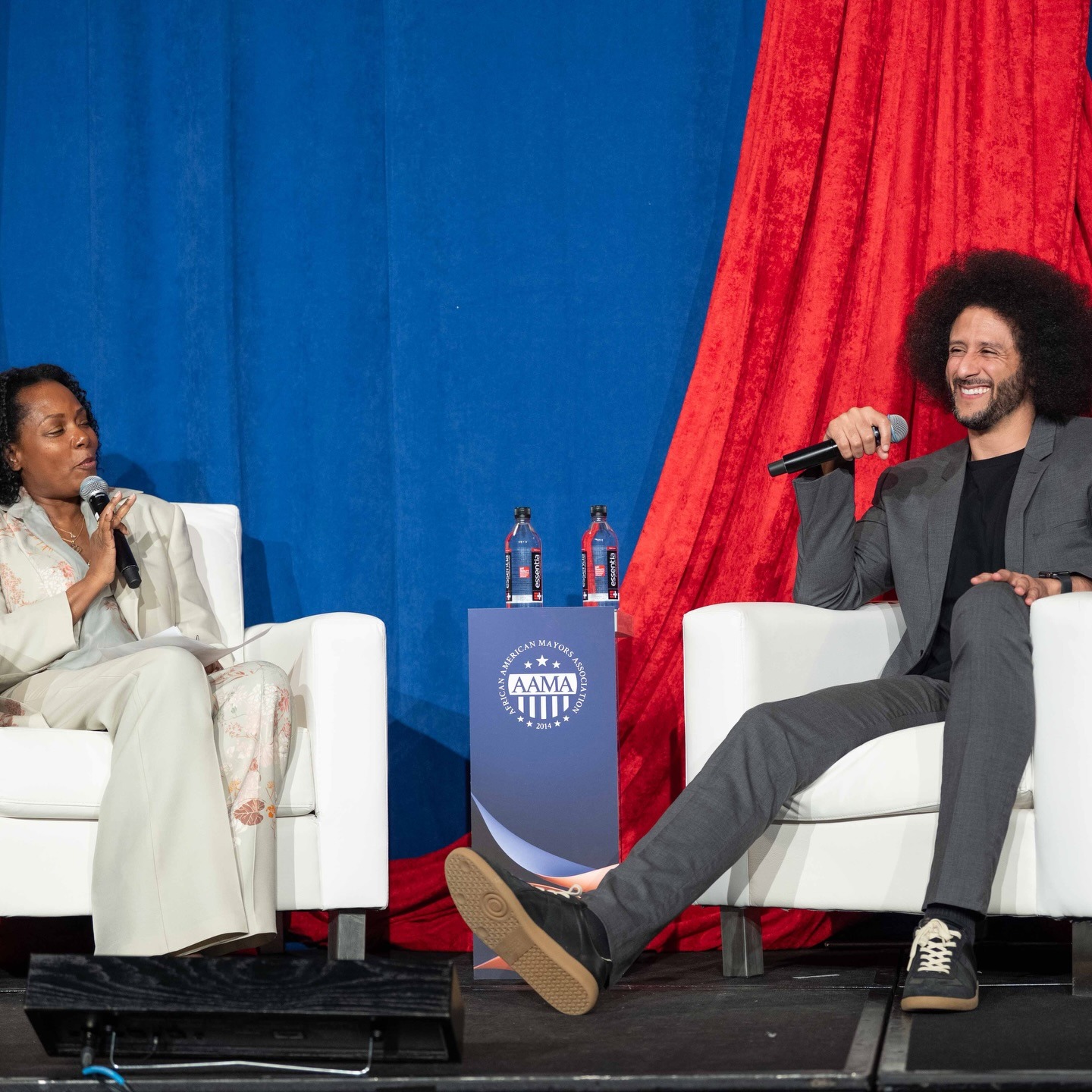
The marquee moment of the last day came when former NFL quarterback and activist Colin Kaepernick took the stage. The founder of Know Your Rights Camp, Mr. Kaepernick, brought a message of principled resistance that resonated with leaders who navigate the same system his kneeling protest once challenged.
Mayor Muhammad drew the connection plainly, “A lot of times, we have to take uncomfortable stances. We’re in one of those moments where we may have to take a knee—take a stand for what is right, even if it means standing up.”
Mayor Van Johnson offered the gathering’s defining word as it closed: “We’re here for business. We’re here to work, to strategize, to lift each other up, and bring those strategies back home. Struggle is in our DNA. We will serve in extraordinary ways, and we will continue to be the hopes and dreams that our ancestors thought of.”
The African American Mayors Association is the only national organization dedicated exclusively to empowering Black mayors. For more information, visit aama.us.
